
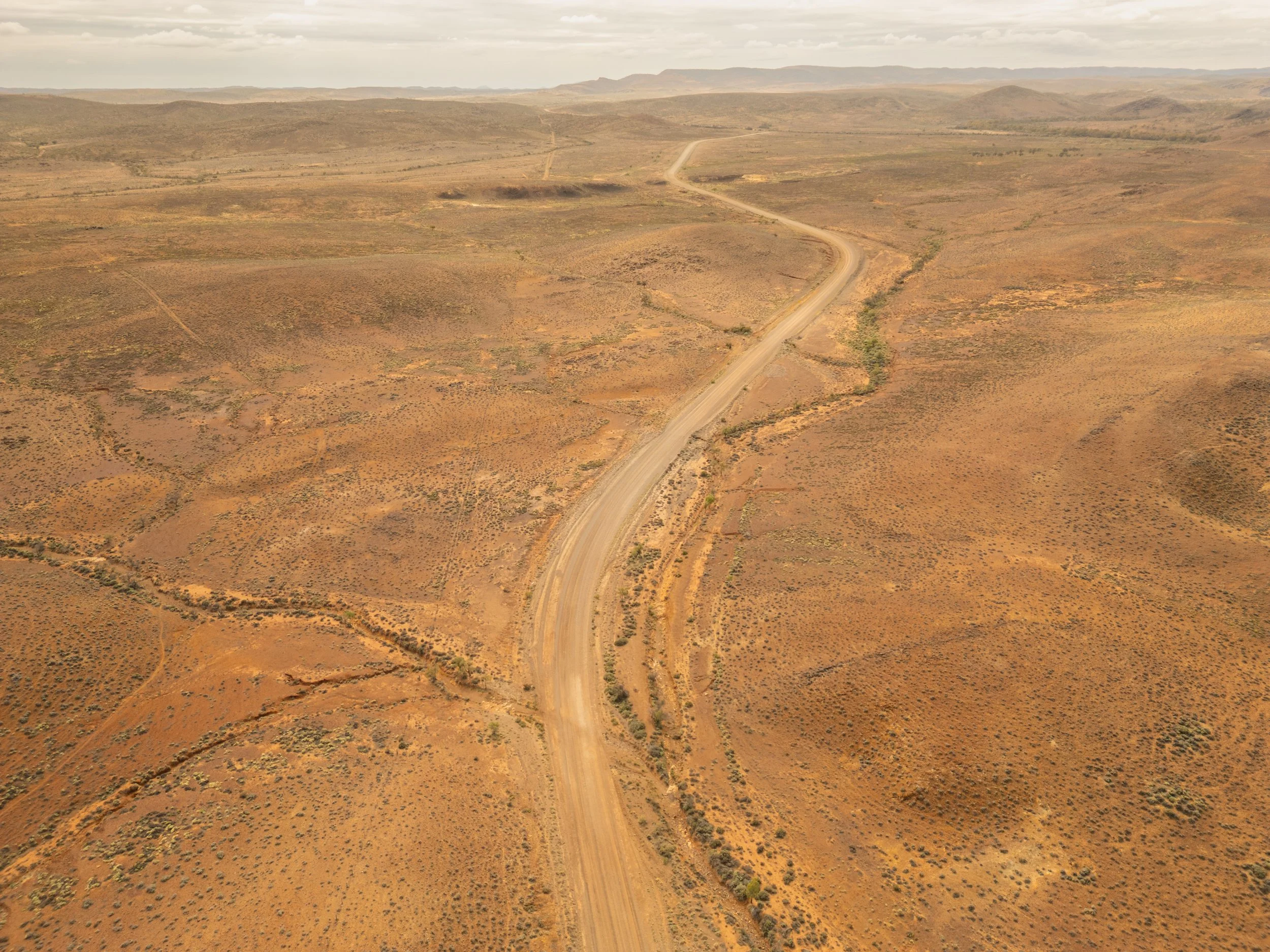
Looking at South Australia Through a Different Lens

I’ve been thinking a lot lately about what makes a good tourism photograph.
For years, tourism photography has often been about the big view.
The dramatic landscape.
The perfect sunset.
The beautiful hotel room.
The smiling people having the perfect holiday.
And don't get me wrong, I love a beautiful landscape as much as anyone.
But when I’m photographing South Australia, I’m always more interested in what sits underneath that picture.
The people.
The culture.
The way we look after our places.
The little details that make somewhere feel like here rather than anywhere else.
And I think that’s where some of the most interesting tourism photography is heading.
It's more than just a pretty picture
South Australia is putting a much bigger focus on tourism that is sustainable, inclusive and connected to culture.
The South Australian Tourism Commission's new True South approach frames tourism as a force for good, with a focus on Aboriginal care for Country and community, regenerative tourism, accessibility and inclusion, and South Australian hospitality.
And honestly, I think that's a really interesting shift.
Because what does that actually look like in a photograph?
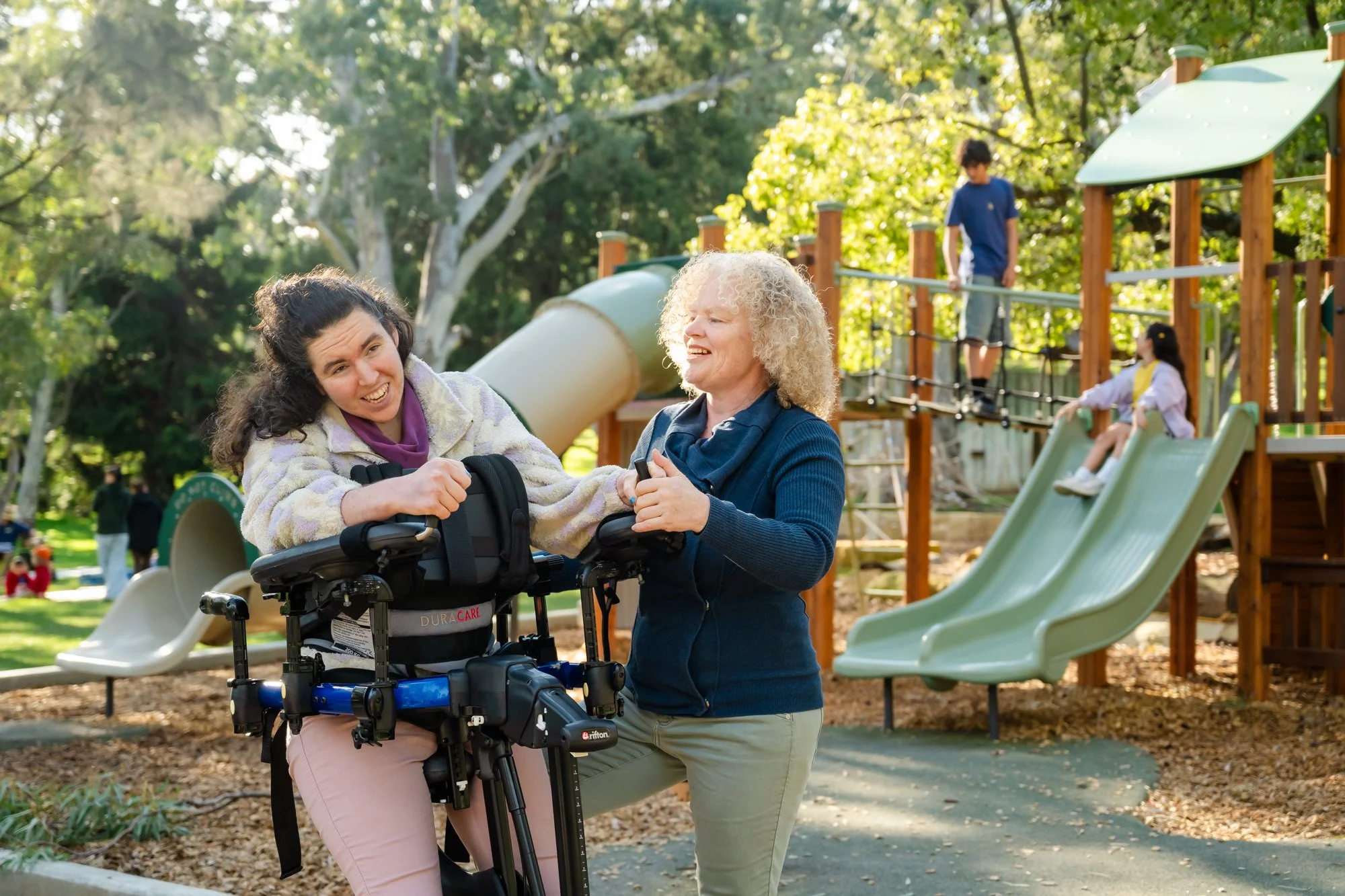
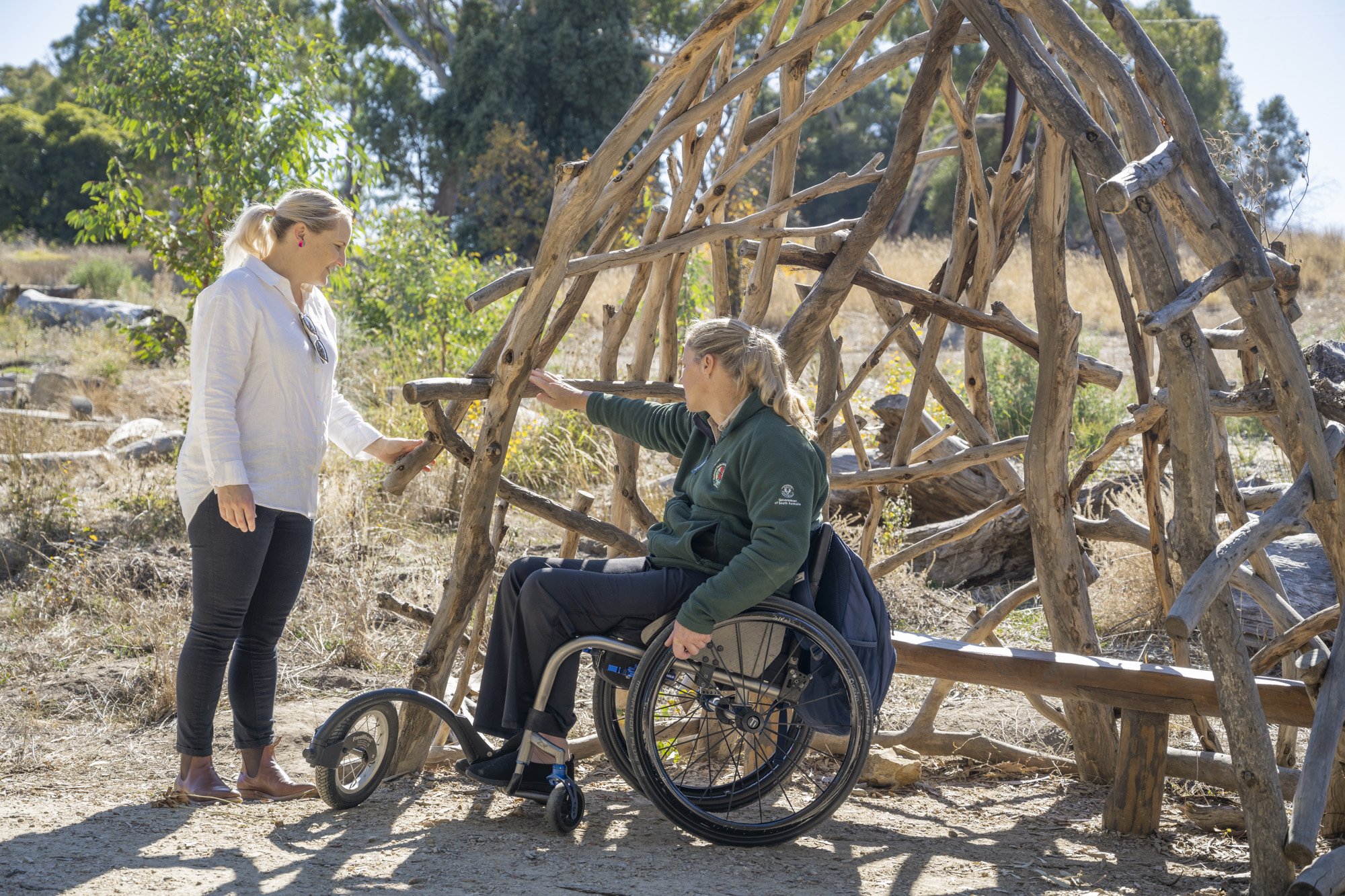
It isn't necessarily a picture of a recycling bin or someone using a wheelchair.
It's much broader than that.
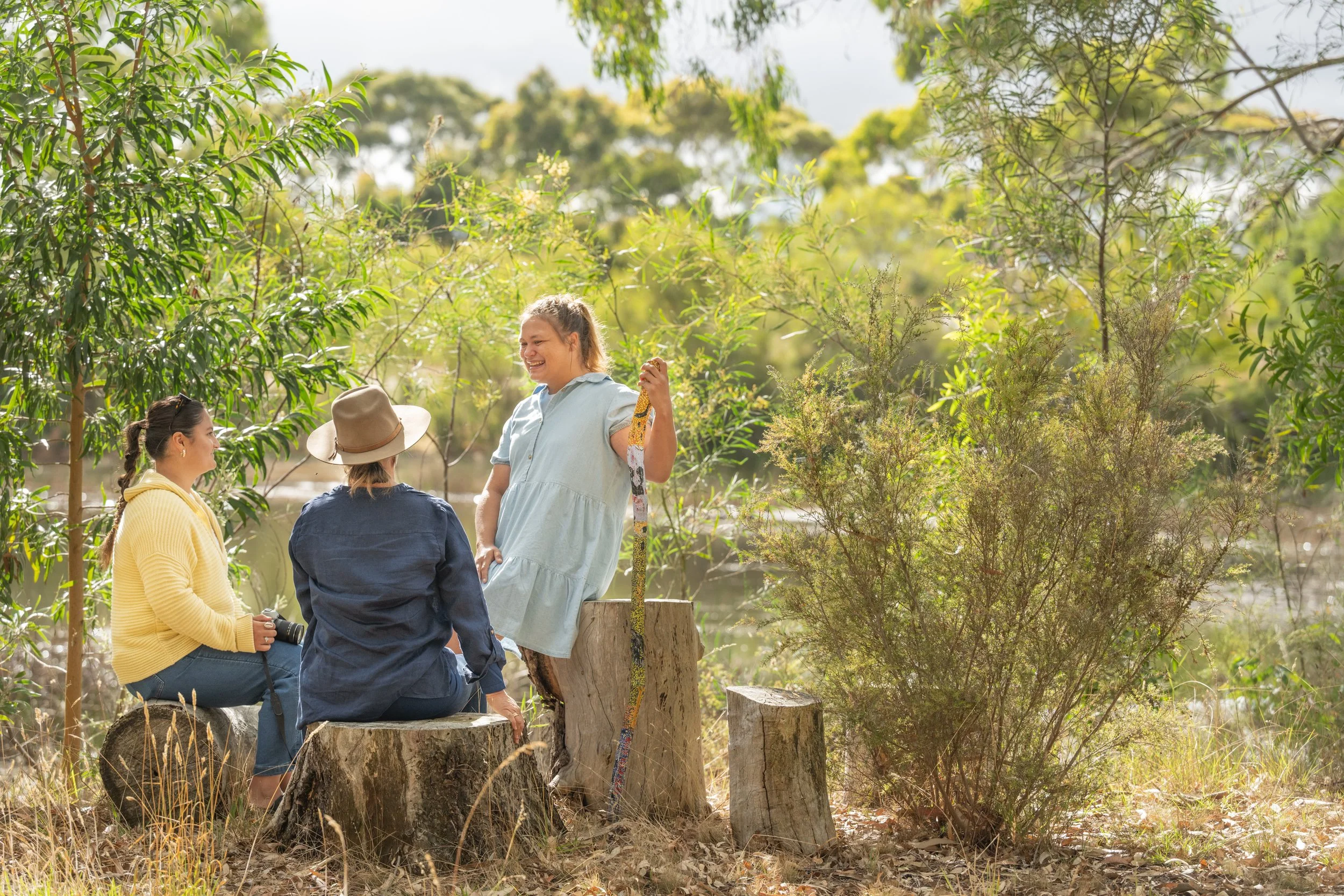
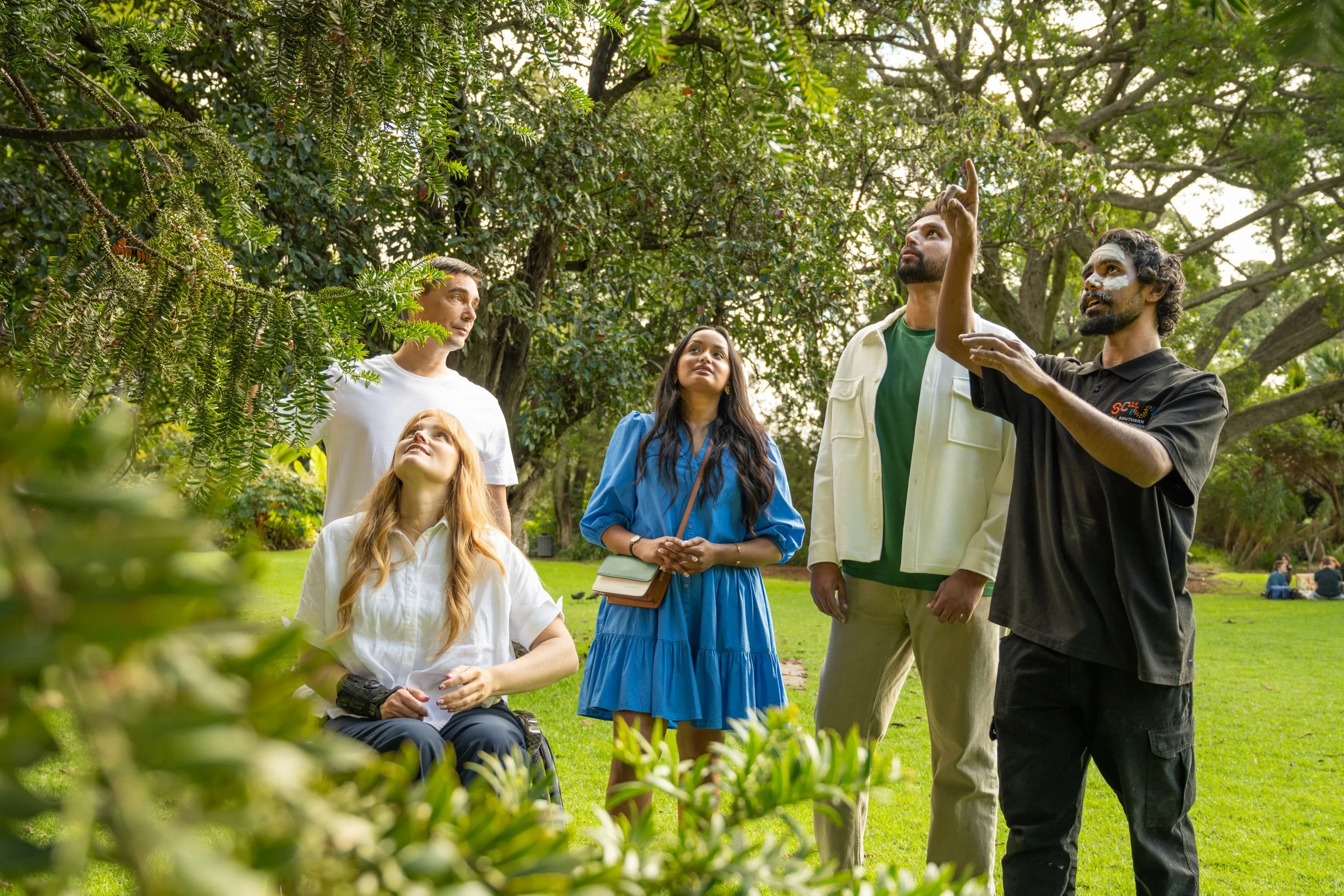
It's showing people experiencing a place in a way that feels genuine.
It's showing landscapes that are being cared for.
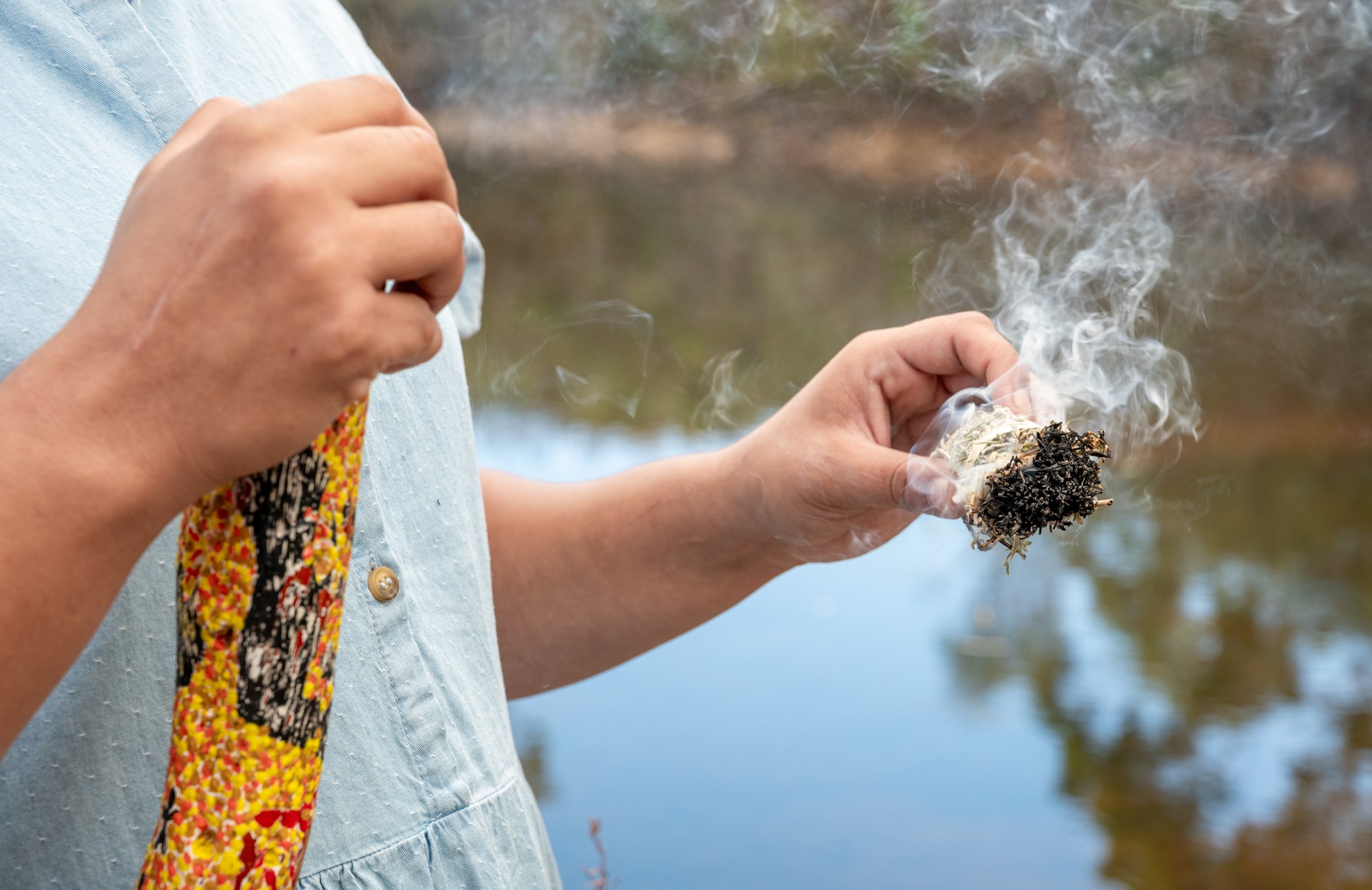
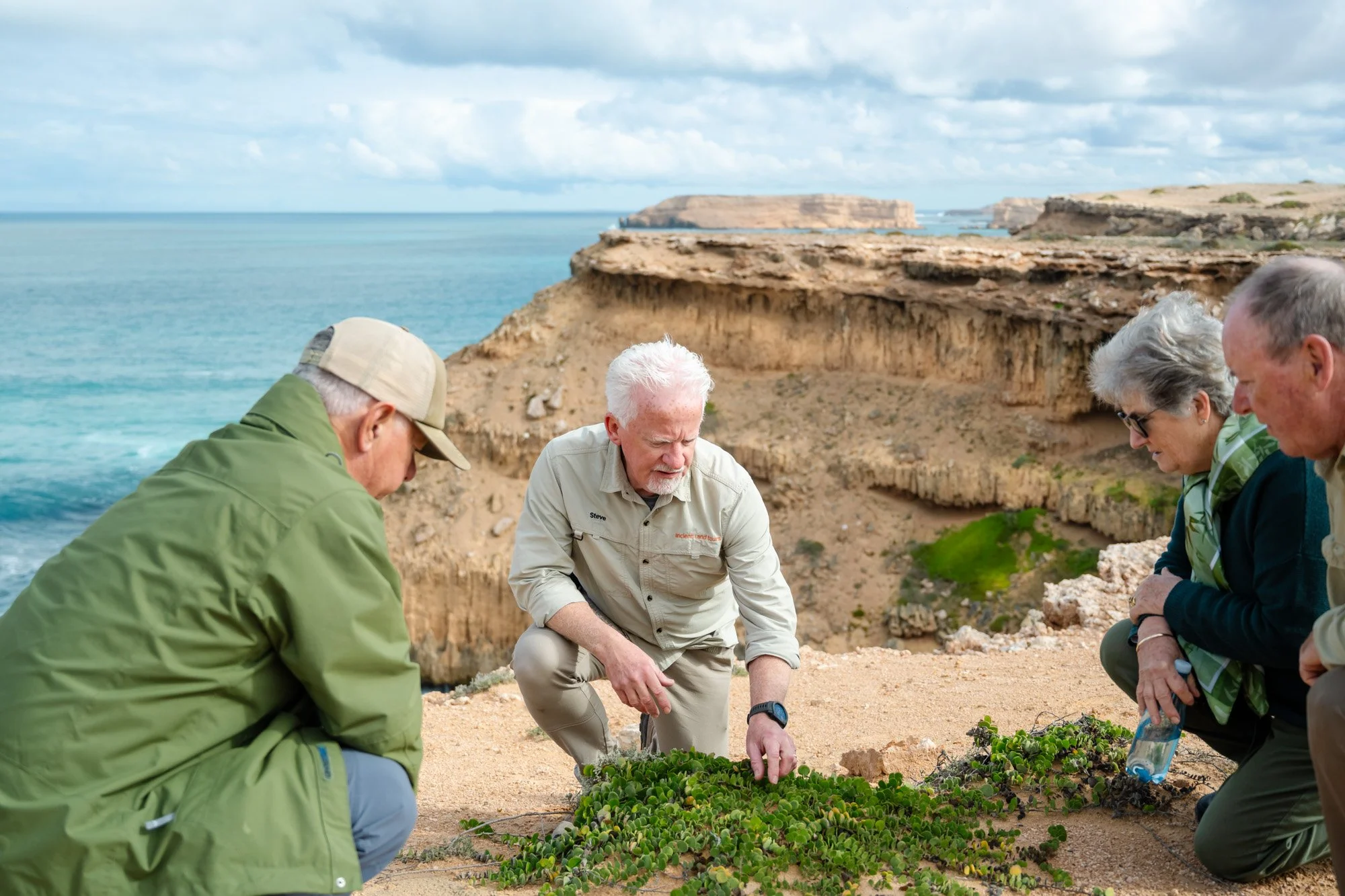
It's showing Aboriginal culture and stories in ways that are respectful and, importantly, led by Aboriginal people.
It's showing that travel isn't just about what we take from a place, but what we give back.
Sustainability doesn't always look like sustainability
Some of my favourite South Australian landscapes are the ones that make you stop and think about how special they actually are.
The coastline.
The bush.
The wetlands.
The wildlife.
The vineyards and farms.
The big open spaces.
But sustainability isn't just about photographing beautiful landscapes.
It's about showing the people who care for them, the businesses making thoughtful choices, the producers working with the land, and the experiences that let visitors connect with nature without simply consuming it.
SA Tourism is now talking about regenerative tourism too, which takes the idea a step further: not just trying to minimise harm, but looking at how tourism can leave communities, culture and environments in a better place.
That's a pretty good story to tell.
And a much more interesting one to photograph.
Culture is everywhere
One of the things I love about photographing South Australia is that culture doesn't need to be manufactured for visitors.
It's already here.
It's in our food.
Our towns.
Our festivals.
Our makers.
Our architecture.
Our landscapes.
And, most importantly, in the continuing cultures and knowledge of Aboriginal people across this state.
There's a growing emphasis on supporting Aboriginal tourism operators and ensuring Aboriginal people own and share their own stories of culture and Country.
For me, that means photography needs to move beyond the token cultural image.
It should create space for people to tell their own stories.
To show connection to Country.
To show contemporary Aboriginal life, not just history.
And to let visitors see a place through the eyes of the people who know it best.
And then there's accessibility
This is another area where I think photography plays a really important role.
If you look at a tourism website and every image shows people effortlessly climbing over rocks, hiking remote trails or sitting on a beach reached by a steep staircase, you might assume that particular experience isn't for you.
But accessibility doesn't have to look clinical or boring.
An accessible experience can still be beautiful.
It can still be adventurous.
It can still be luxurious, fun, social, romantic or completely wild.
The difference is that the photography needs to show people that they can actually be part of it.
South Australia is putting more emphasis on accessible tourism, with dedicated information around accessible accommodation, transport, attractions and experiences.
And I think that's where photographers can make a real difference.
Show the ramp.
Show the accessible room.
Show the person actually enjoying the experience.
Show the different ways people can experience the same place.
Don't just tell people it's accessible.
Show them.
This is where I think tourism photography gets really interesting
For me, good tourism photography isn't about making everything look perfect.
It's about making people want to be there.
And sometimes that means showing the imperfect bits too.
A person laughing halfway through an experience.
Wind blowing someone's hair everywhere.
A muddy pair of boots.
A weathered building.
A landscape that isn't pristine but tells an important story.
Someone making something by hand.
A local guide sharing something they know.
A visitor experiencing something for the first time.
Those are the photographs that make me feel something.
And they're often the photographs that make me want to go somewhere.
South Australia has plenty of stories to tell
I think we're incredibly lucky here.
We've got extraordinary landscapes, incredible food and wine, wildlife, beaches, regional communities, festivals and a huge amount of cultural depth.
But perhaps the next chapter of South Australian tourism isn't just about showing how beautiful we are.
It's about showing how we live here, how we care for this place, whose stories belong here, and how everyone can experience it.
And as a photographer, that's a pretty exciting brief.
Because there's so much more to photograph than the postcard.
Sometimes you just have to look a little closer.
Find out more about South Australia’s approach to sustainable, inclusive and culturally connected tourism through SA Tourism’s True South.
A stay at Little National Hotel Adelaide
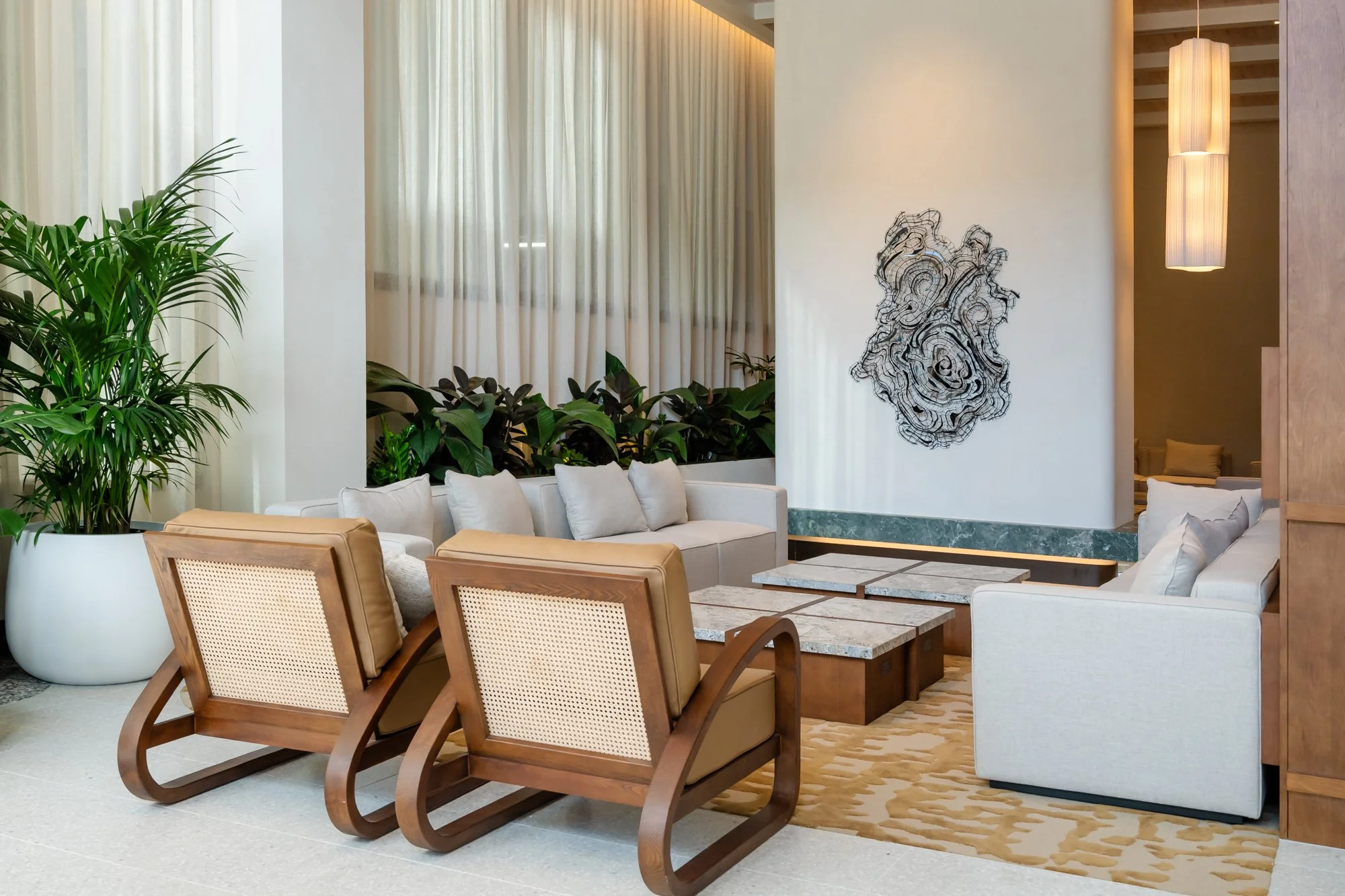
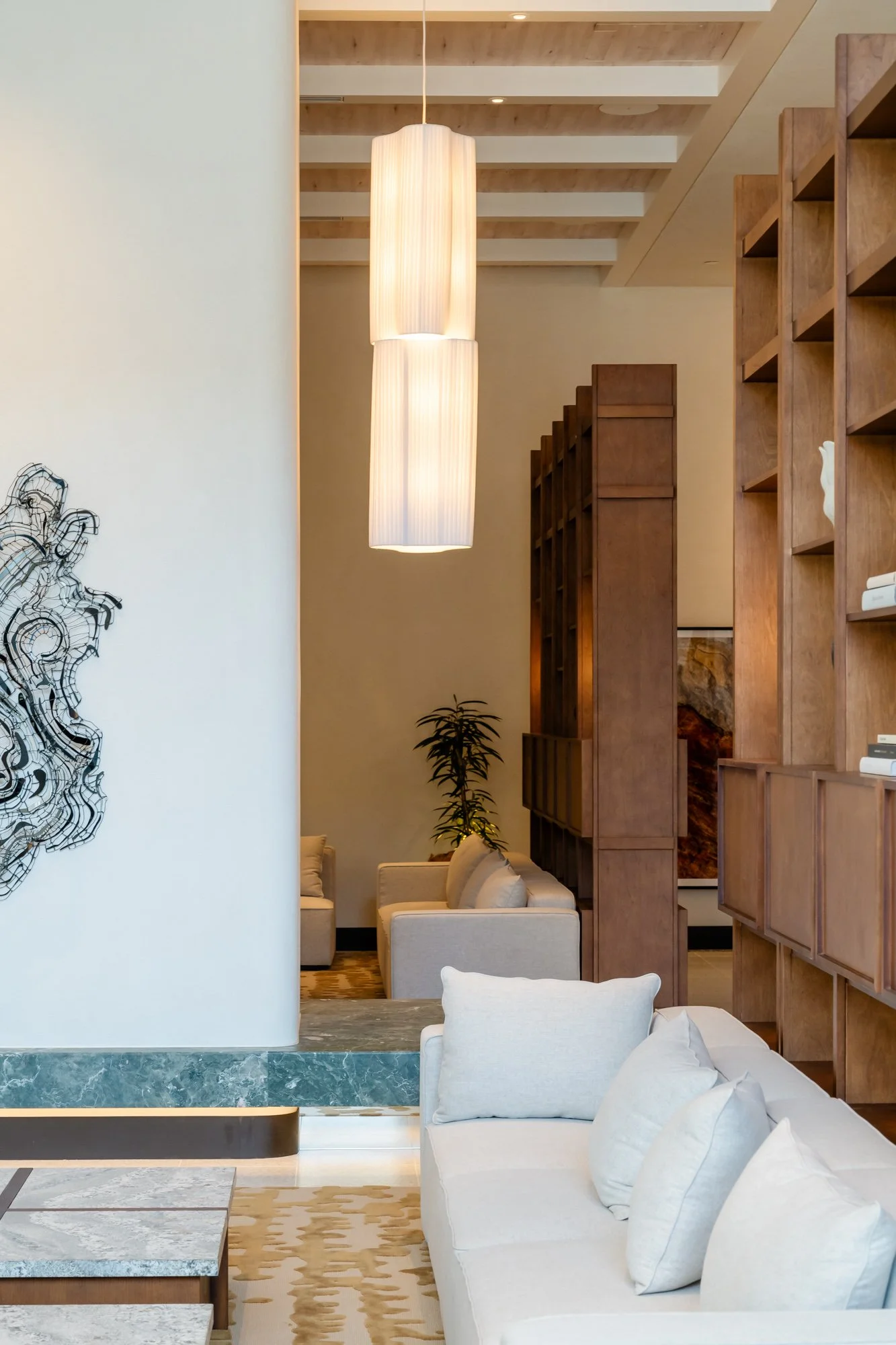
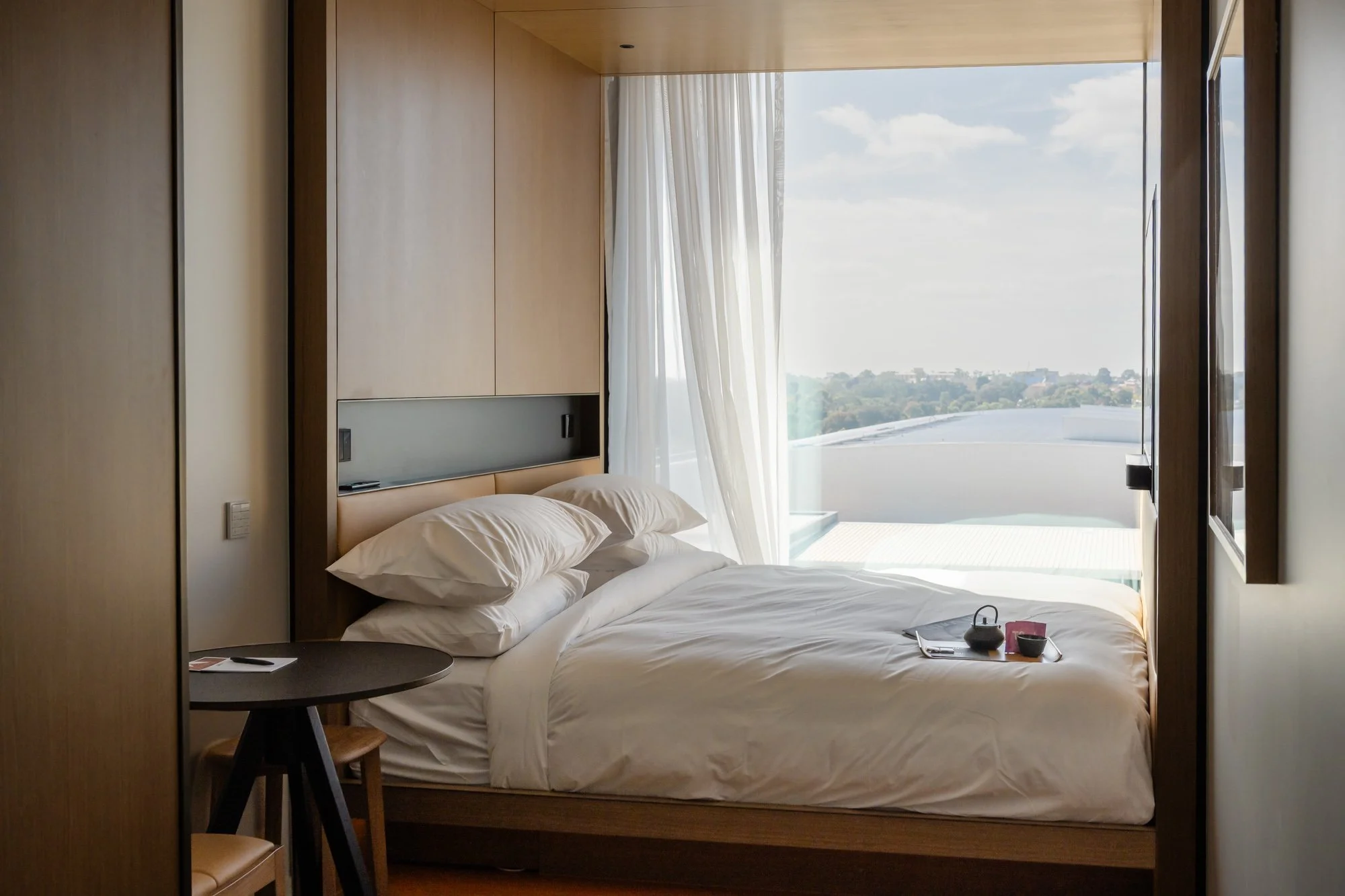
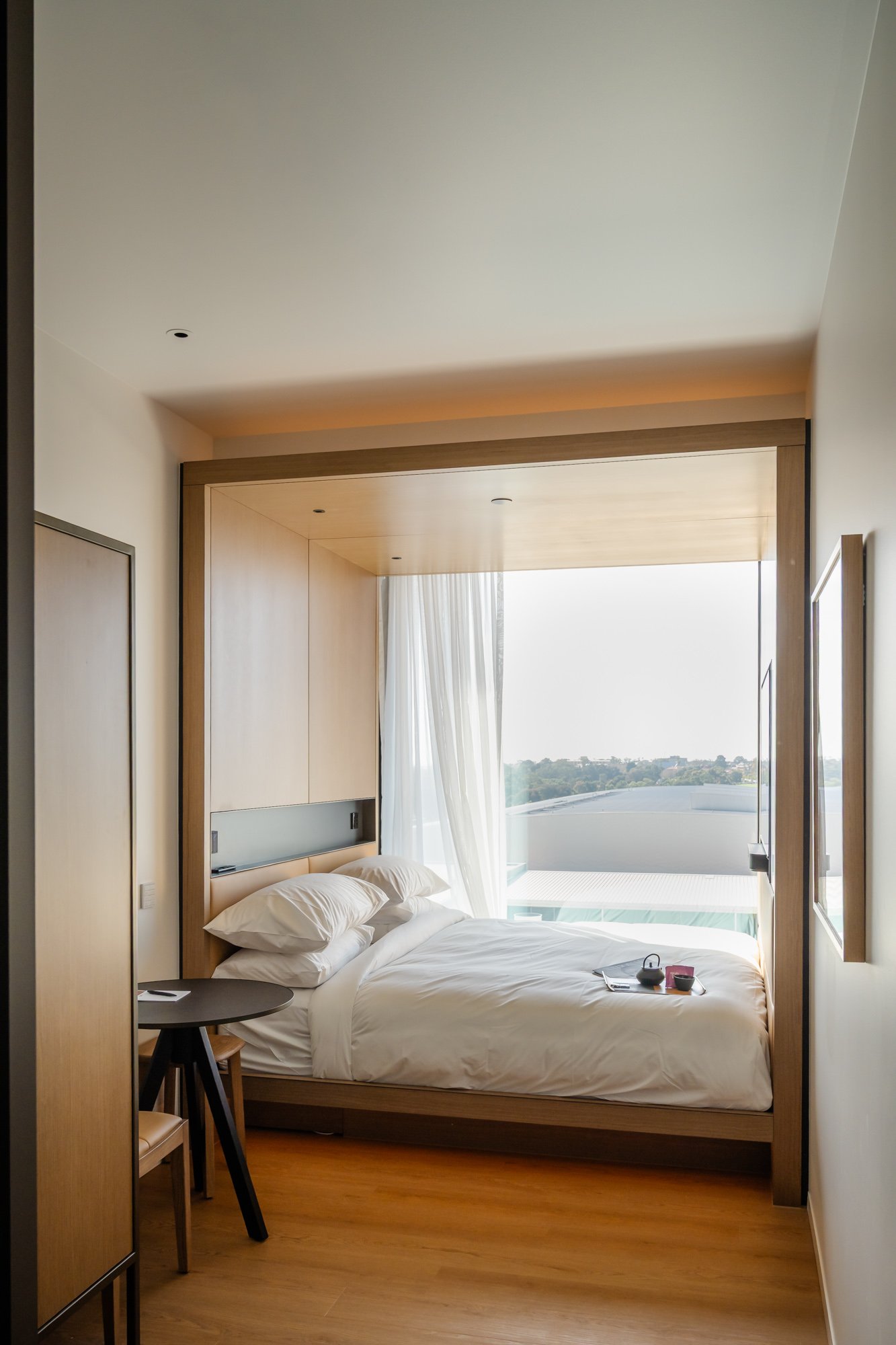
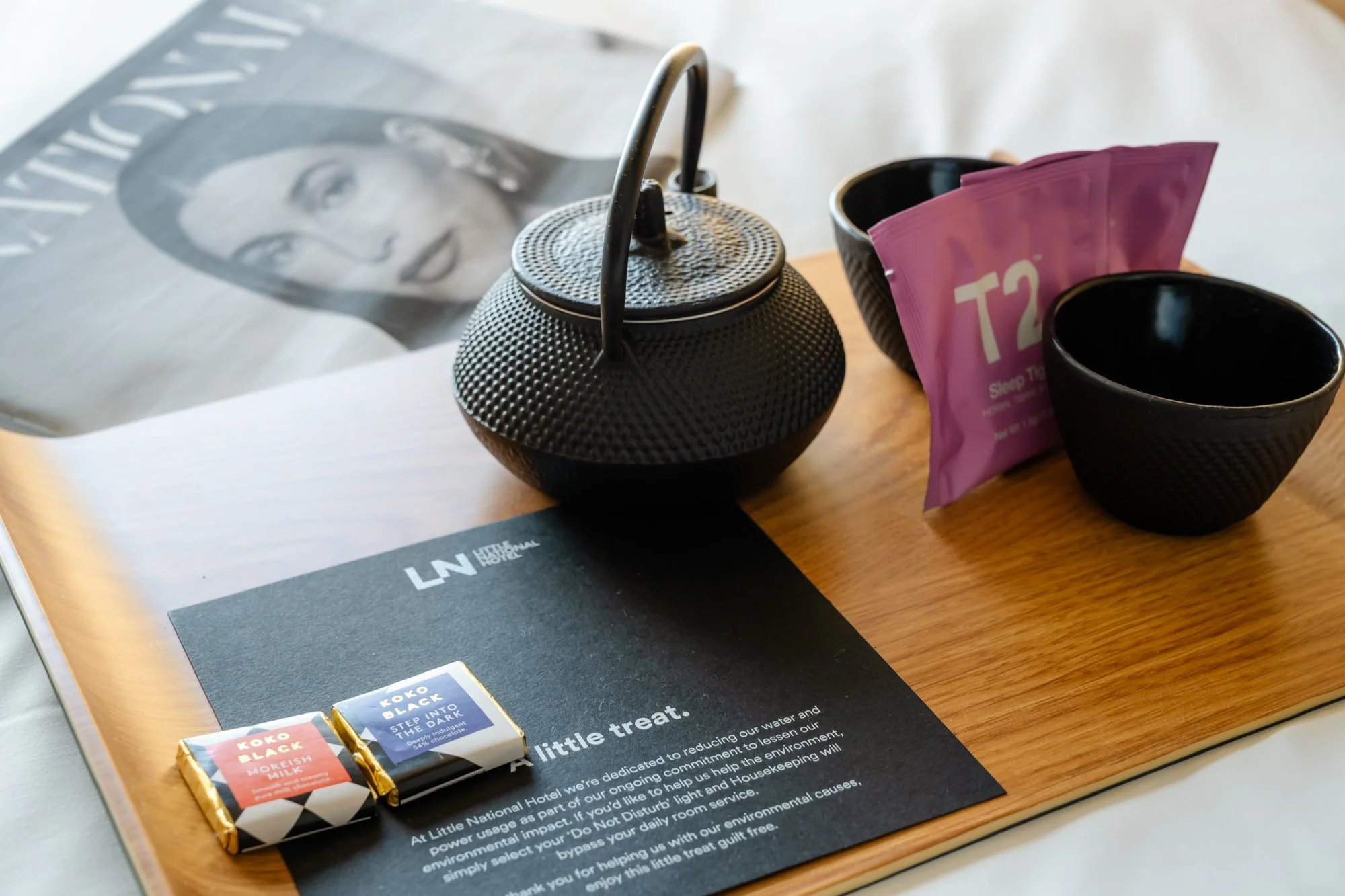
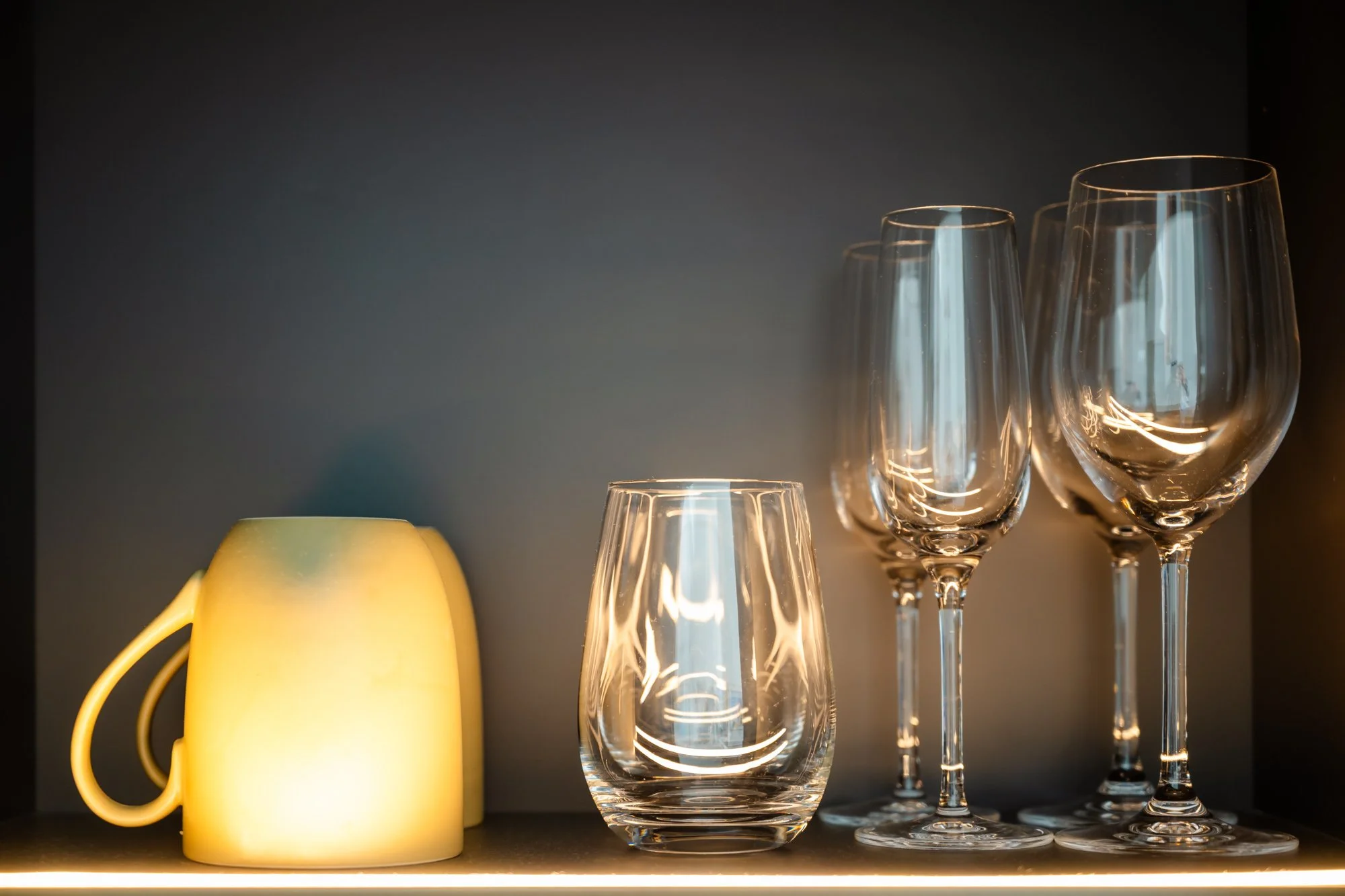
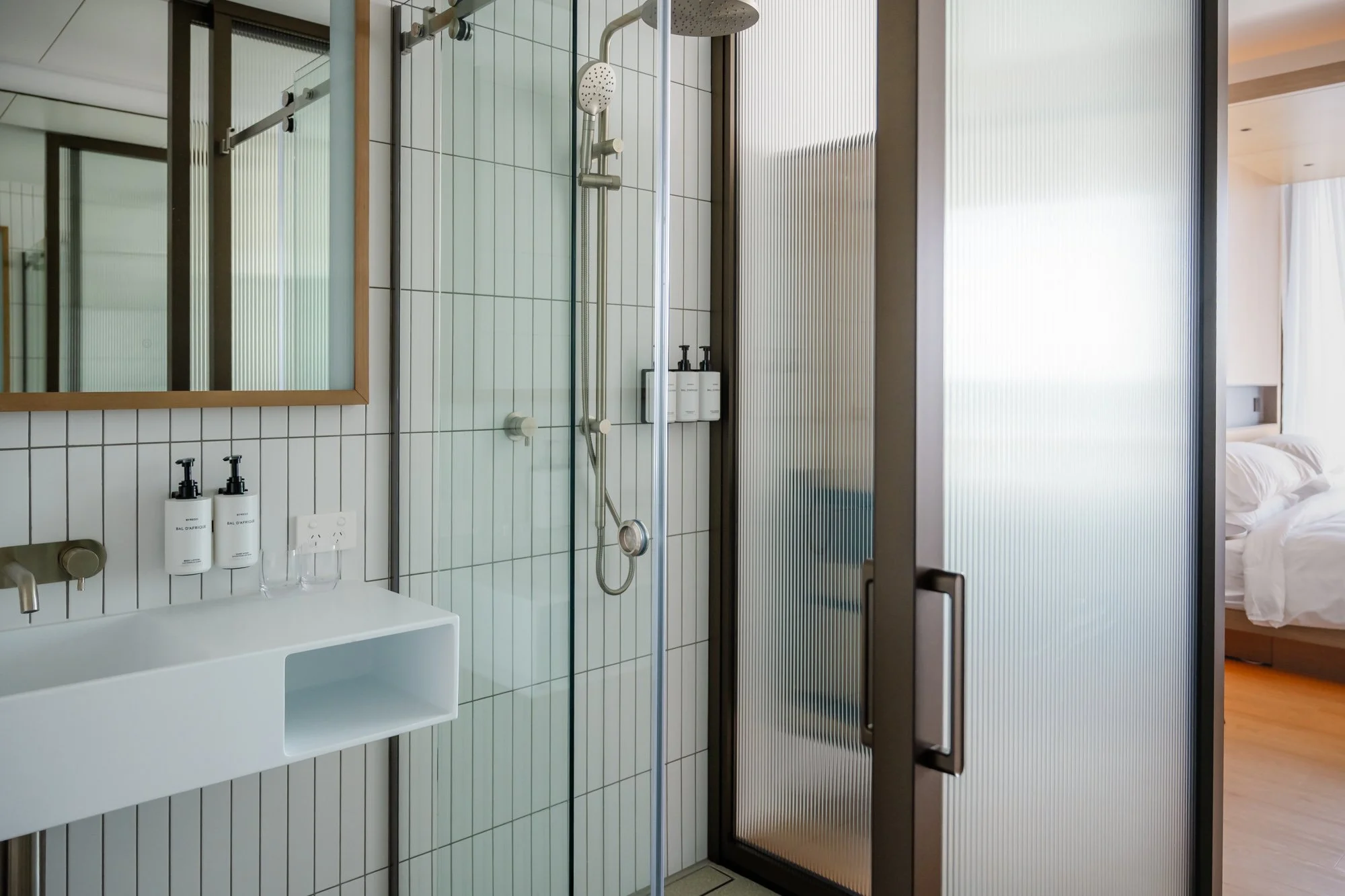
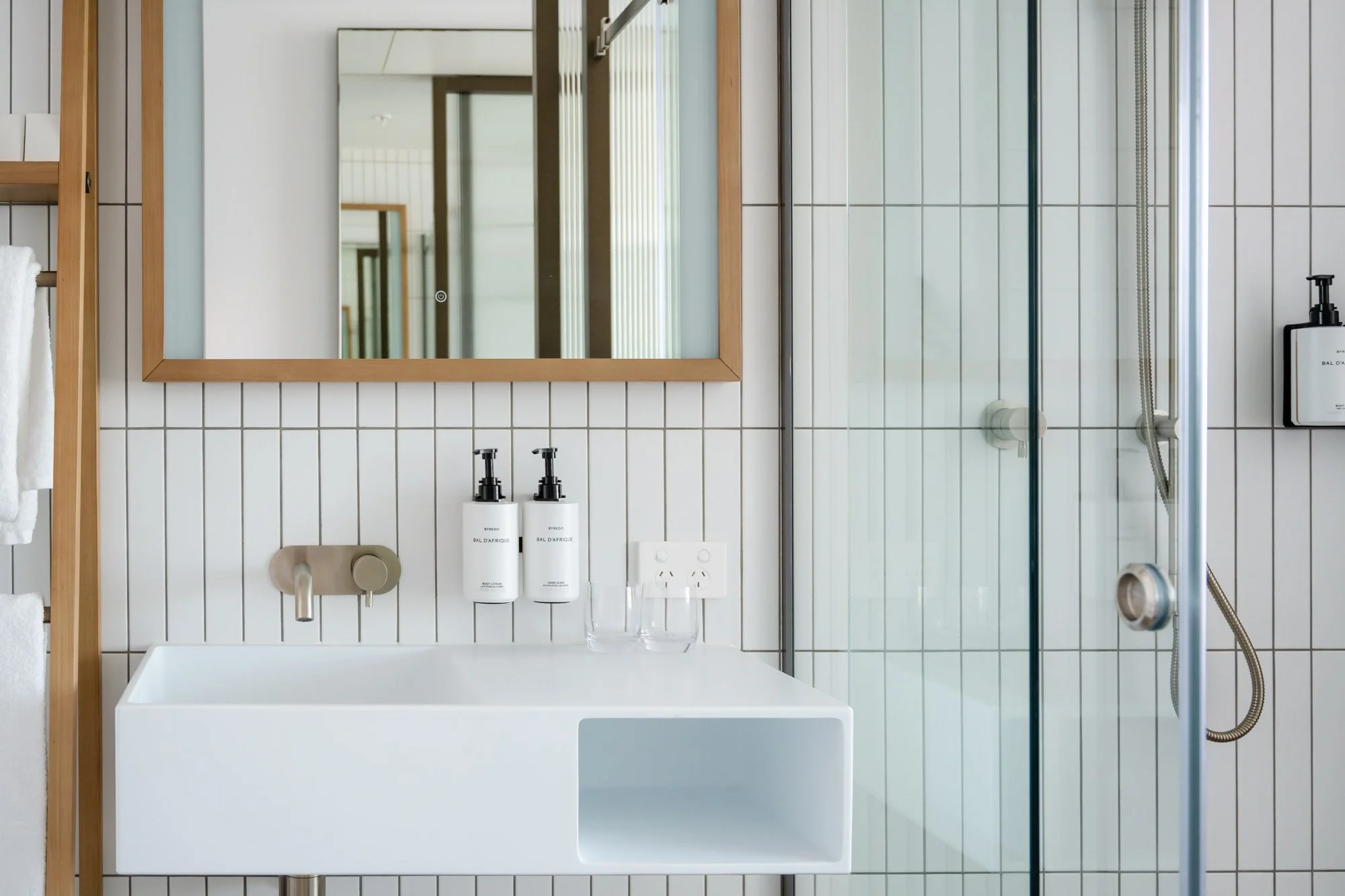
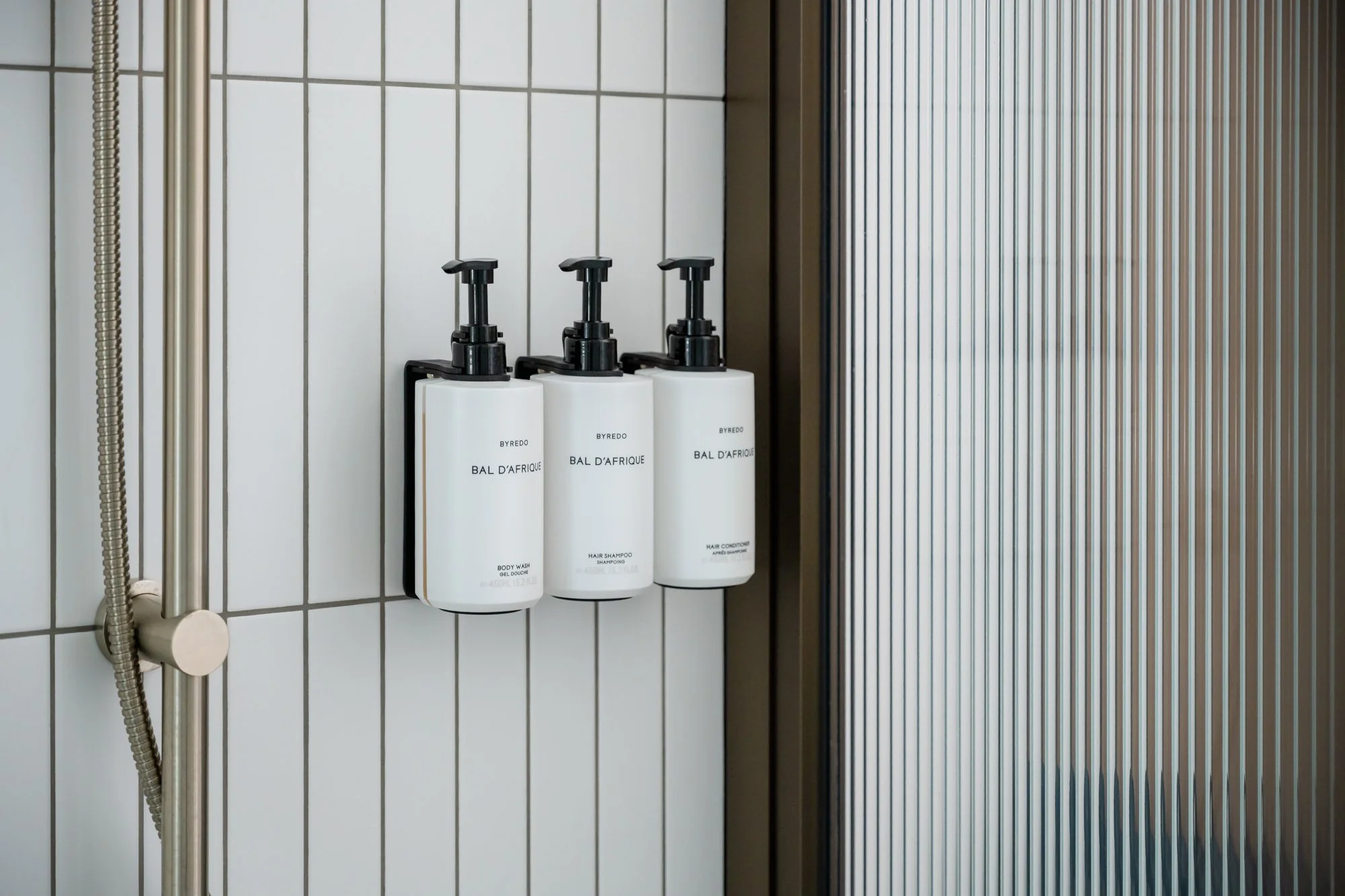
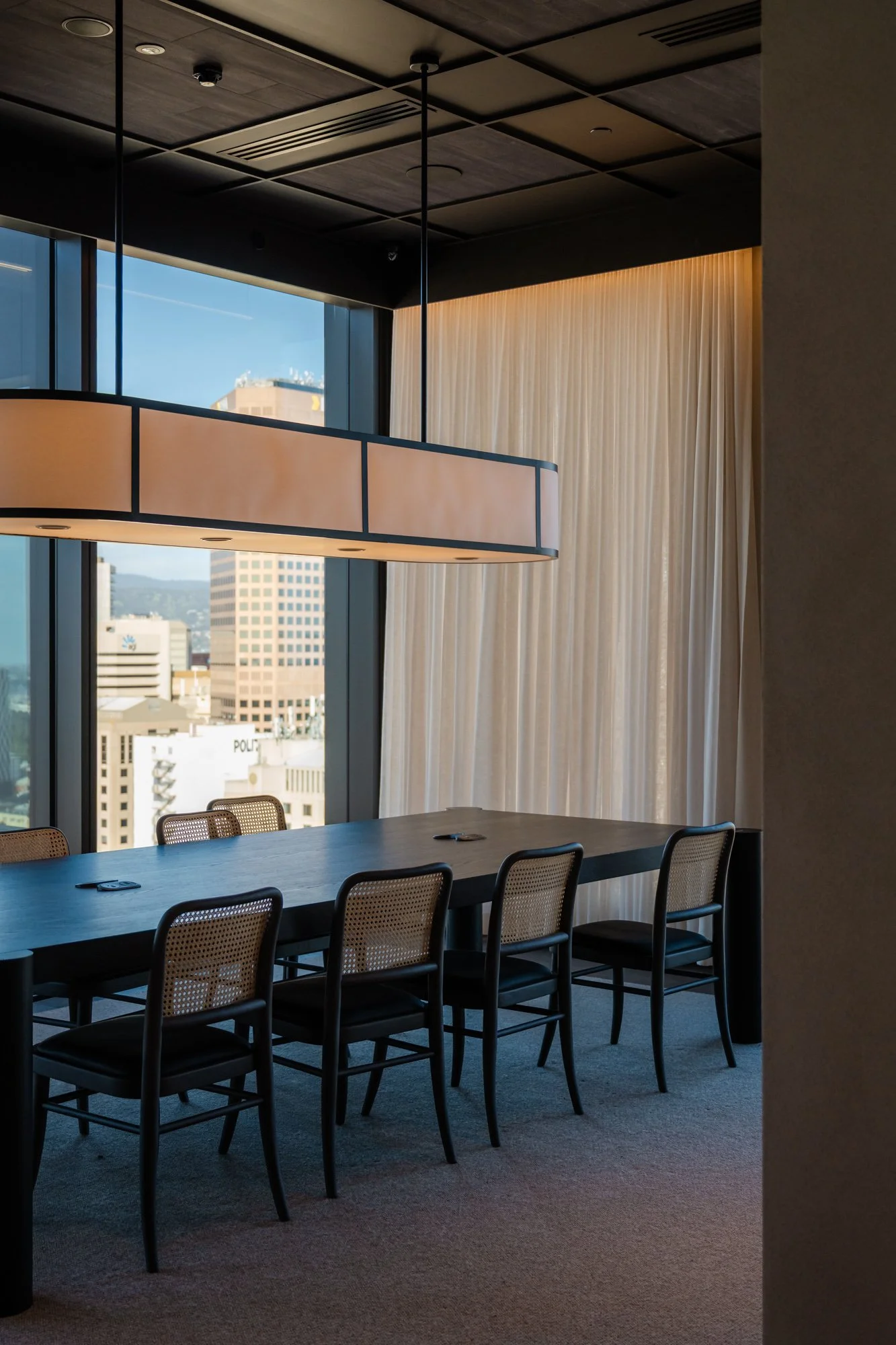
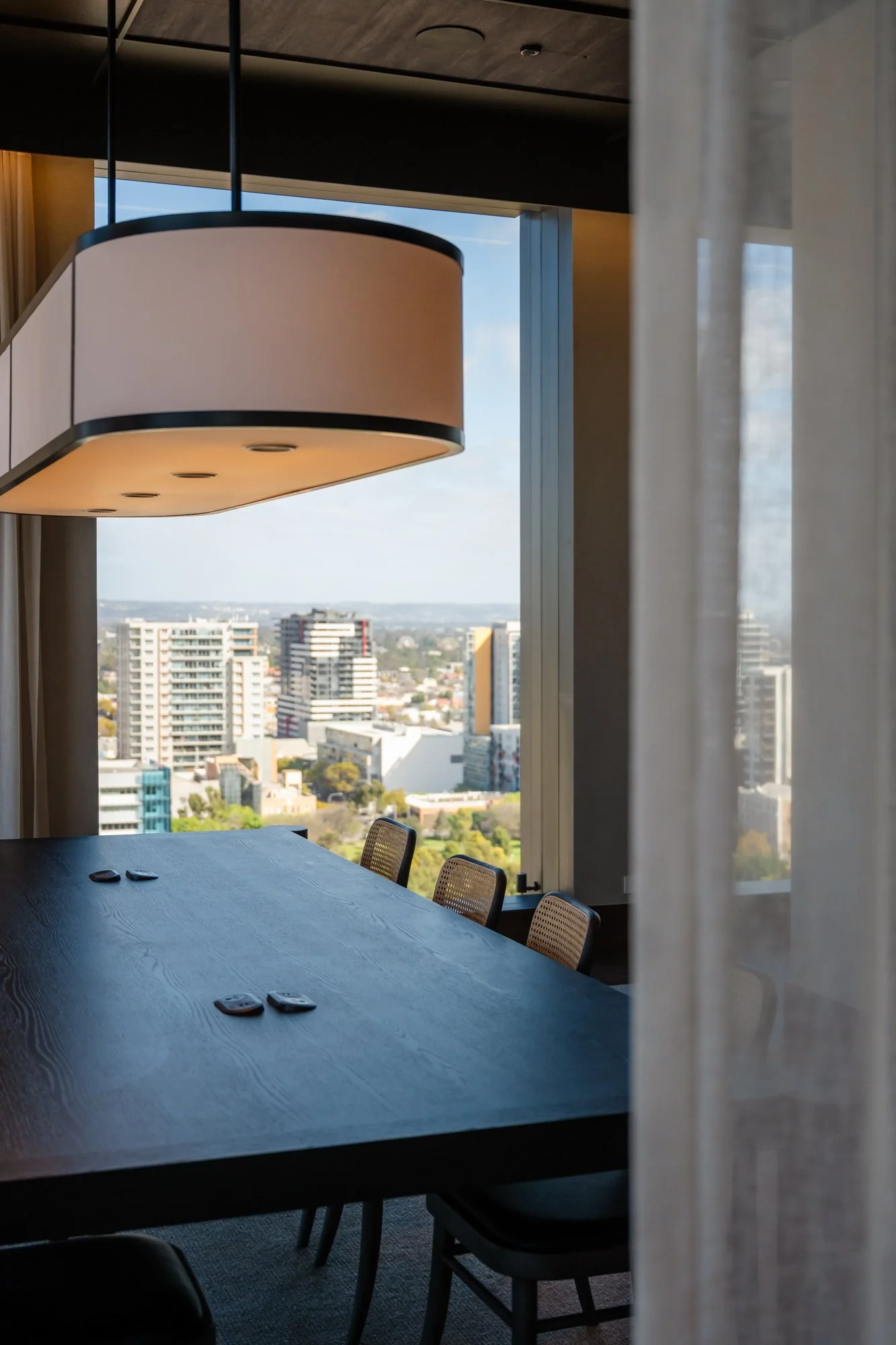
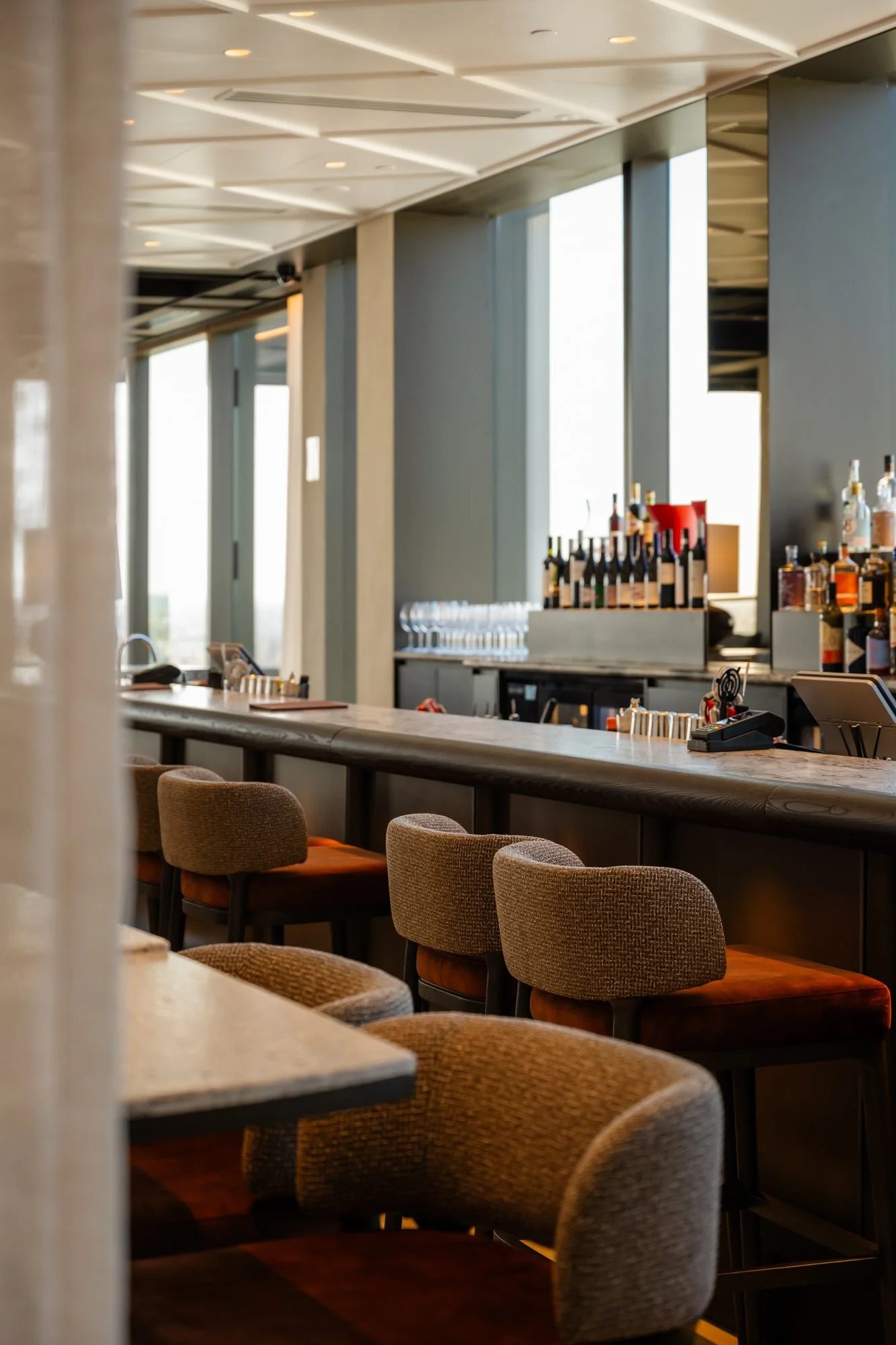
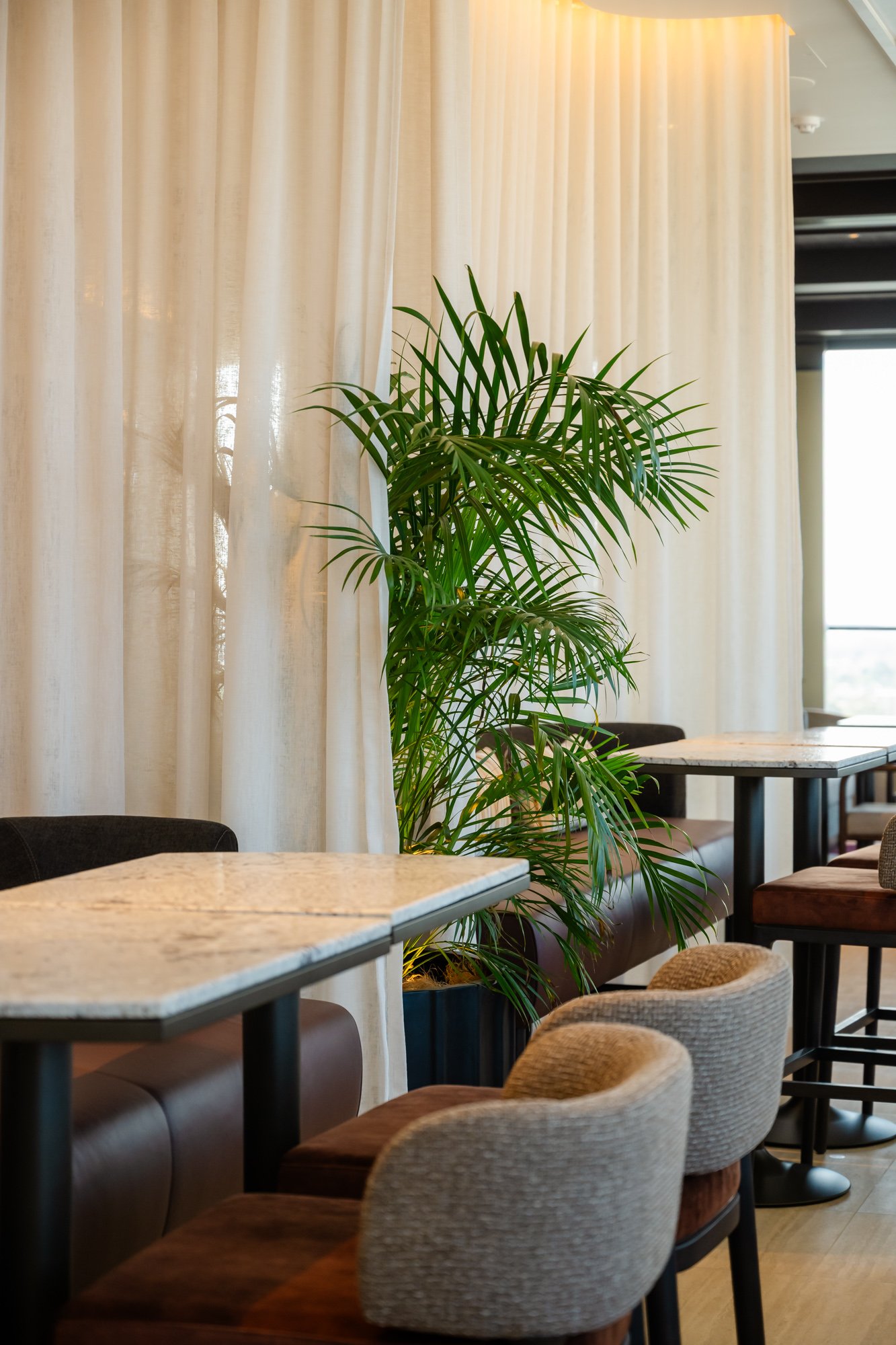
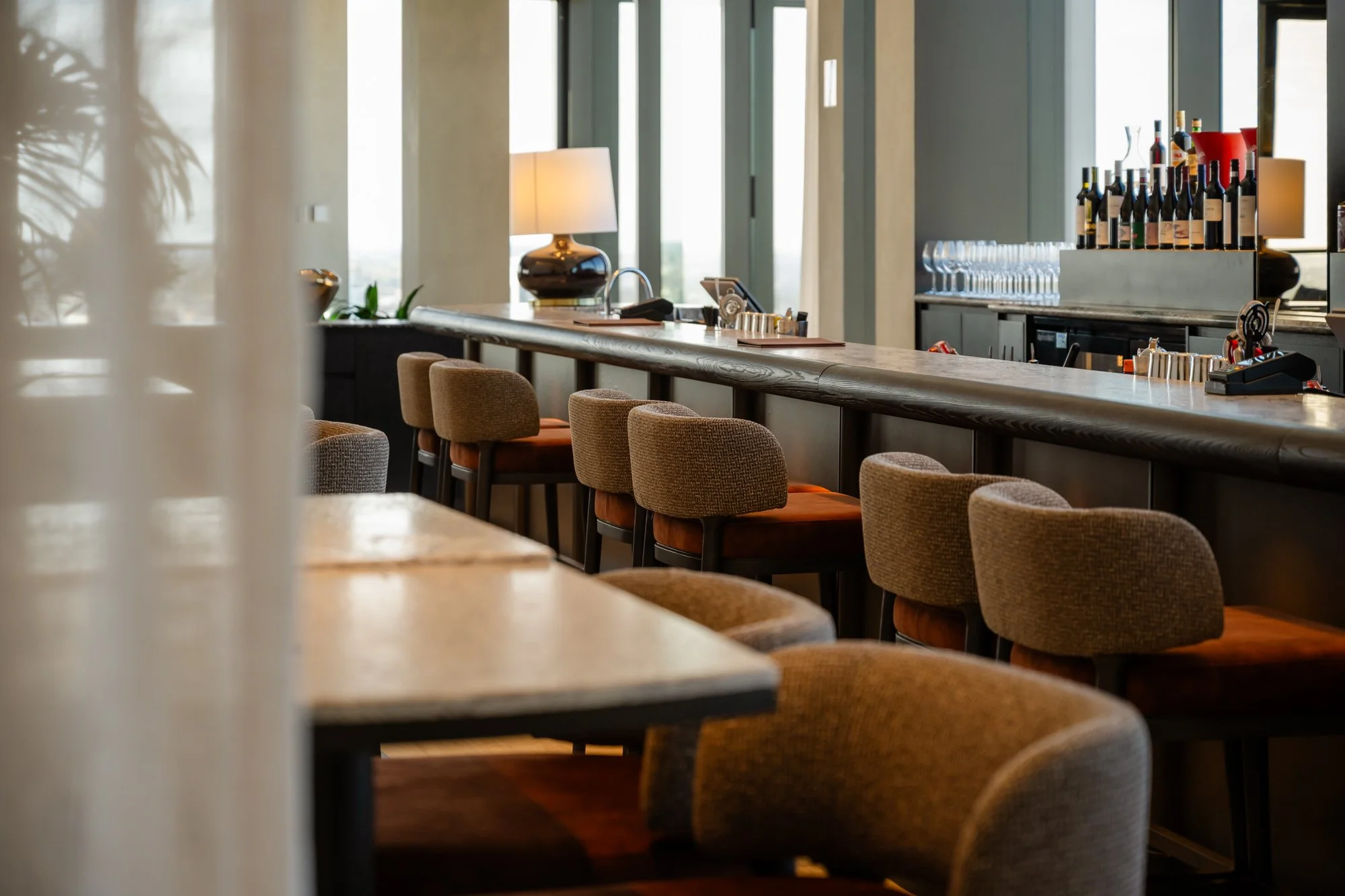
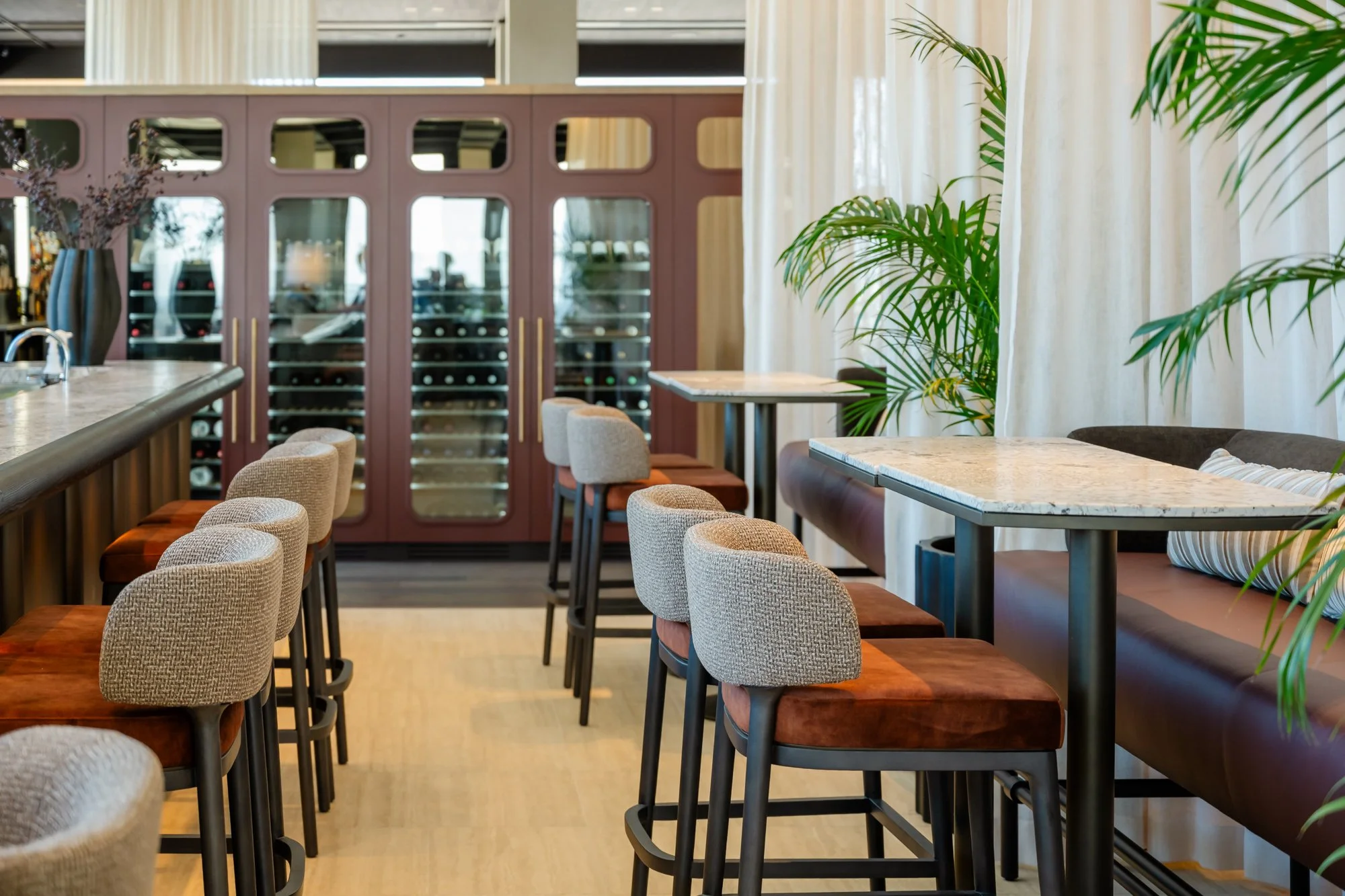
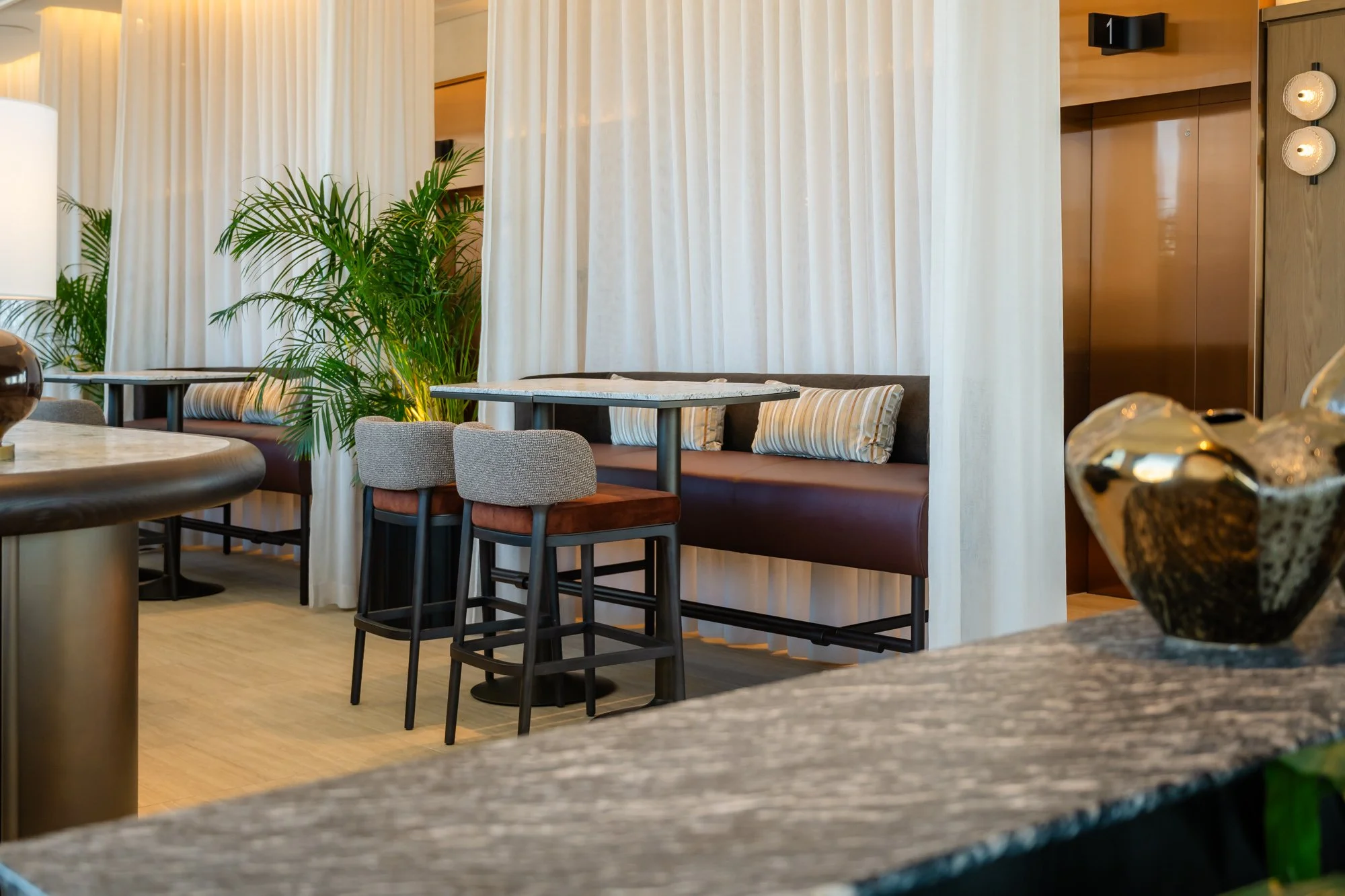
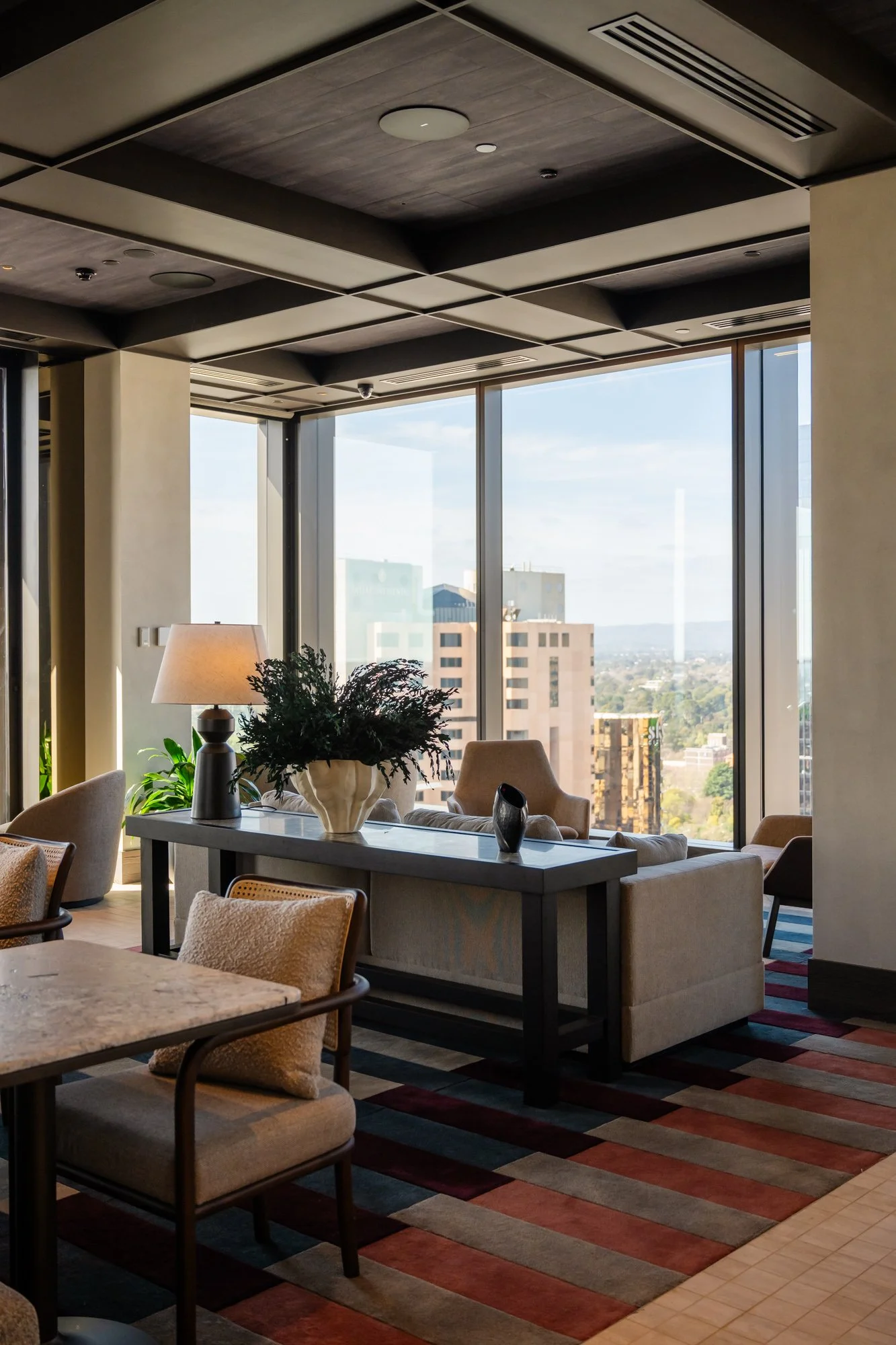
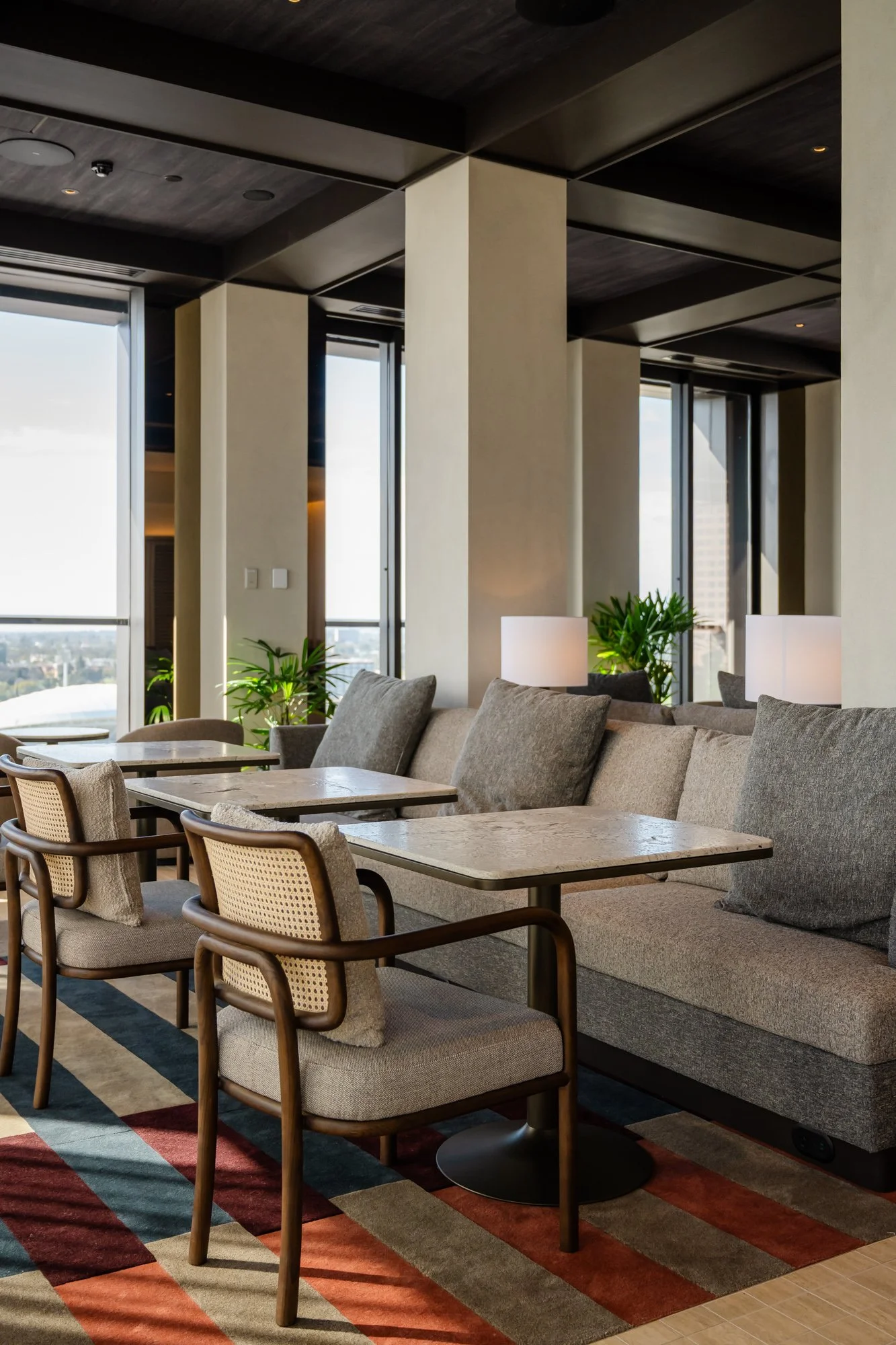
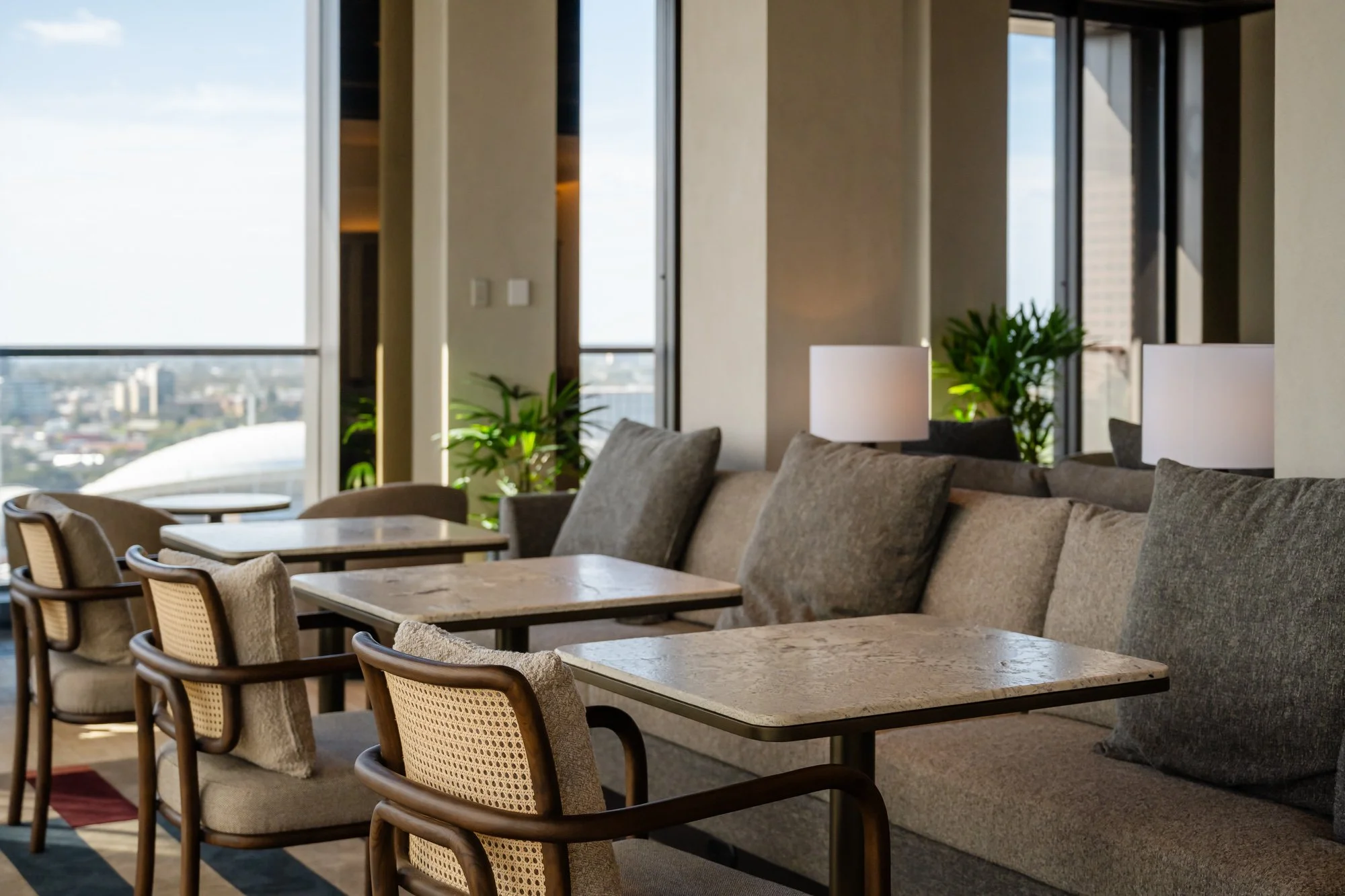
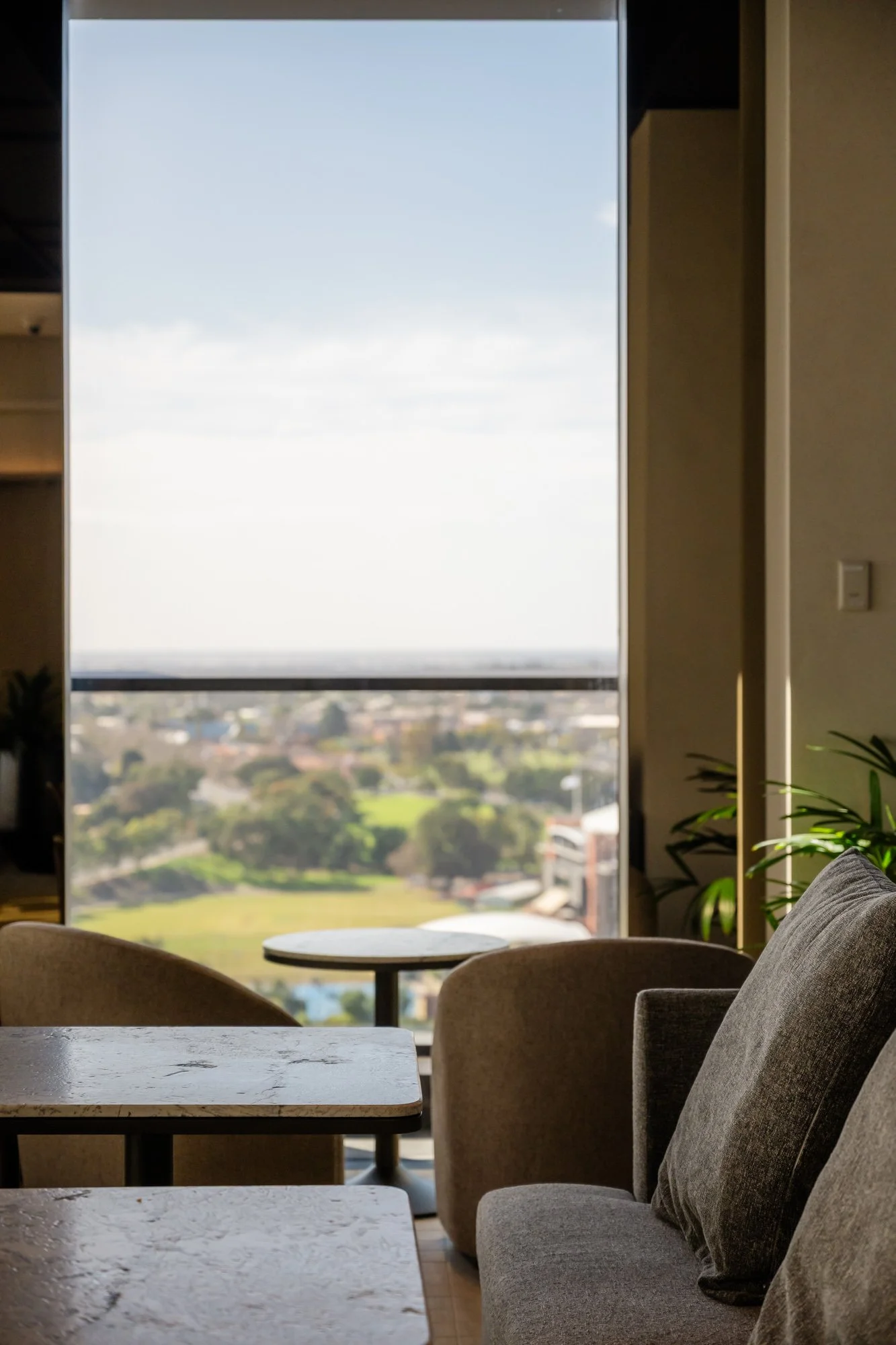
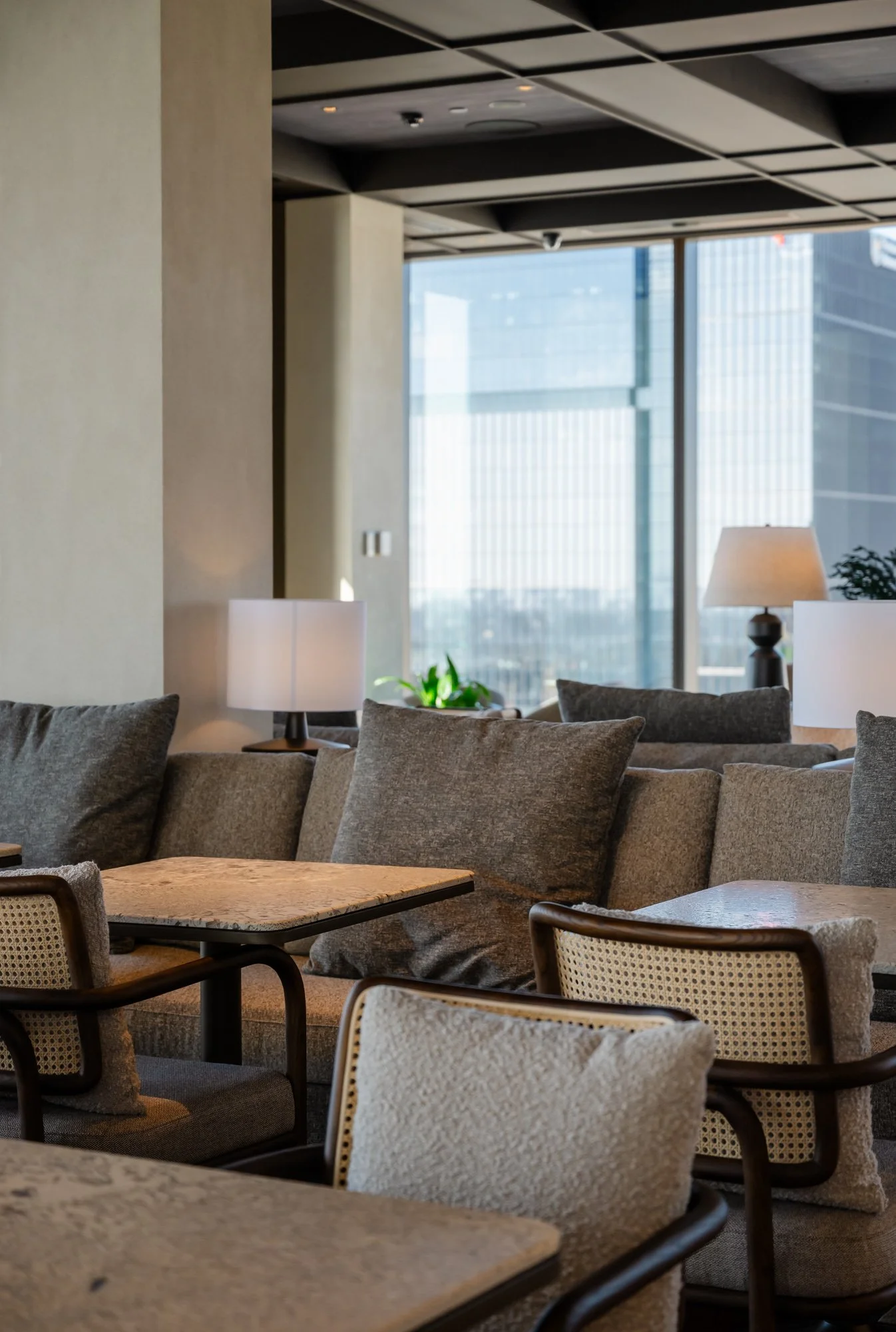
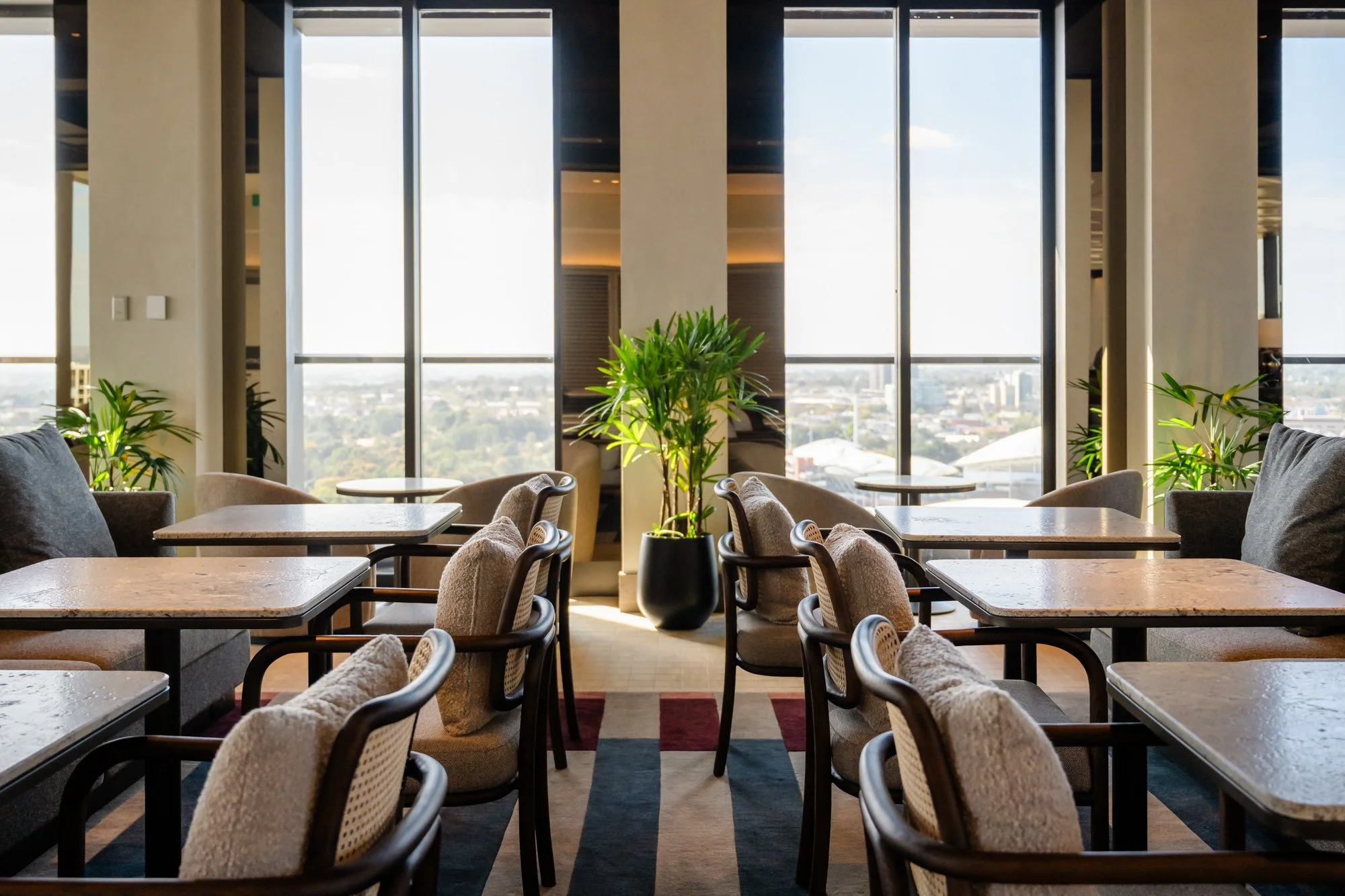
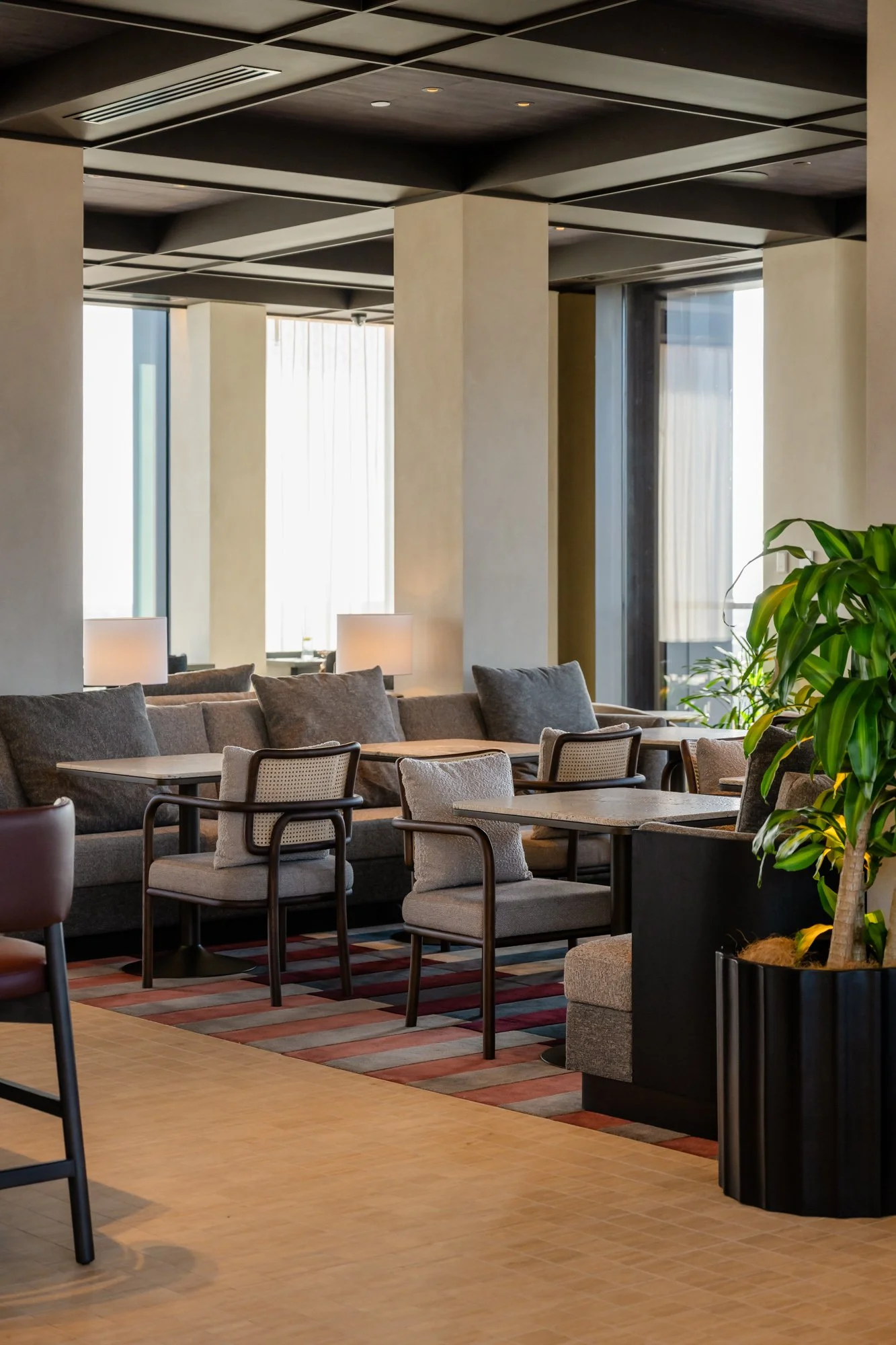
I’ve stayed at Little National Hotel in Sydney a few times and really loved it, so when Adelaide finally got its own Little National, I was pretty keen to try it out.
And what better excuse than a night in the city with a girlfriend and tickets to the theatre?
Little National Hotel Adelaide had only been open for about a week when we stayed, so I expected a few teething issues. New hotel, new staff, new systems... surely there had to be a few creaks somewhere.
But actually, the first impression was pretty seamless.
A very digital check-in
Check-in was easy, and you can check in online before you arrive. The hotel is embracing a digital approach, with the app and online touchpoints doing much of the work that traditionally happens at reception.
You can tell they’re trying to make the whole experience as effortless as possible, with less reliance on having to find a staff member every time you need something.
I quite like this approach, although I do think there’s something to be said for having the option of a good old-fashioned human when you need one. Or an in-room phone rather than downloading an app for services.
The room
The room was lovely.
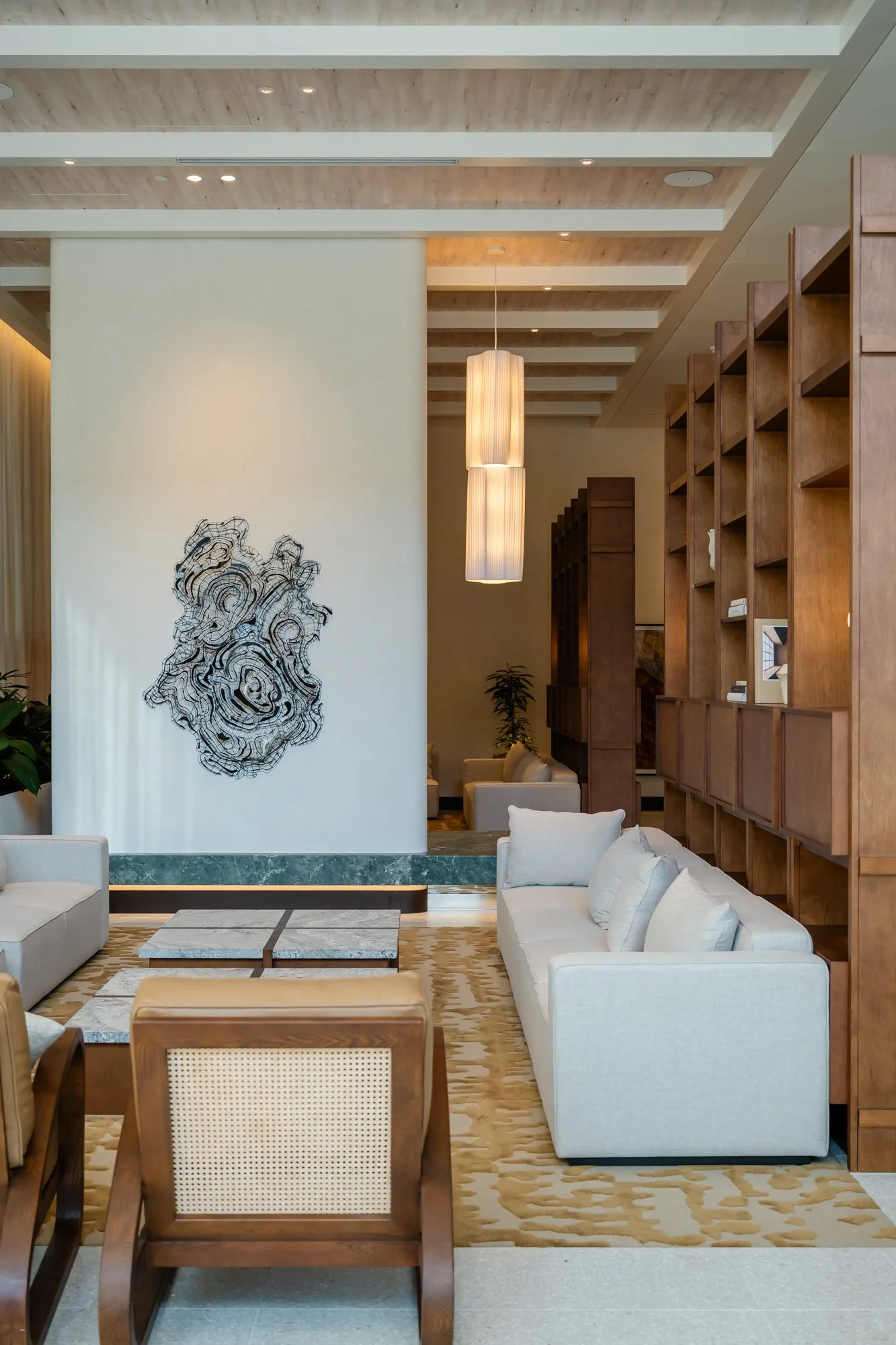
Little National rooms are designed around a really comfortable sleeping space rather than being huge, and the super king bed was every bit as good as I remembered from Sydney. The wall-to-wall window also made the room feel light and spacious. The hotel uses Byredo amenities, which are a lovely touch, along with all the other little details you’d expect from a new hotel.
There was a tiny bit of dust around the room, which I suspect is probably just part of being a brand-new building with new furnishings and window coverings still settling in. Nothing major, but something I’d keep an eye on if I were the hotel.
Otherwise, everything felt fresh, comfortable and beautifully considered.
But the real surprise is upstairs
For me, the standout space was the lounge and working area upstairs.
It’s one of those spaces where you could quite happily settle in for a few hours (or the day), whether you’re working, having a drink, catching up with a friend or just taking in the view.
And the views are fantastic.
Being high above North Terrace gives you a completely different perspective of Adelaide, with views stretching across the city and out towards the hills and coast. The Adelaide hotel is the brand’s most expansive property yet, with the rooftop spaces designed to make the most of that elevated position.
There’s also a rather spectacular view from the bathroom. Let’s just say there are a LOT of windows up there.
Perfect for a night in the city
For a theatre night, it was exactly what I was after.
We could check in, get changed, head out for the evening and then come back to a really comfortable bed without having to drive home. And being on North Terrace puts you within easy walking distance of the Adelaide Convention Centre, Adelaide Oval, Rundle Mall and the Leigh and Peel Street precinct.
A few little things will inevitably be refined as the hotel settles into life. That's completely normal for somewhere that's only been open a week.
But overall? I was impressed.
I already knew I liked the Little National Hotel concept from Sydney, and it’s nice to see Adelaide get its own version, with the brand’s signature comfort and design but with a distinctly Adelaide outlook.
Would I stay again?
Absolutely.
From West to South… Ceduna and Kangaroo Island
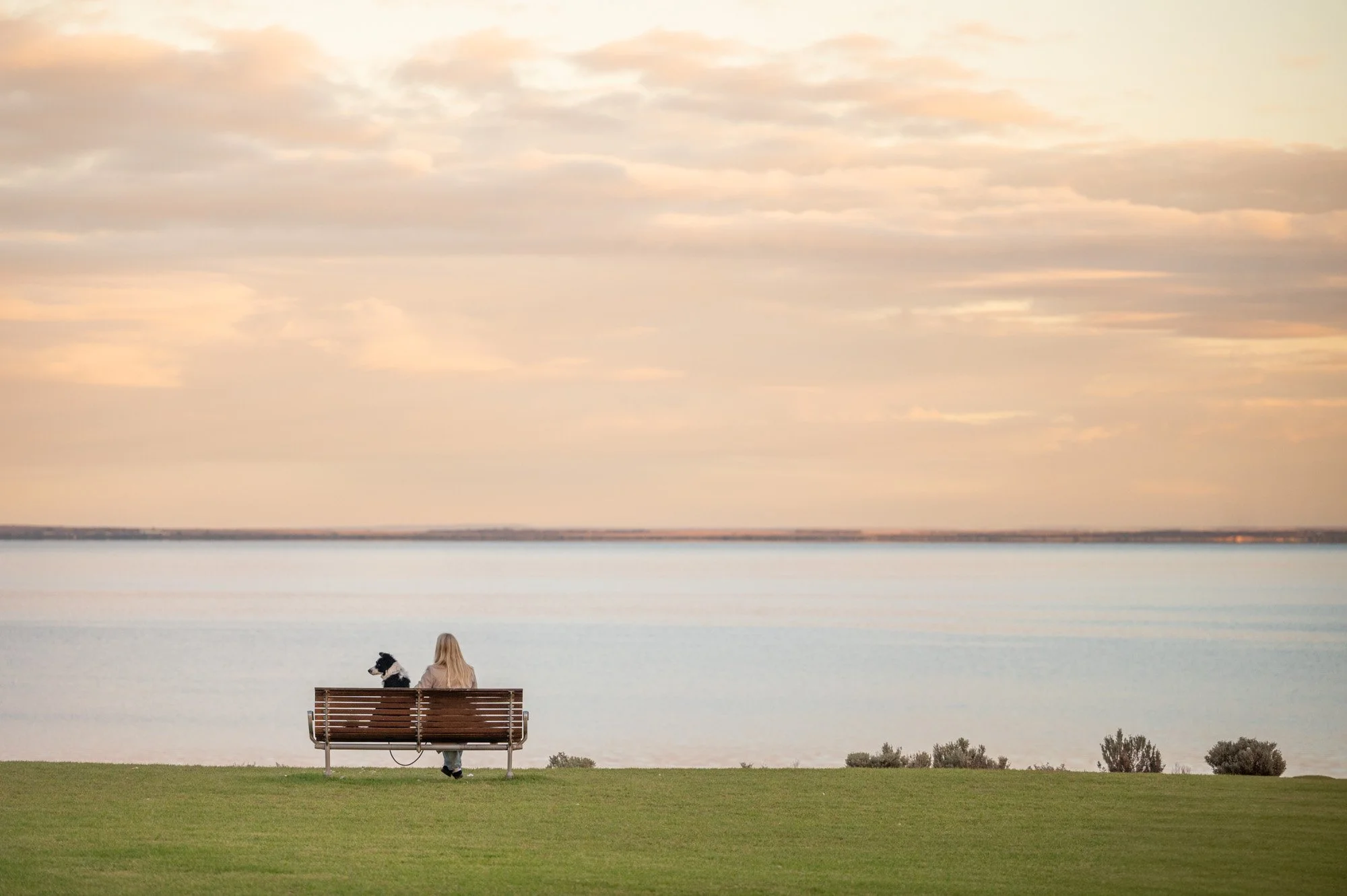
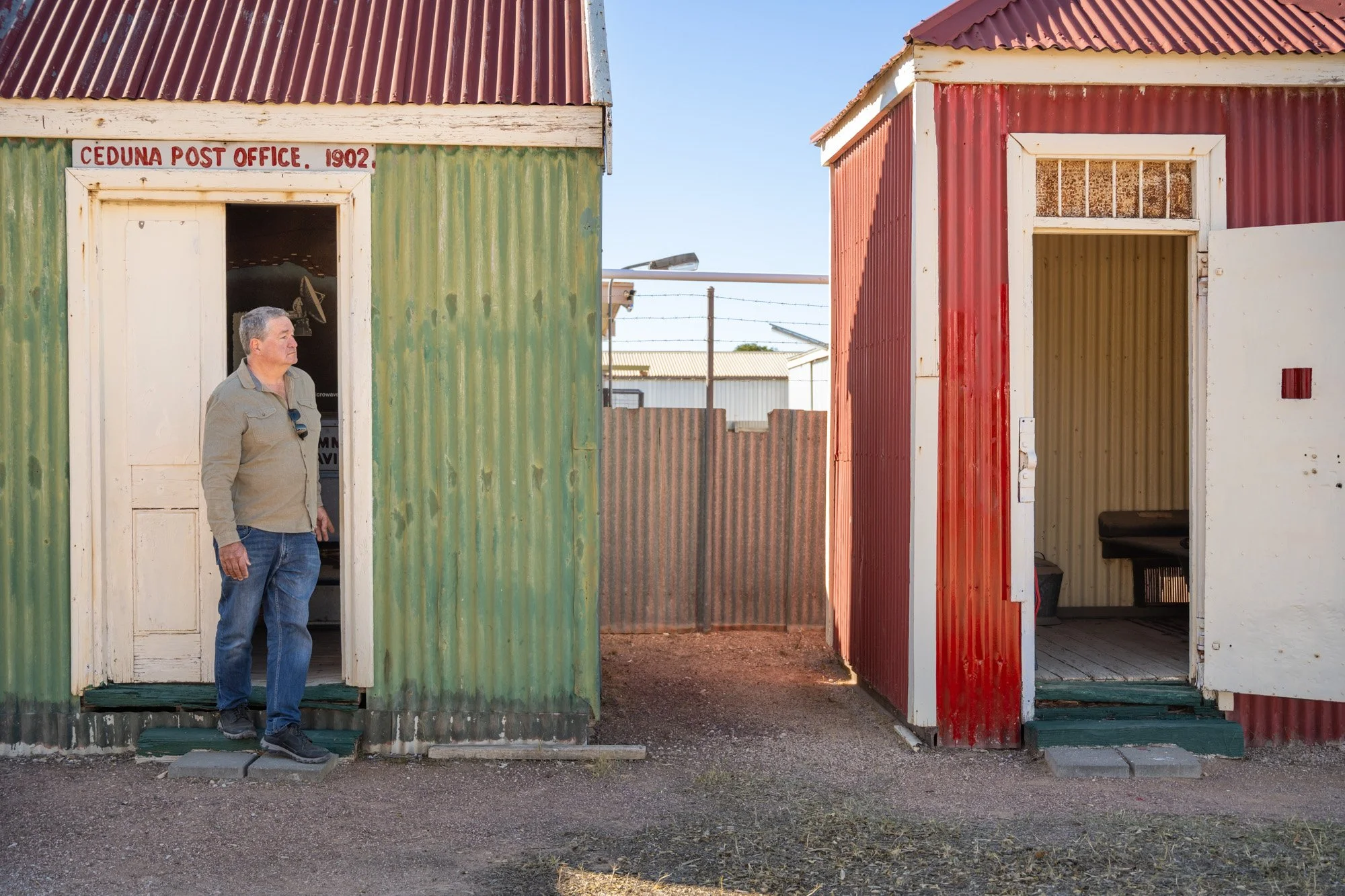
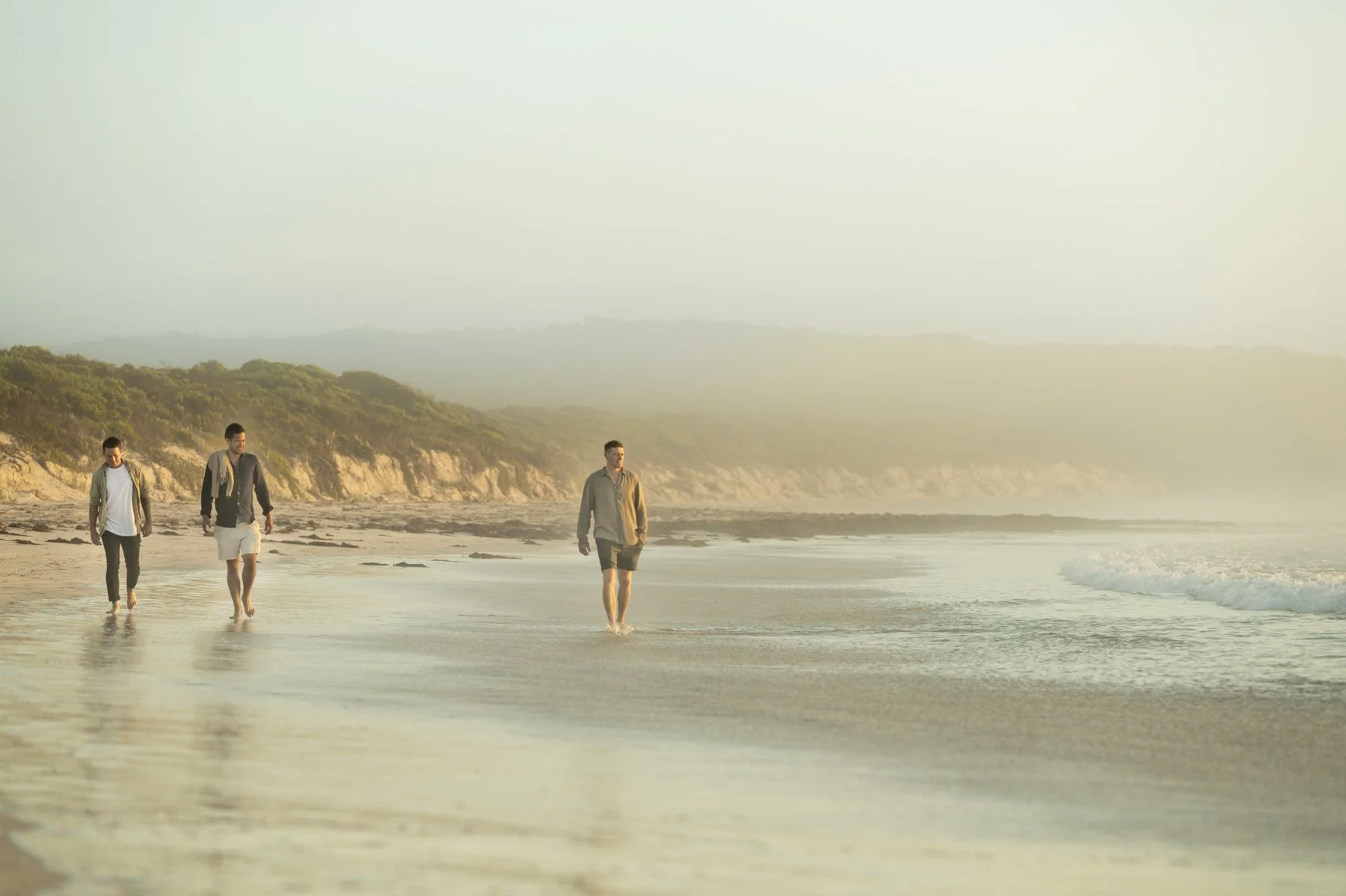

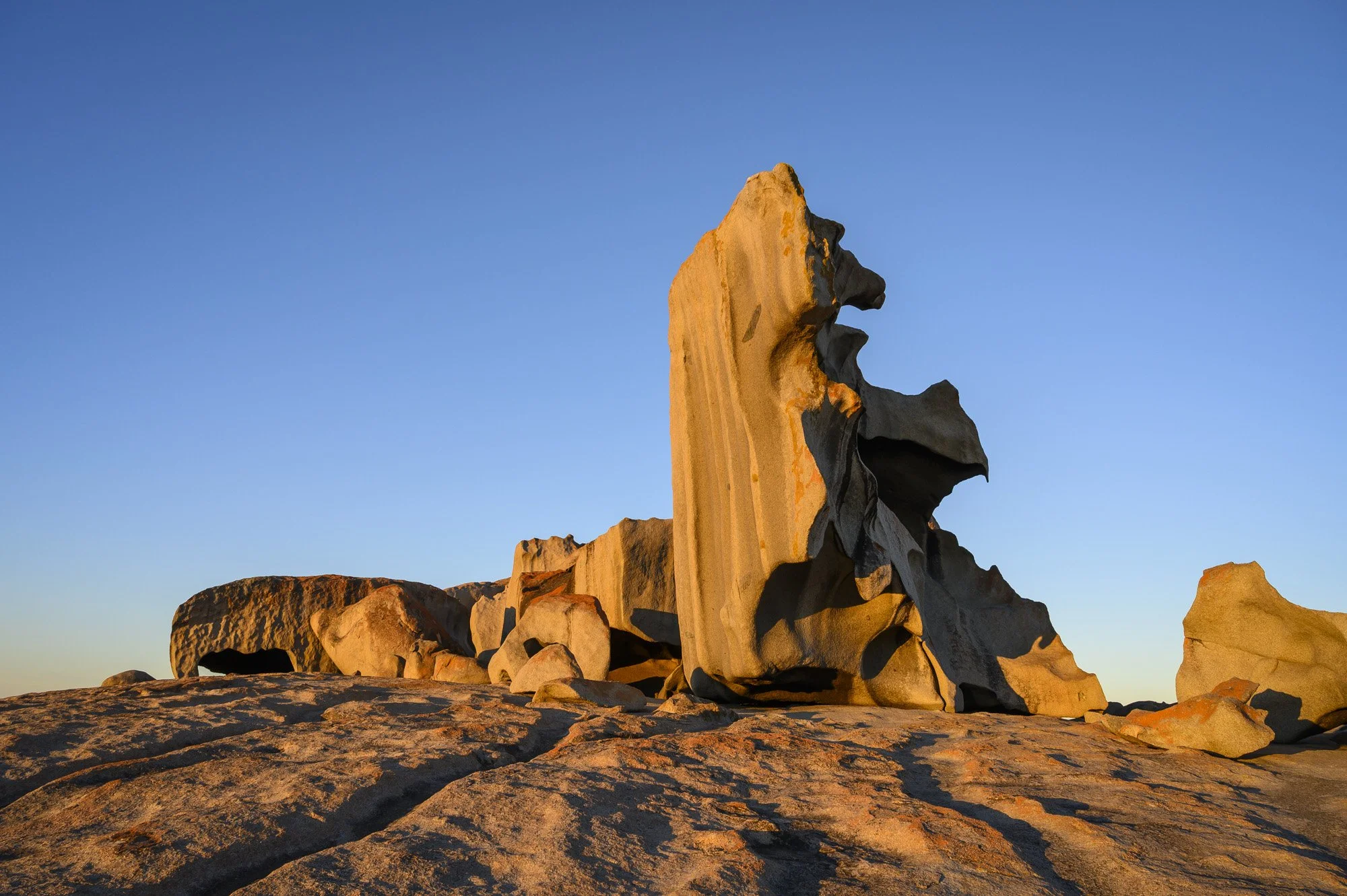
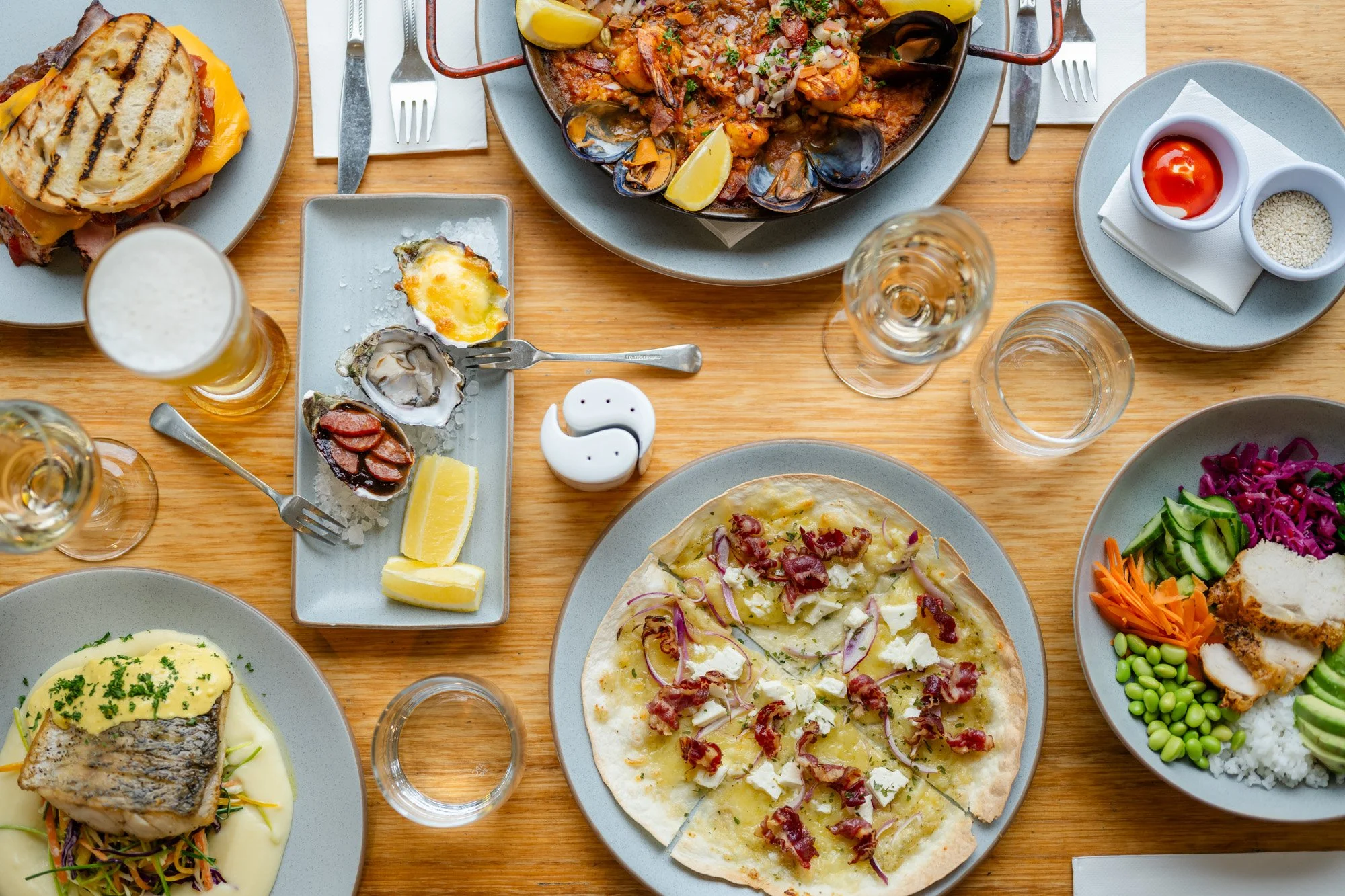
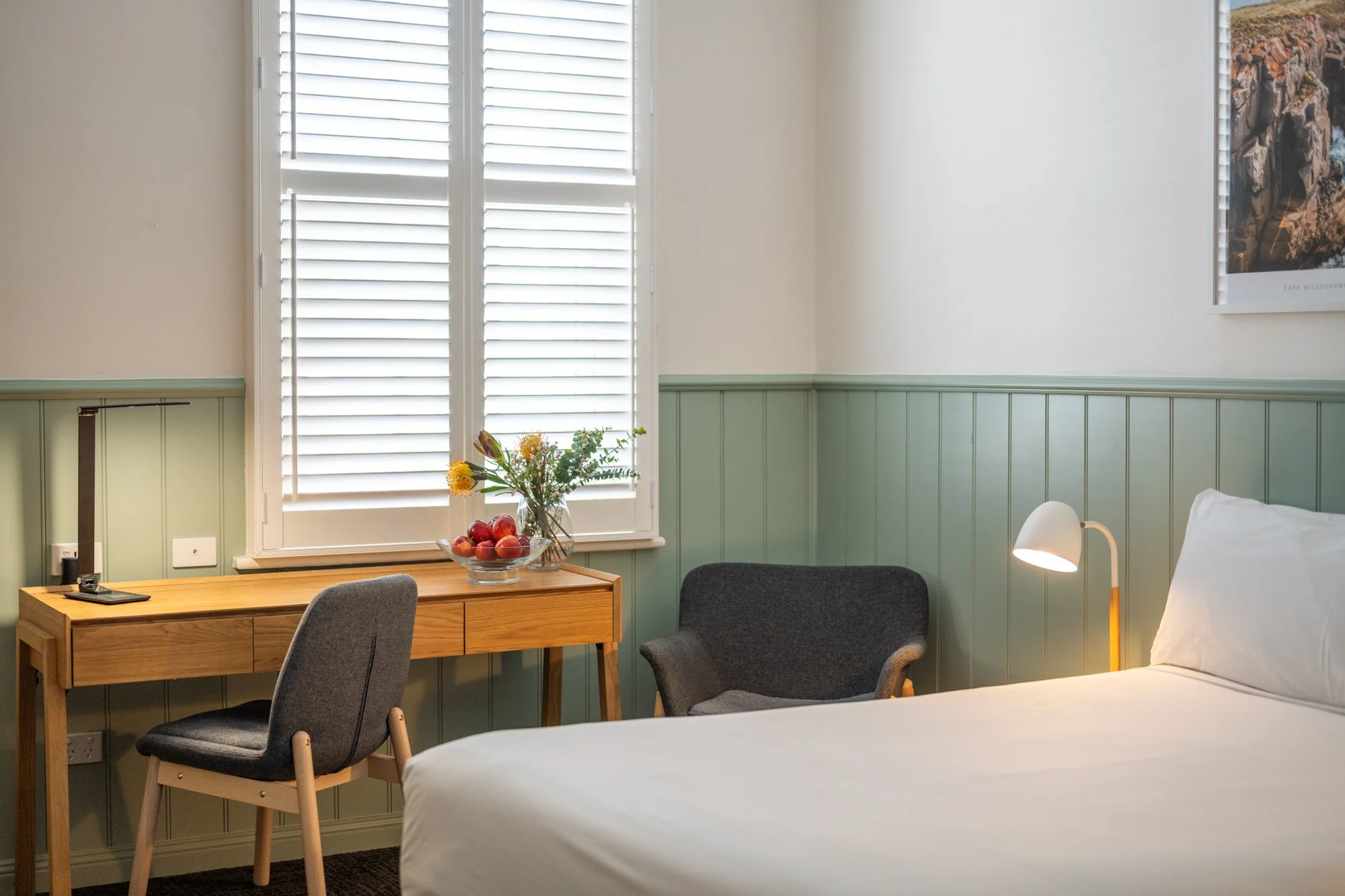
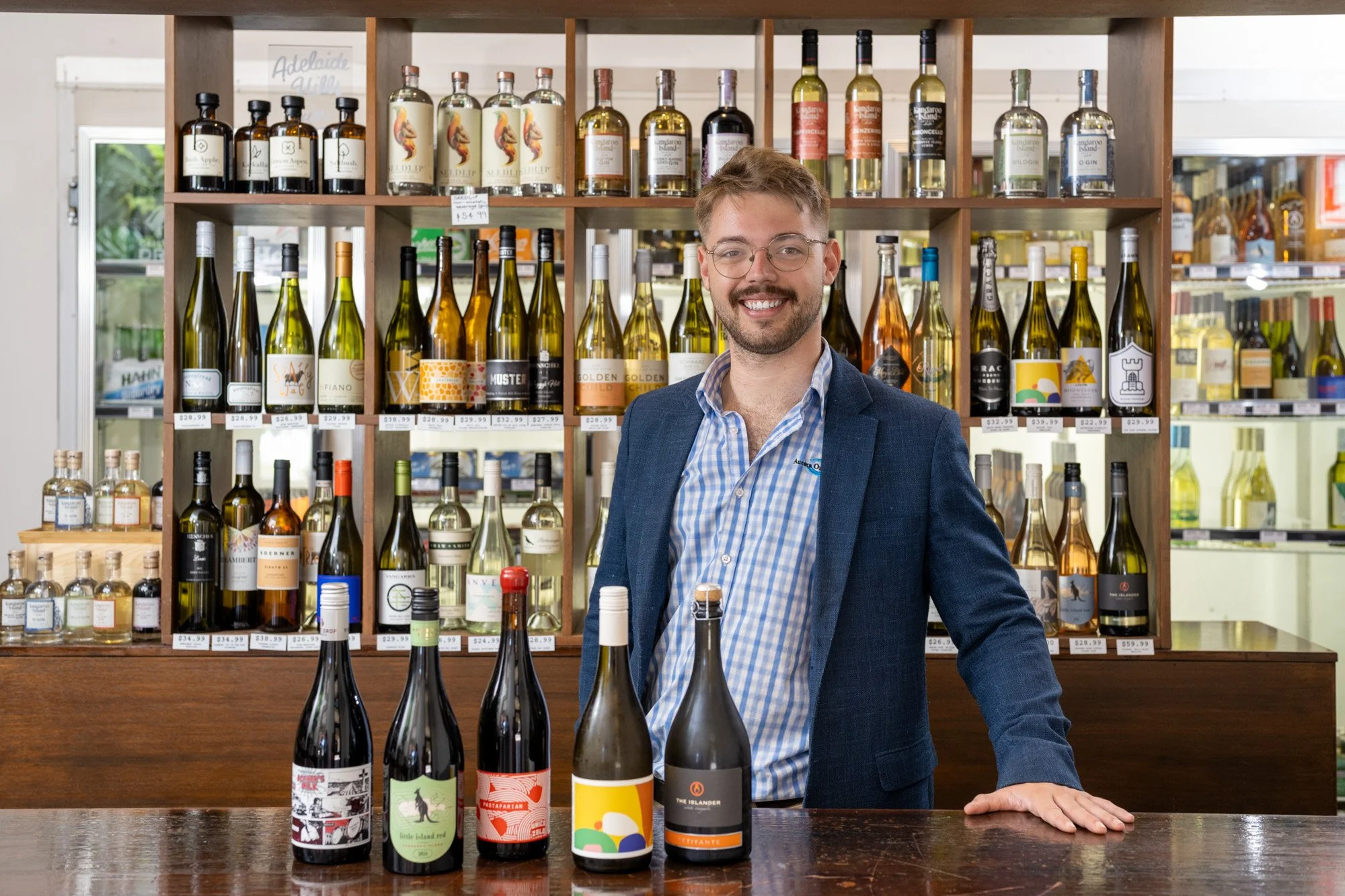
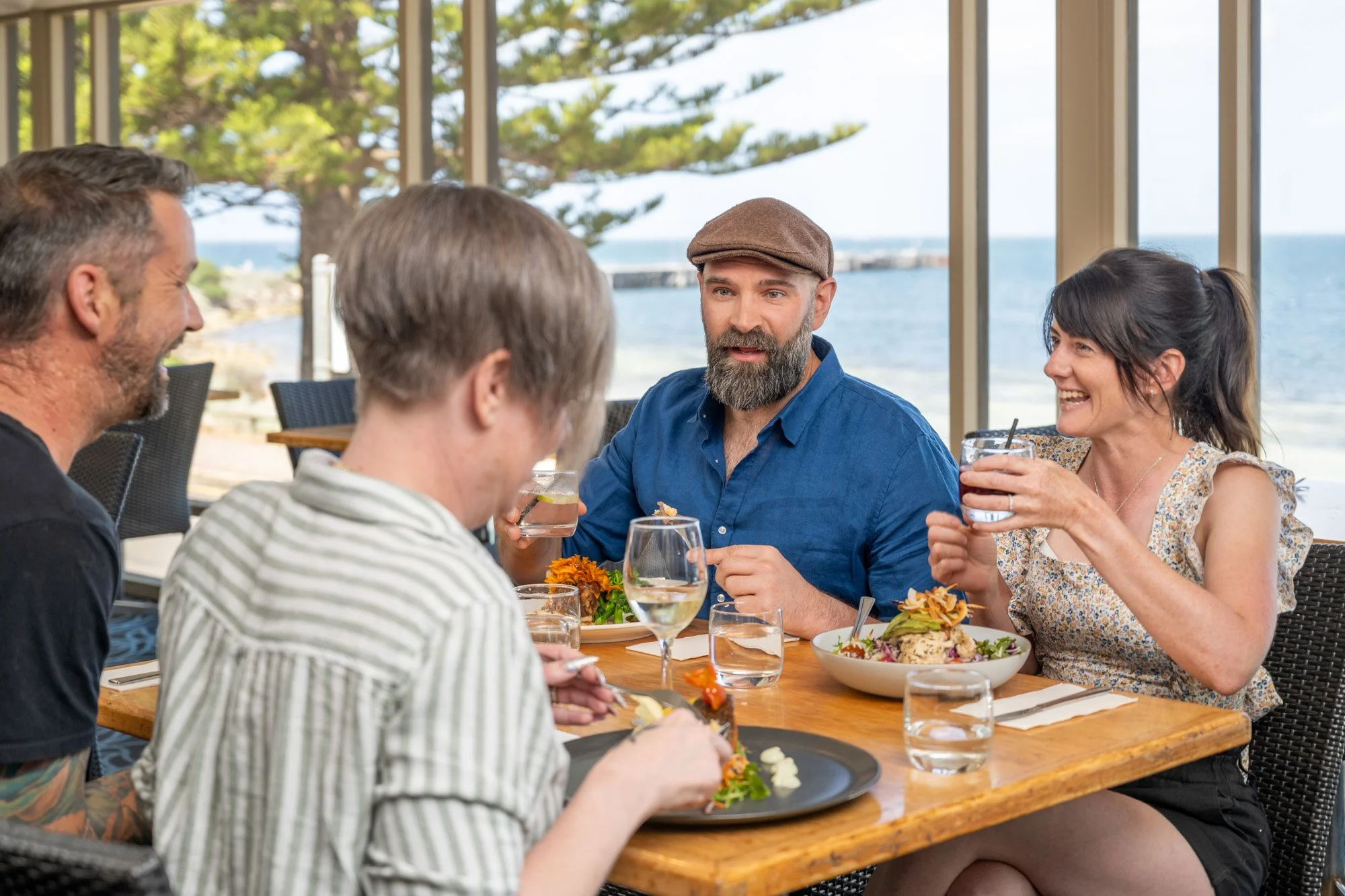
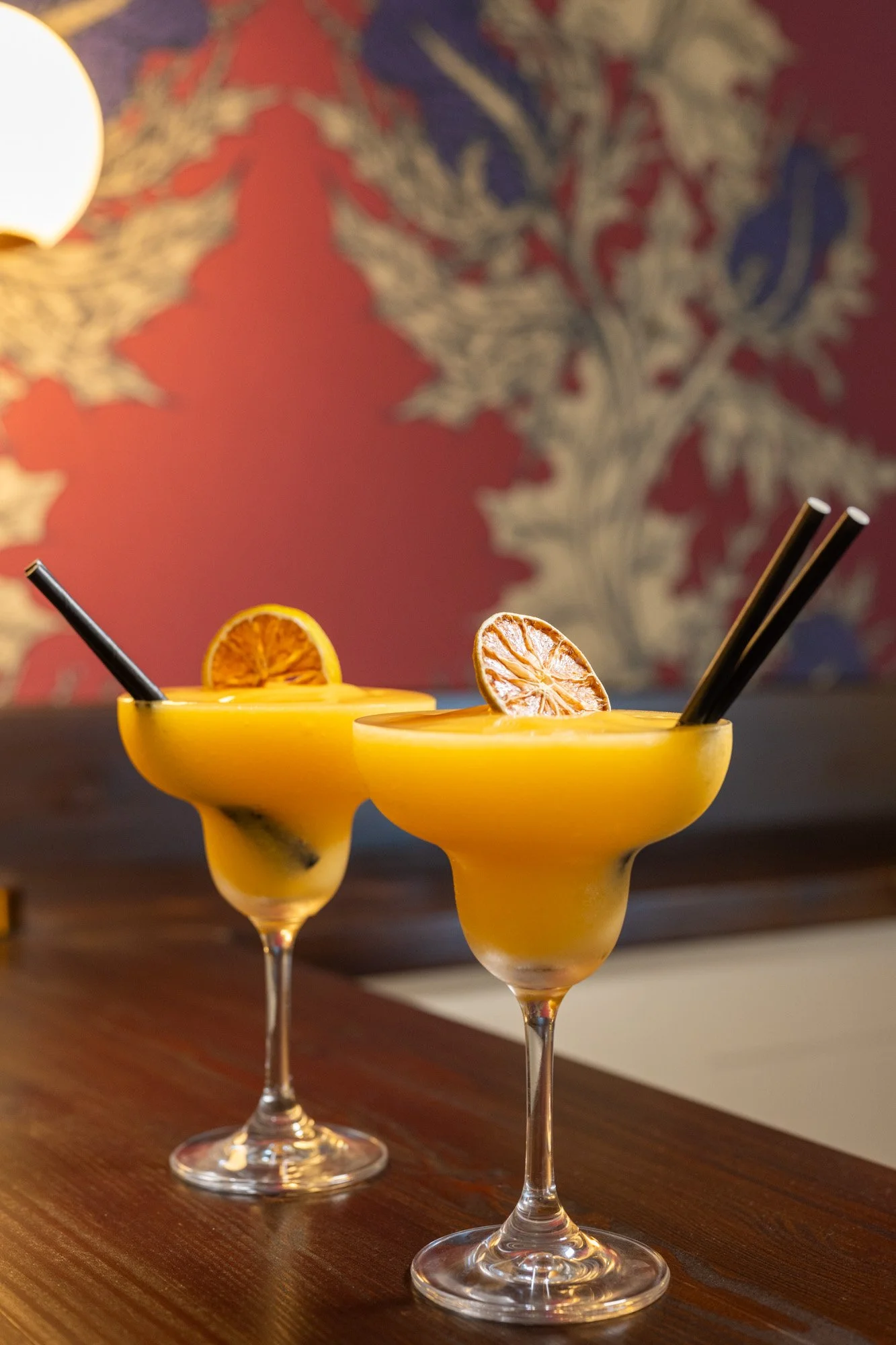
Who Needs Some Photos? (Silly question, I know.)
I’m heading west again this October long weekend, and I thought I’d put it out there in case anyone along the way needs some new photography.
I’ll be making the trip from Adelaide to Ceduna over the long weekend, travelling through the Eyre Peninsula, and then heading back again.
Which means if you’re a business, tourism operator, accommodation provider, food producer, restaurant, winery, tourism organisation or anyone else who could use some fresh images, this is a pretty good opportunity to get me out your way without having to cover the full cost of travel.
I’m already going.
You just need to give me a reason to stop!
Eyre Peninsula
There are so many great businesses and places along the Eyre Peninsula that could do with a fresh batch of photography.
Maybe you’ve renovated your accommodation.
Maybe you’ve got a new menu.
Perhaps you've launched a new product, need some updated images for your website or social media, or simply haven't had a decent library of professional photos taken for a while.
I can shoot along the route to Ceduna, around the Eyre Peninsula while I'm there, or on the way home.
So if you're somewhere between Adelaide and Ceduna, or anywhere across the Eyre Peninsula, get in touch.
And then… Kangaroo Island
The following week, I’ll be heading to Kangaroo Island for another photography trip.
Again, I’ll already be there, camera in hand.
So if you’re a business on Kangaroo Island that needs photography, this is another opportunity to take advantage of shared travel costs.
Accommodation, tourism, food, wildlife, experiences, products, people, landscapes — I'm happy to create whatever images you need to help tell your story.
Why now?
Because getting a photographer to travel specifically to you can add a significant amount to the cost of a shoot.
But when I'm already making the trip, we can share those travel costs.
It means you get professional photography without having to foot the entire travel bill yourself.
And I get another excuse to stop, explore somewhere new and take photographs.
Seems like a pretty good arrangement to me!
So if you're on the Eyre Peninsula, anywhere between Adelaide and Ceduna, or on Kangaroo Island, and you've been thinking about getting some new photography done, send me a message.
Let's see if we can fit you into the trip.
I'll be heading west over the October long weekend and then over to Kangaroo Island the following week.
Where should I stop?
Life on the Beach: Gili Trawangan
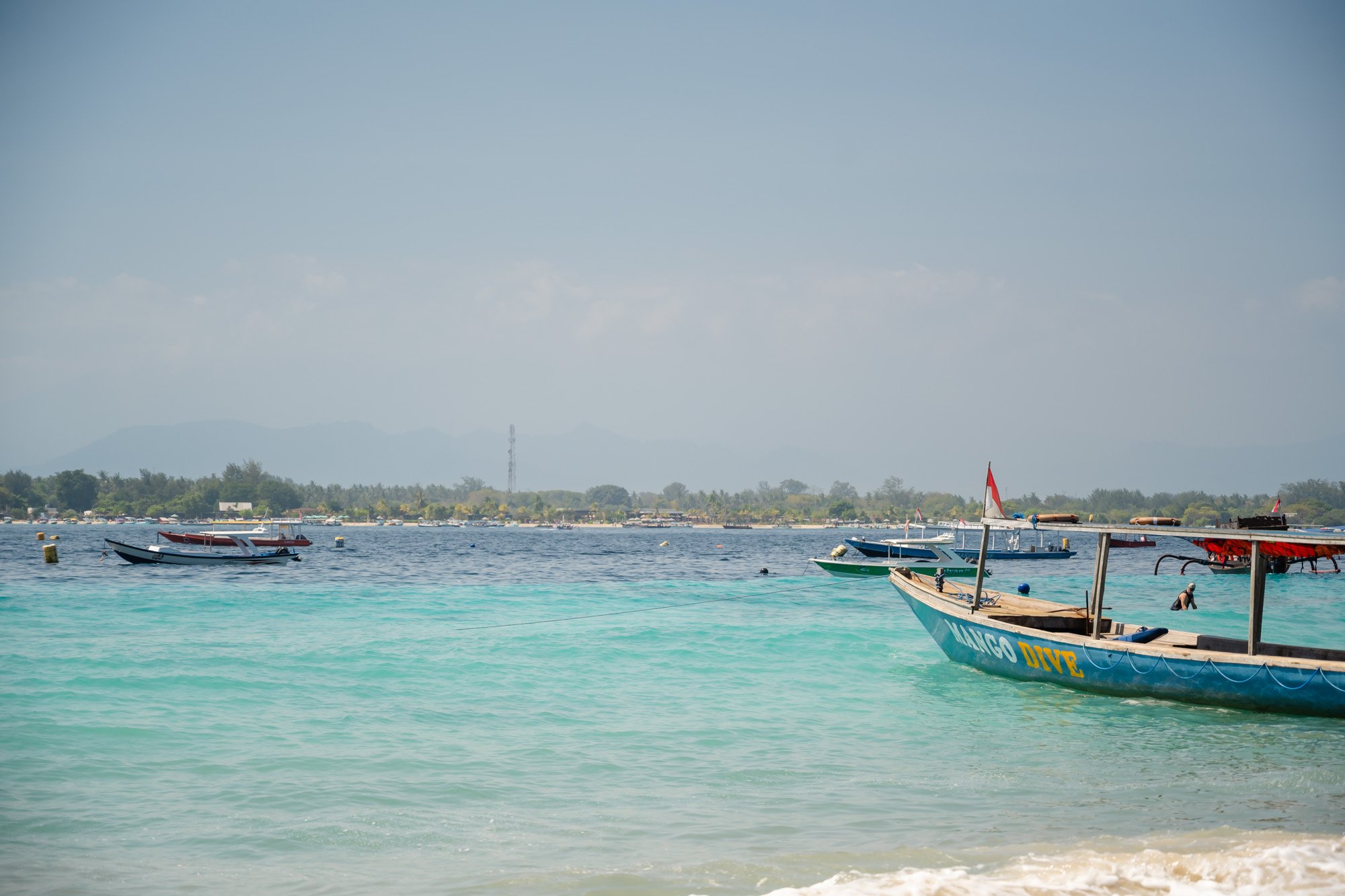
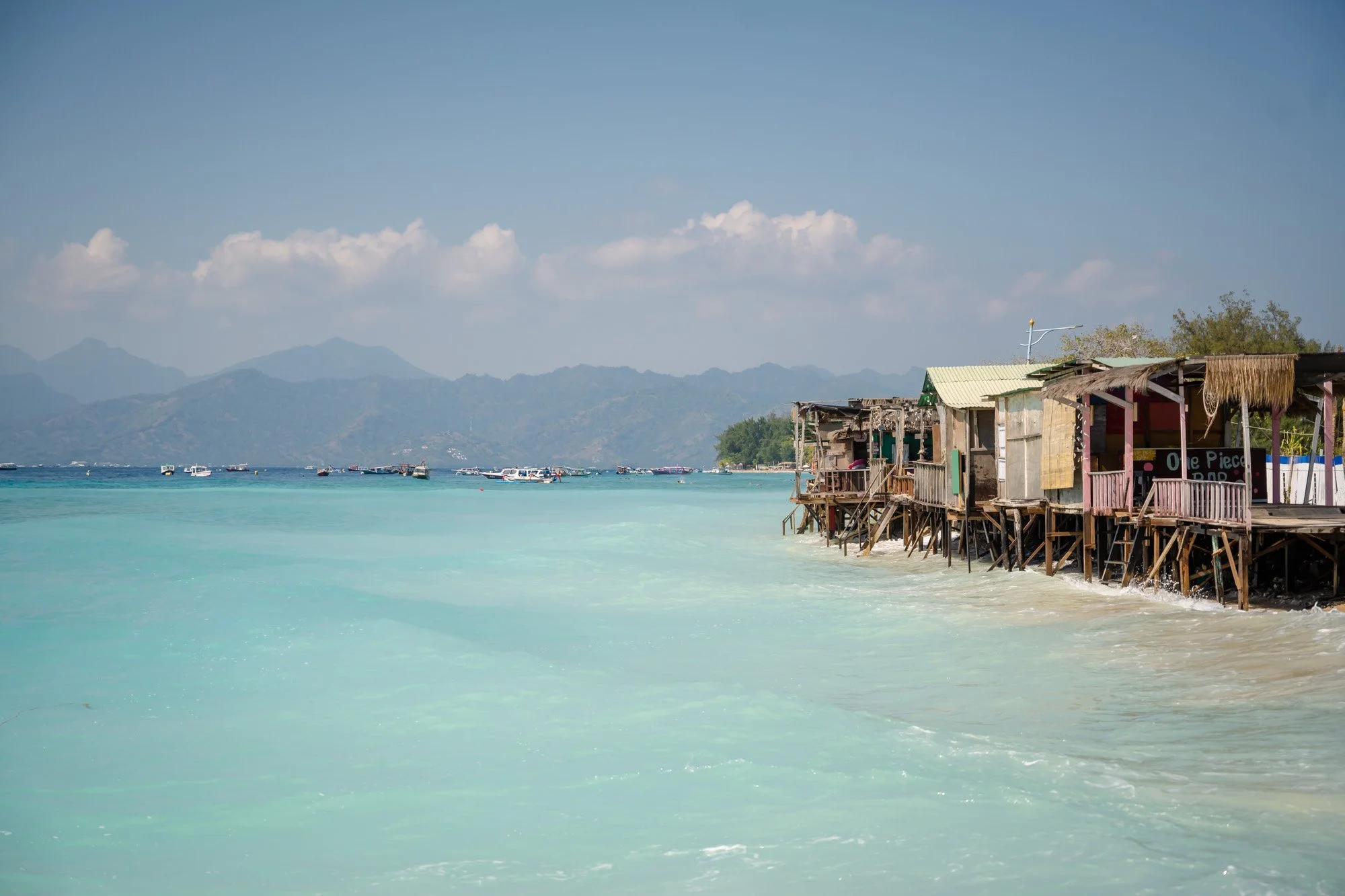
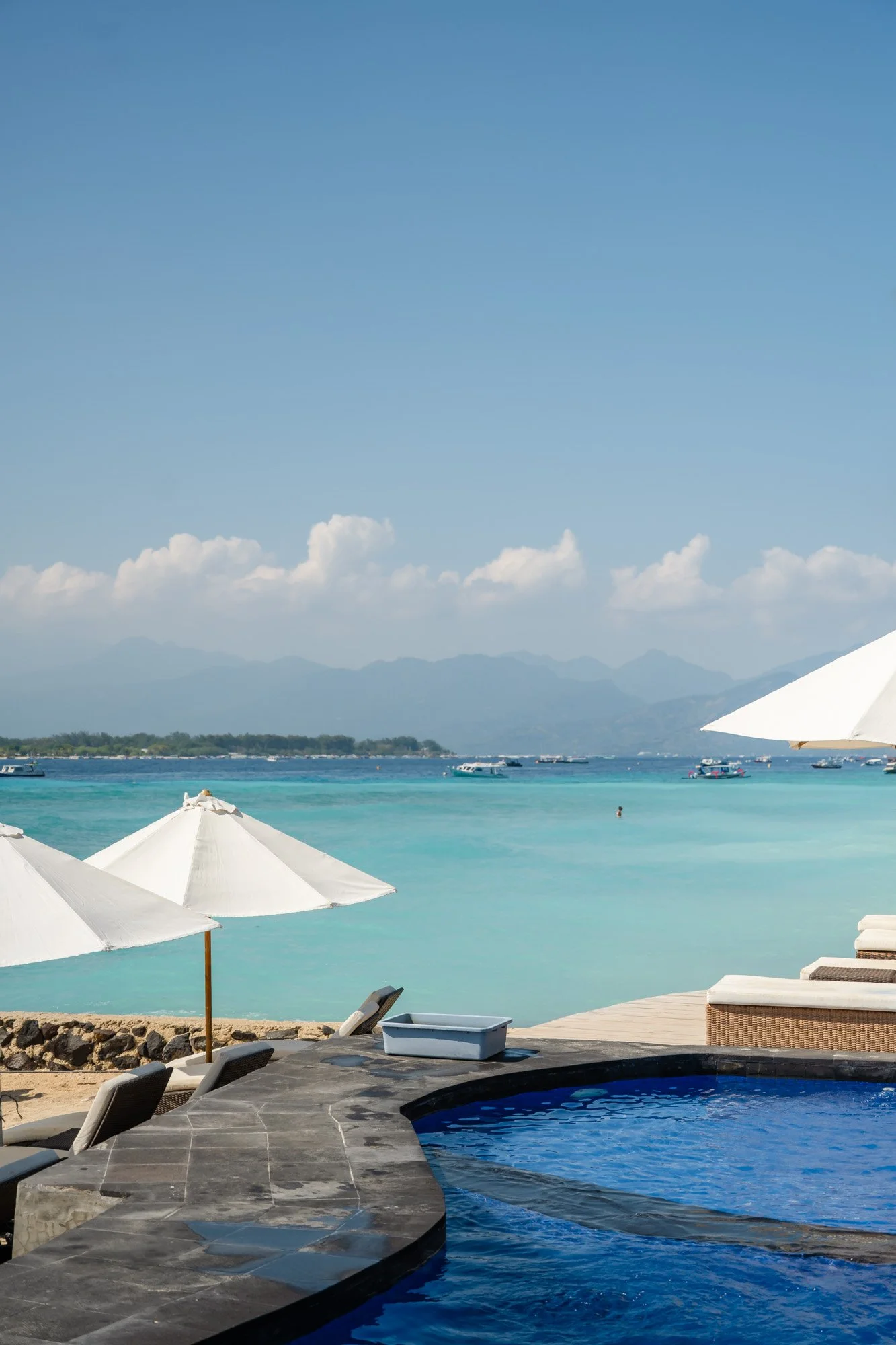
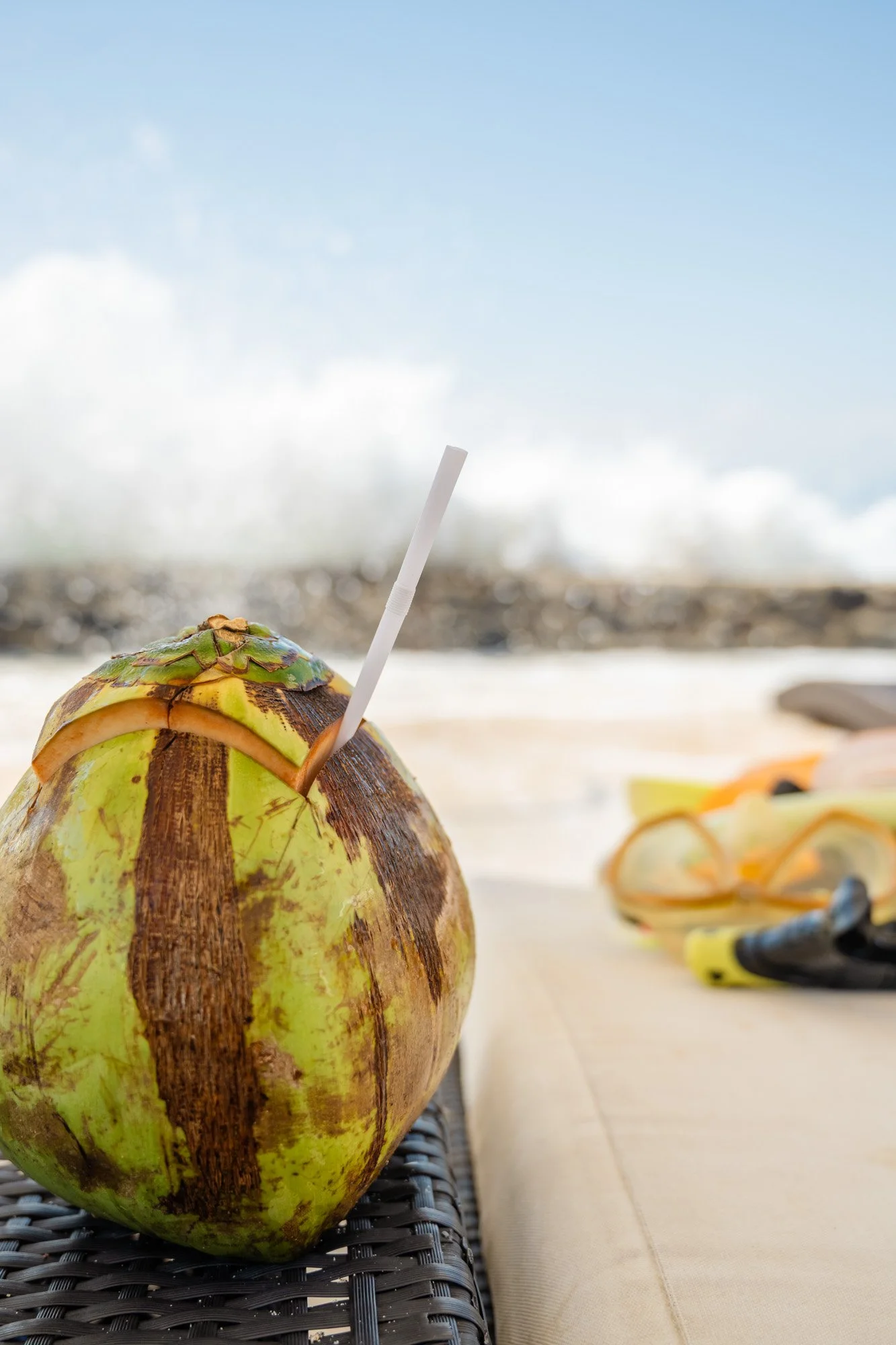
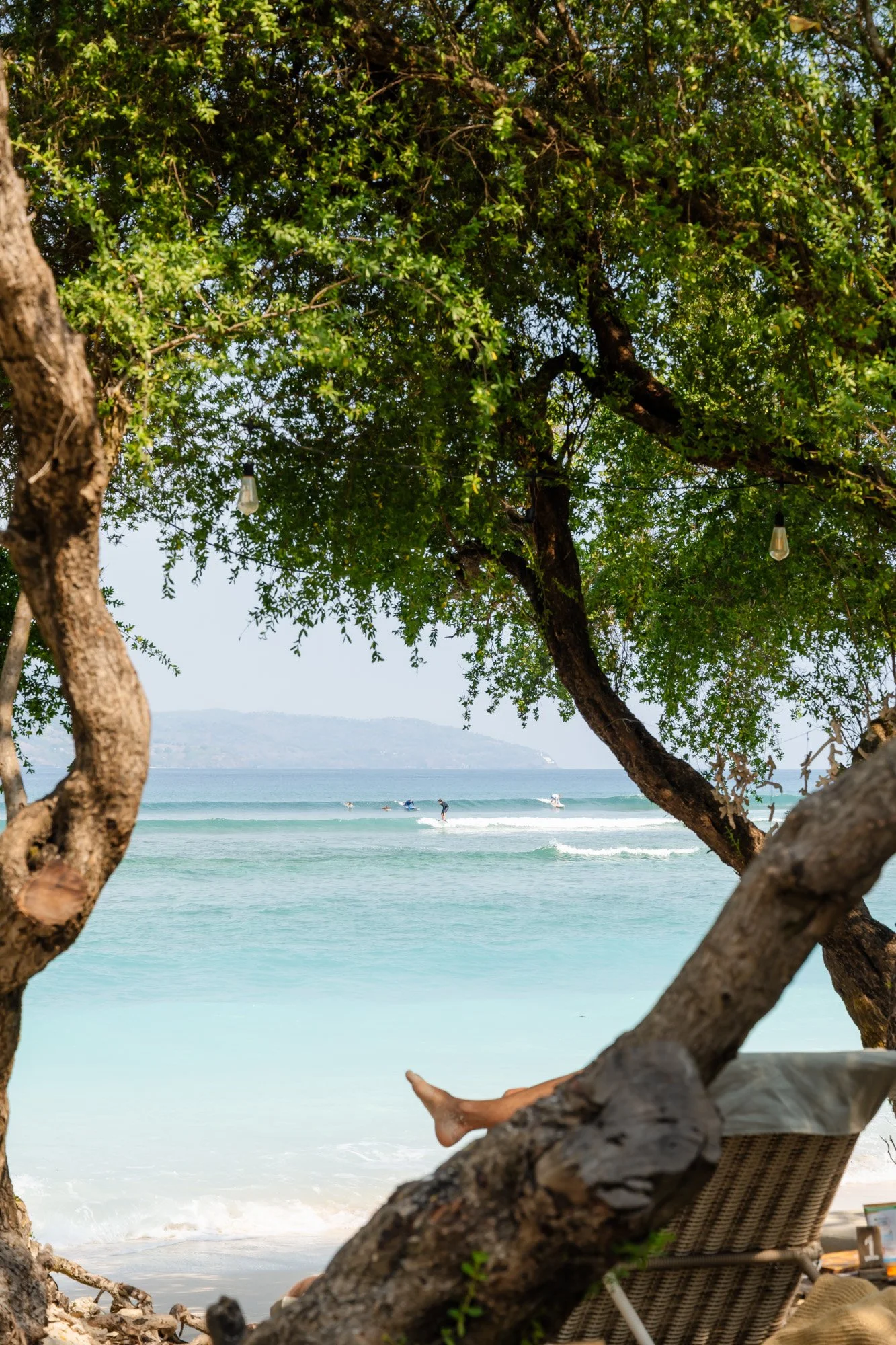
Most of our days on Gili Trawangan revolved around the beach.
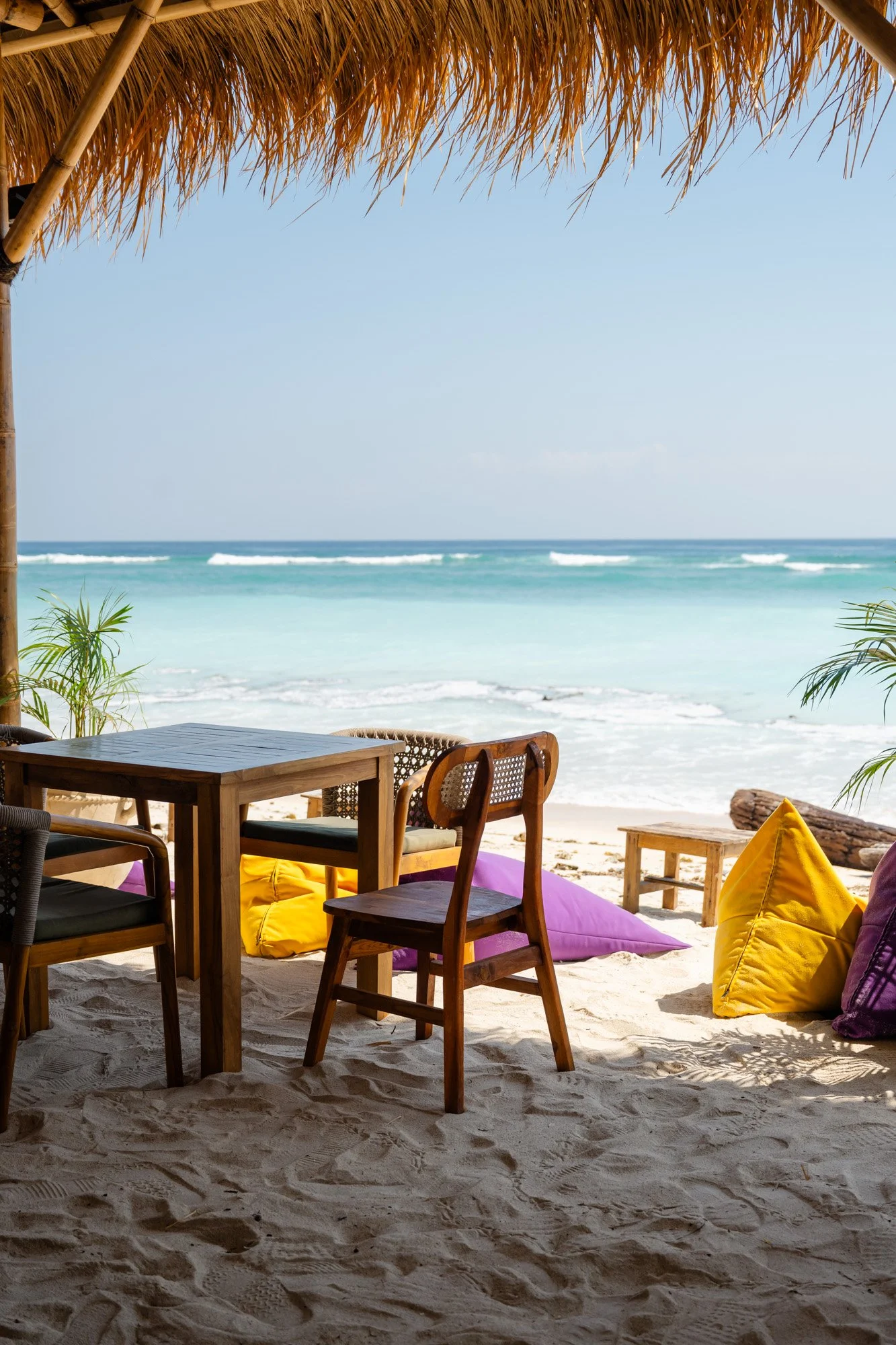
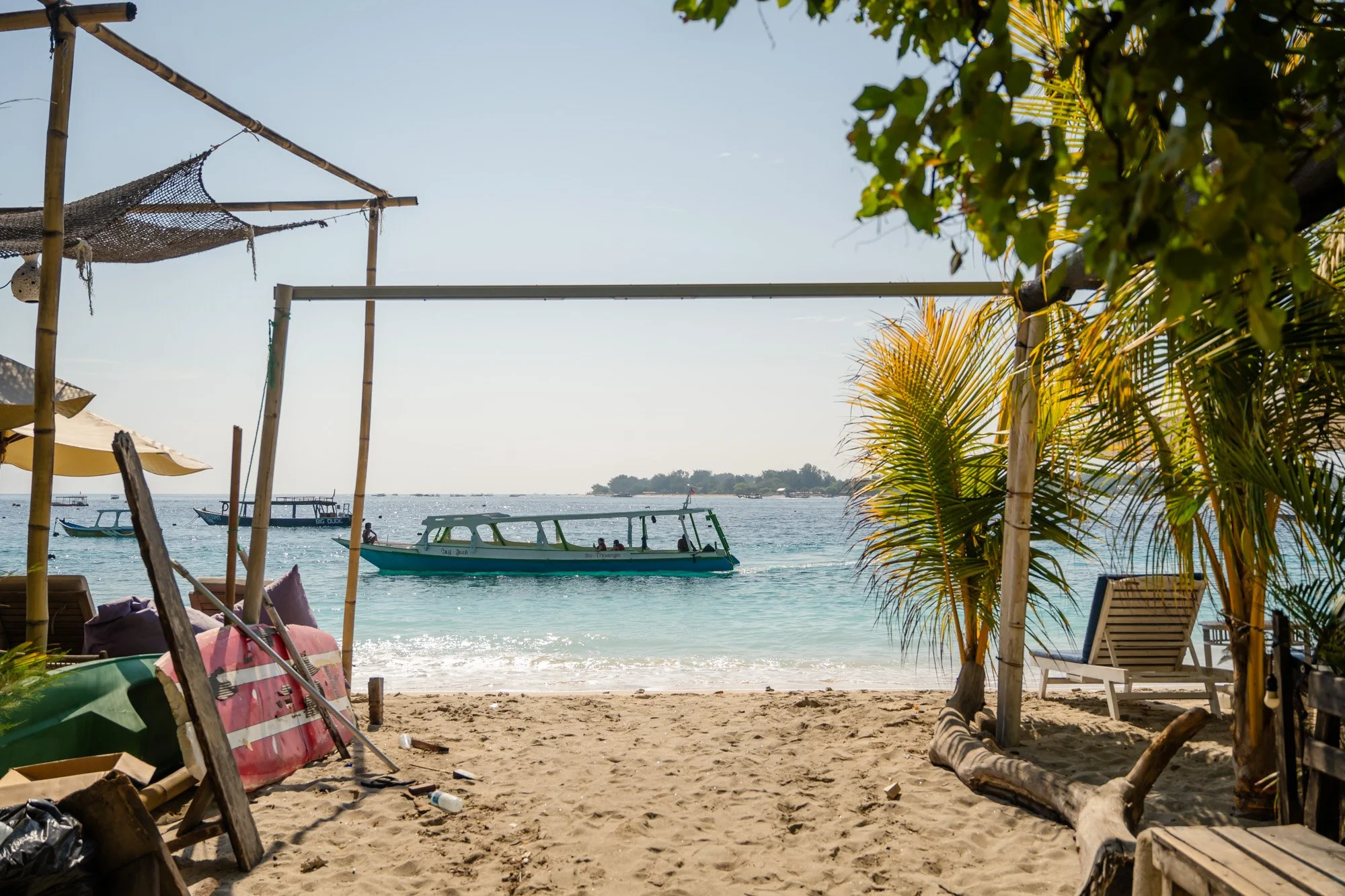
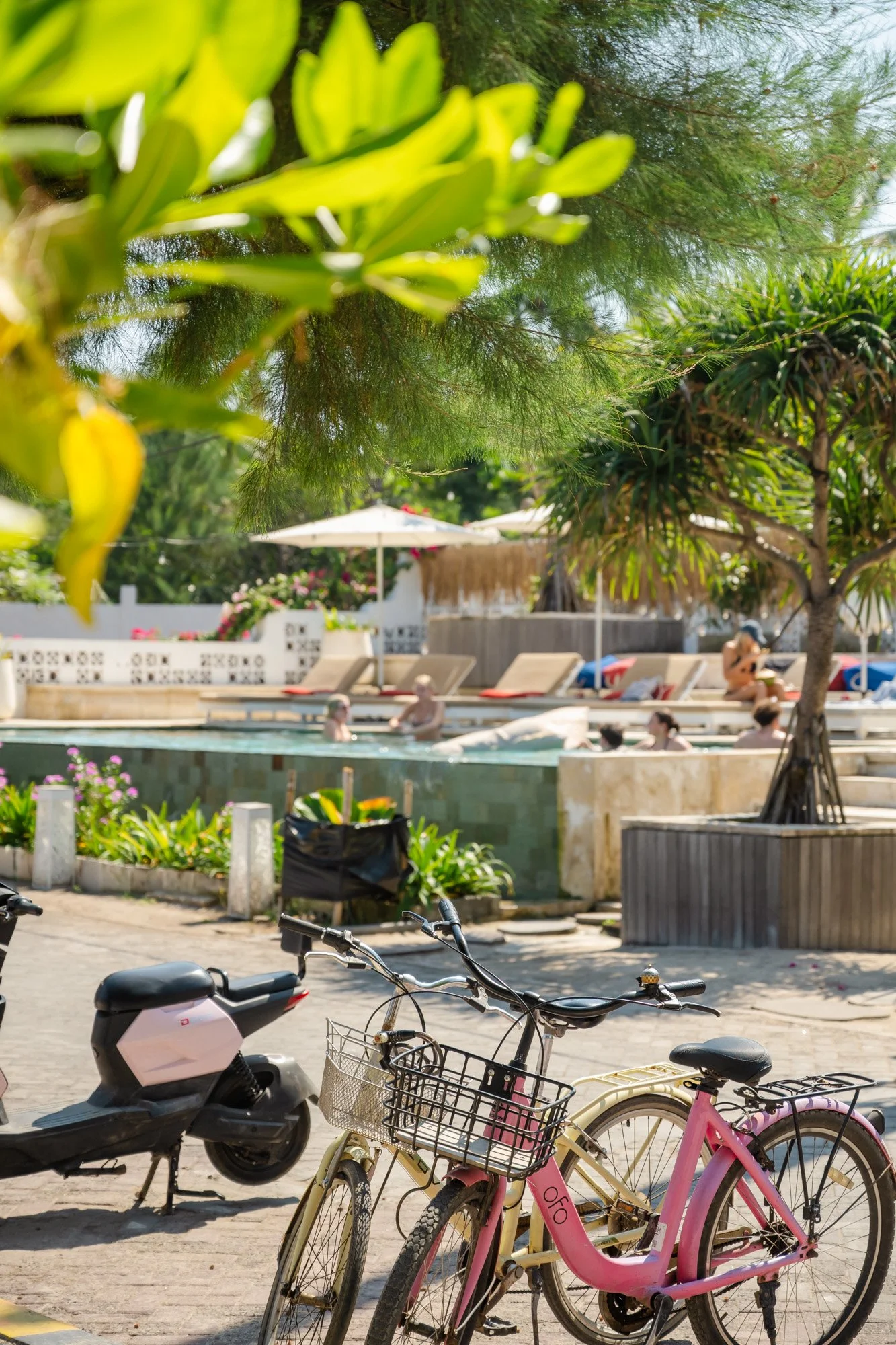
There’s one main road that goes all the way around the island, and along the way you’ll find plenty of little beach clubs, restaurants and places to stop for a swim, a drink or a few hours doing absolutely nothing.
And I really liked its simplicity.
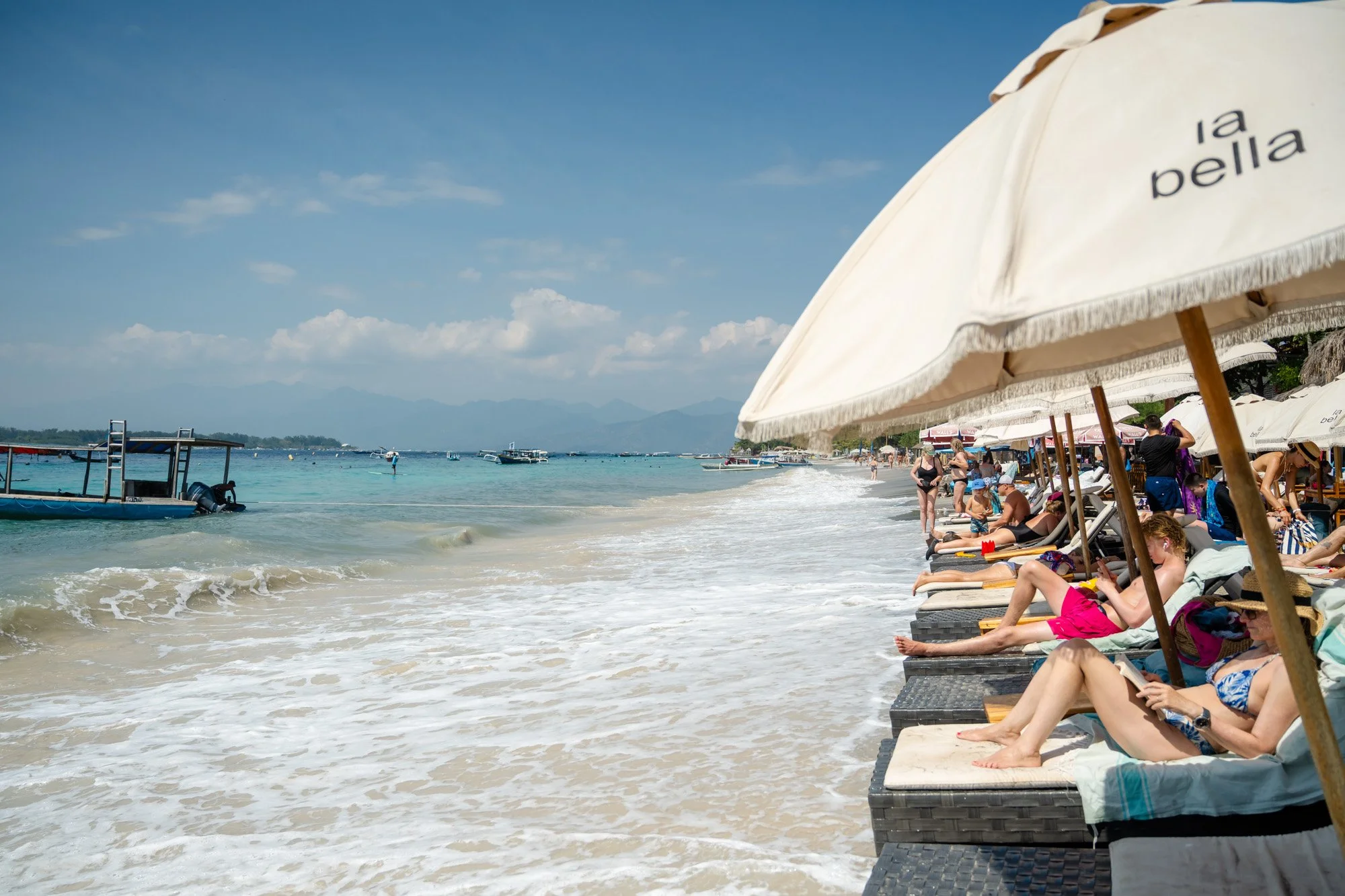
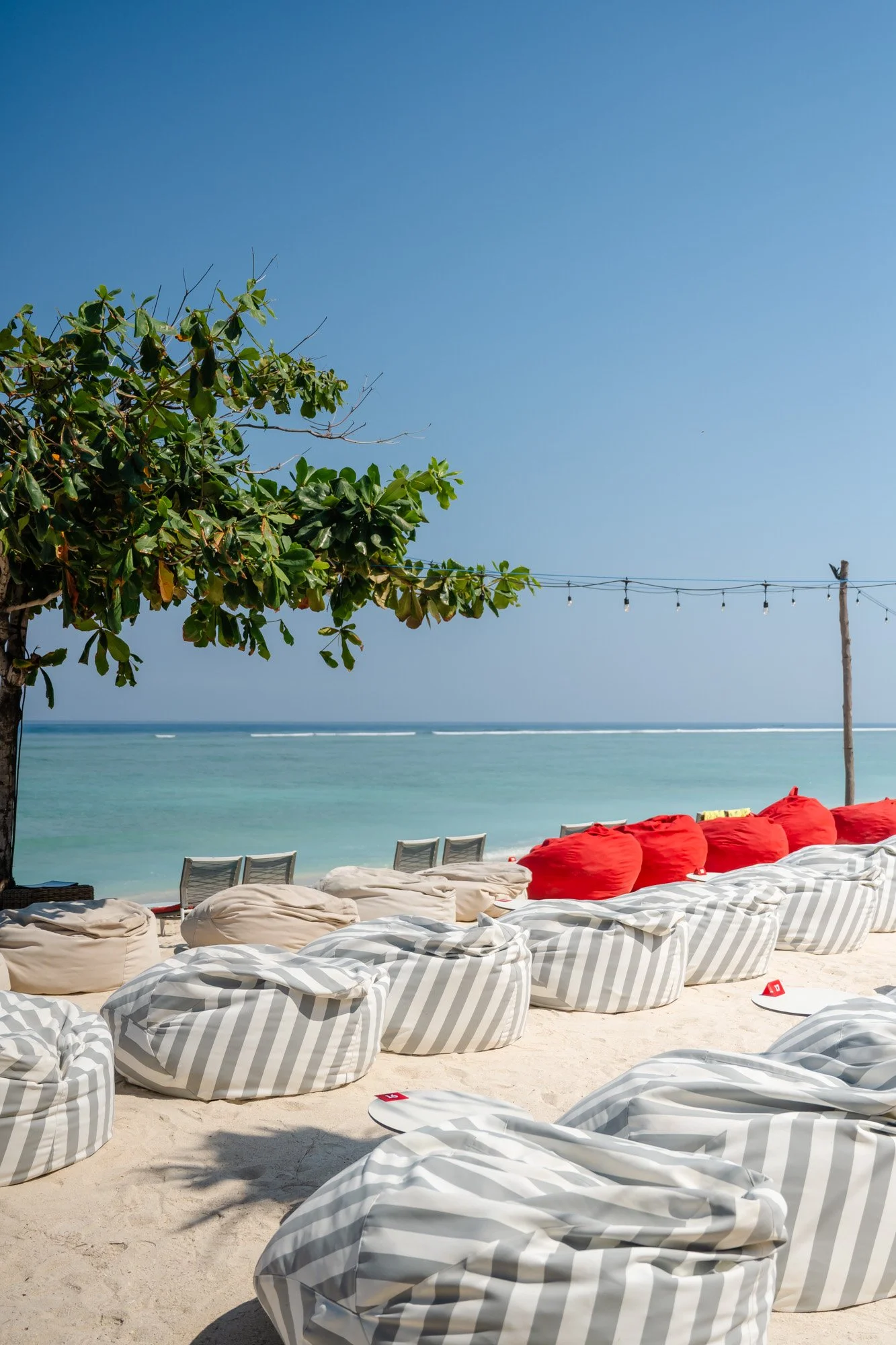
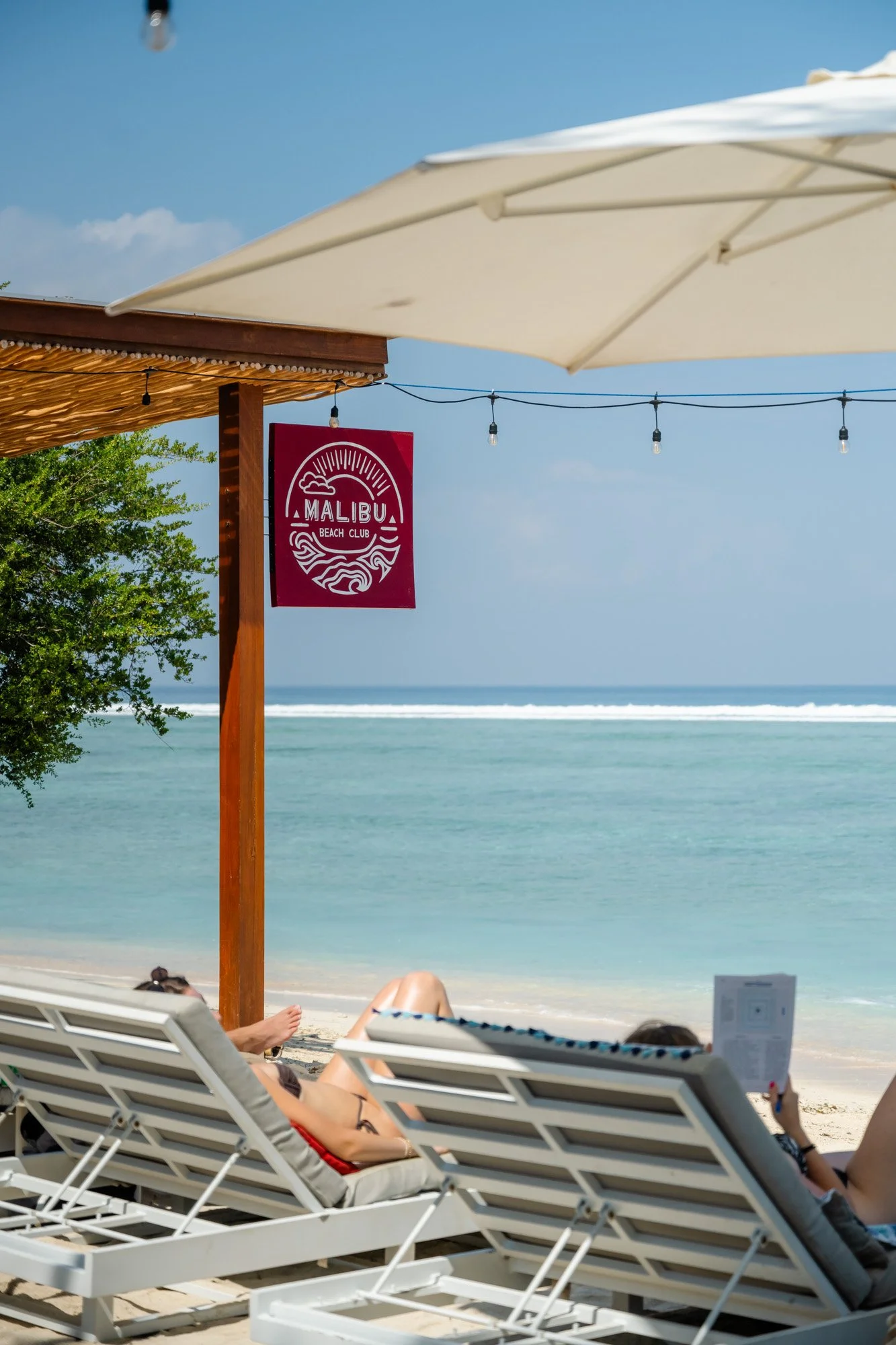
Most of the beach clubs we stopped at didn’t charge you to use the sun lounges or chairs - you just bought some food or drinks. So we could pick somewhere we liked, settle in for a while, have a swim, read, people-watch and then jump back on our bikes and keep going.
It was a pretty good way to spend a day (or few).
The beaches aren't perfect
Now, I’m going to be honest.
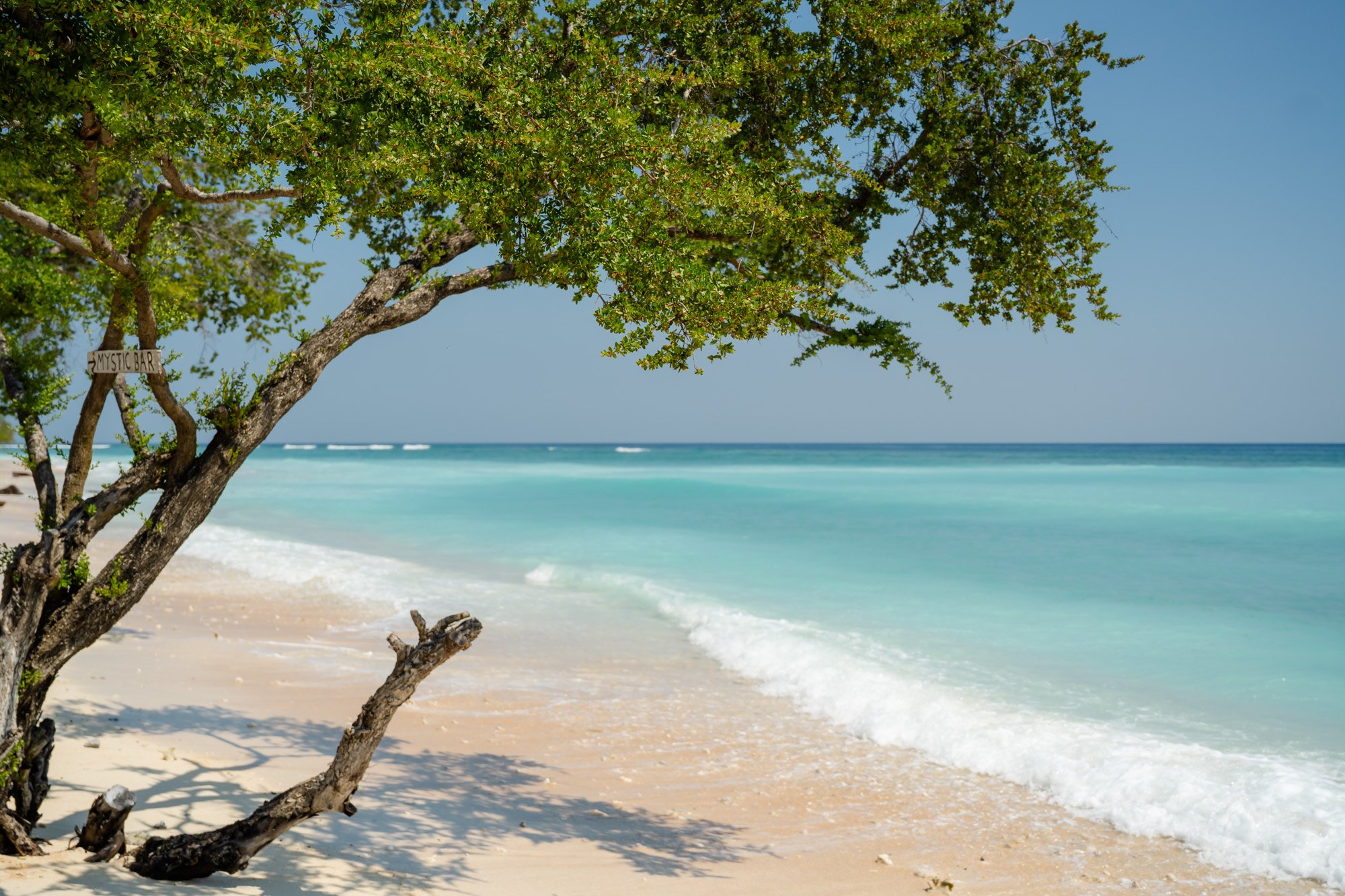
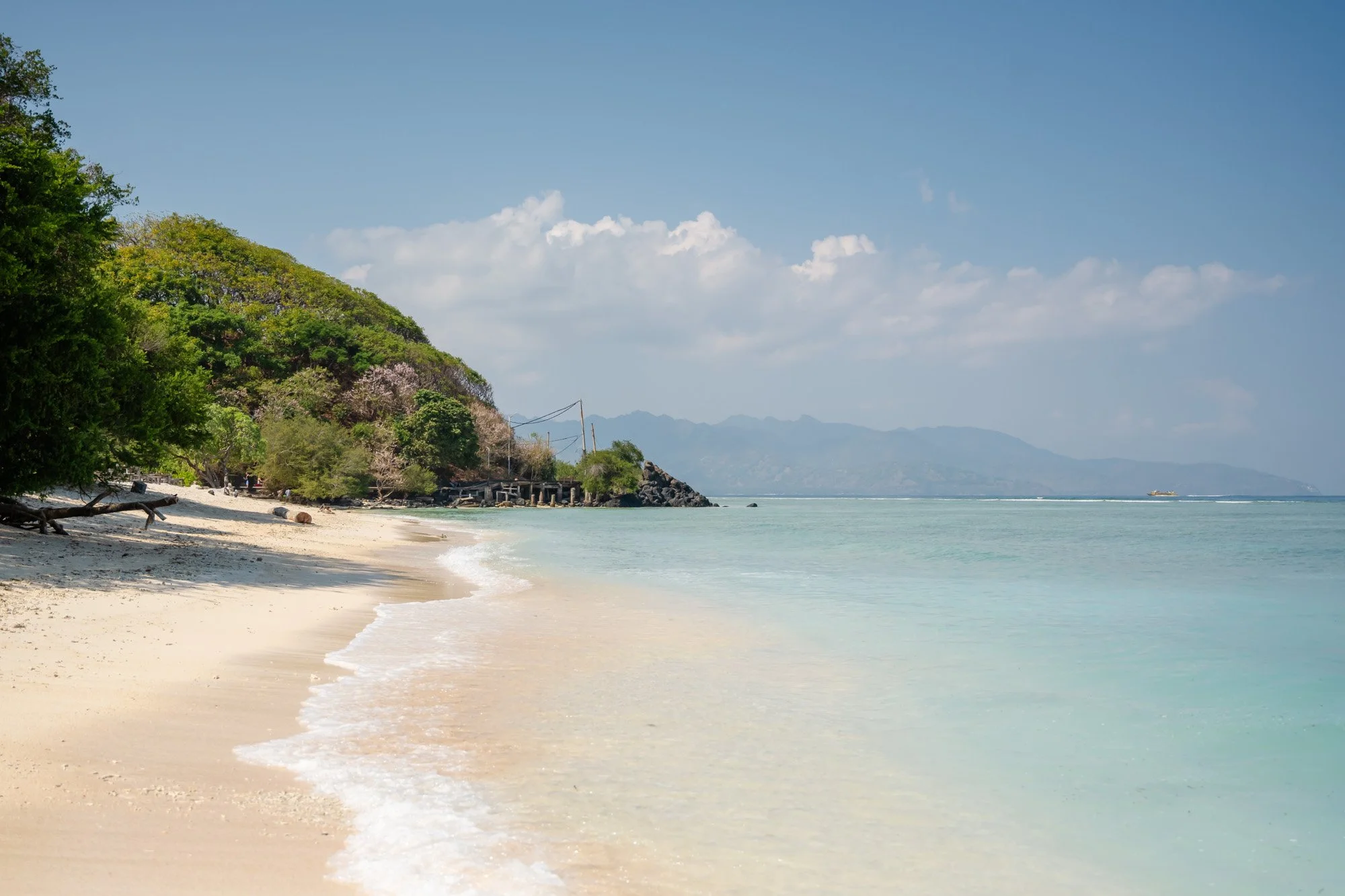
The beaches on Gili T aren’t what I would call fabulous.
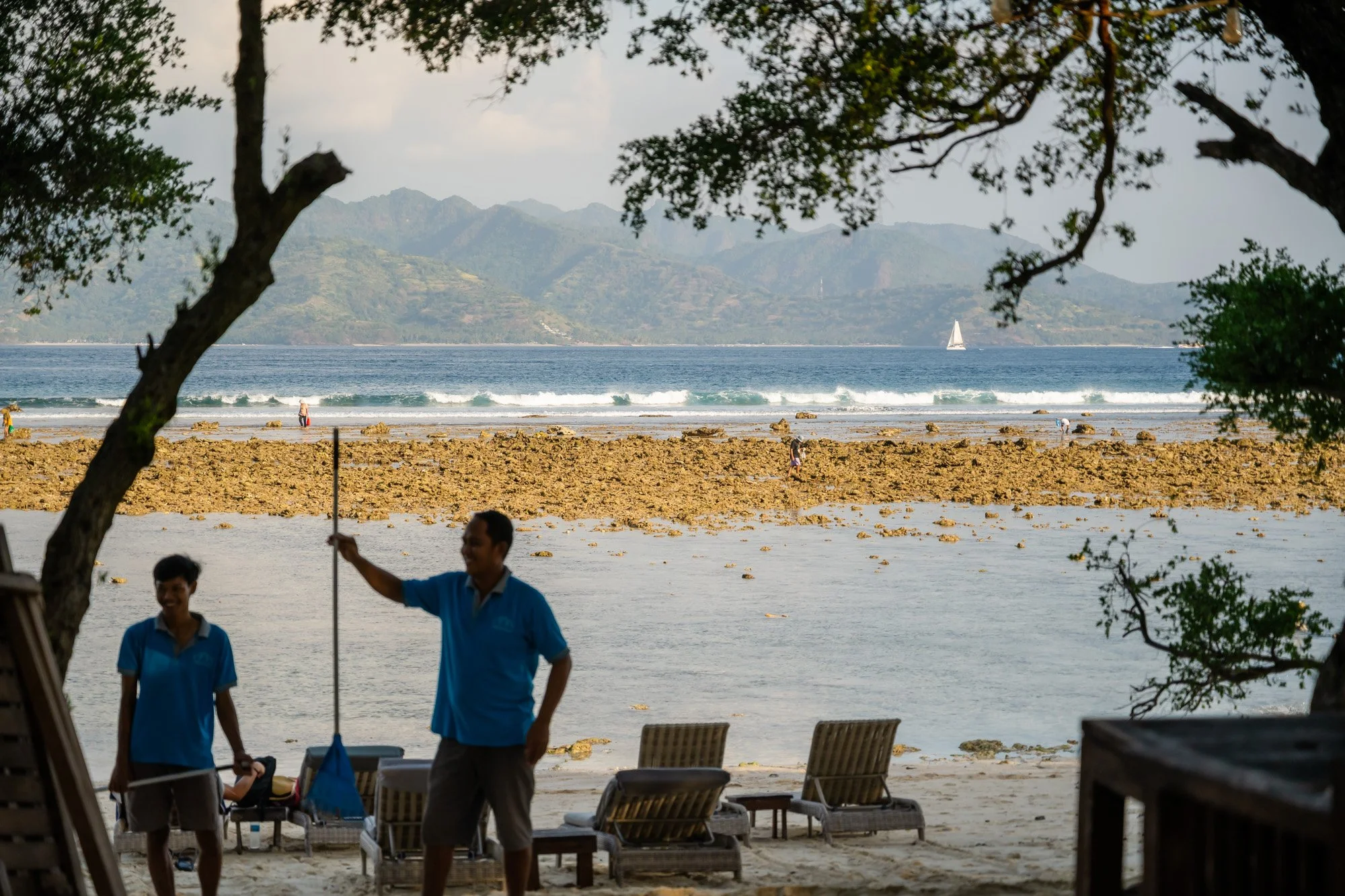
They’re quite narrow and, unfortunately, like much of Bali, there’s rubbish that washes up along the shoreline. It’s hard not to notice, especially when you have that incredibly clear, beautiful water right in front of you.
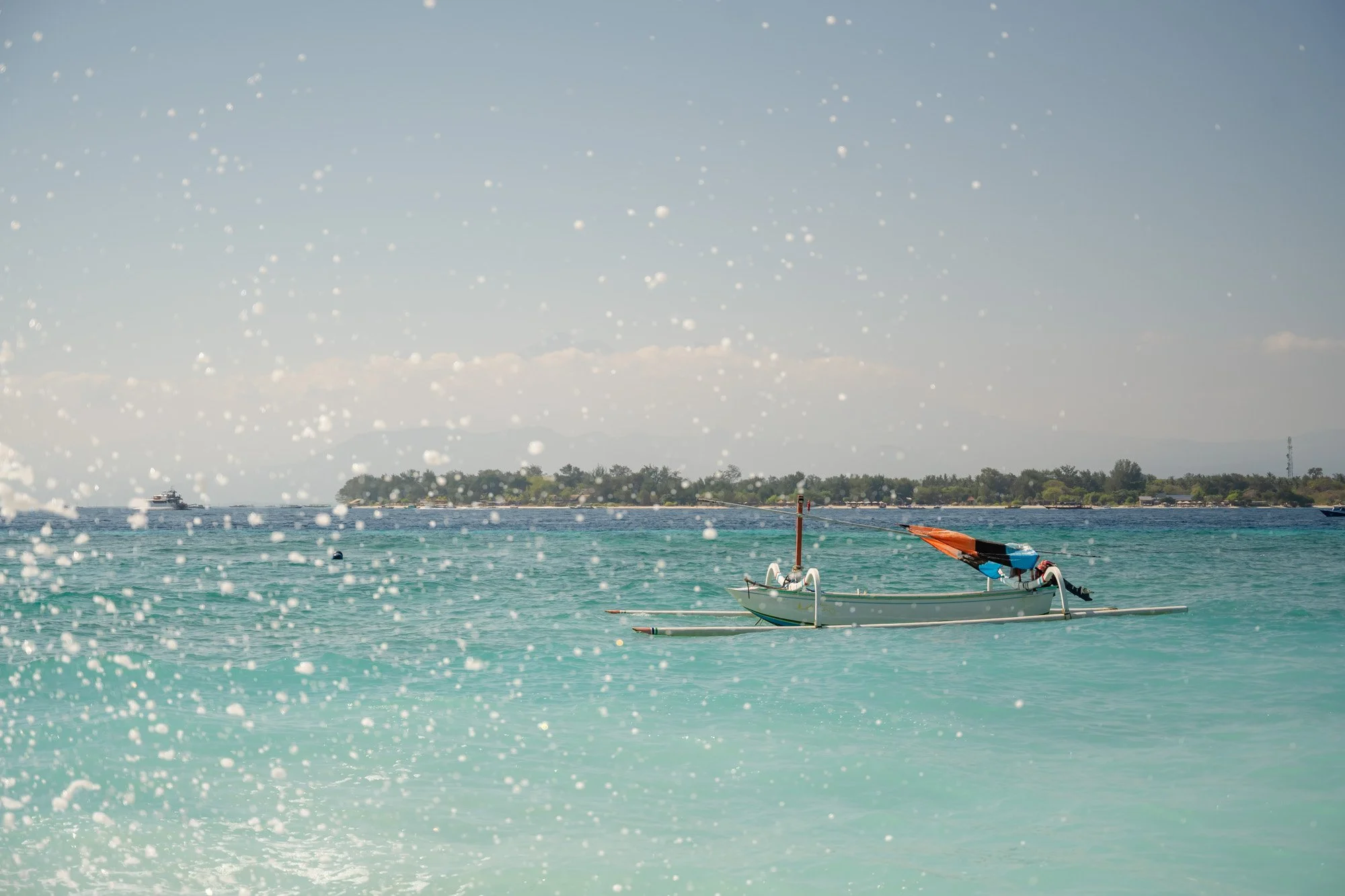
But the water really is gorgeous.
Crystal-clear, warm, and very inviting.
So while the beaches themselves aren't perfect, there are plenty of spots where you can sit right by the water, swim, snorkel or just spend a few hours doing very little.
And sometimes doing very little is exactly what you’re after on an island holiday.
Beach clubs and slow afternoons
The beach clubs are really what make the waterfront work.
There are little restaurants, bars and sun lounges all along the main road, so you can simply stop wherever takes your fancy.
Some are lively, some are quiet, some have music playing and others are just somewhere to sit under a big sun umbrella and watch the world go by.
We’d often find somewhere we liked and just settle in.
Swim.
Eat.
Drink.
Lie in the sun.
Repeat.
Honestly, I could get used to that.
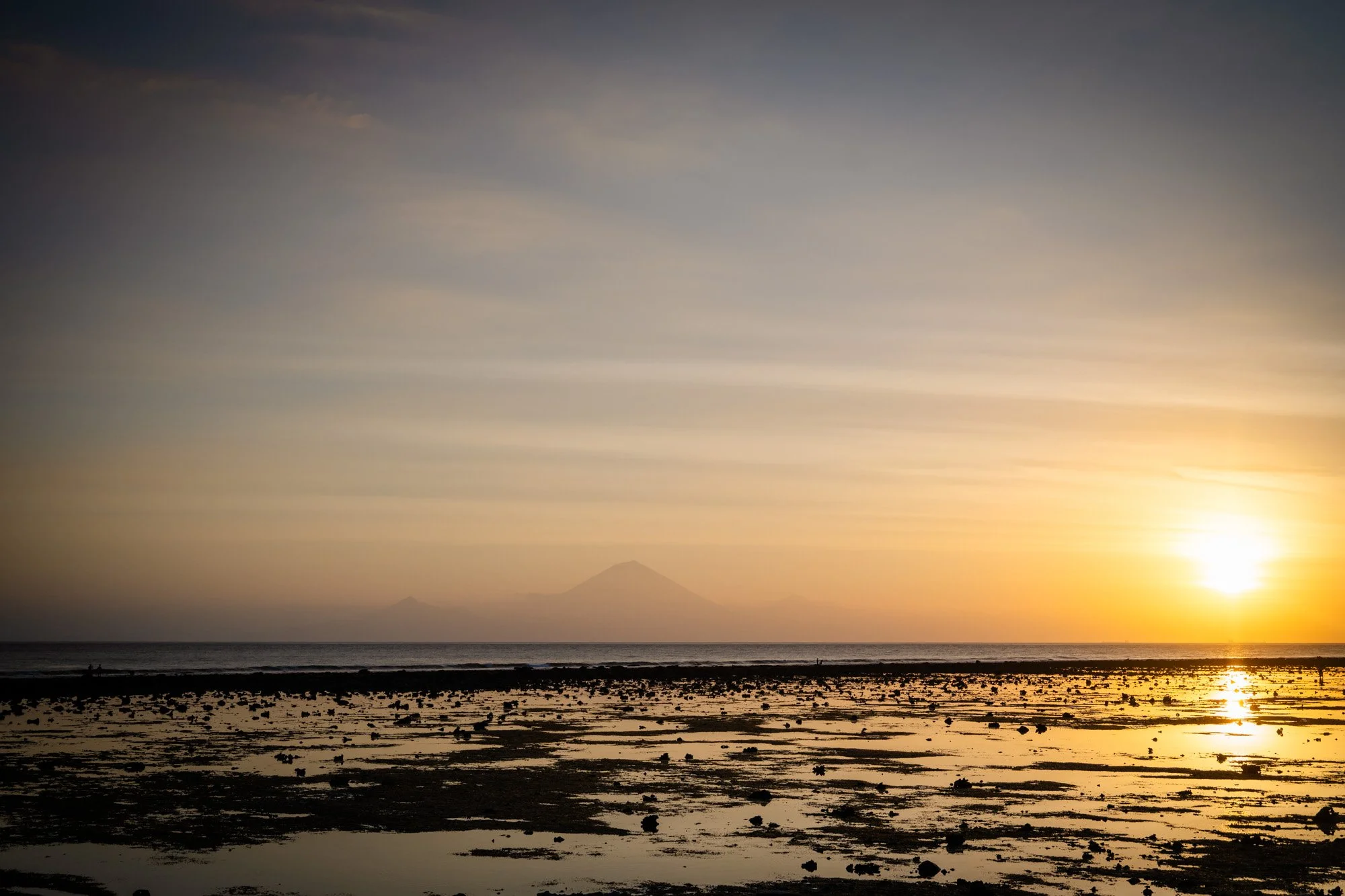
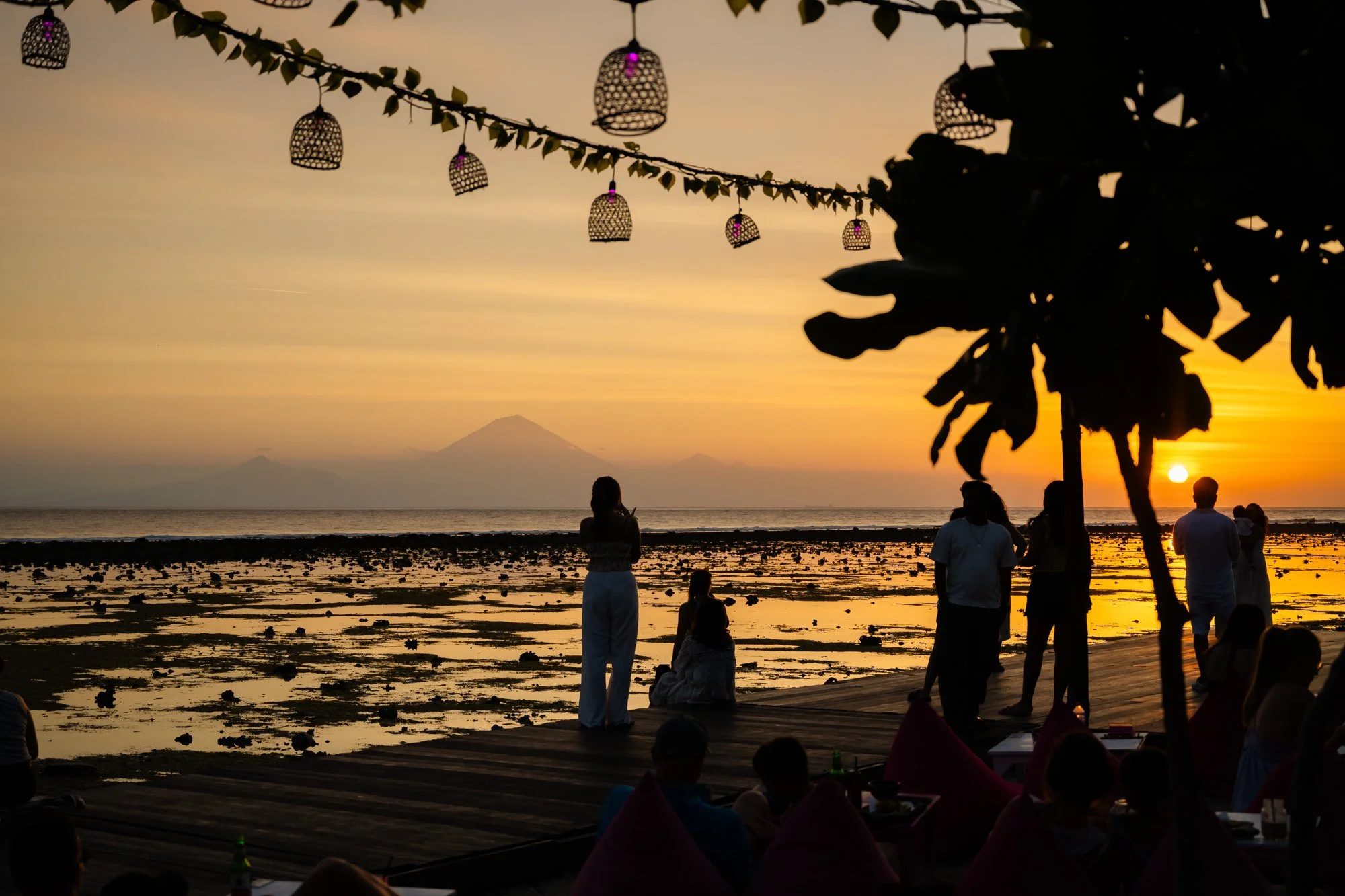
Sunset on Gili T
And then there are the sunsets.
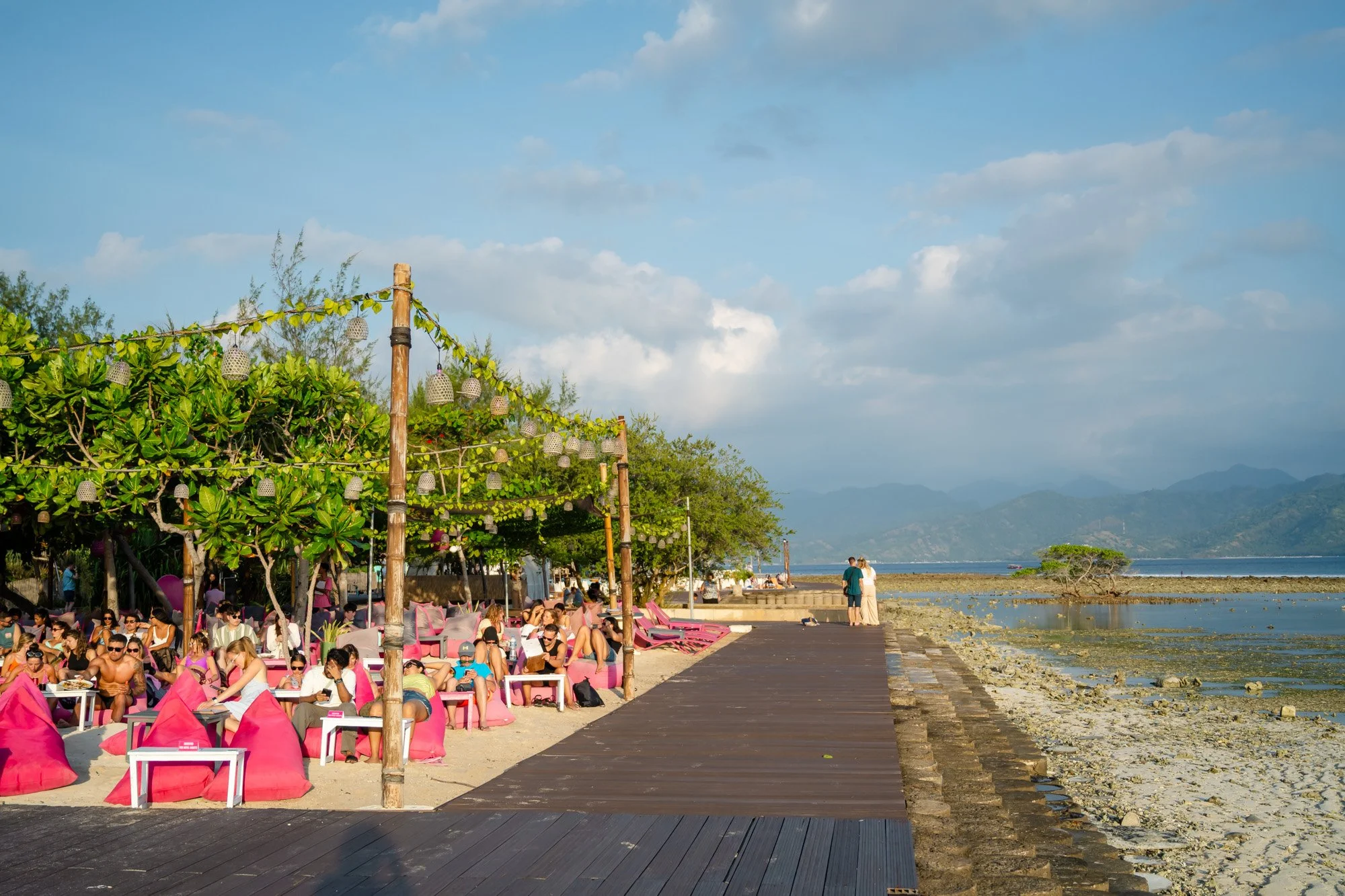
As the afternoon starts to disappear, people gradually make their way to the western side of the island and settle into the beach clubs and restaurants.
Everyone seems to be there for the same reason - a drink in hand, something to eat and a good spot to watch the sun go down.
The sunsets can be spectacular, with the volcano of Bali sometimes visible across the water.
But even when you don't get a huge colourful sunset, there’s something lovely about sitting on the beach as the light fades and watching everyone around you do exactly the same thing.
Gili T beach life
I think this is probably what I enjoyed most about Gili T.
It’s not a perfect tropical paradise.
The beaches are narrow, there’s rubbish washing up, and it can definitely be a little rough around the edges.
But the water is beautiful, there are plenty of places to stop and relax, and the whole island makes it very easy to spend your days doing whatever you feel like.
And really, isn’t that what an island holiday is supposed to be about?
A bike ride.
A swim.
A cold drink.
A sun lounge.
And watching the sun go down.
Gili T. Not the party island I expected
When people imagine a tropical island, they often picture perfect white sand beaches, crystal-clear water and palm trees swaying in the breeze.
And yes, Gili Trawangan has some sort of that.
But what I loved most about this little island was not just the postcard-perfect moments. It was the contrast.
The beauty mixed with the chaos.
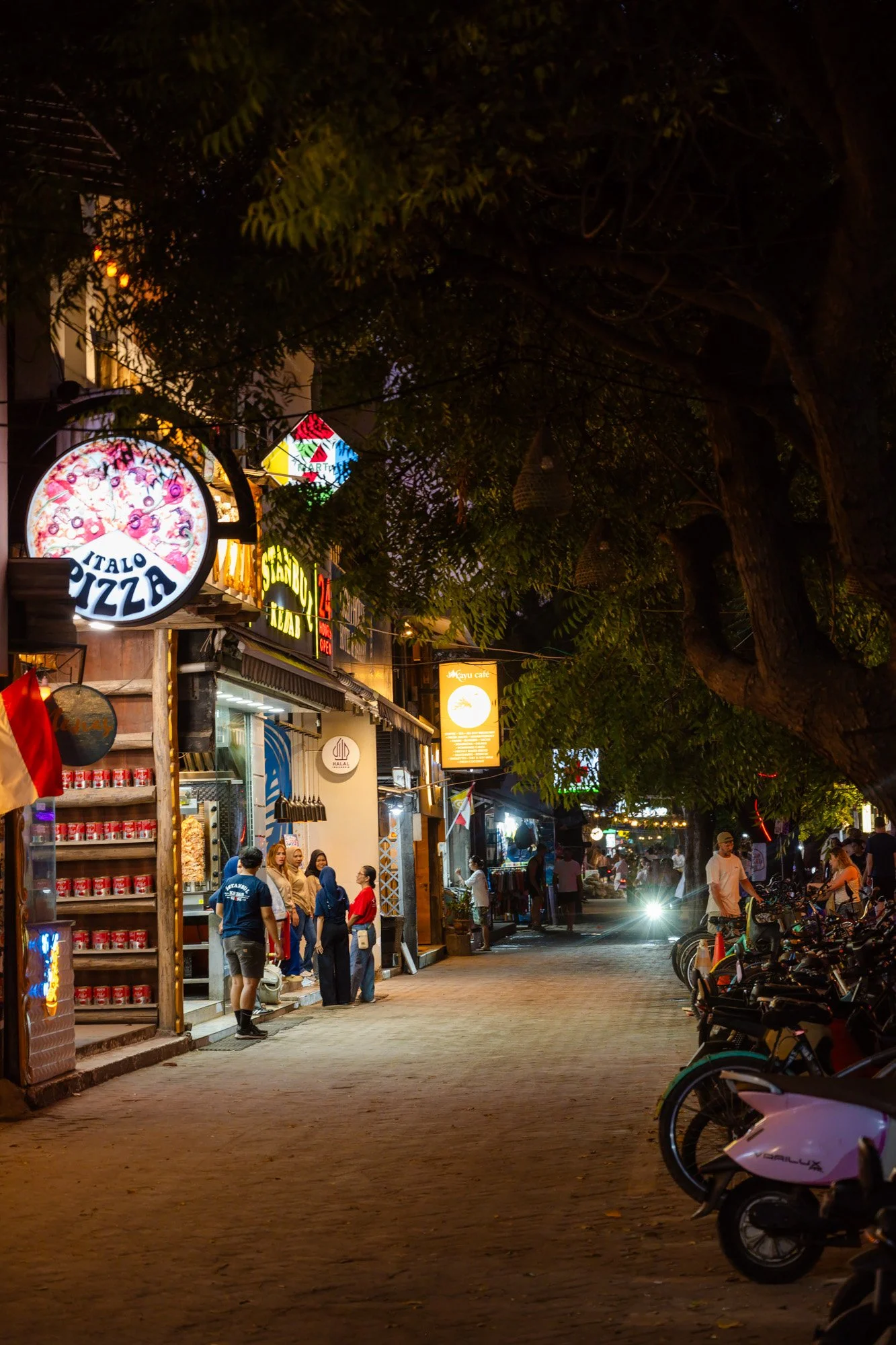
The old buildings.
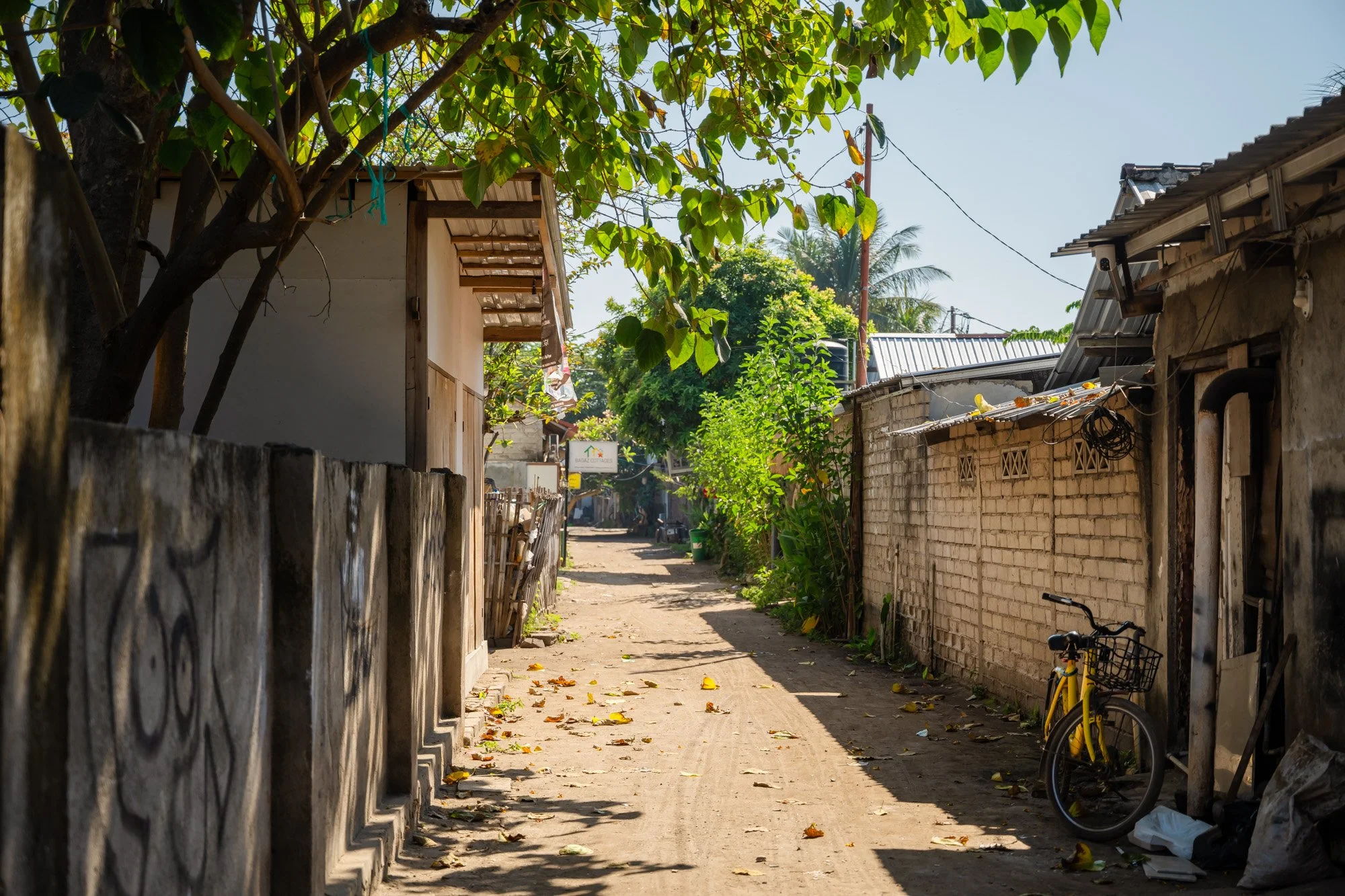
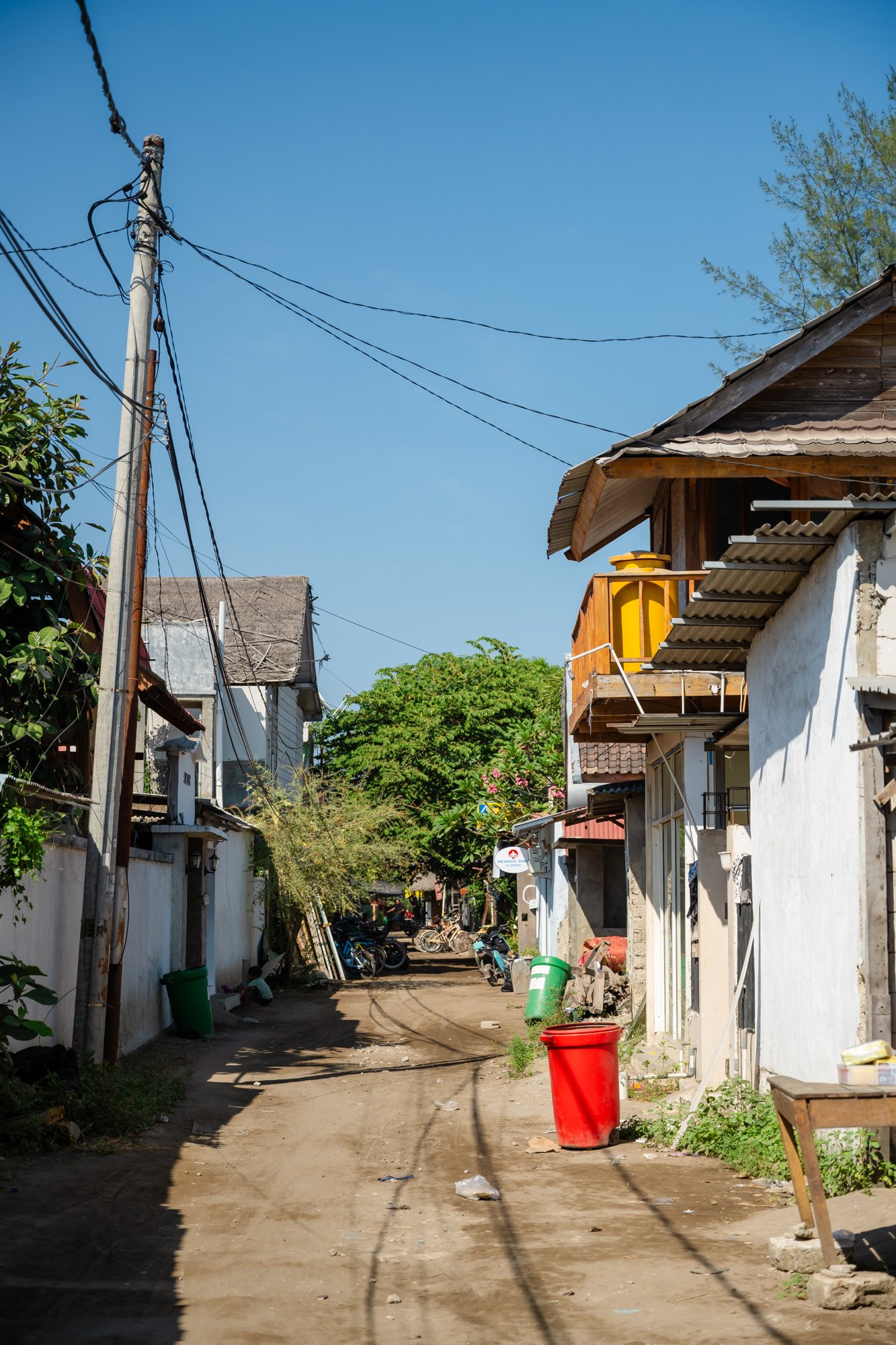
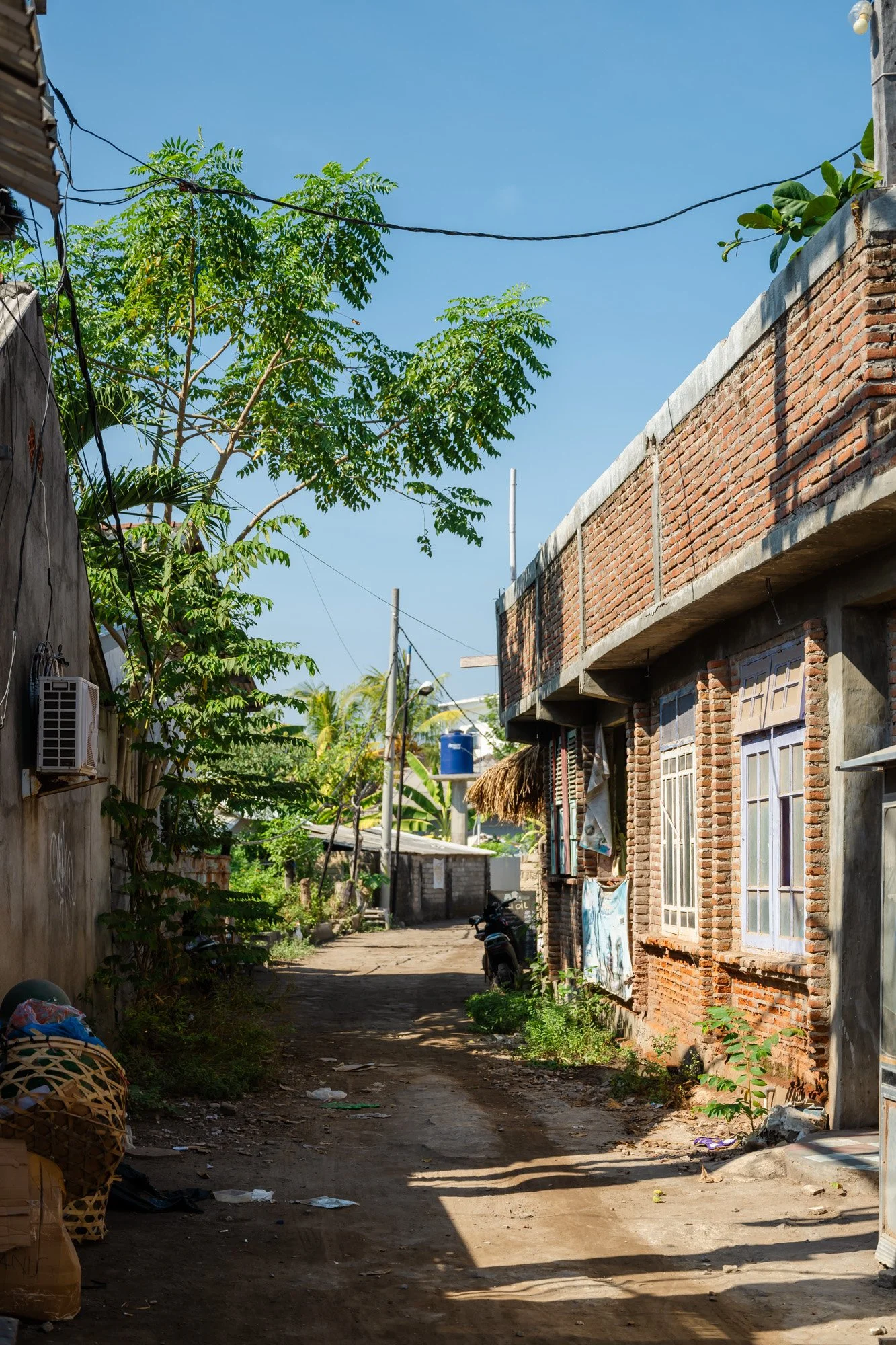
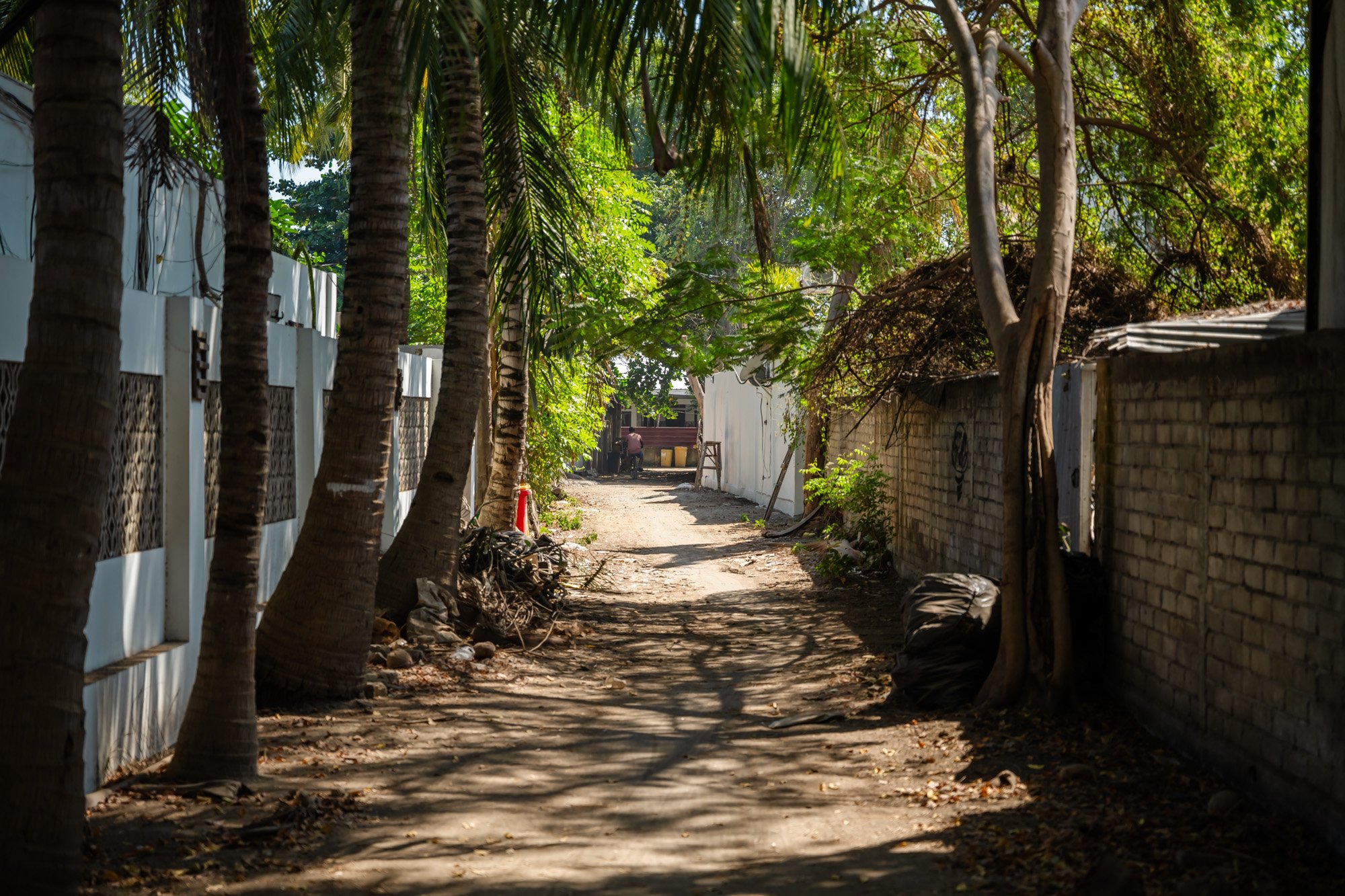
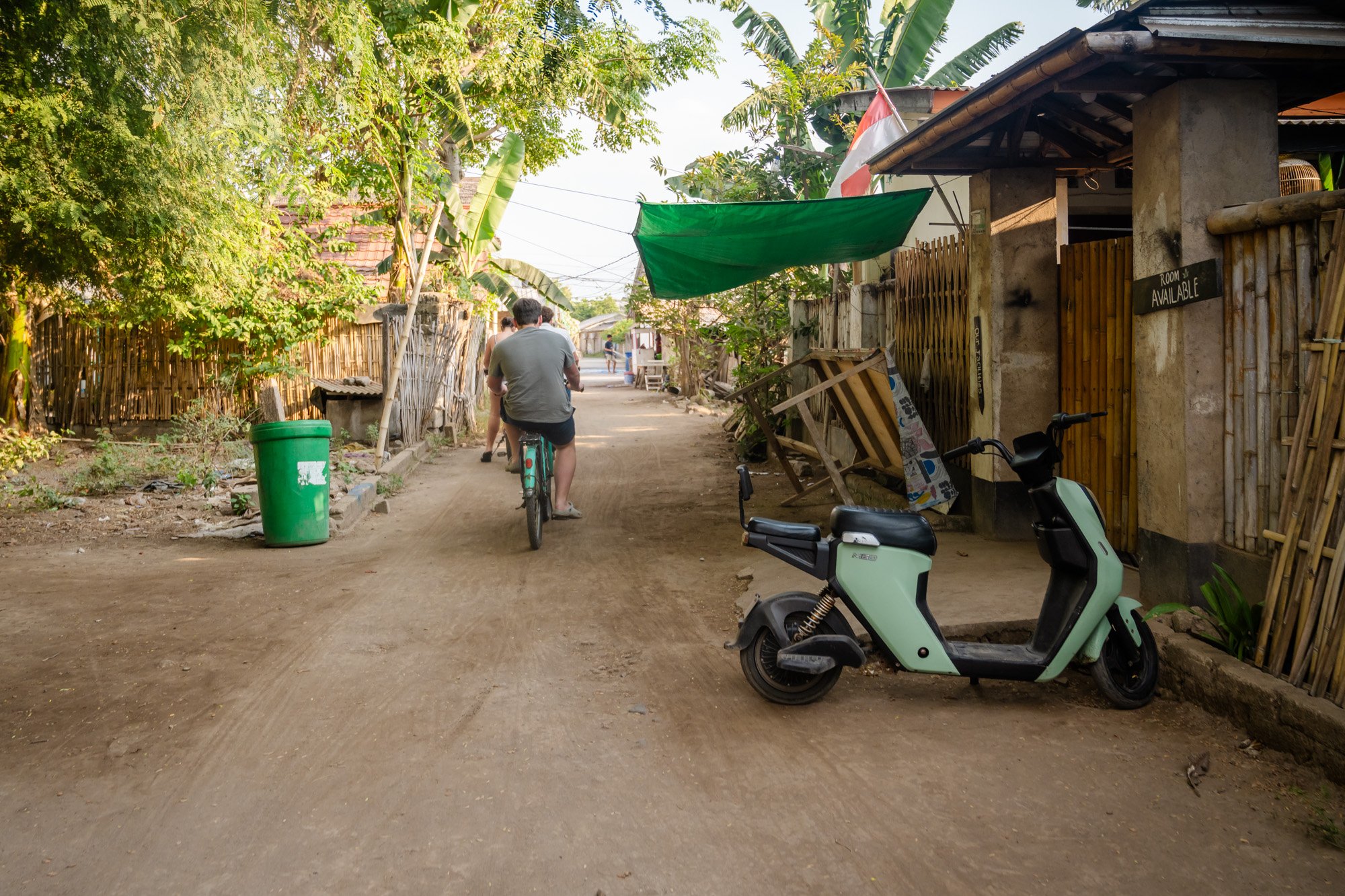
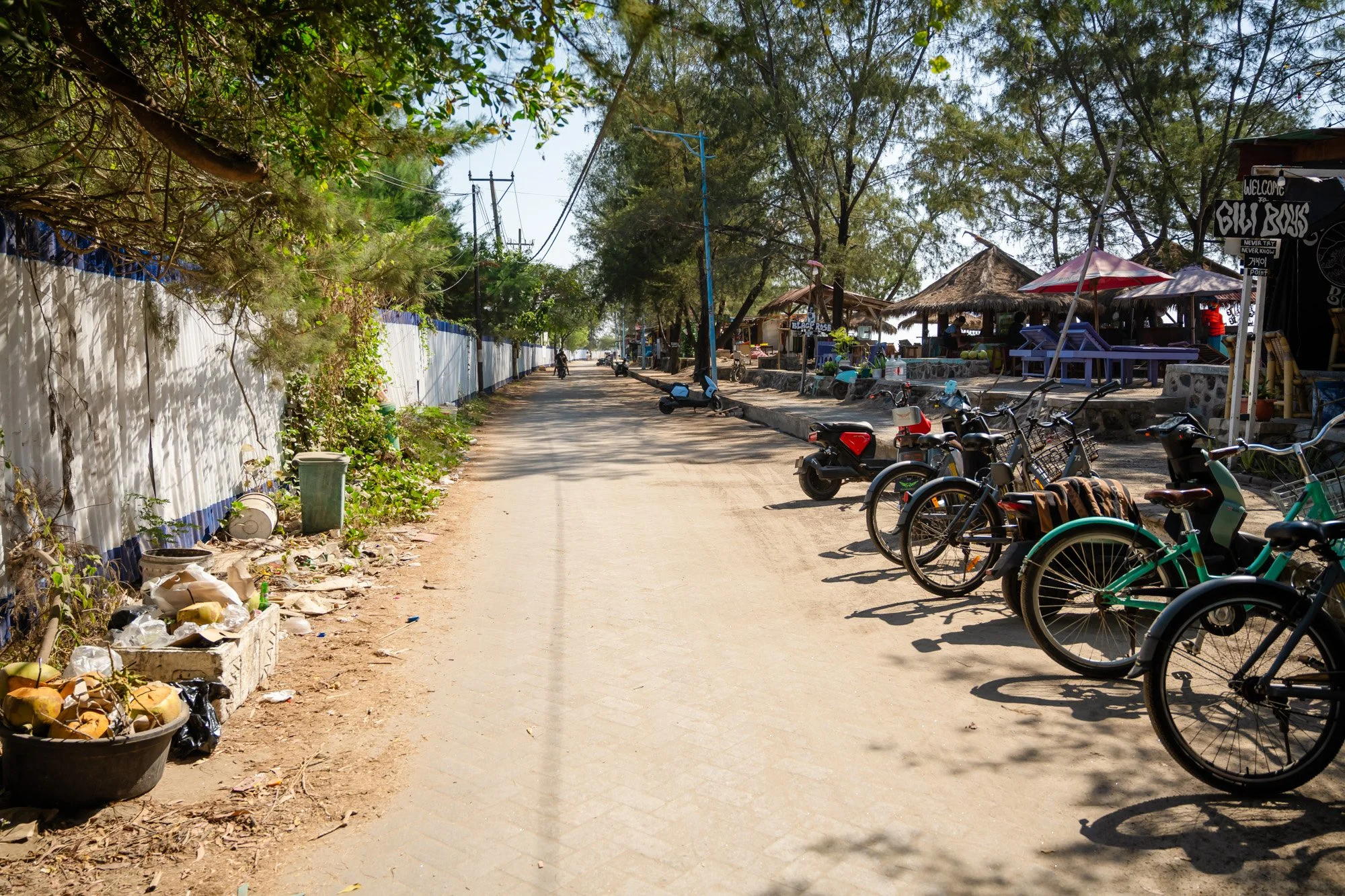
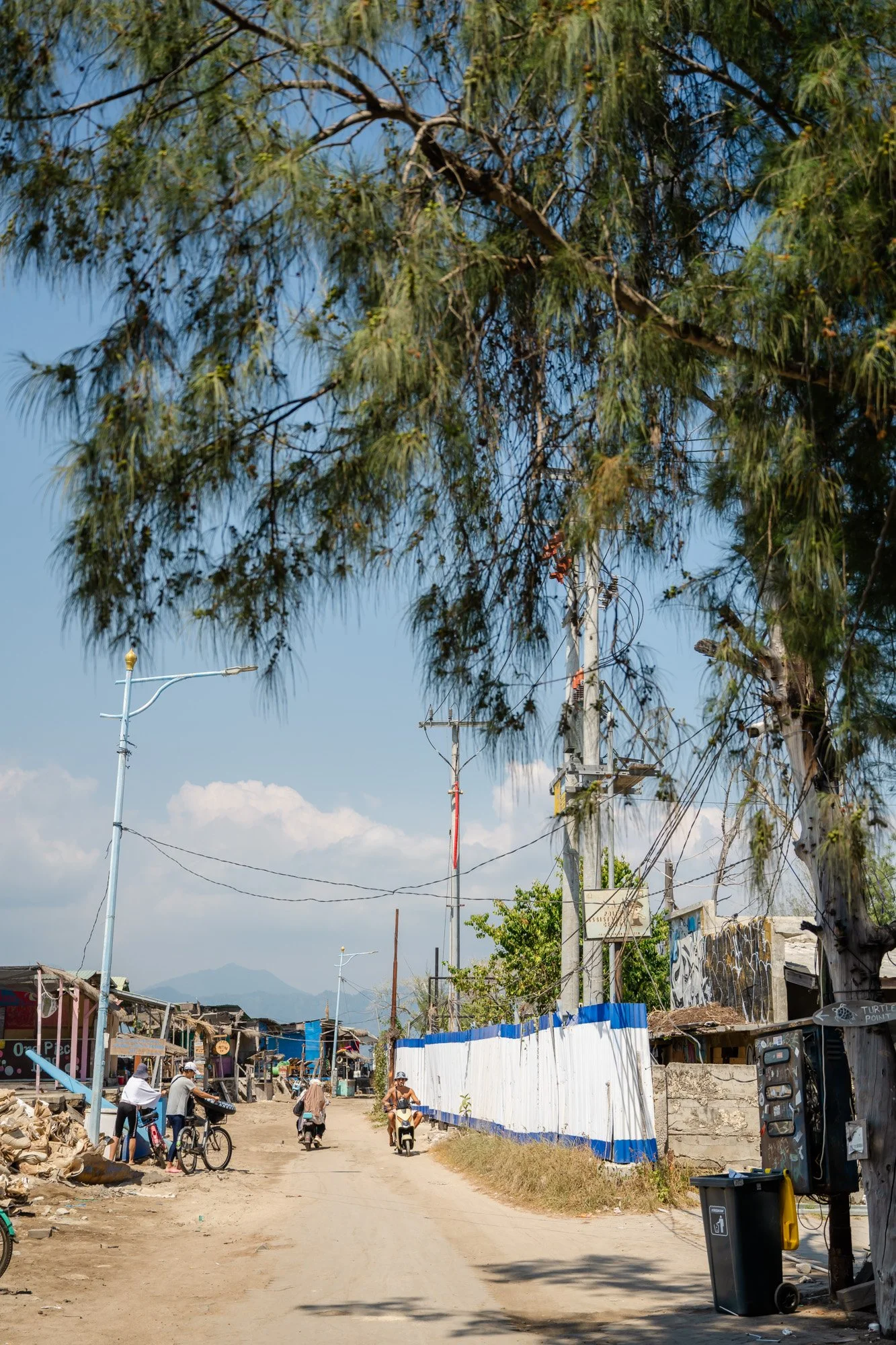
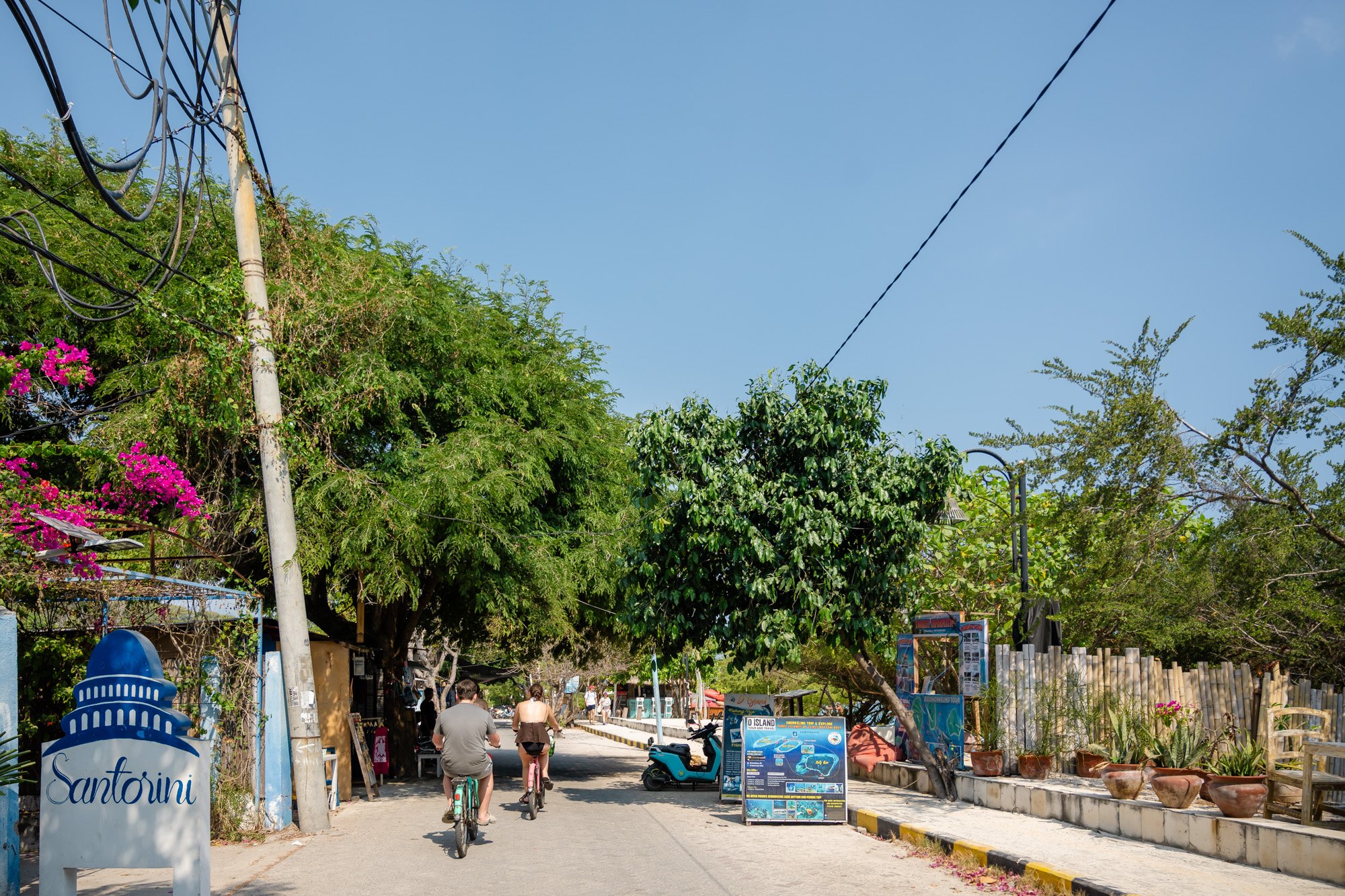
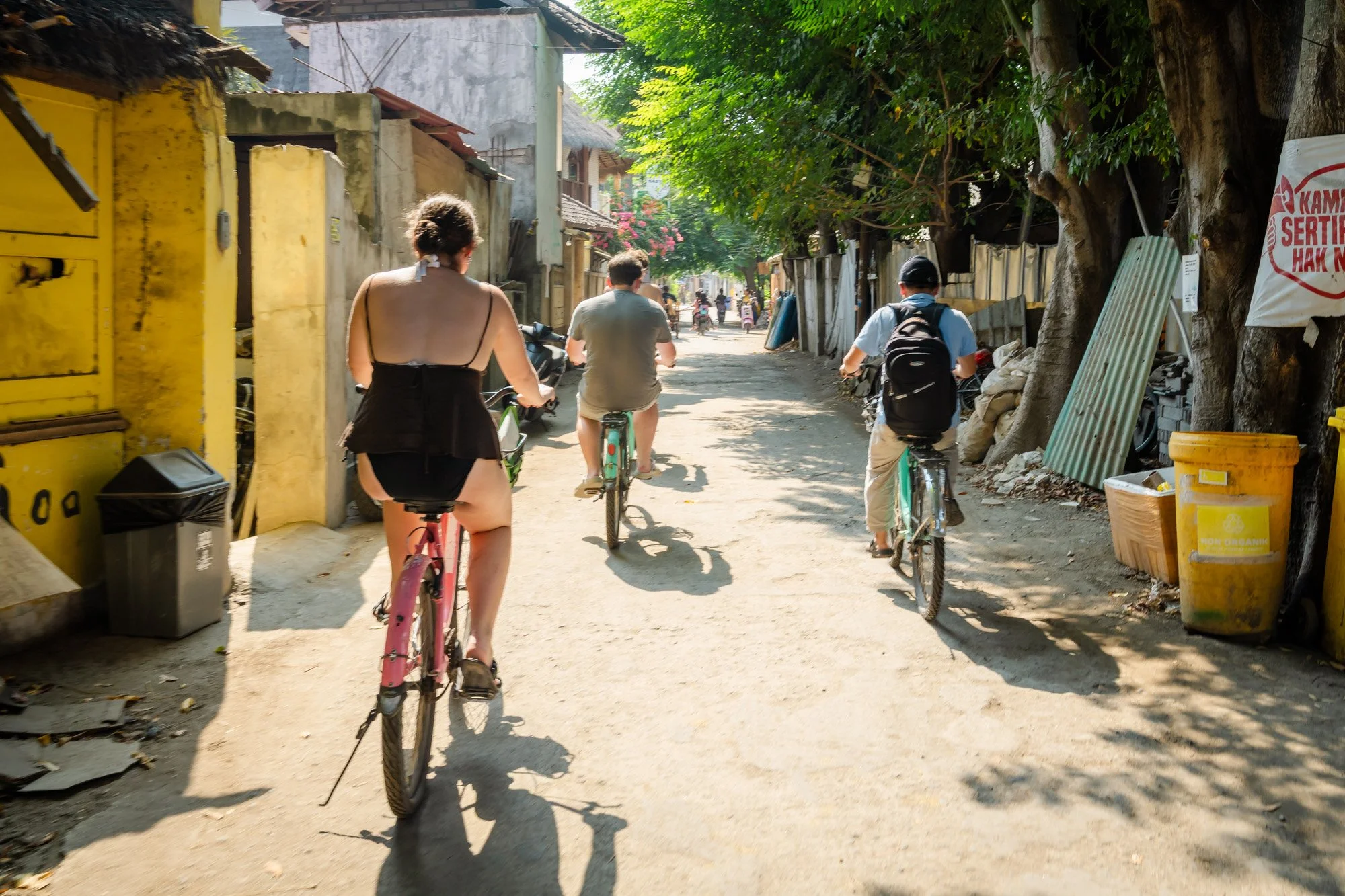
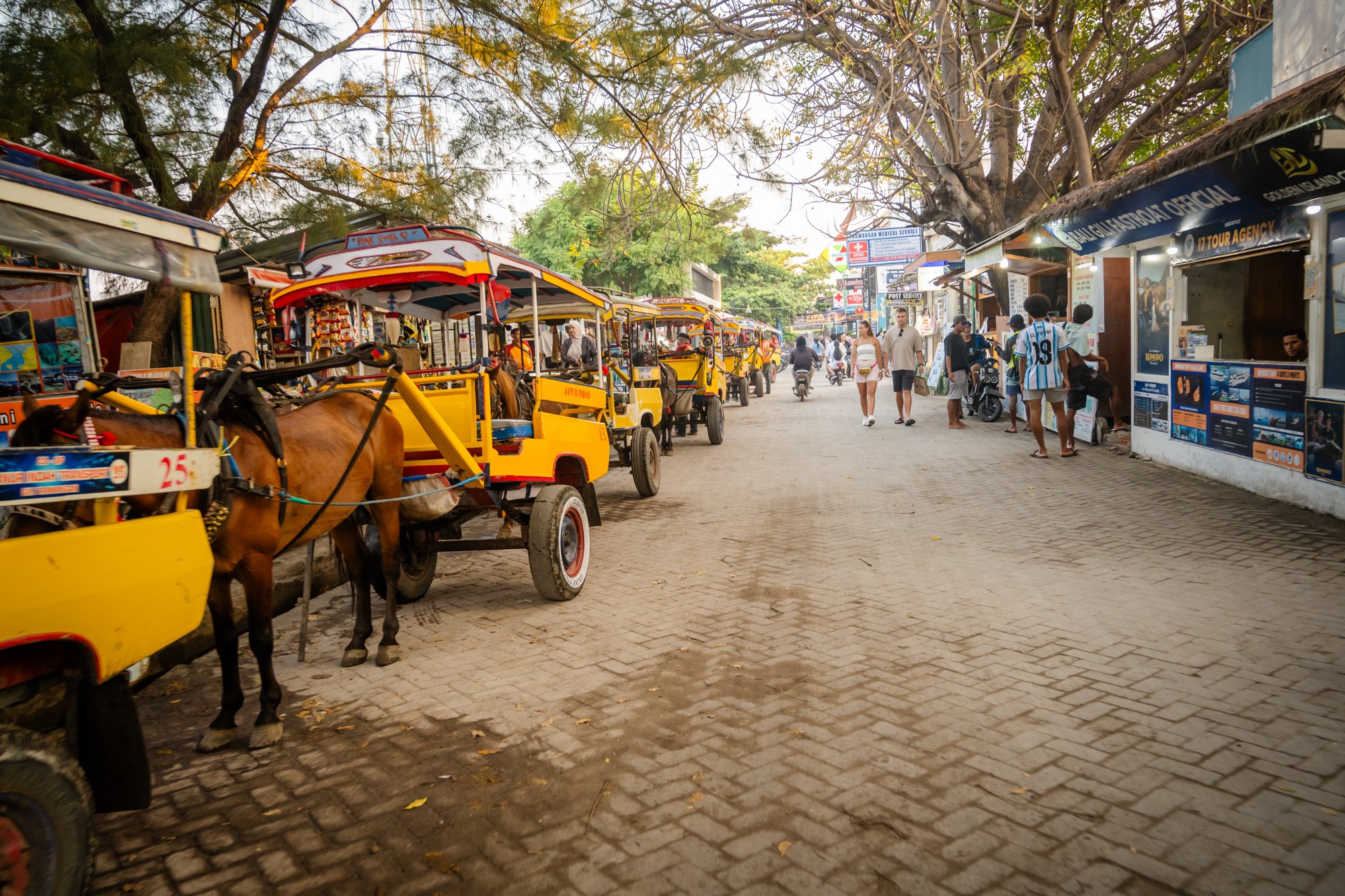
The dusty streets.
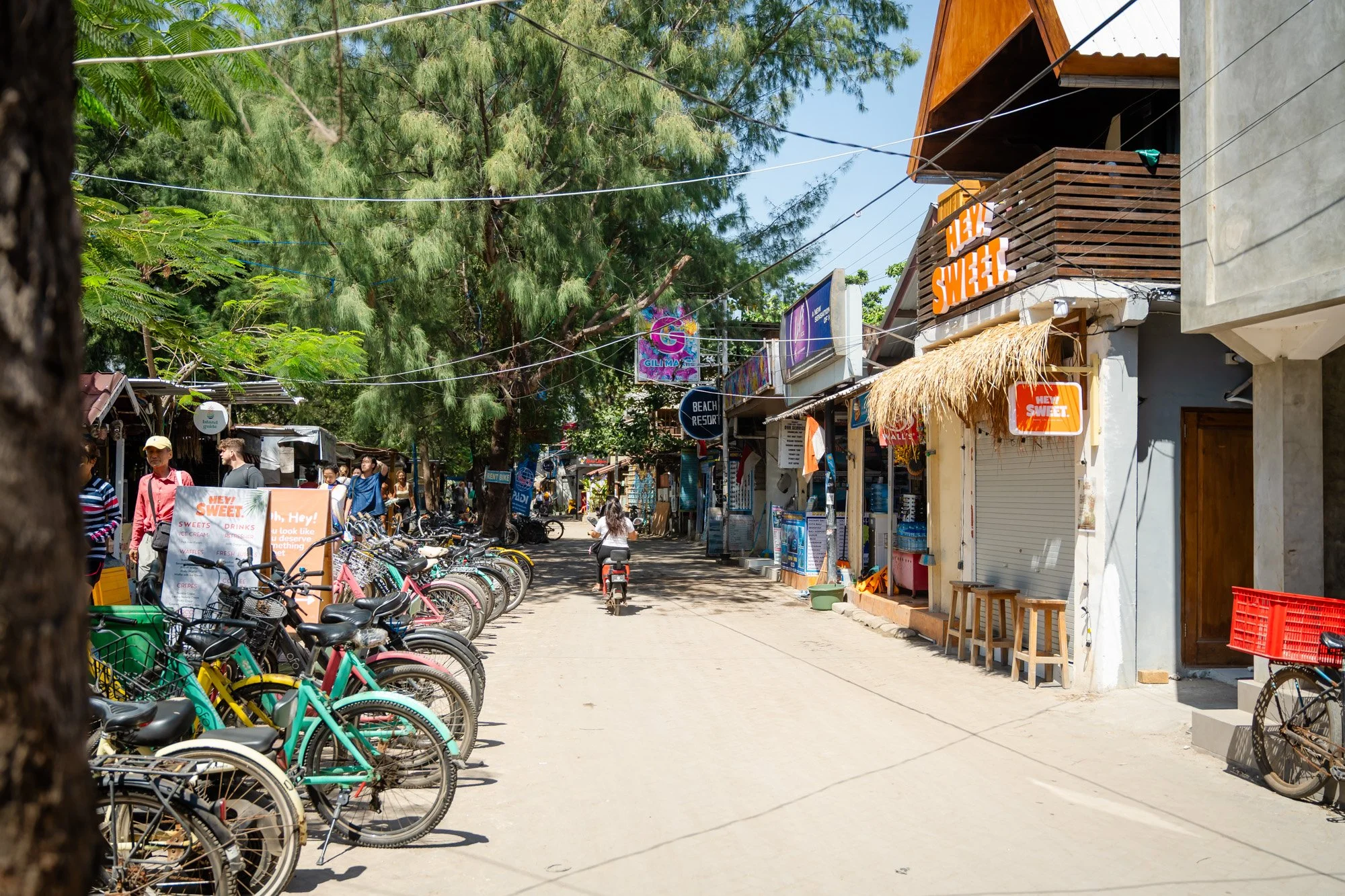
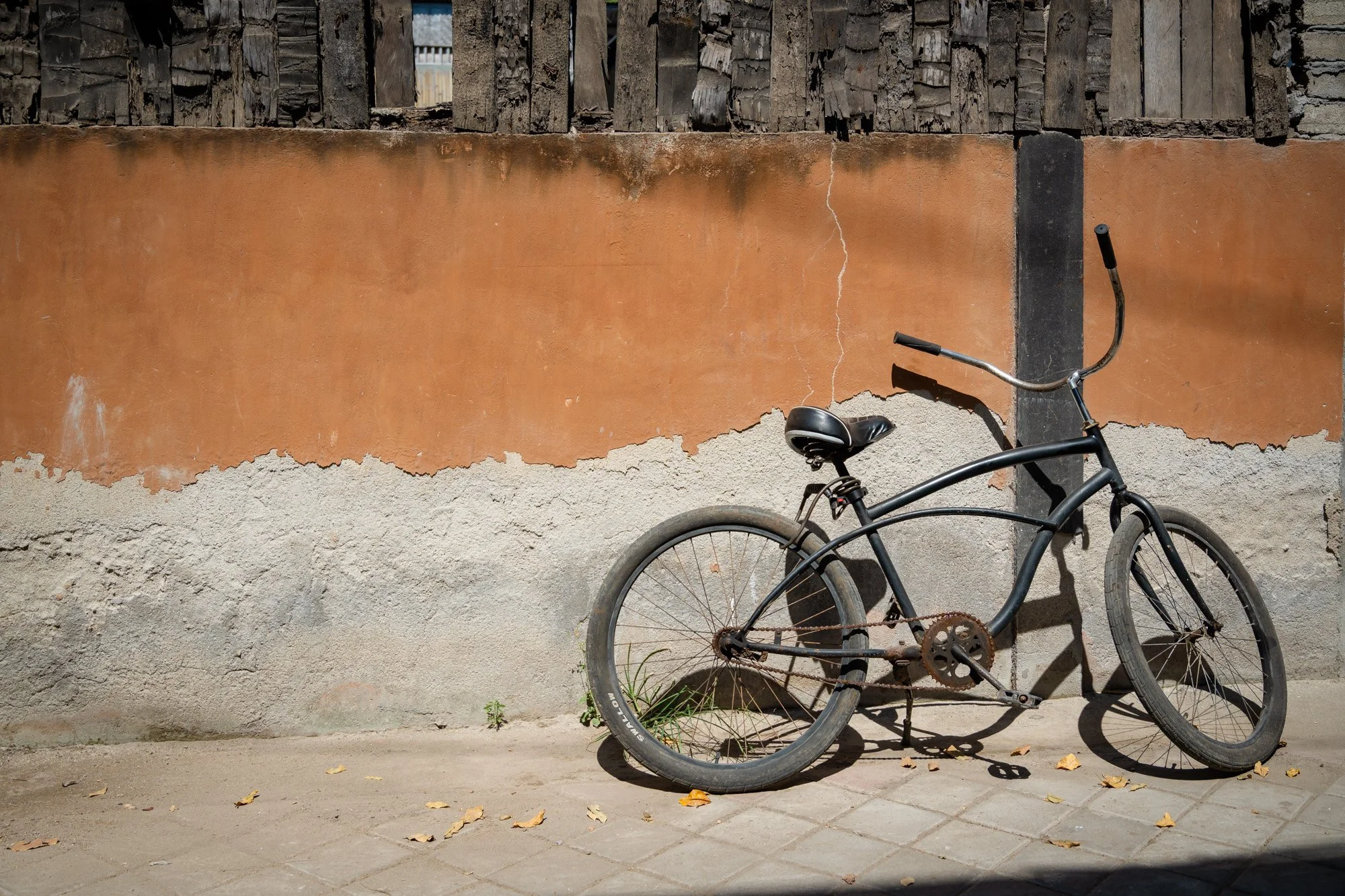
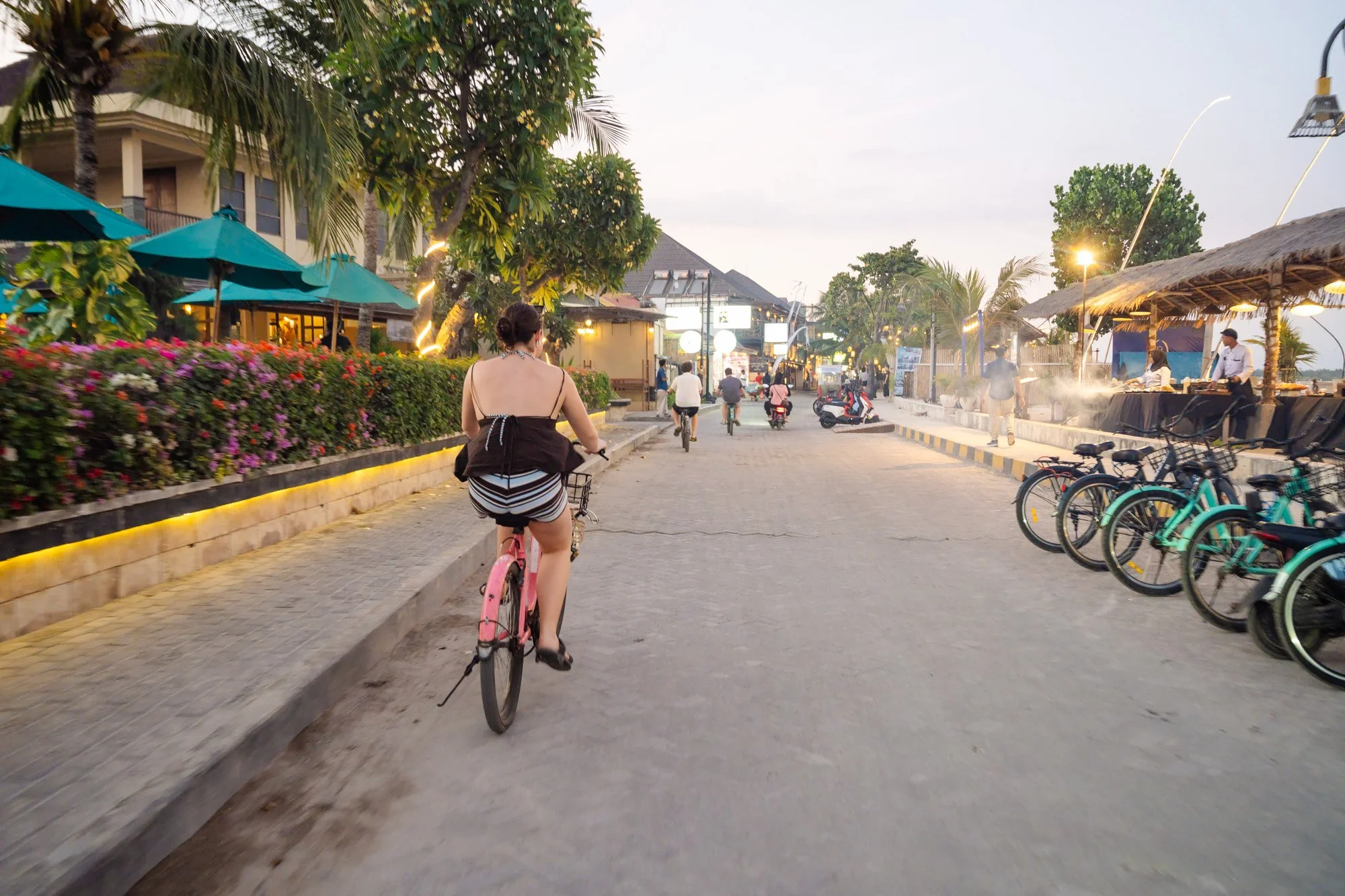
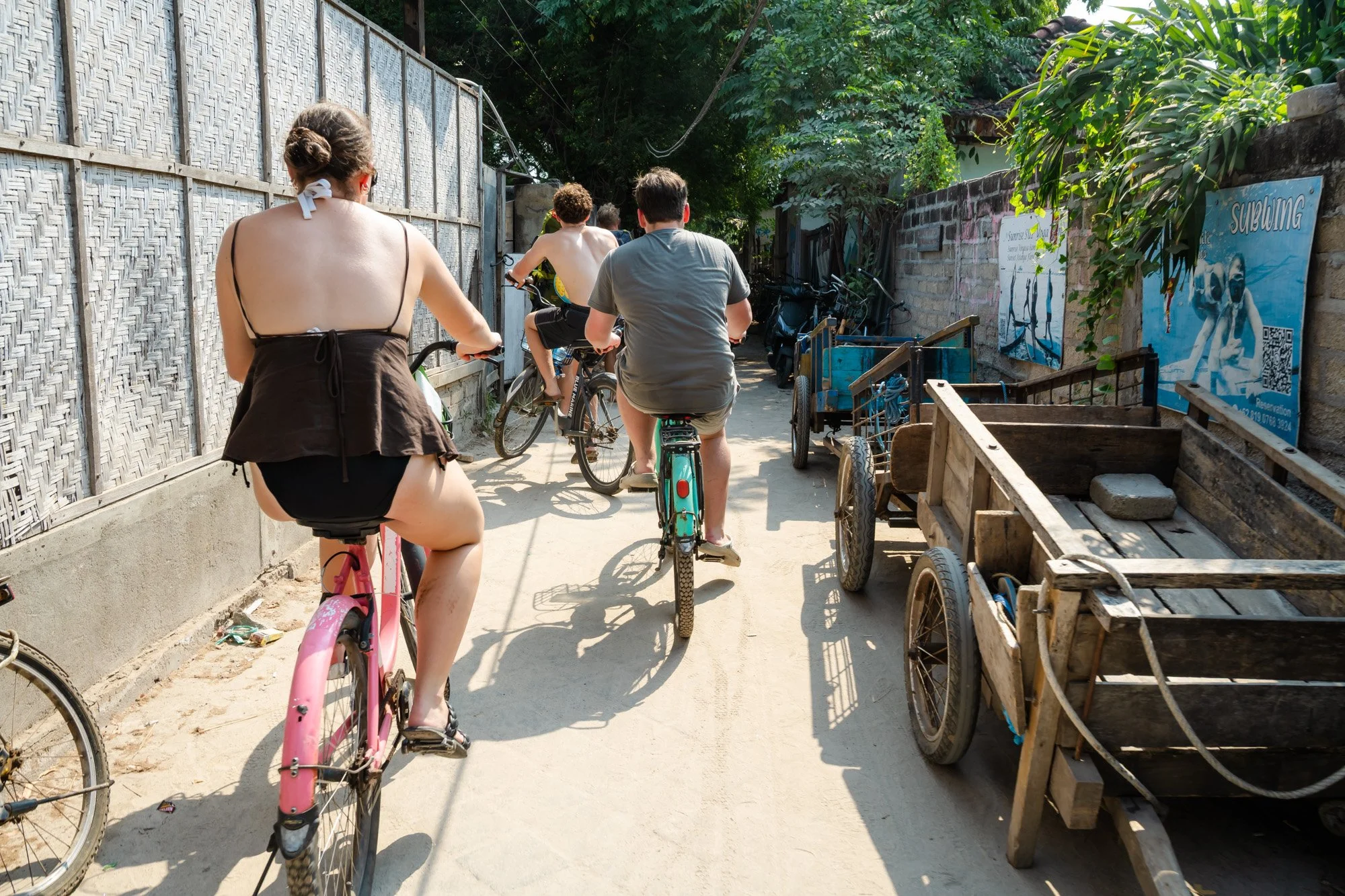
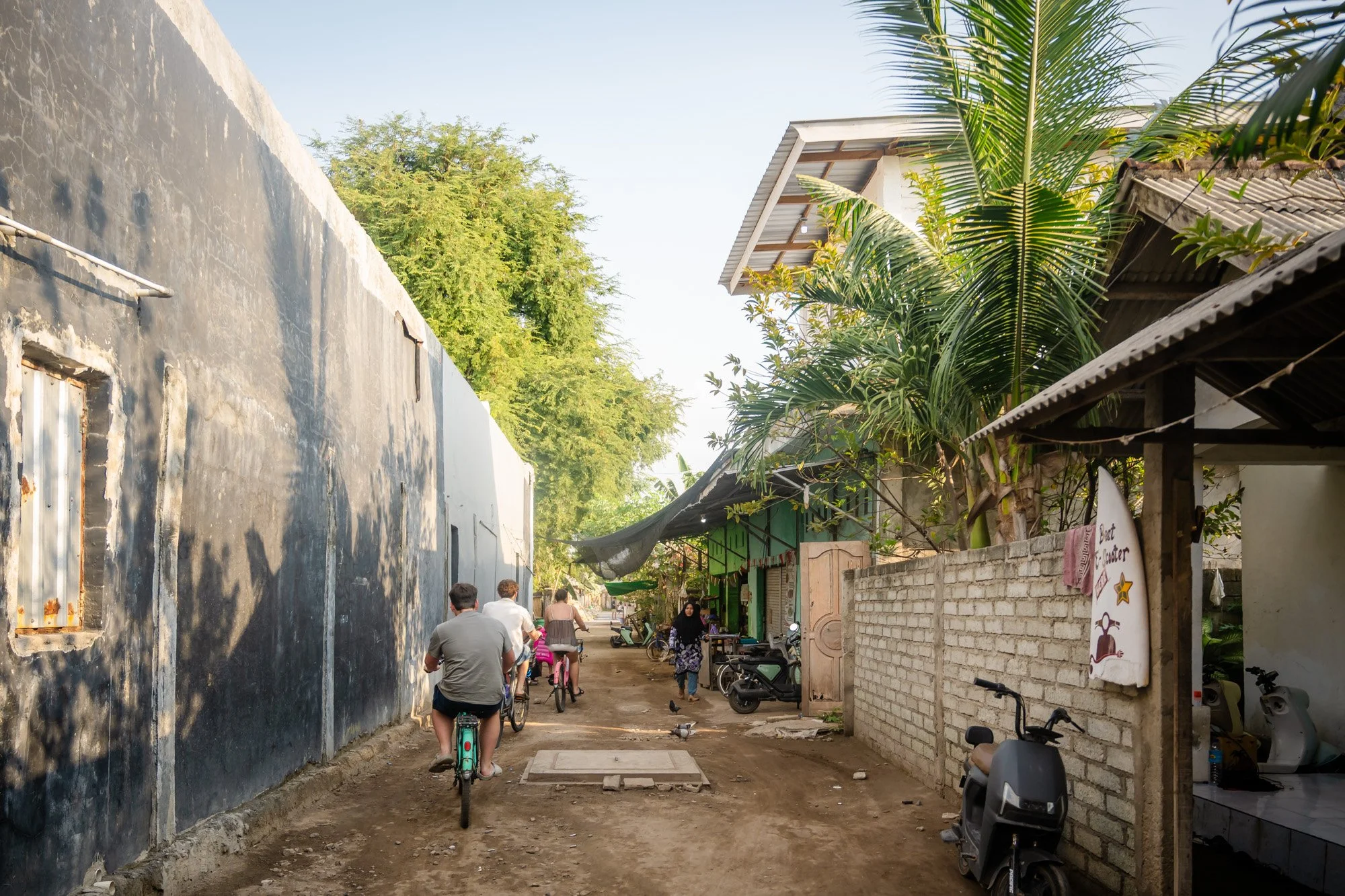
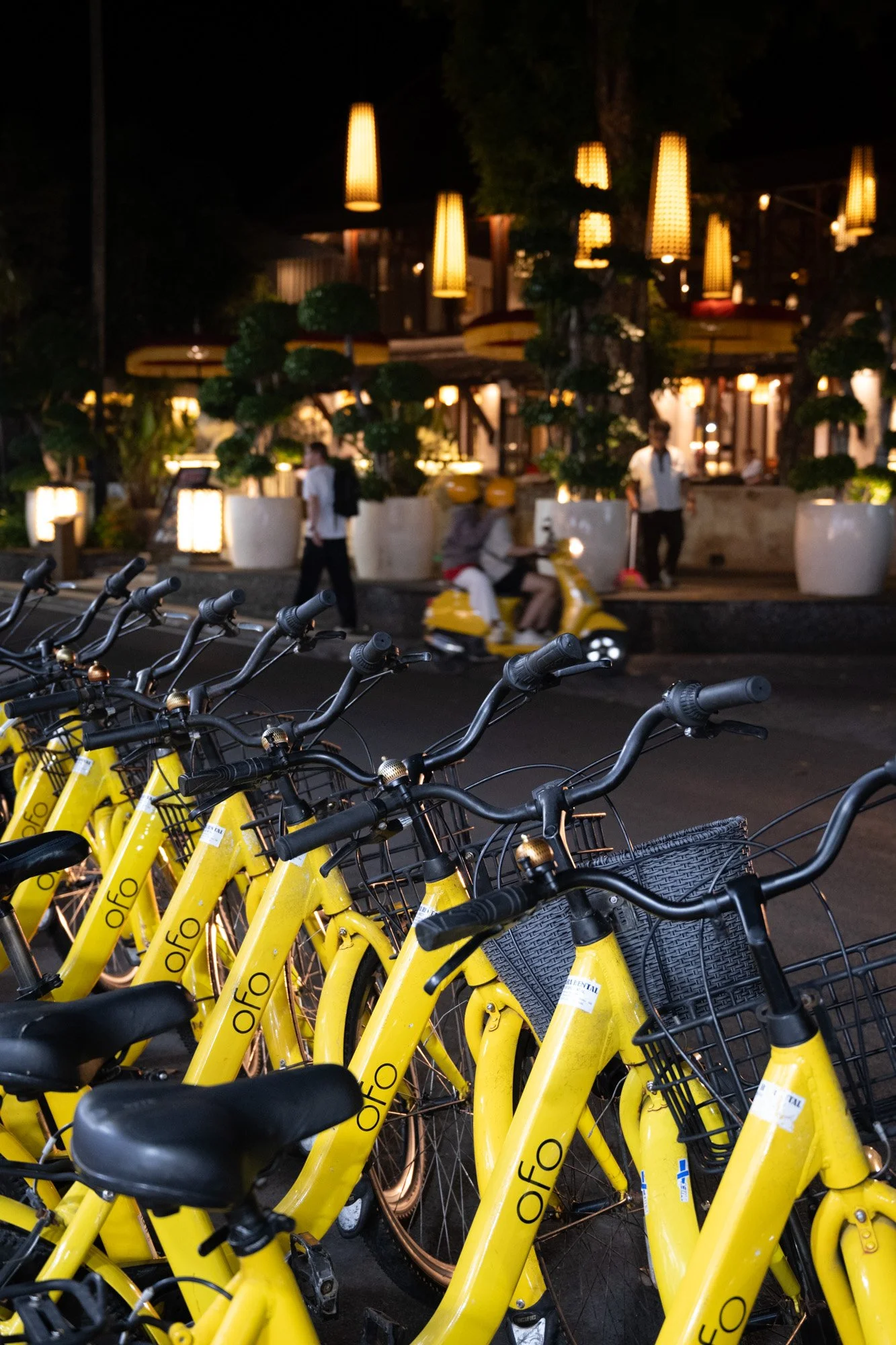
The bicycles clunking along.
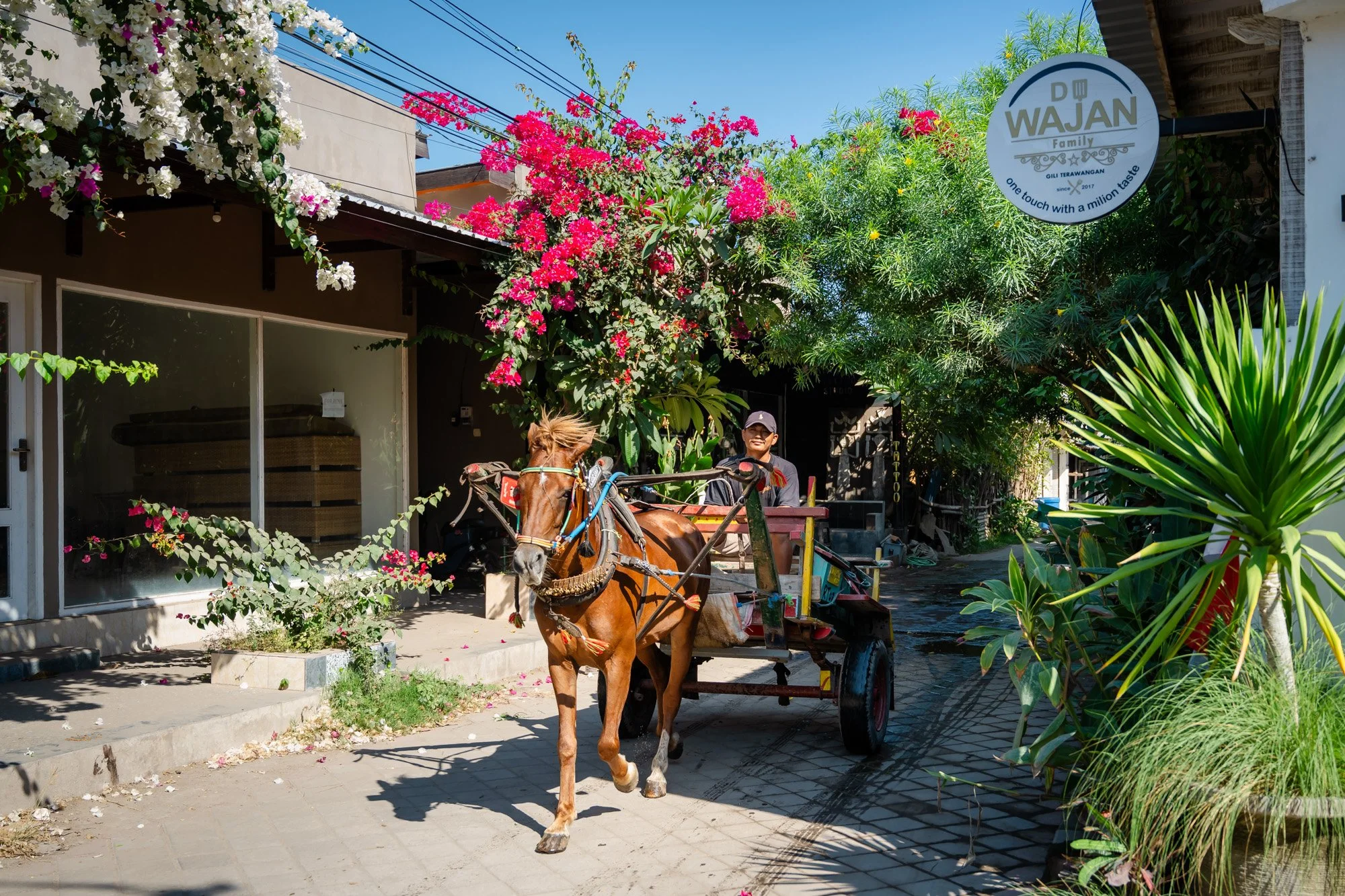
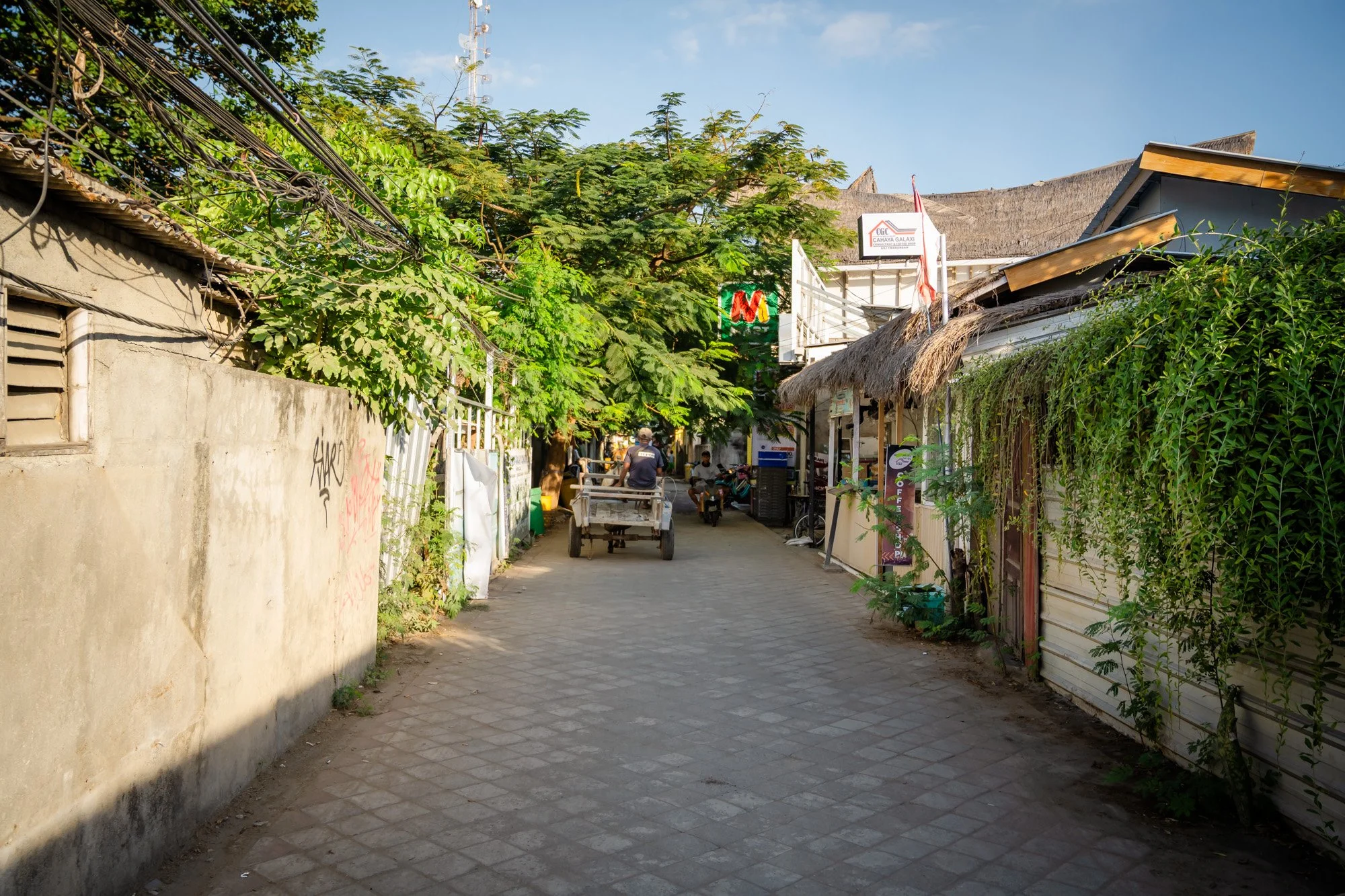
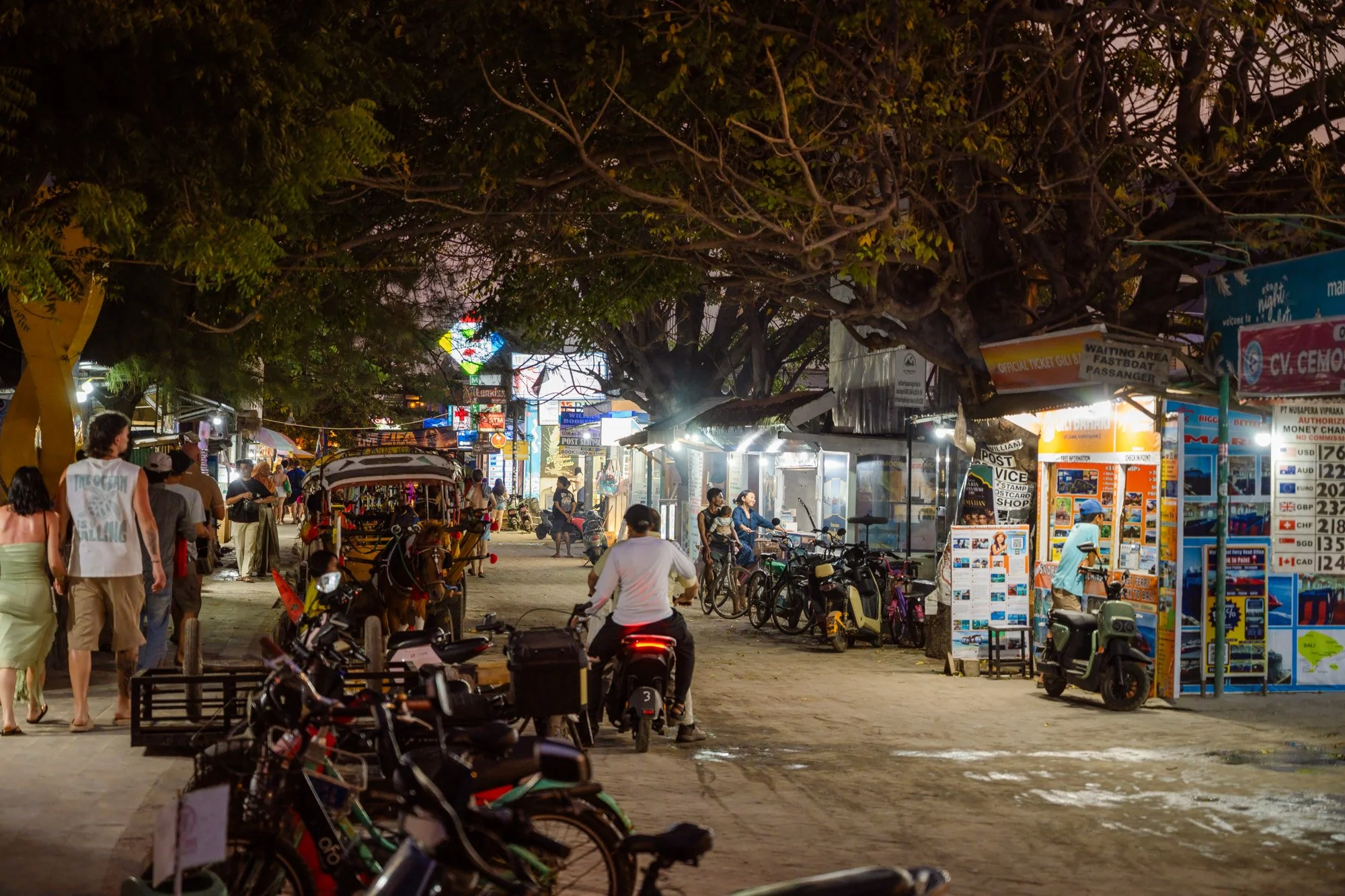
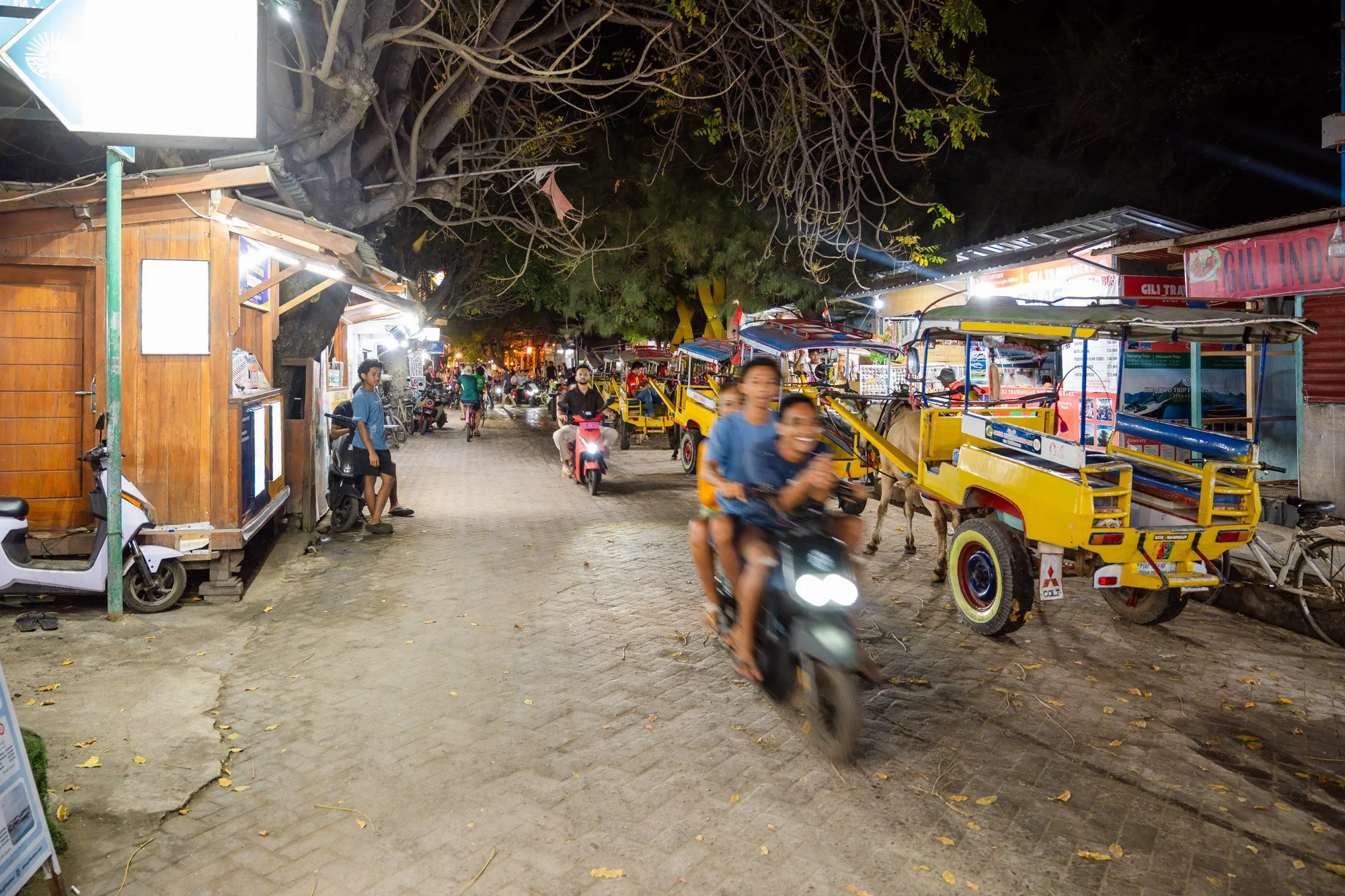
The horses and carts weaving their way through the crowds.
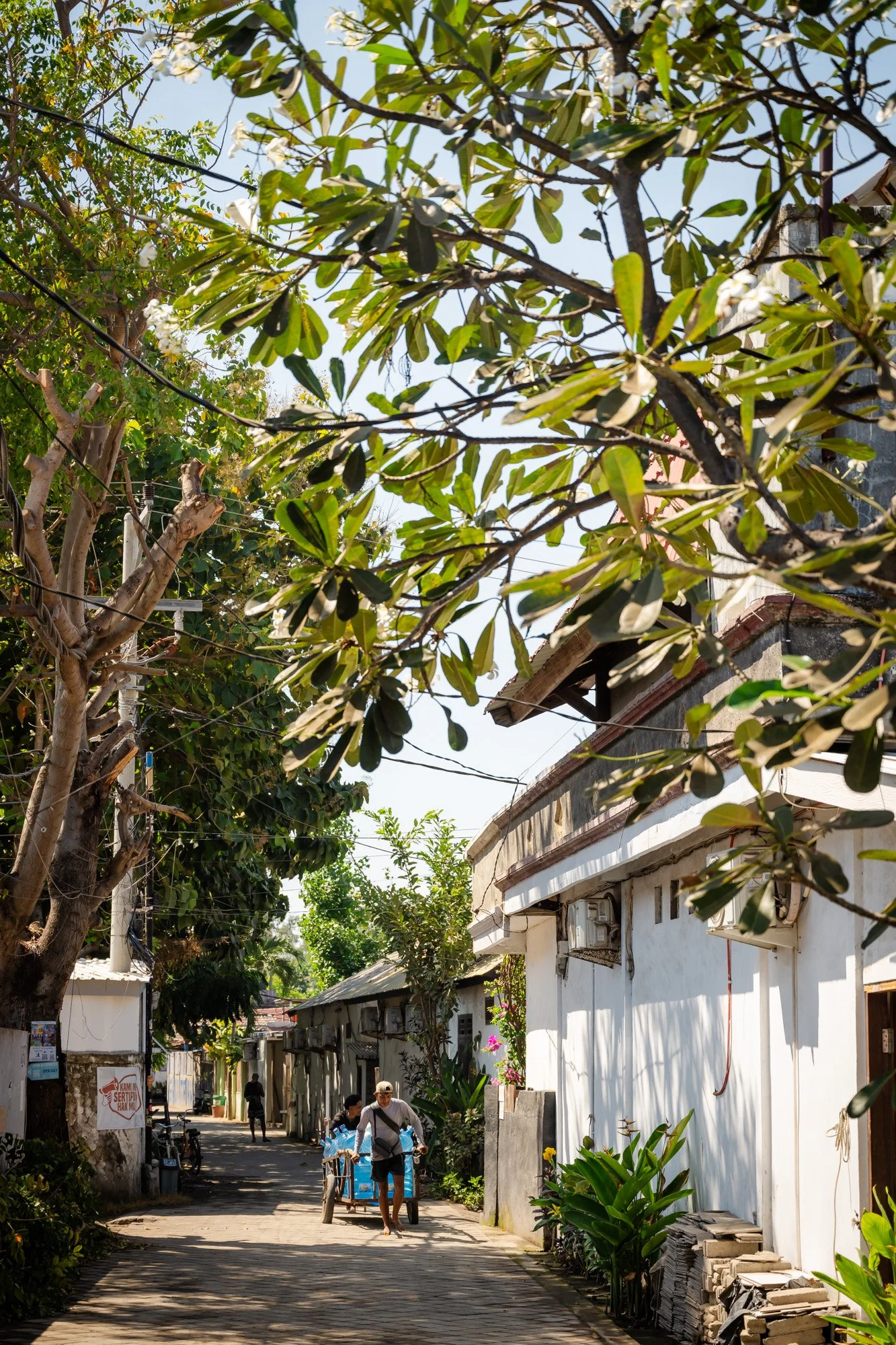
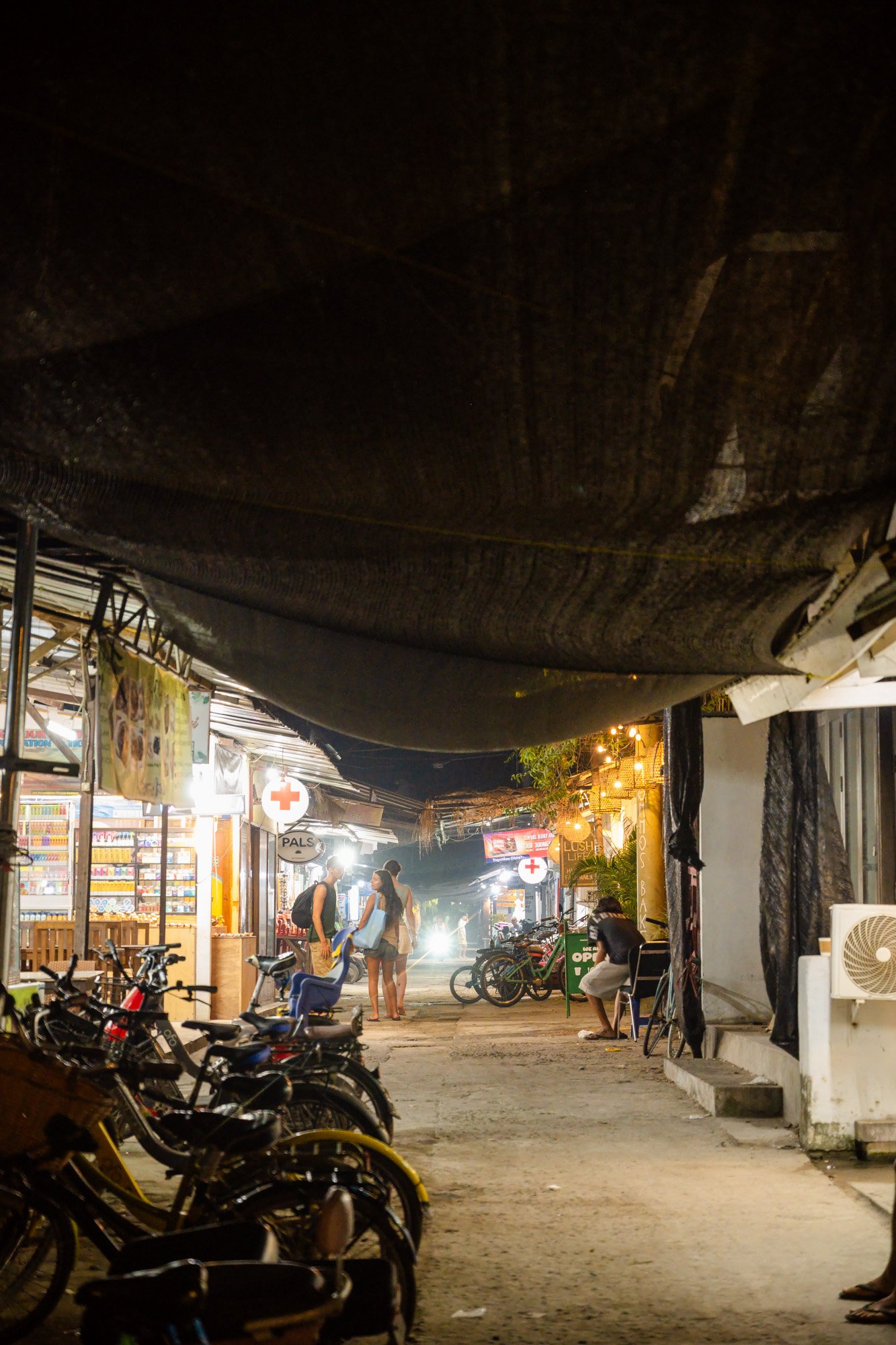
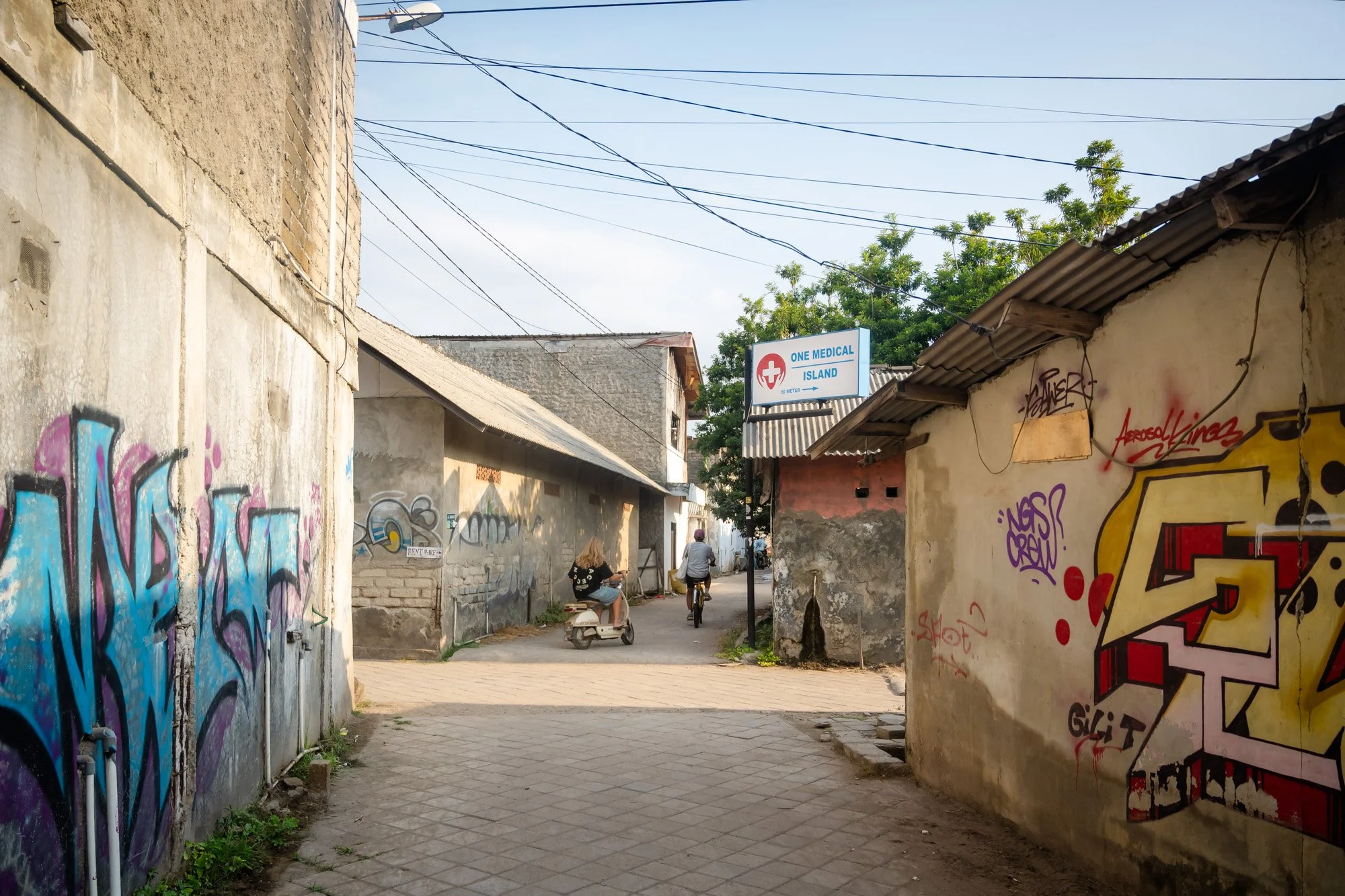
The little back alleys where you never quite knew what you would find.
Gili Trawangan was not what I expected - and that’s exactly why I enjoyed it.
Not the party island I expected
I’ll admit, I was a little hesitant about visiting Gili Trawangan.
I had always heard it described as the party island — a place known for backpackers, late nights and people drinking until sunrise.
And while I’m sure that side of the island exists, I never saw it.
I was genuinely surprised by how peaceful it felt.
Instead of endless partying, I found families, couples and travellers of all ages enjoying the island. There were lots of European visitors, and the overall atmosphere felt relaxed and easygoing.
I didn’t see streets full of drunk people wandering around, and we weren’t kept awake by loud music or partying.
Admittedly, we weren’t out late at night - usually heading back to our villa around 9pm — but even then, the island felt calm and comfortable.
For me, Gili Trawangan was much more than its reputation.
It was a place to ride bikes, explore, swim with turtles, slow down and enjoy island life.
Sometimes a place’s reputation doesn’t quite match the reality, and I’m really glad I gave Gili T a chance.
An island without cars
One of the first things you notice when you arrive on Gili Trawangan is what you don’t see.
Cars.
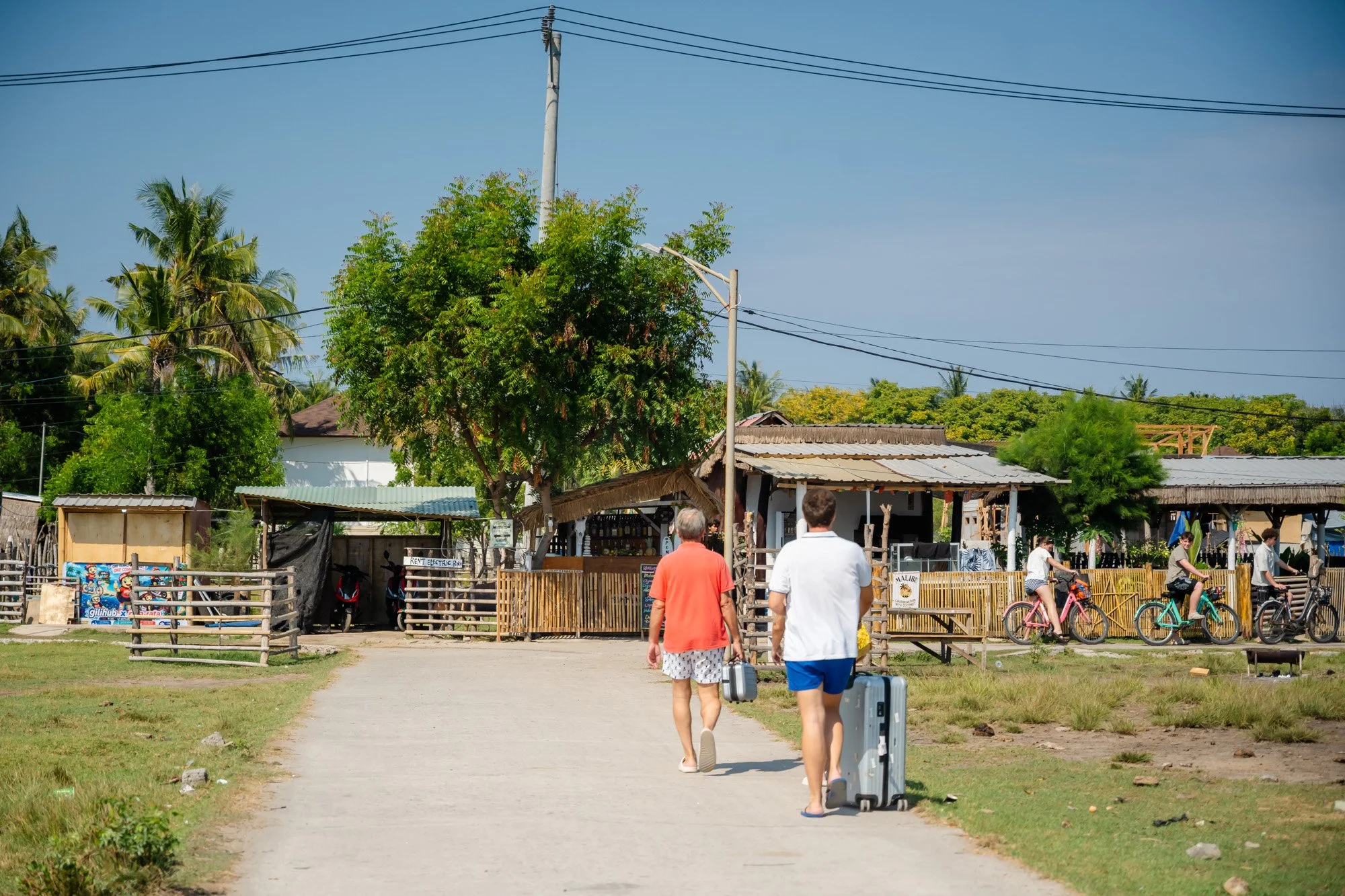
There are no cars on the island, and that completely changes the feeling of the place.
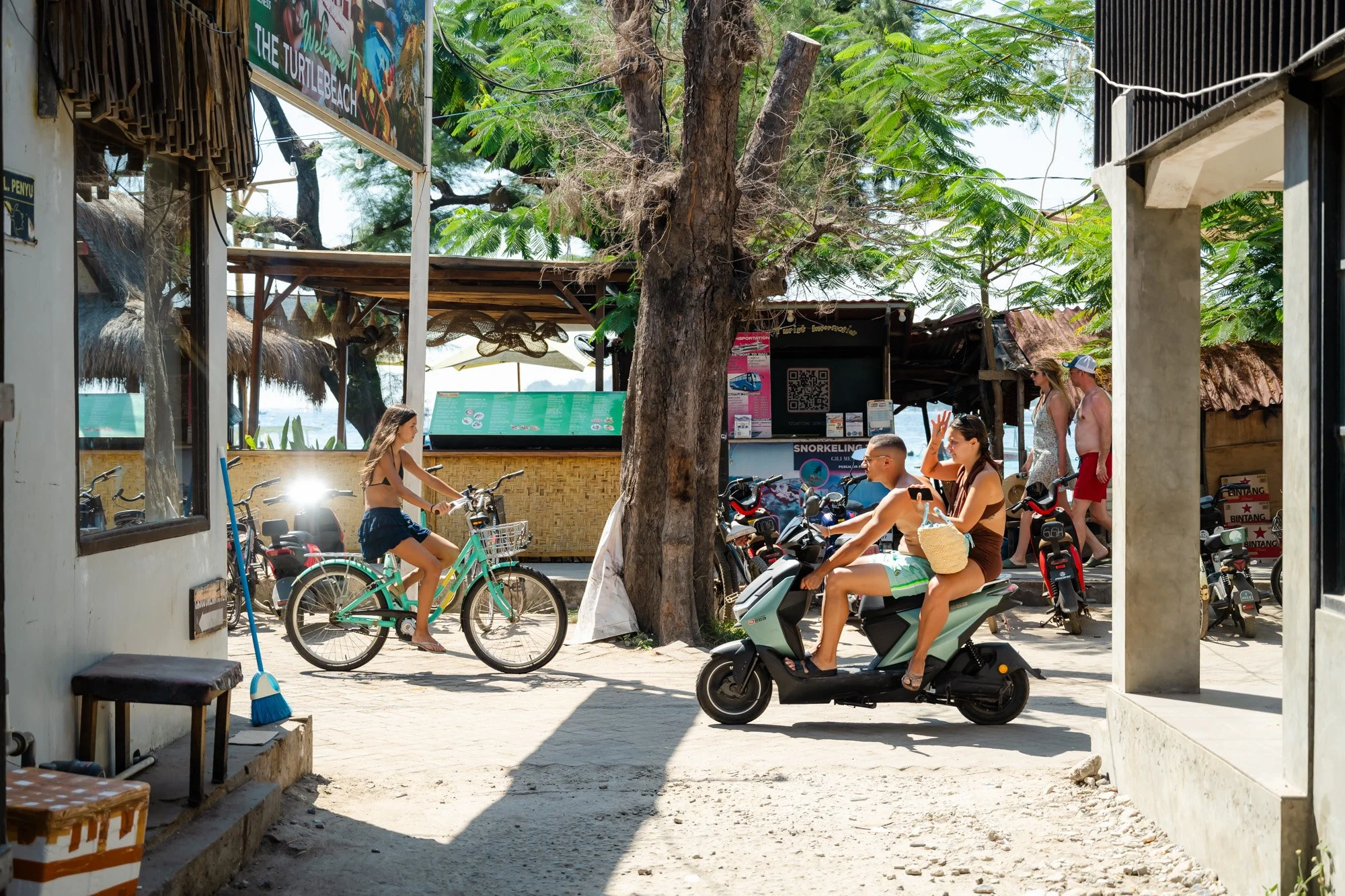
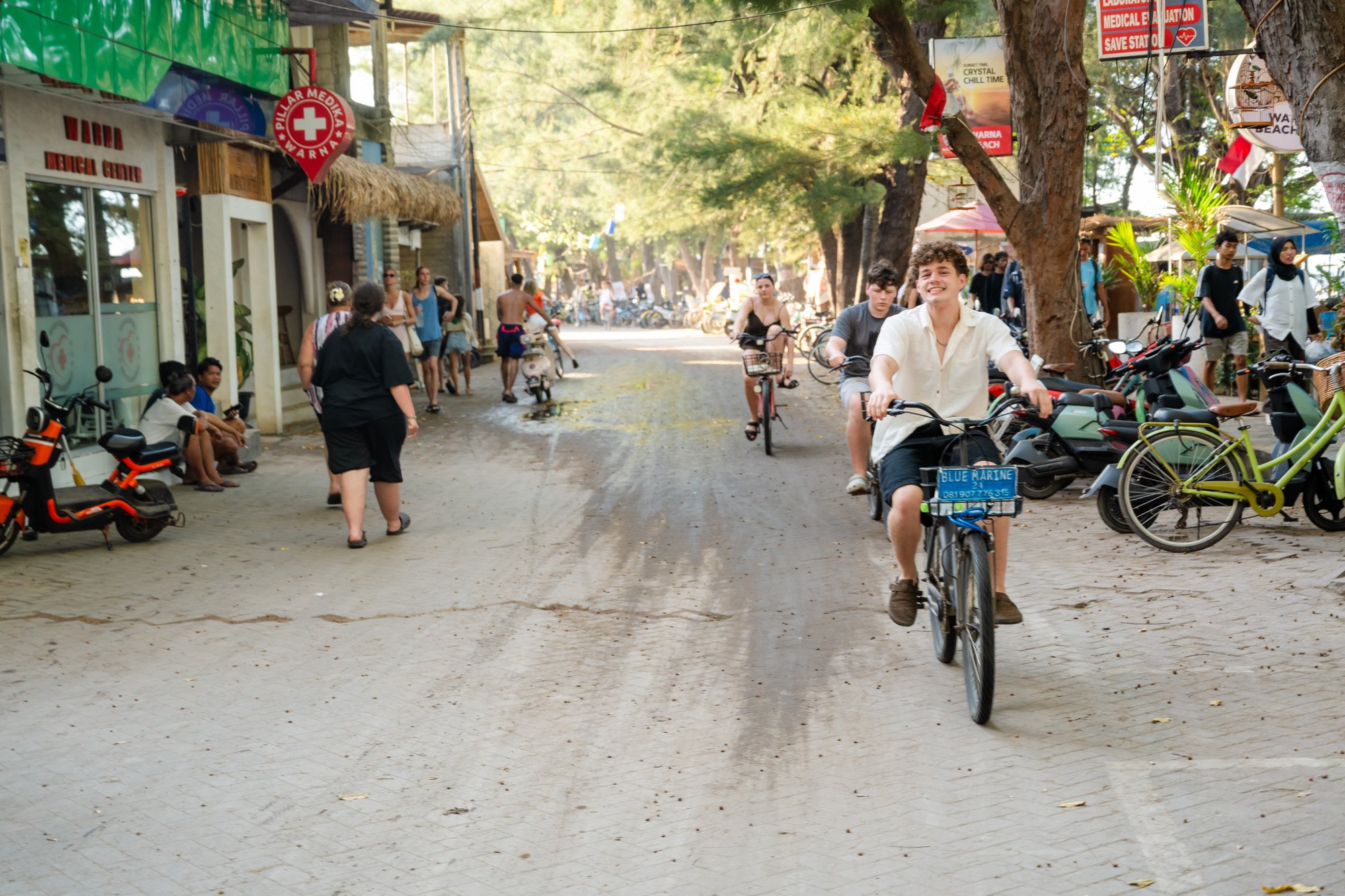
Instead, people get around by bicycle, electric bikes, walking or the traditional horse-drawn carts known as cidomo.
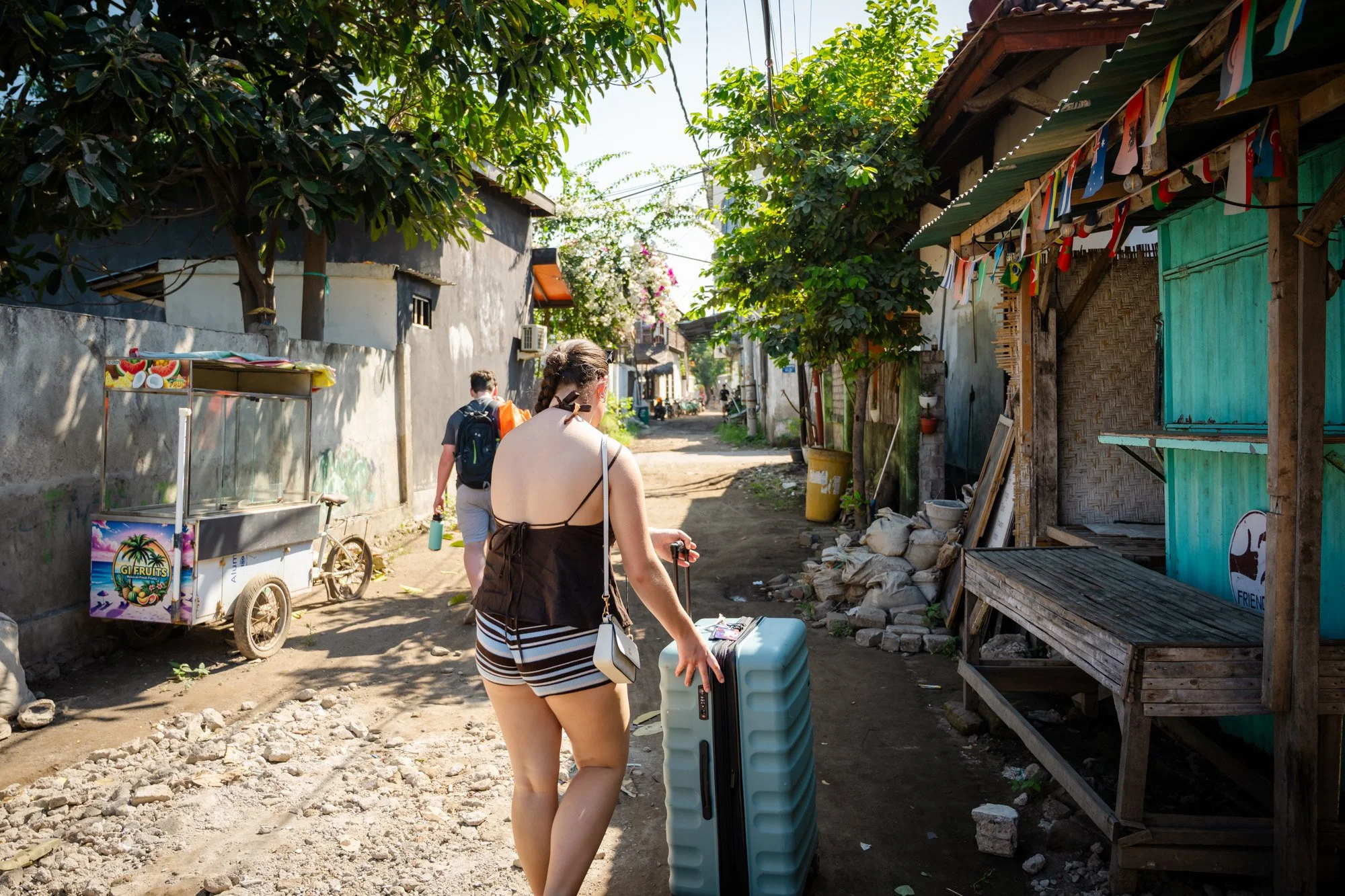
When you arrive by boat, you have a choice: walk with your luggage, hire a bicycle, or jump on a horse and cart to take you to your accommodation.
You’ll often see travellers making their way down the streets pulling suitcases behind them - a very different arrival experience from most holiday destinations.
And honestly, I loved it (when I didn’t have to lug the suitcase).
The lack of cars creates a slower pace, even when the streets themselves can feel wonderfully chaotic.
Exploring by bicycle
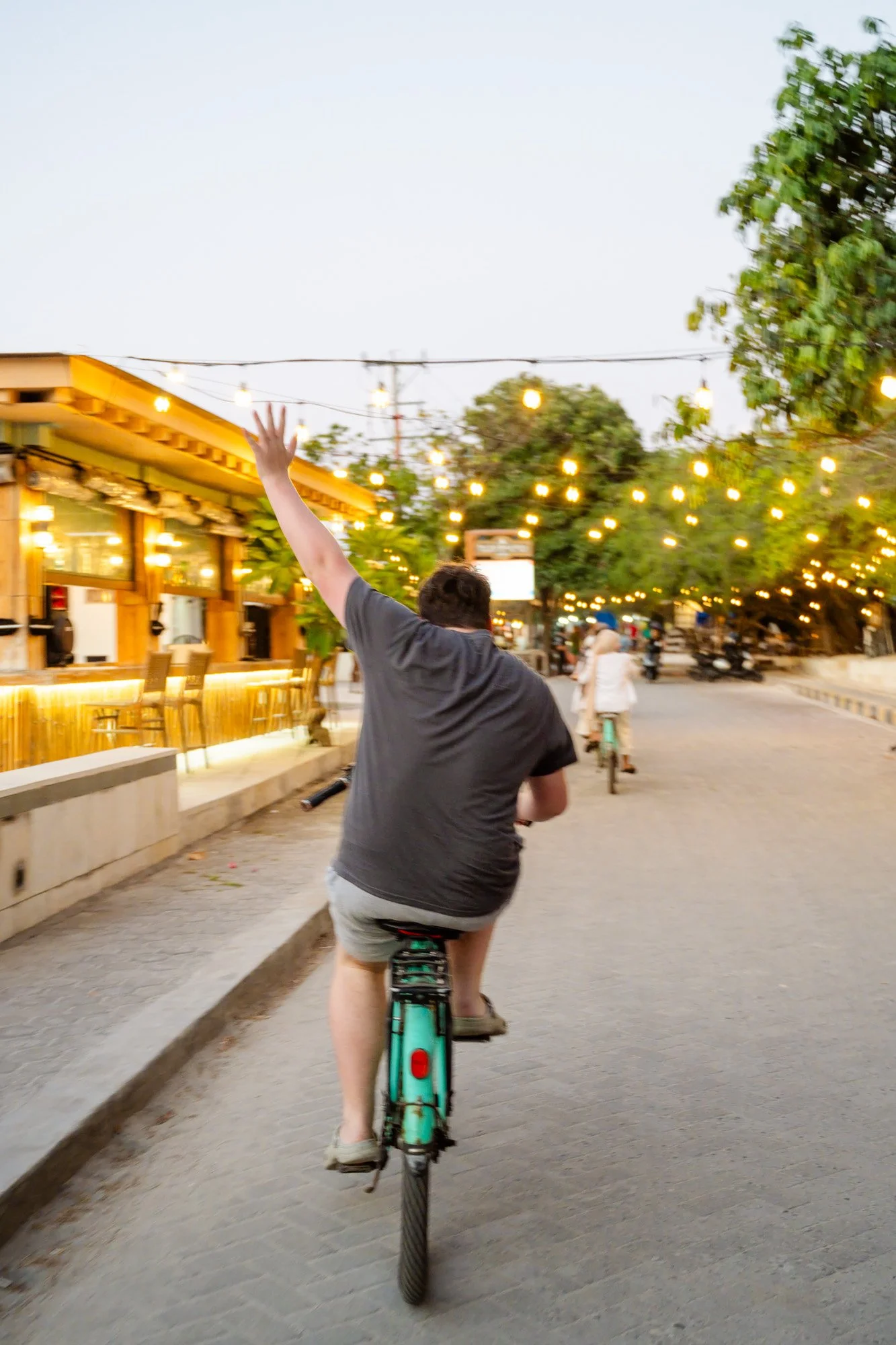
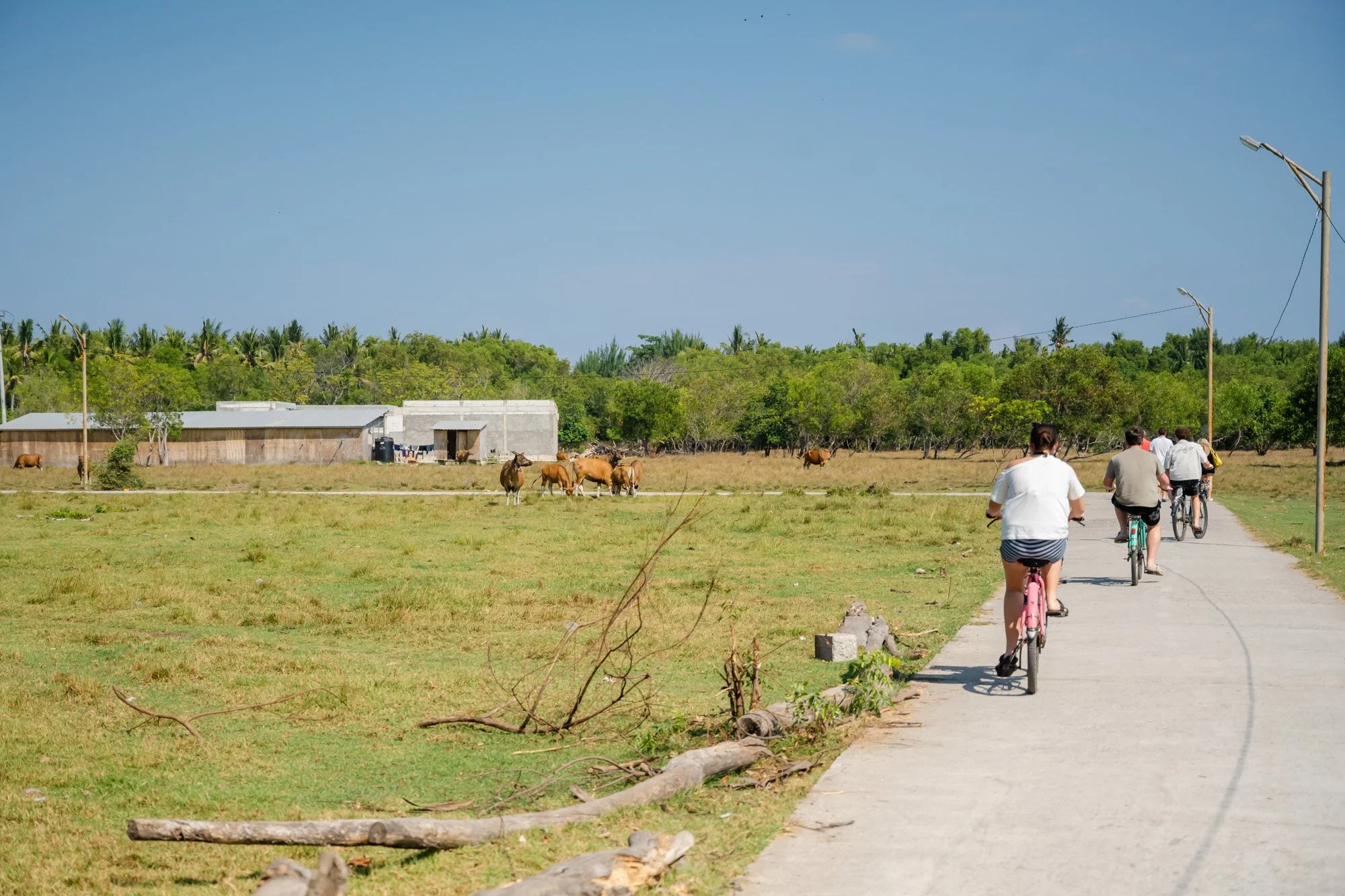
The best way to experience Gili Trawangan is by bicycle.
Walking is possible, but cycling allows you to explore much more of the island and discover little corners you might otherwise miss.
Although don’t expect a smooth ride!
Our bikes had definitely seen better days.
Seats that refused to stay up, stands that constantly collapsed, chains that decided to come off at the most inconvenient moments, and a constant clunking sound as we made our way around.
But somehow, that was part of the fun.
It wasn’t about having the perfect bike.
It was about laughing, exploring and enjoying the adventure.
The streets of Gili Trawangan
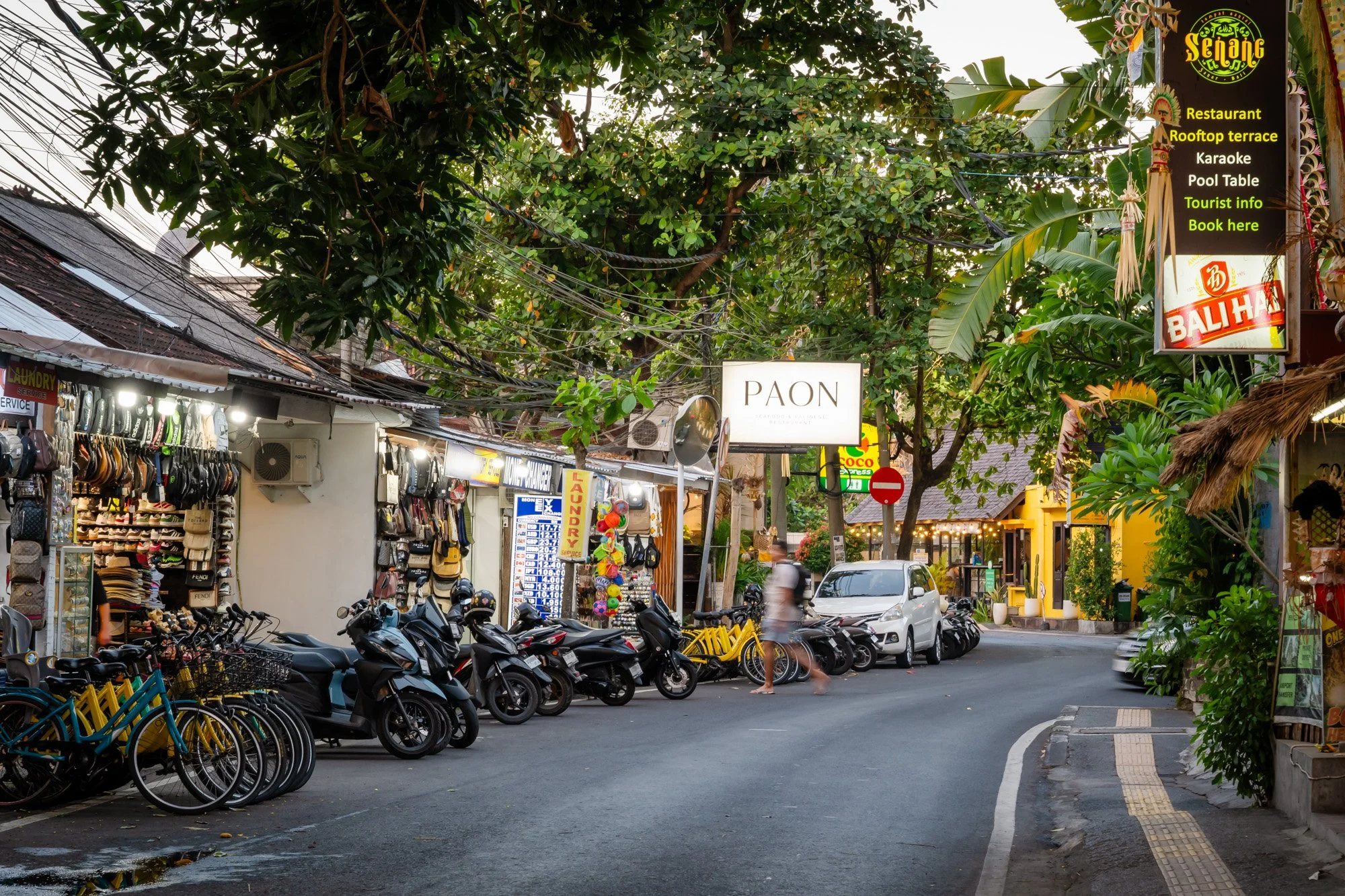
The main road circles the island, but the real charm is found when you turn down the smaller side streets.
Some are paved.
Some are dusty.
Many feel more like little back alleys than roads.
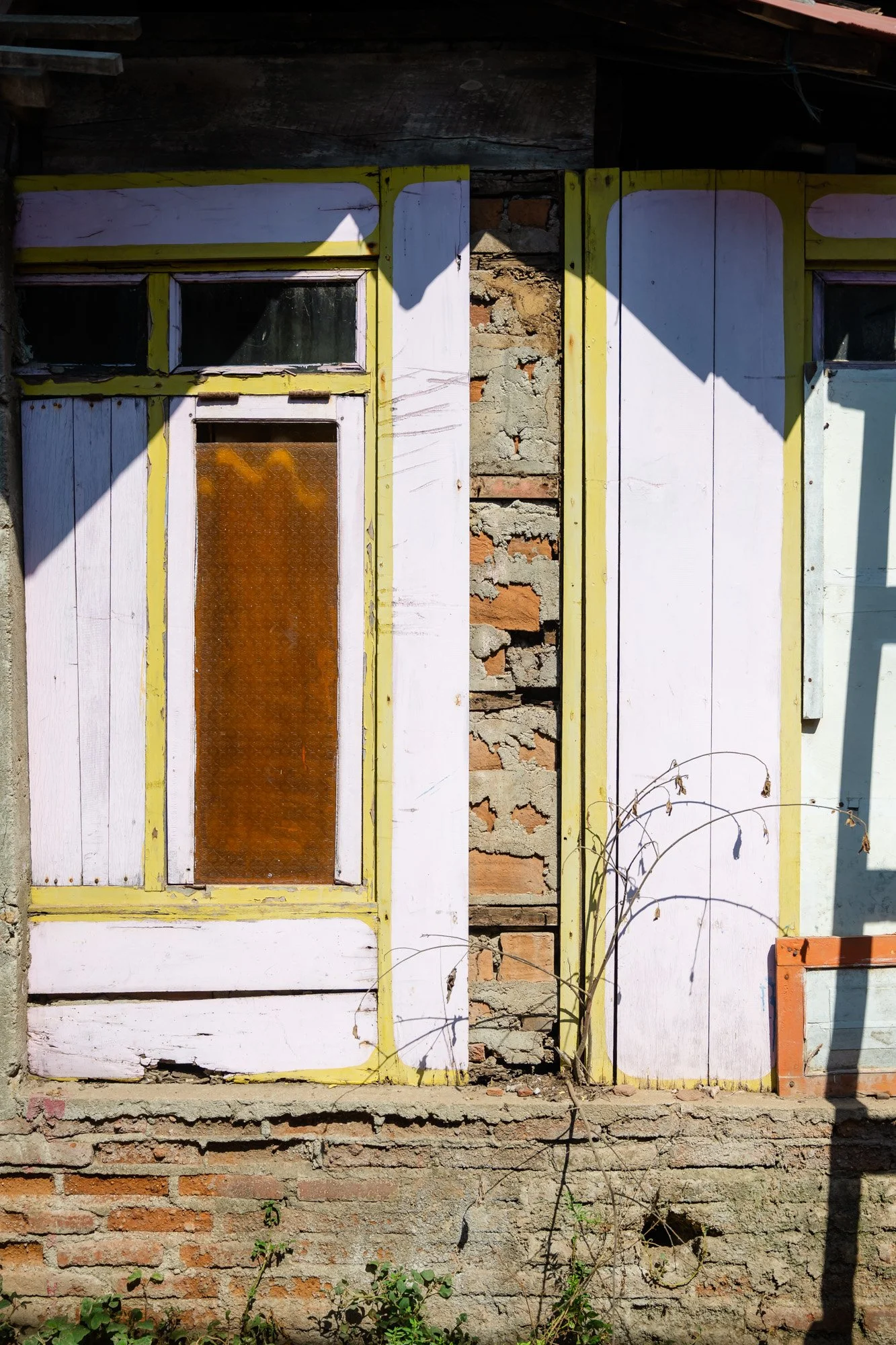
You’ll find crumbling buildings, unfinished structures and places that look like they have been forgotten. Yet somehow, amongst all of this, there is still beauty.
The tropical plants growing around old walls.
The colours.
The people.
The little moments of daily life happening around you.
It’s a place where you can see the imperfections, but they somehow add to the character.
Beauty amongst the craziness
At times, Gili Trawangan feels busy and chaotic.
Electric bikes whizz past.
Bicycles weave around pedestrians.
Horse and carts make their way through the streets.
People are laughing, carrying bags, heading to the beach or simply going about their day.
But underneath all of that movement is a sense of peace.
Maybe it’s because there are no cars.
Maybe it’s because island life naturally slows people down.
Or maybe it’s because you’re surrounded by ocean, sunshine and a community that lives at a different pace.
A photographer’s perspective
For me, Gili Trawangan was a place full of stories.
Not just the beautiful beaches and turquoise water, but the everyday details.
The streets.
The bikes.
The textures of old buildings.
The contrast between new and old.
The little moments that show what life is really like on the island.
Sometimes the most interesting places aren’t the ones that are perfectly polished.
Sometimes they’re the places where beauty exists alongside the imperfections.
And Gili Trawangan is definitely one of those places.
It reminded me that sometimes the places we almost don’t visit become the ones we remember most.
Catching the Ferry from Padang Bai to Gili Trawangan
I'll admit, before booking the ferry to Gili Trawangan, I was a little nervous.
Like a lot of people, I'd seen stories in the media about boats sinking and rough crossings between Bali and the Gili Islands. Whether they're common or not, they were enough to make me spend a fair bit of time researching which company to book with.
In the end, I chose Eka Jaya.
The main reason? Their boats are bigger than many of the others, and everything I read suggested they were more stable if the weather turned or the sea got a little rough. They also recommended taking one of the earlier ferries before the wind picked up later in the day, which made a lot of sense to me.
As it turned out, it was a great decision.
An unexpectedly early start
I organised a transfer to Padang Bai through Eka Jaya, and we arrived ridiculously early.
Not just a little early... really early.
Luckily, there was space on an earlier ferry, so after a quick "Yes!" we found ourselves rushing to grab our bags and get checked in before the boat left.
It all happened pretty quickly, but in hindsight I was so glad we jumped on. It meant we arrived on Gili Trawangan earlier and had almost an entire extra morning to enjoy the island.
Head upstairs
Once we'd settled in, I went straight upstairs.
This is definitely where I'd recommend spending at least part of the trip.
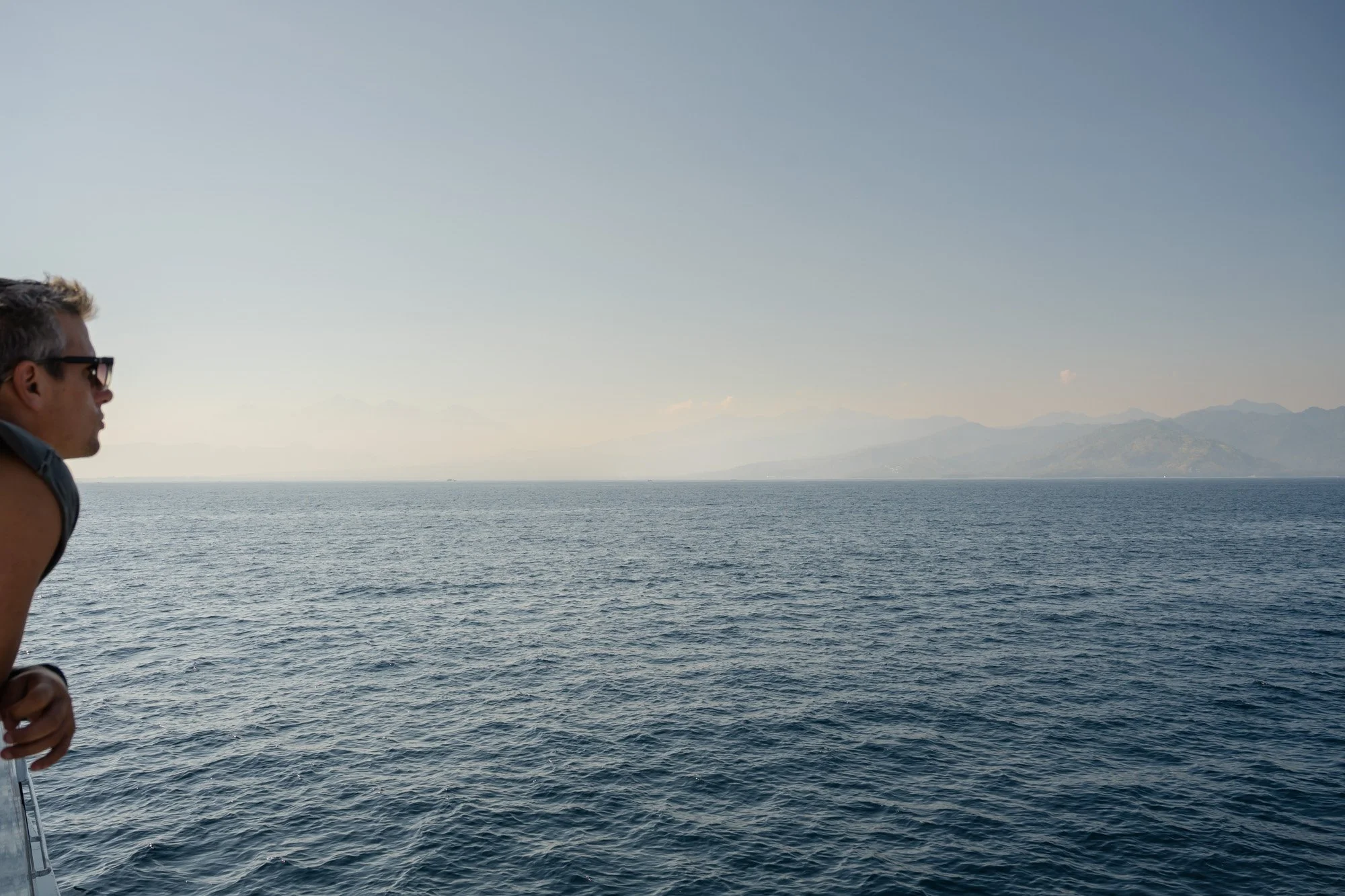
The views are incredible.
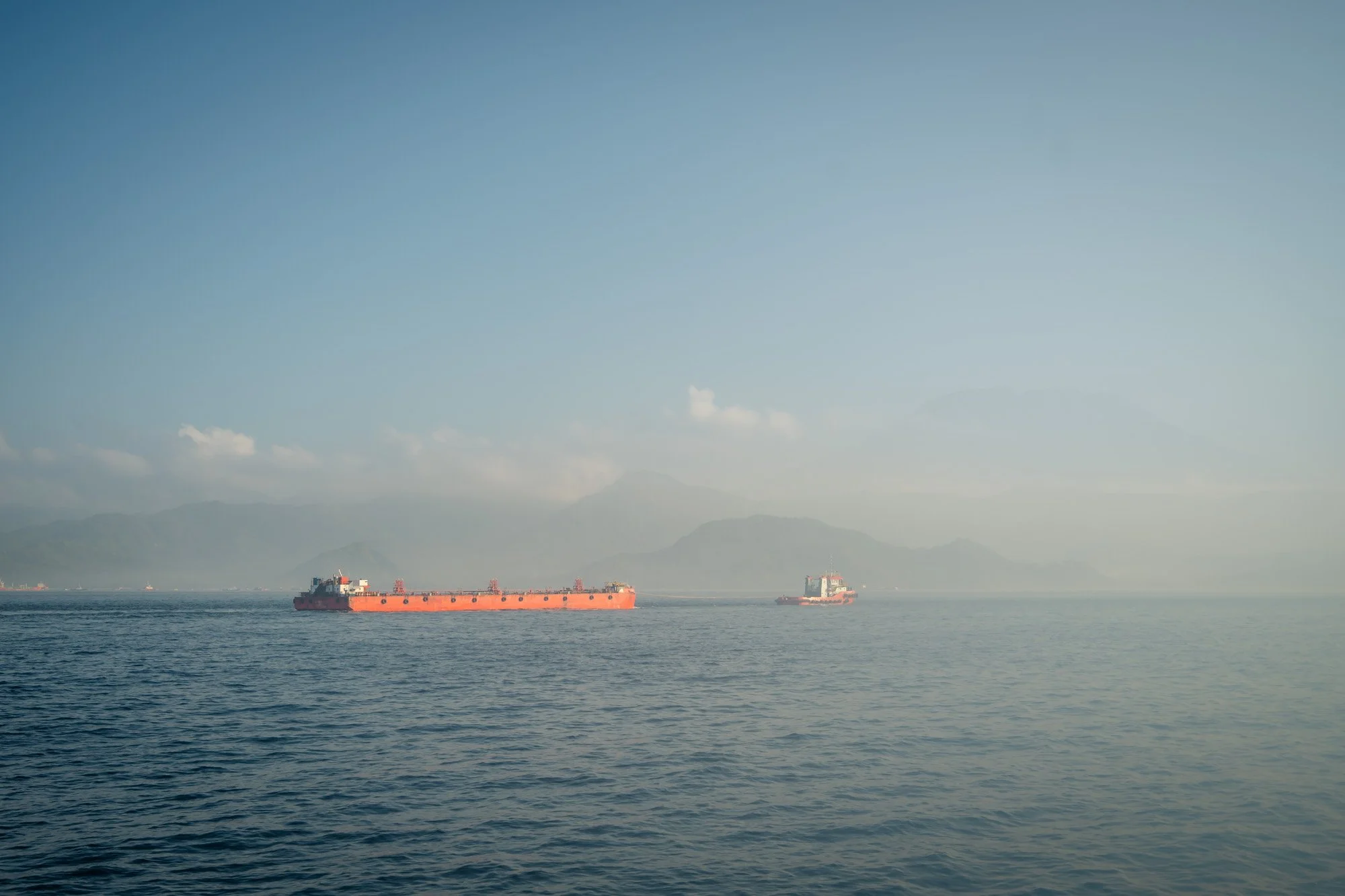
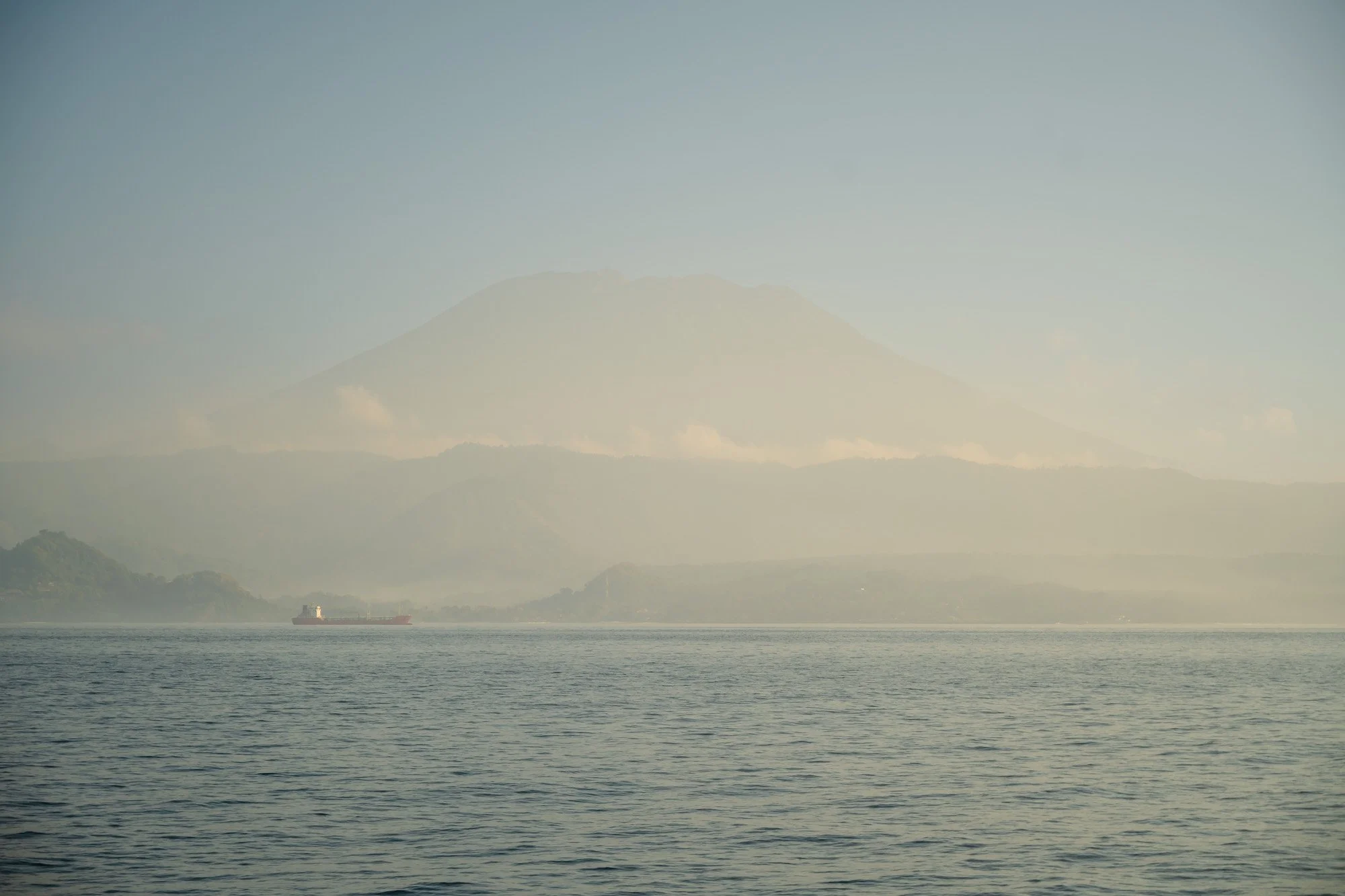
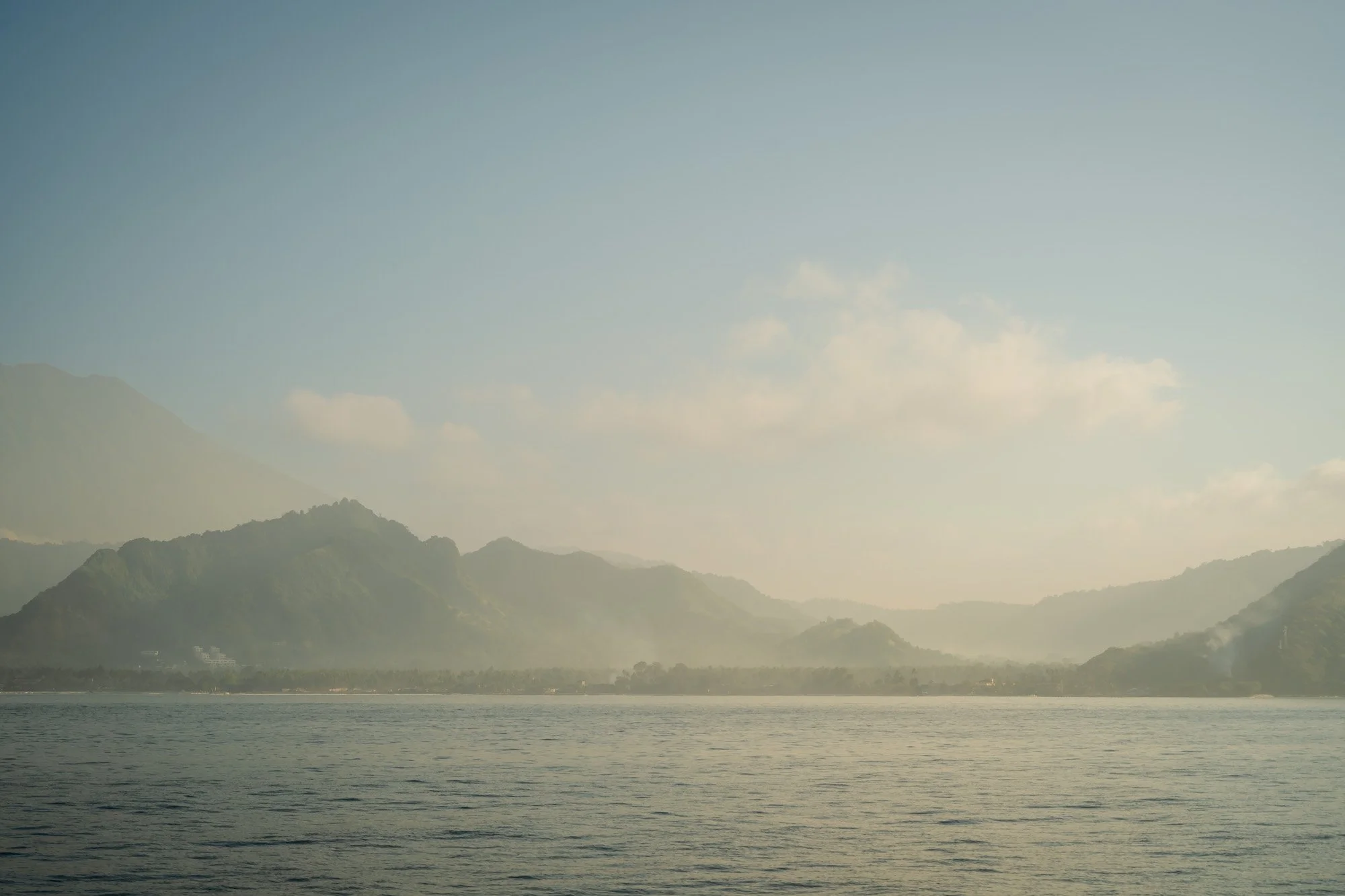
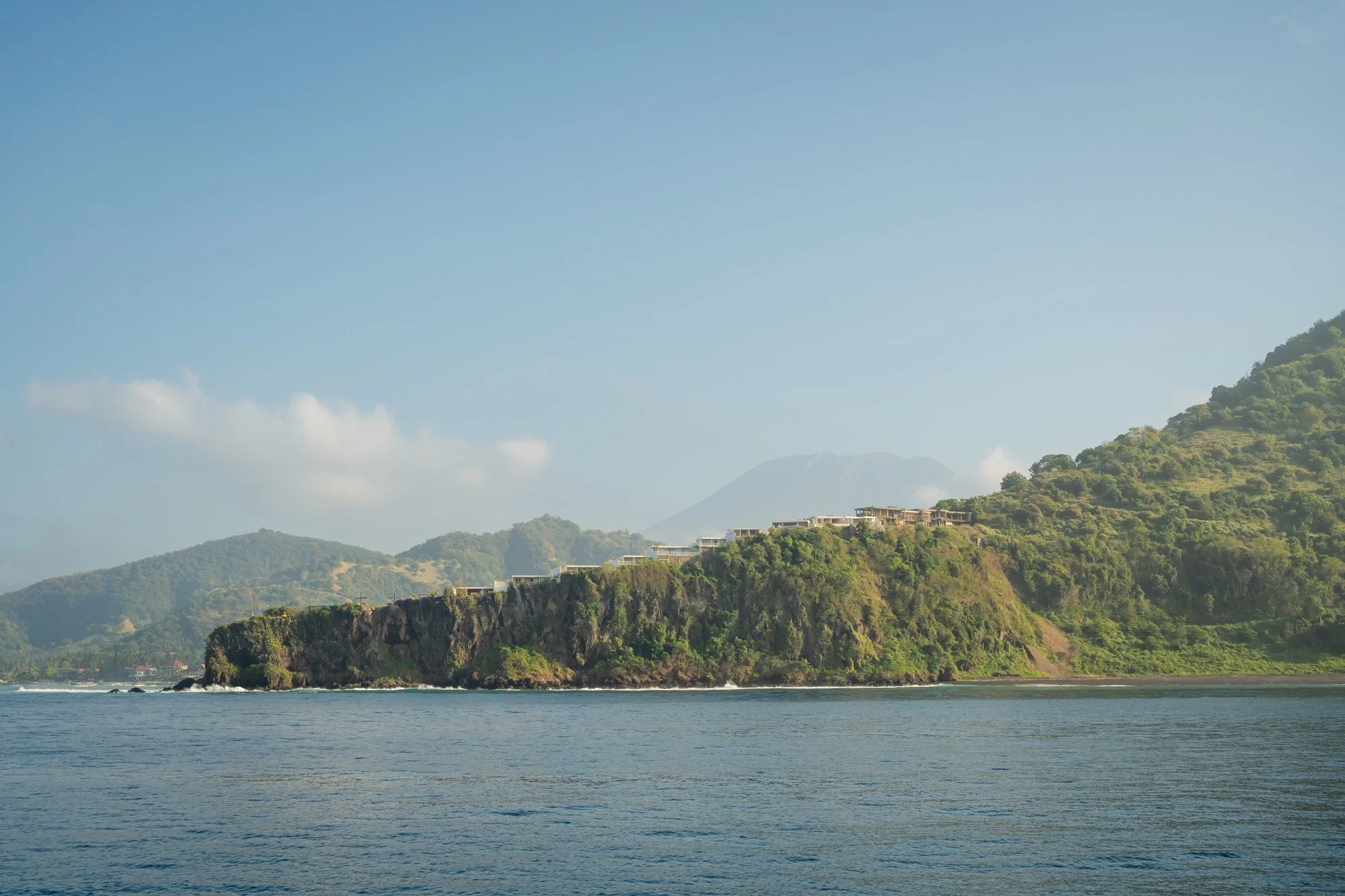
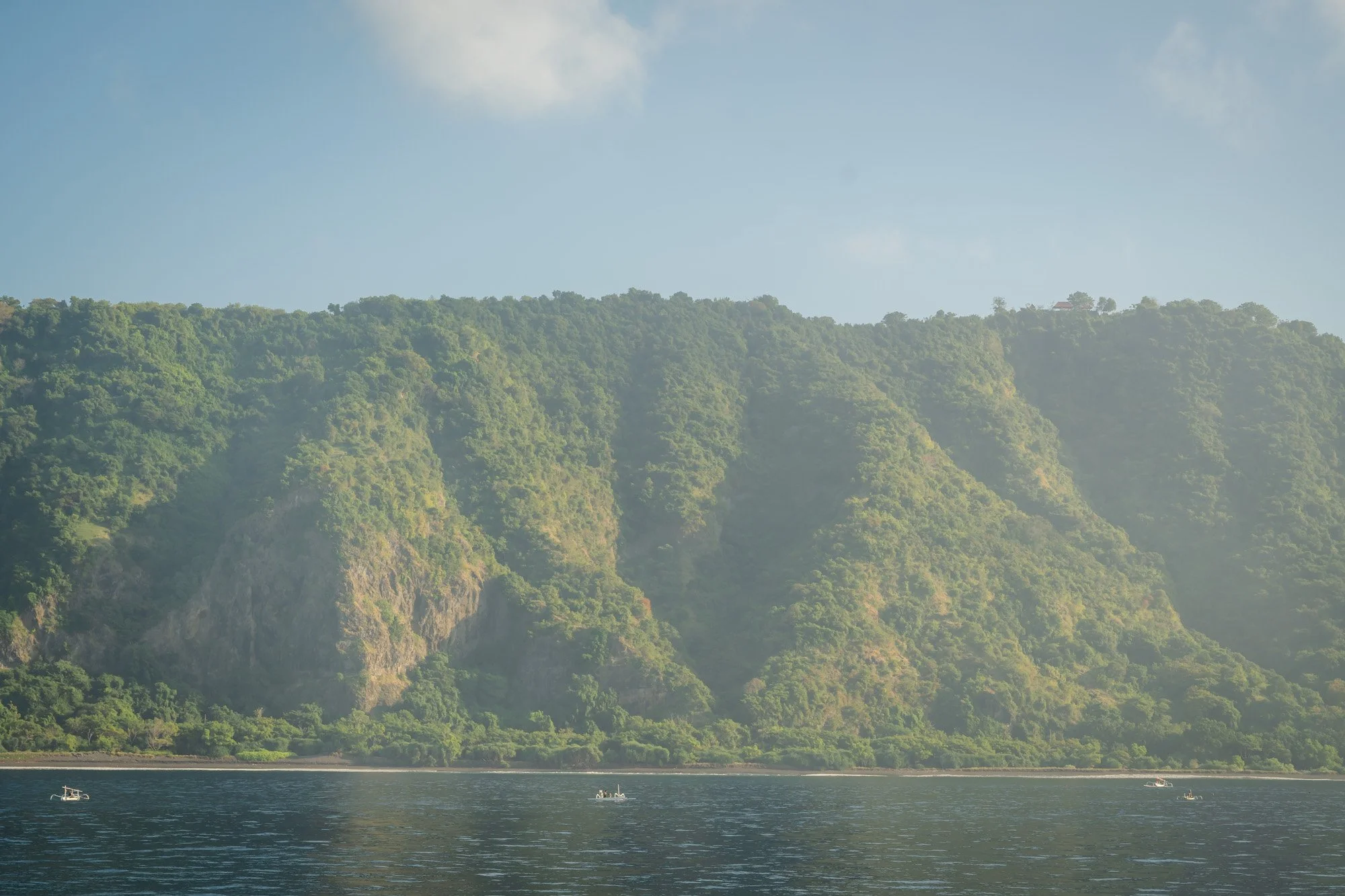
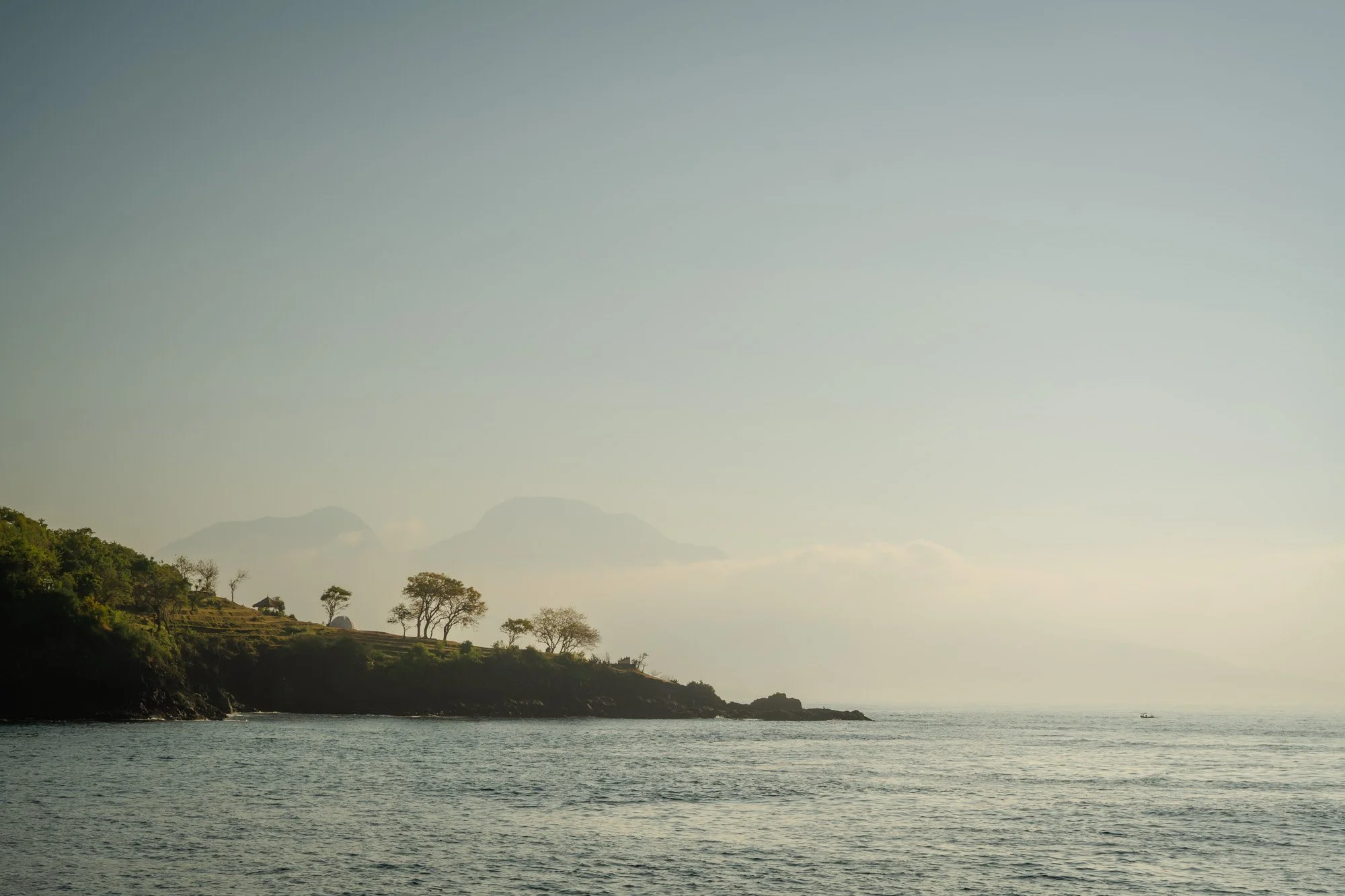
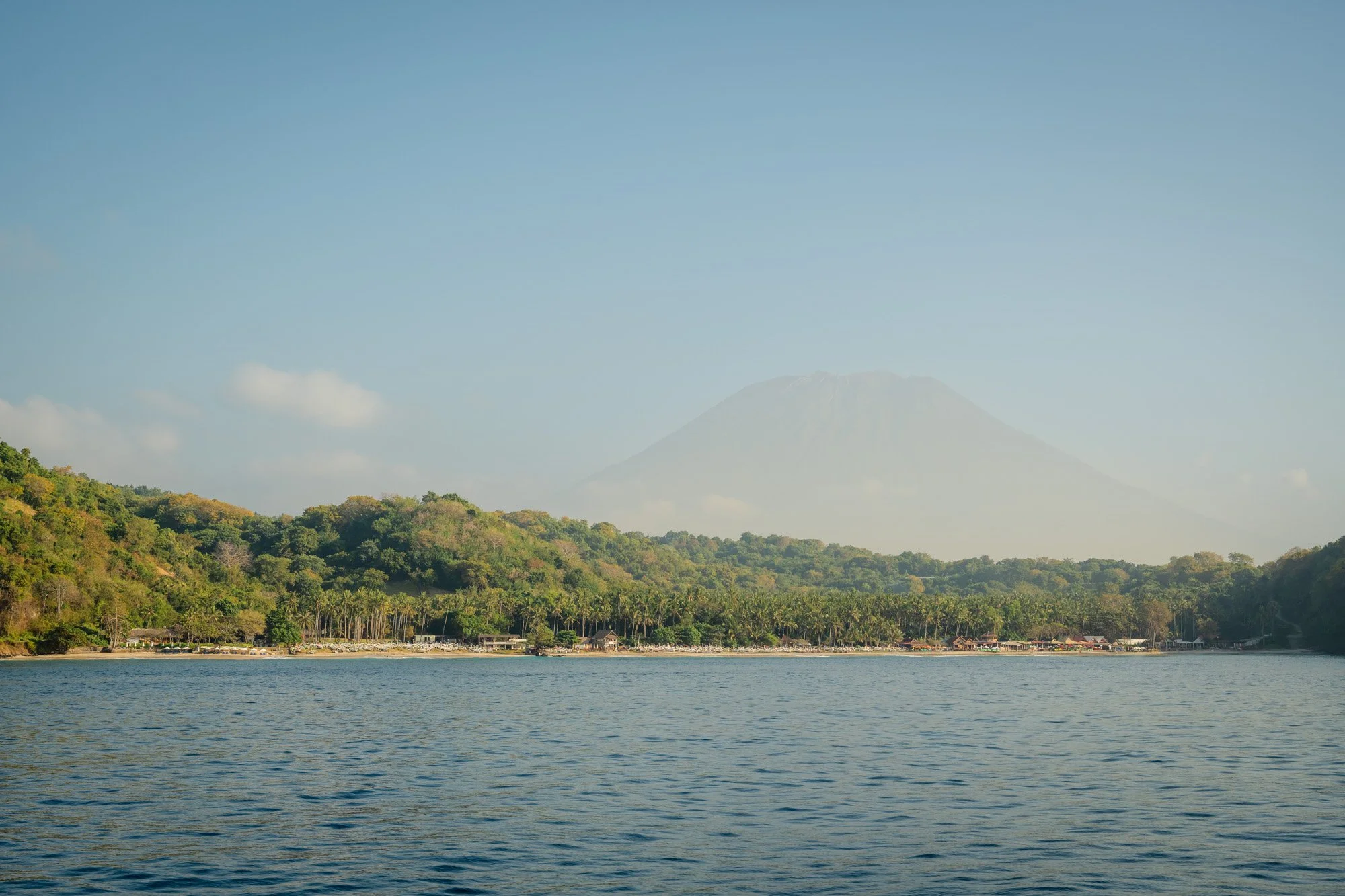
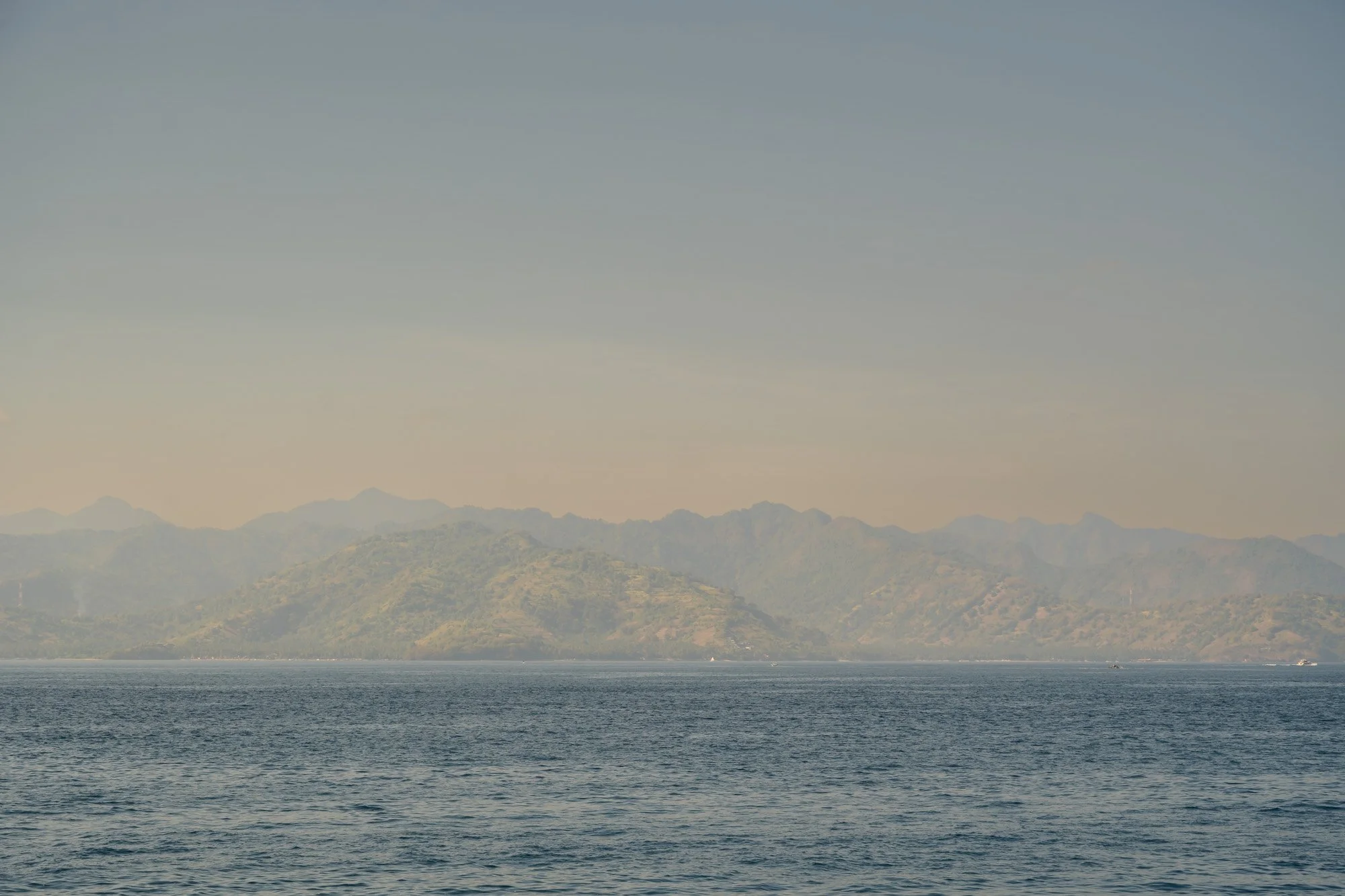
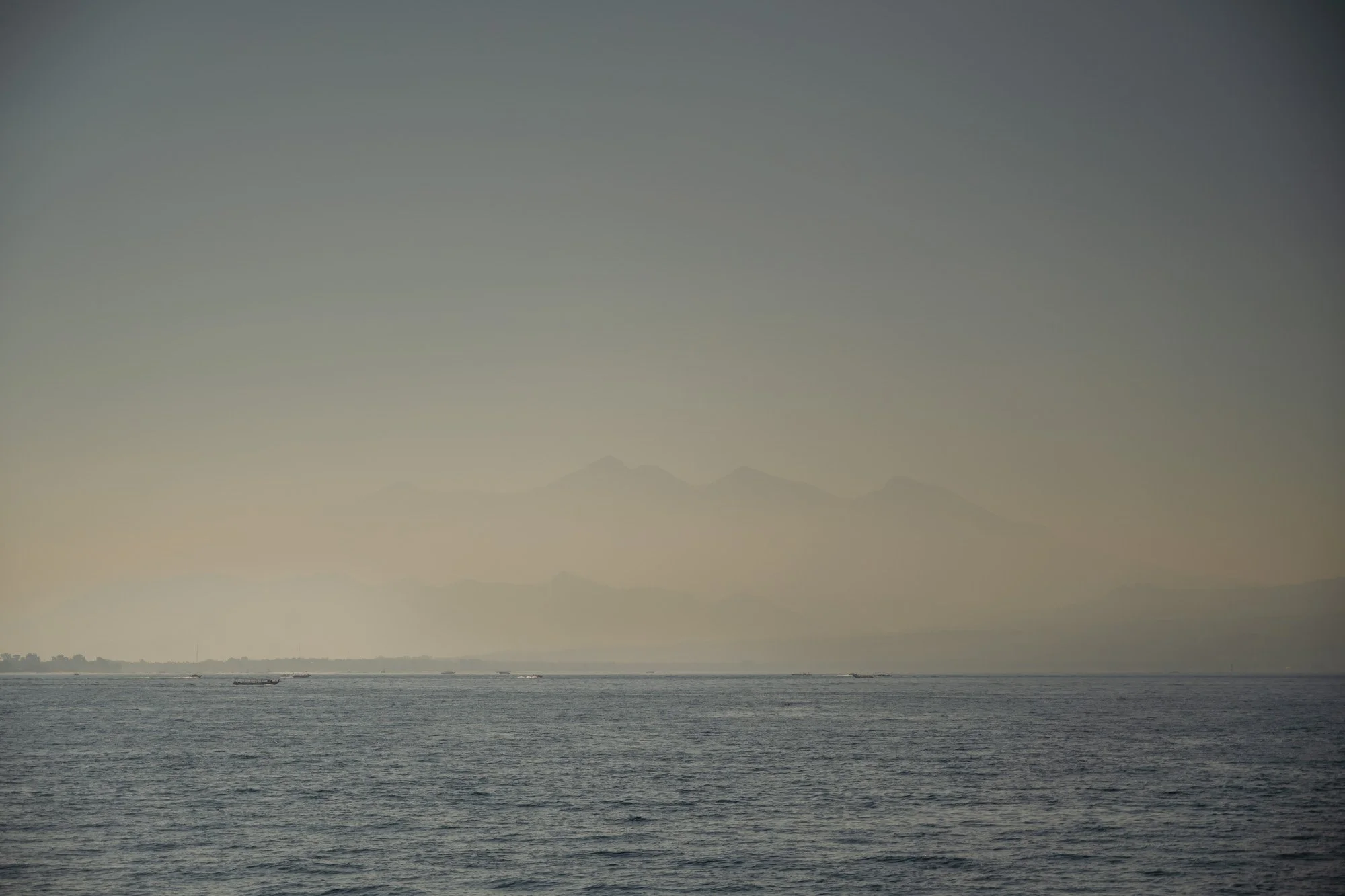
Looking back towards Bali, you can see the mountains rising through the mist, the volcano in the distance, layers of lush green hills and tiny villages dotted along the coastline.
Fishing boats drift across the water, and from out there you get such a different perspective of Bali.
The landscape just kept changing as we travelled further away.
Surprisingly comfortable
The ferry itself was much better than I expected.
There's an air-conditioned cabin downstairs (actually, it was freezing!), while upstairs there's an open deck with music playing, drinks, beers, and snacks for sale.
People were spread out, some enjoying the sunshine and others escaping the heat inside.
It had a really relaxed atmosphere.
Before I knew it, Gili Trawangan came into view.
The journey is part of the adventure
Sometimes we get so focused on getting somewhere that we forget the journey can be one of the highlights.
For me, this ferry ride wasn't just about getting from Bali to Gili Trawangan.
It was about seeing Bali from a completely different perspective.
The volcano.
The mountains.
The fishing boats.
The tiny villages hugging the coastline.
It was peaceful and beautiful, one of those moments when I found myself putting the camera down every now and then just to soak it all in.
If you're a little nervous about making the crossing, I'd say do your research, choose a company you feel comfortable with, and if you can, grab one of the morning ferries.
Then head upstairs, take in the view, and enjoy the ride.
It might just end up being one of your favourite parts of the trip.
A Peaceful Start in Sanur: Staying at Sagara Villas & Suites, Bali
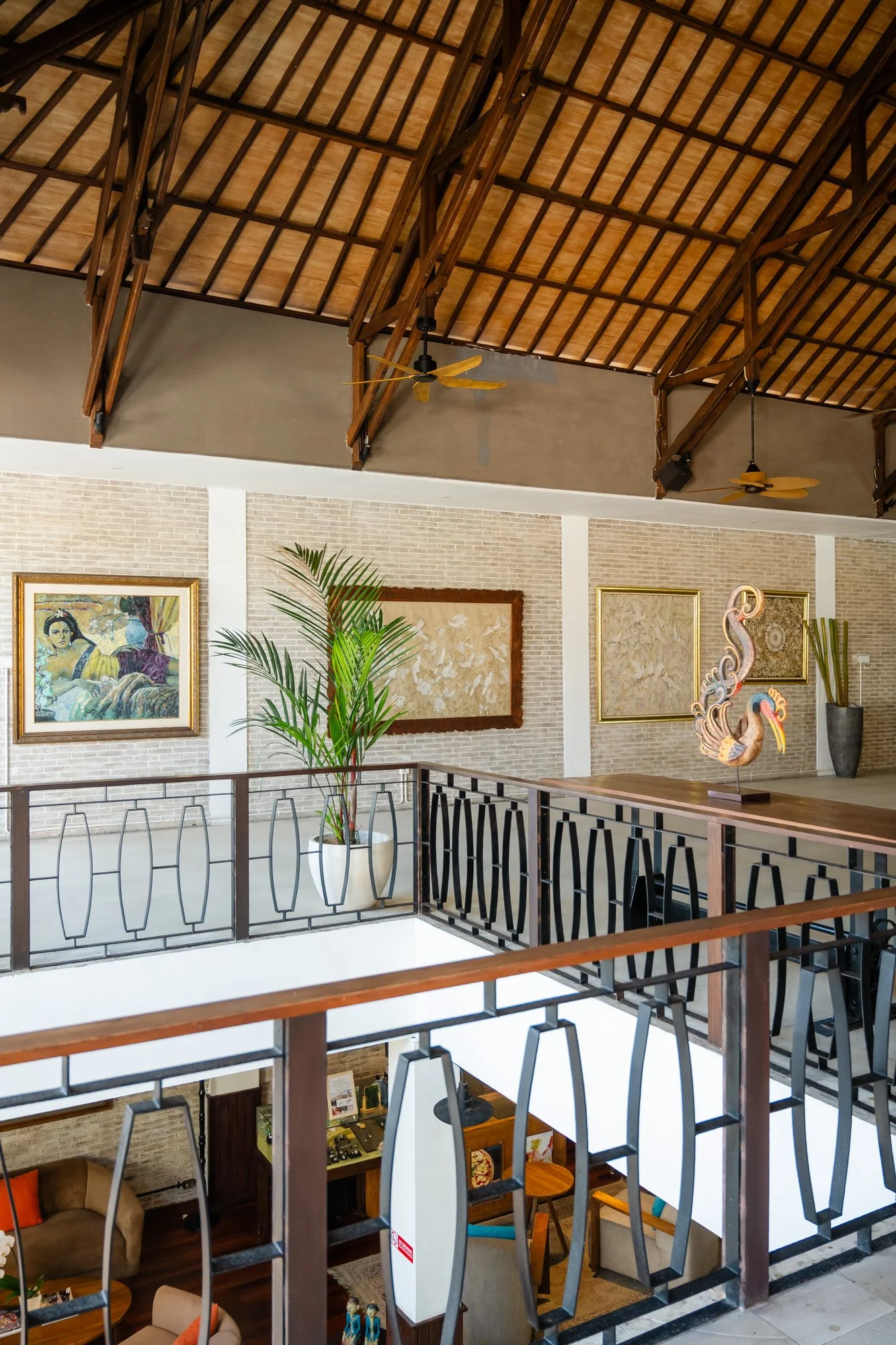
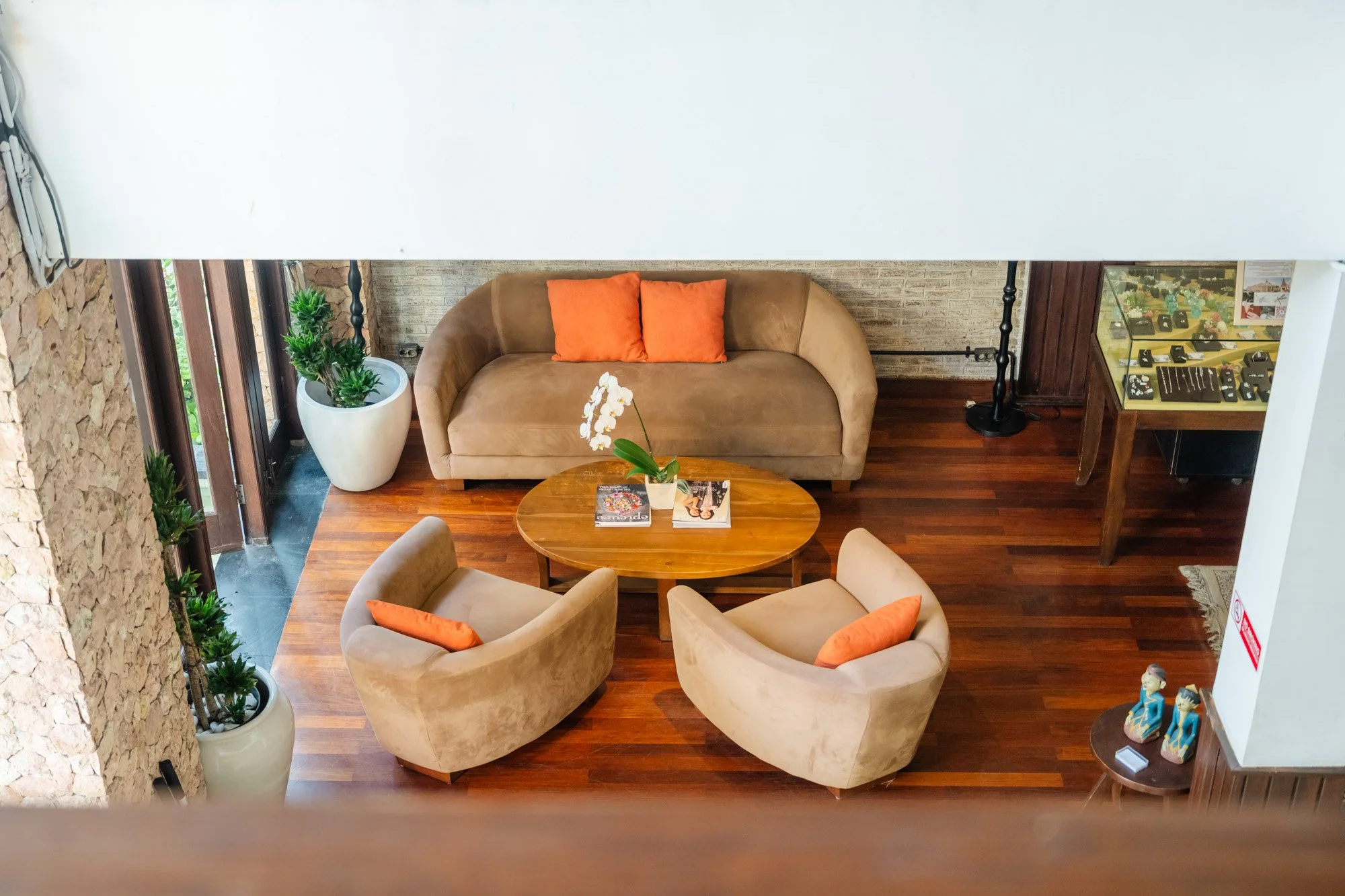
When you're flying into Bali on a late-night flight, all you really want is for everything to go smoothly.
I'd organised a driver through Sagara Villas & Suites to pick us up from the airport. Our flight from Adelaide was due to arrive around 10 pm, but after a few delays we didn't actually land until midnight. By the time we collected our bags and made our way through the airport, it was close to 2 am before we finally arrived at the hotel.
Thankfully, the driver was waiting with a smile, and after a comfortable drive through the especially quiet streets (it was nearly 2am) of Sanur, we were greeted by a staff member at the night reception who showed us straight to our room.
After a long day of travelling, it was exactly what we needed.
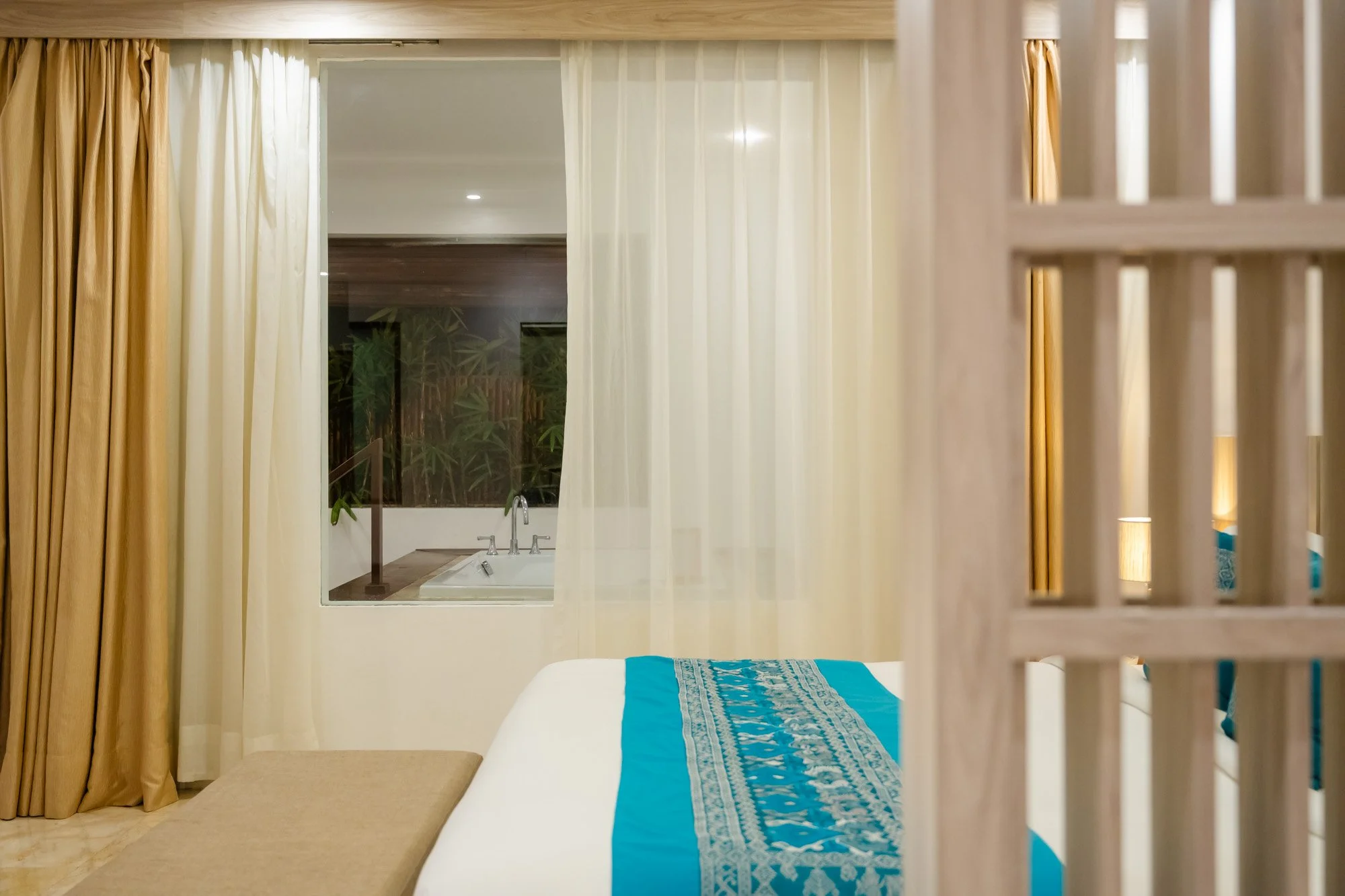
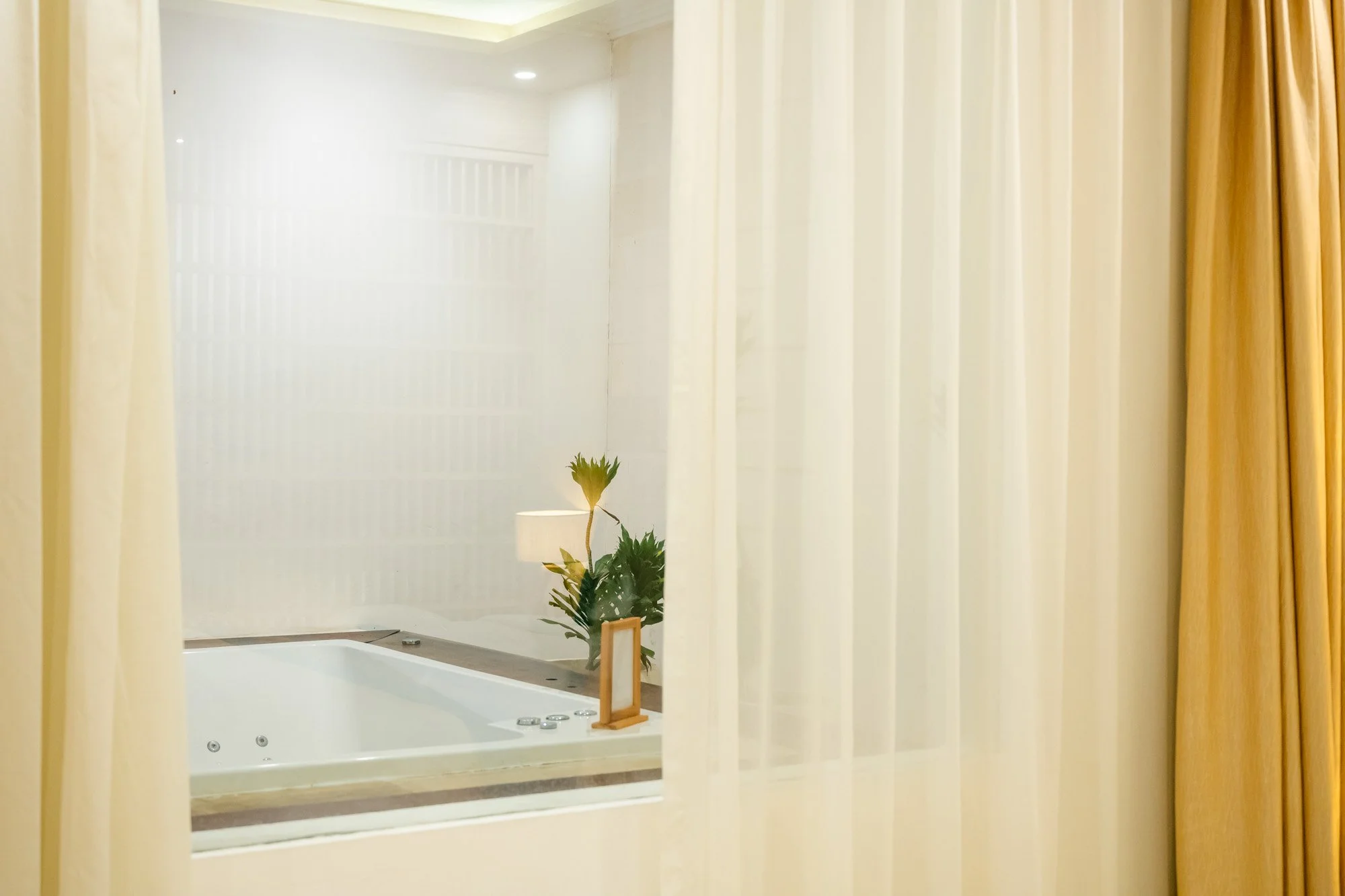
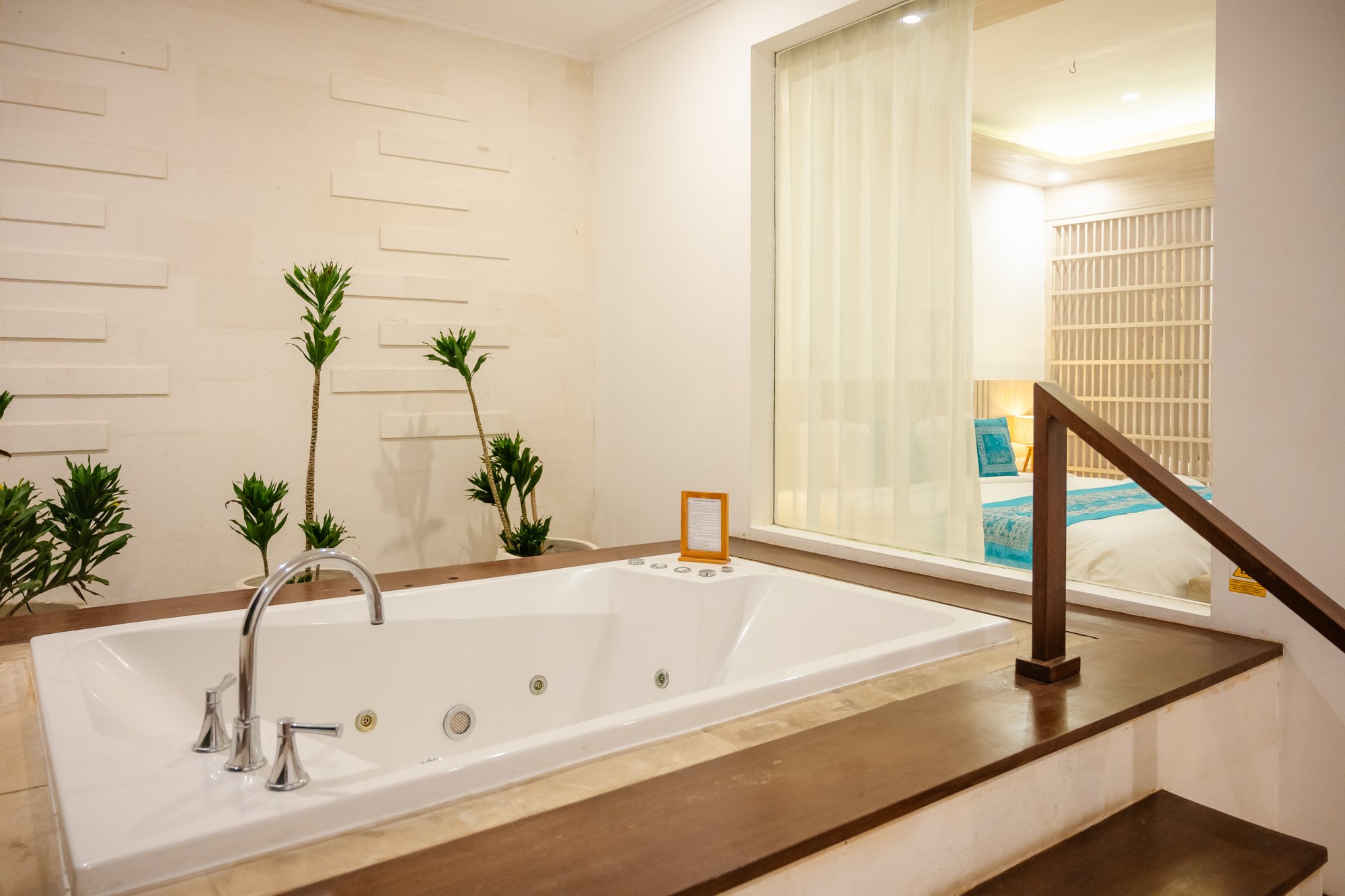
Our suite was spacious, quiet and beautifully presented. There was a huge bathroom, plenty of room to spread out and, best of all, a spa on the balcony. Although I was too tired to enjoy it that night, it certainly added a touch of luxury.
Not long after our heads hit the pillows, the alarm was reminding us it was breakfast time (yes, we didn’t want to miss breakfast!)
Slow mornings by the pool
One of my favourite things about staying somewhere smaller is that it never feels rushed.
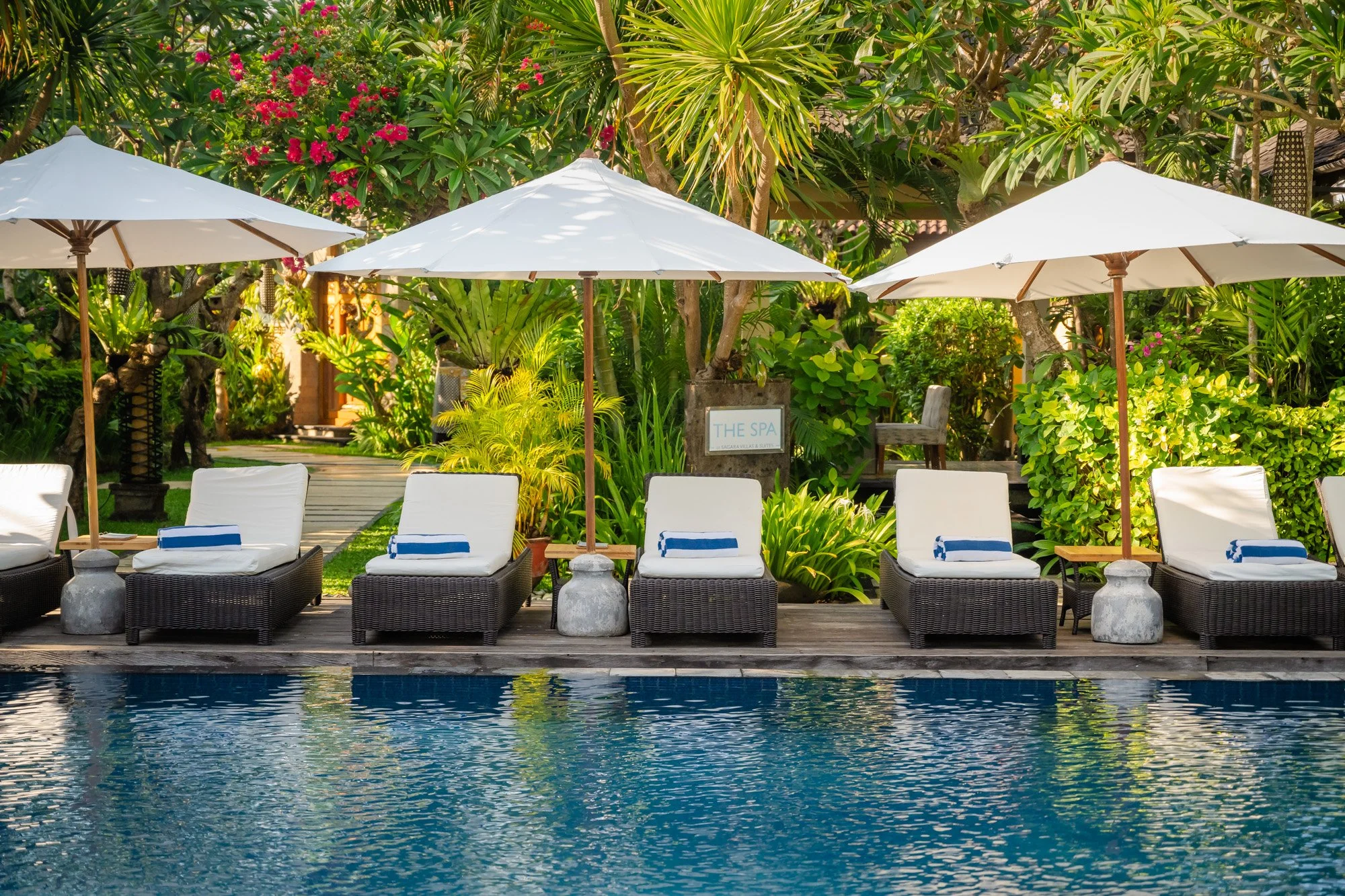
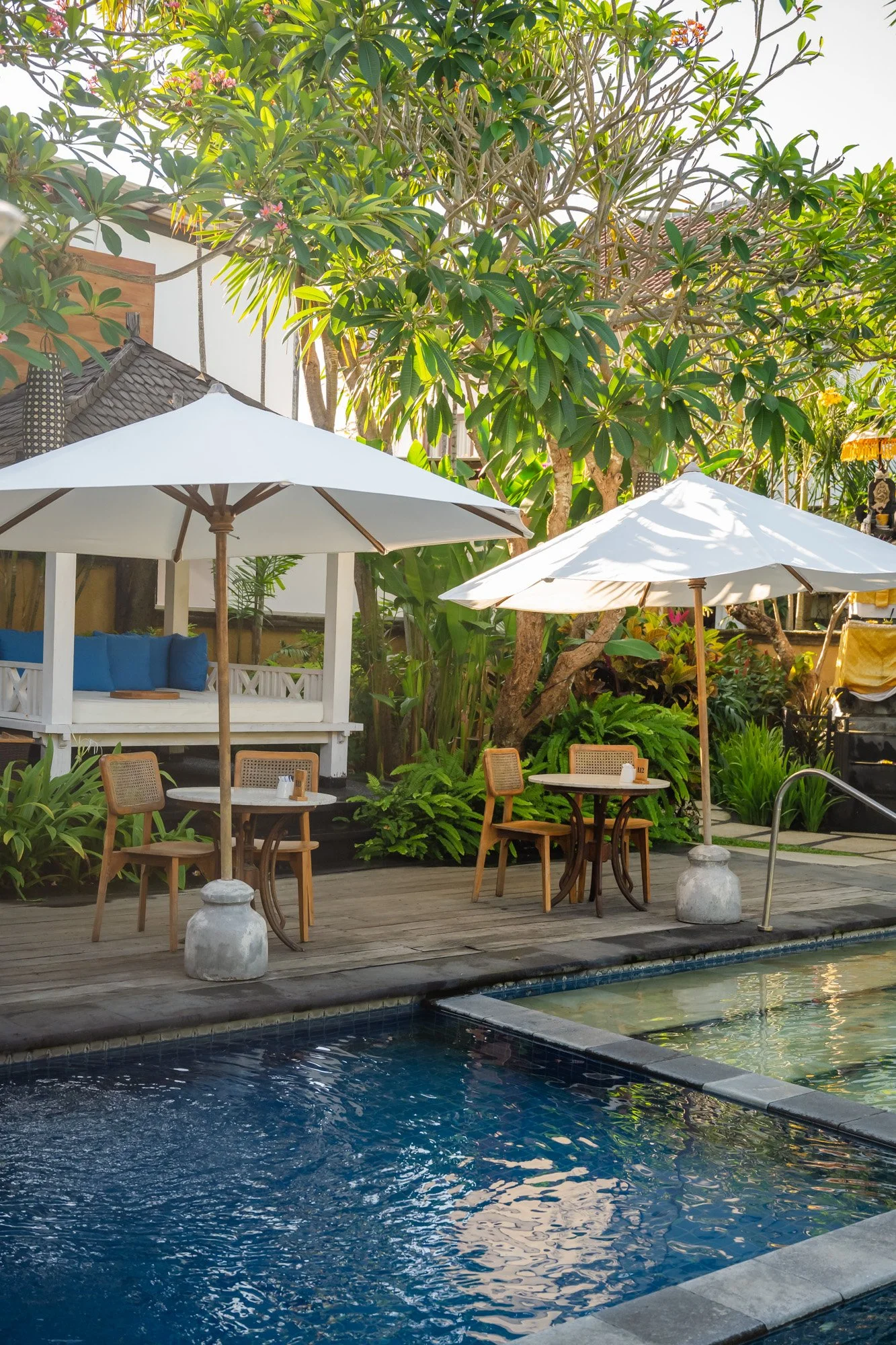
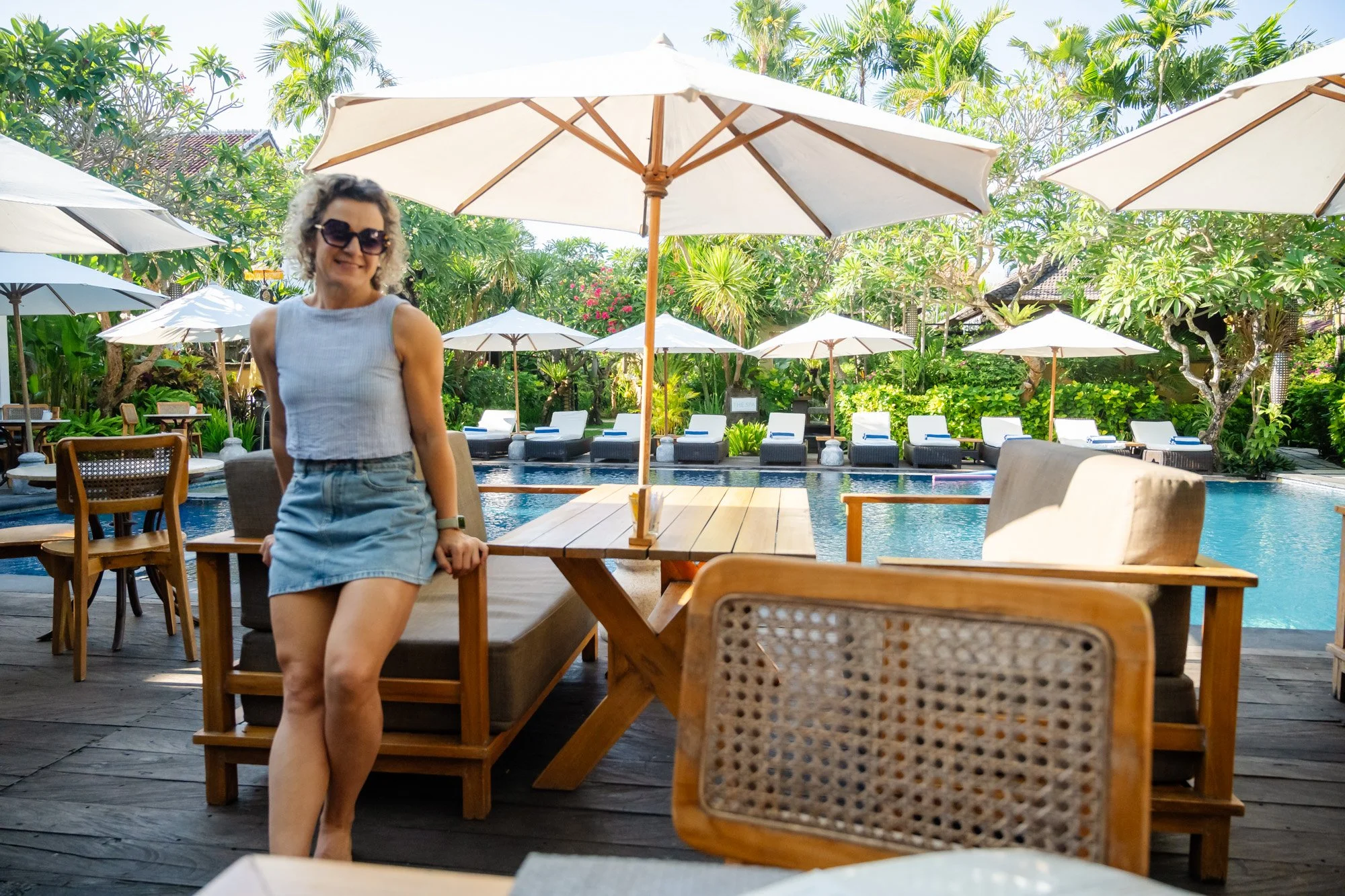
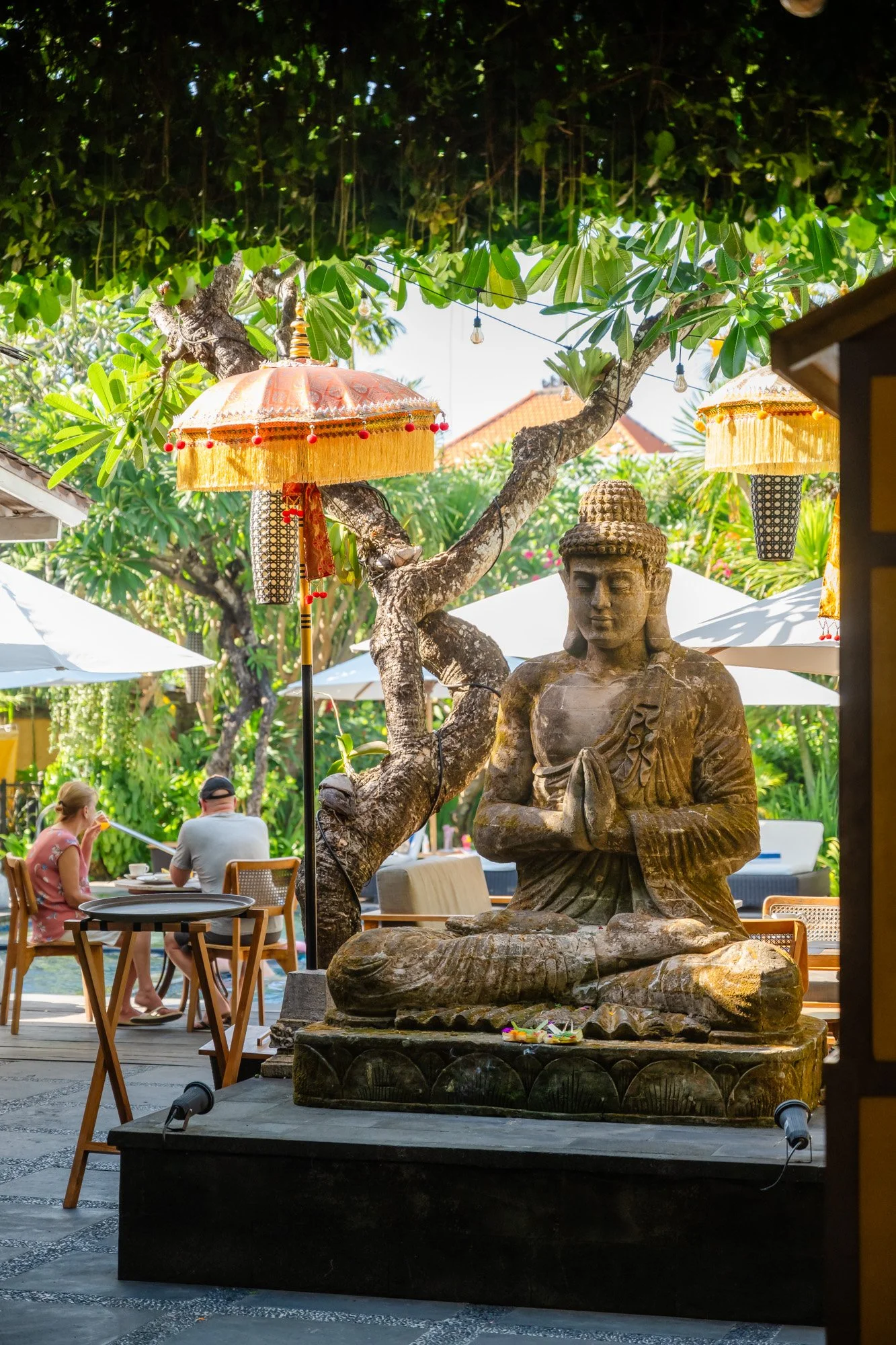
Breakfast at Sagara is served à la carte beside the pool, with only a handful of tables tucked amongst the gardens. It felt peaceful and relaxed, rather than busy and crowded.
As we enjoyed breakfast, we chatted with another table who were celebrating a birthday. The staff surprised them with a birthday cake, and it was one of those lovely little moments that showed how genuinely friendly and thoughtful everyone was.
After breakfast, we wandered through Sanur, exploring the local streets and getting our first taste of Bali on this trip.
Relaxed, friendly and effortless
Our stay wasn't completely without incident!
While moving one of the trundle beds in our room, we accidentally put a small hole in the wall. I sheepishly let reception know, expecting it to be a much bigger issue than it was (and wondering what I would have to pay).
Instead, they simply thanked us for letting them know and had it repaired almost immediately. No fuss, no drama - just wonderful service.
It's often the little things like this that leave the biggest impression.
A hidden little oasis
Although the property also has private villas, we stayed in one of the suites and found it perfect for our visit.
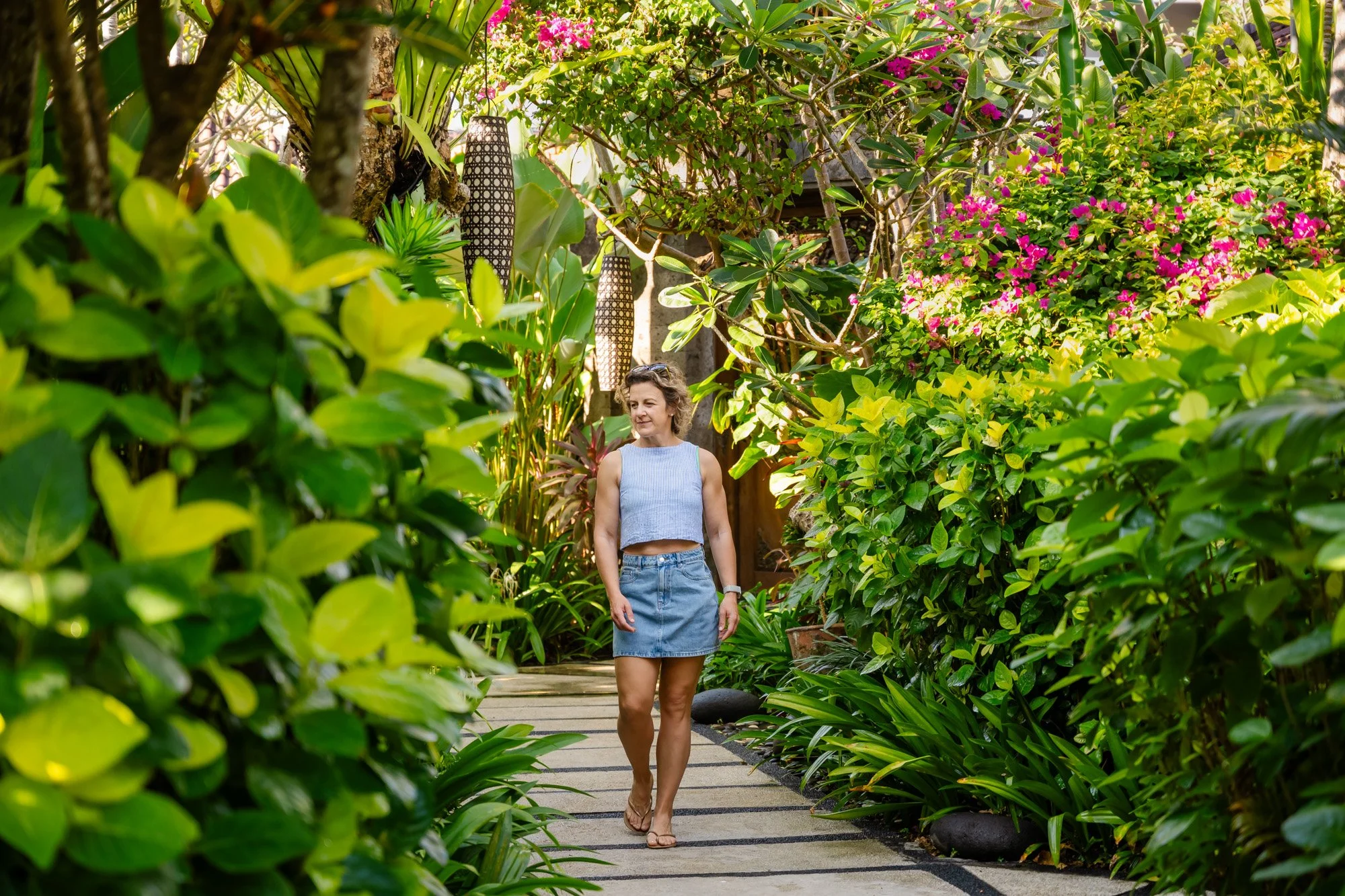
The location is ideal - just a short stroll to Sanur Beach, with plenty of restaurants, cafés and shops nearby, yet tucked back far enough to feel peaceful and quiet.
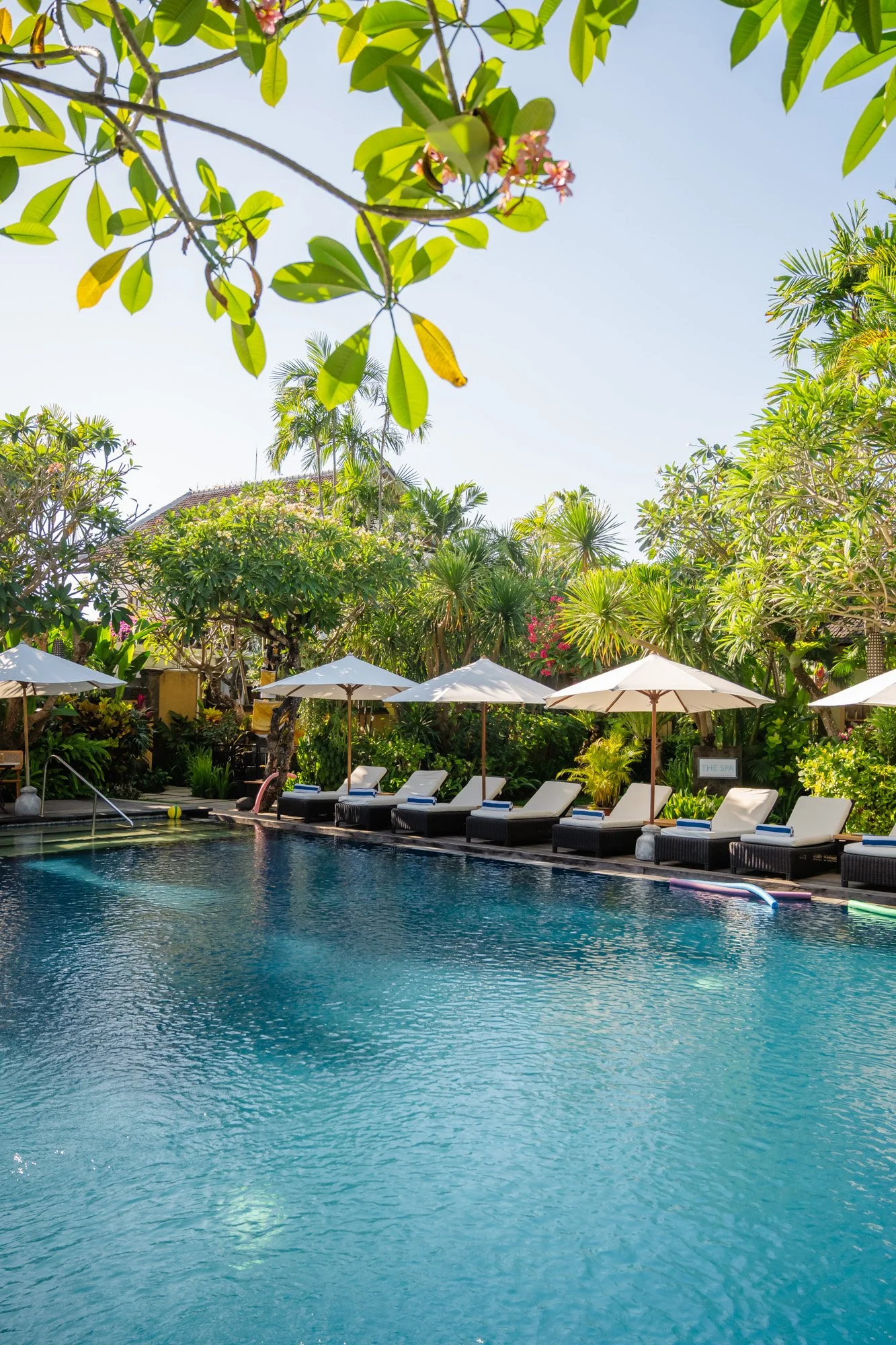
That afternoon we spent some time by the pool, floating in the warm water before relaxing on the sun loungers beneath the shade of tropical trees and fragrant frangipanis.
It was calm.
It was quiet.
It was exactly the gentle start we wanted before the rest of our Bali adventure unfolded.
Would I stay again?
Absolutely.
For the price we paid, I thought Sagara offered incredible value. Comfortable rooms, friendly staff, a lovely breakfast, a peaceful pool area and a location that made exploring Sanur easy without being caught up in the crowds.
Sanur, Bali: A Slower Side of the Island
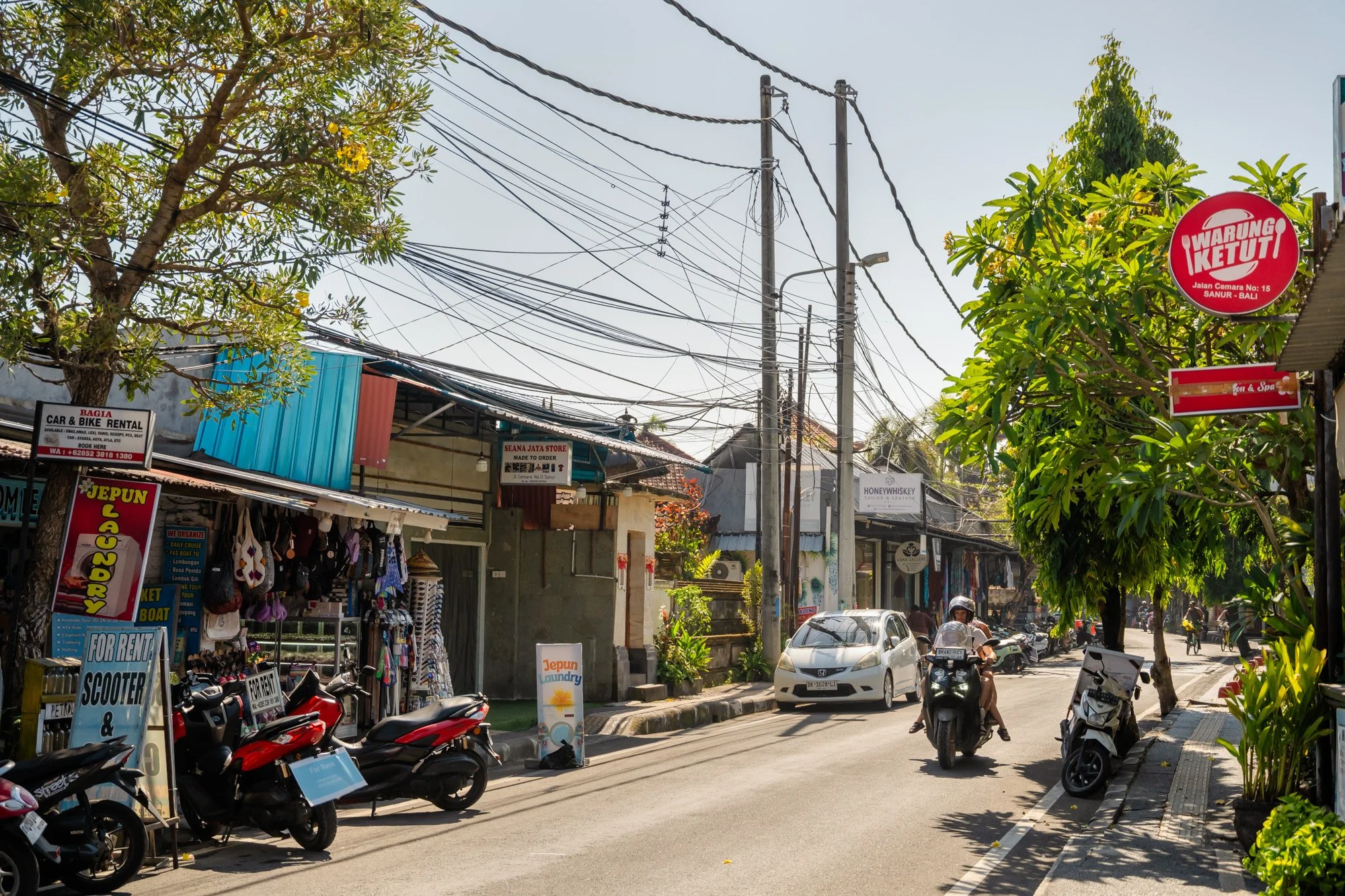
Our first stop in Bali was Sanur.
After arriving in the early hours of the morning from Adelaide, it was the perfect place to spend a couple of nights before heading off on the next part of our adventure. It gave us time to slow down, settle into Bali and shake off the travel before an early transfer to Padang Bai for our boat trip to Gili T.
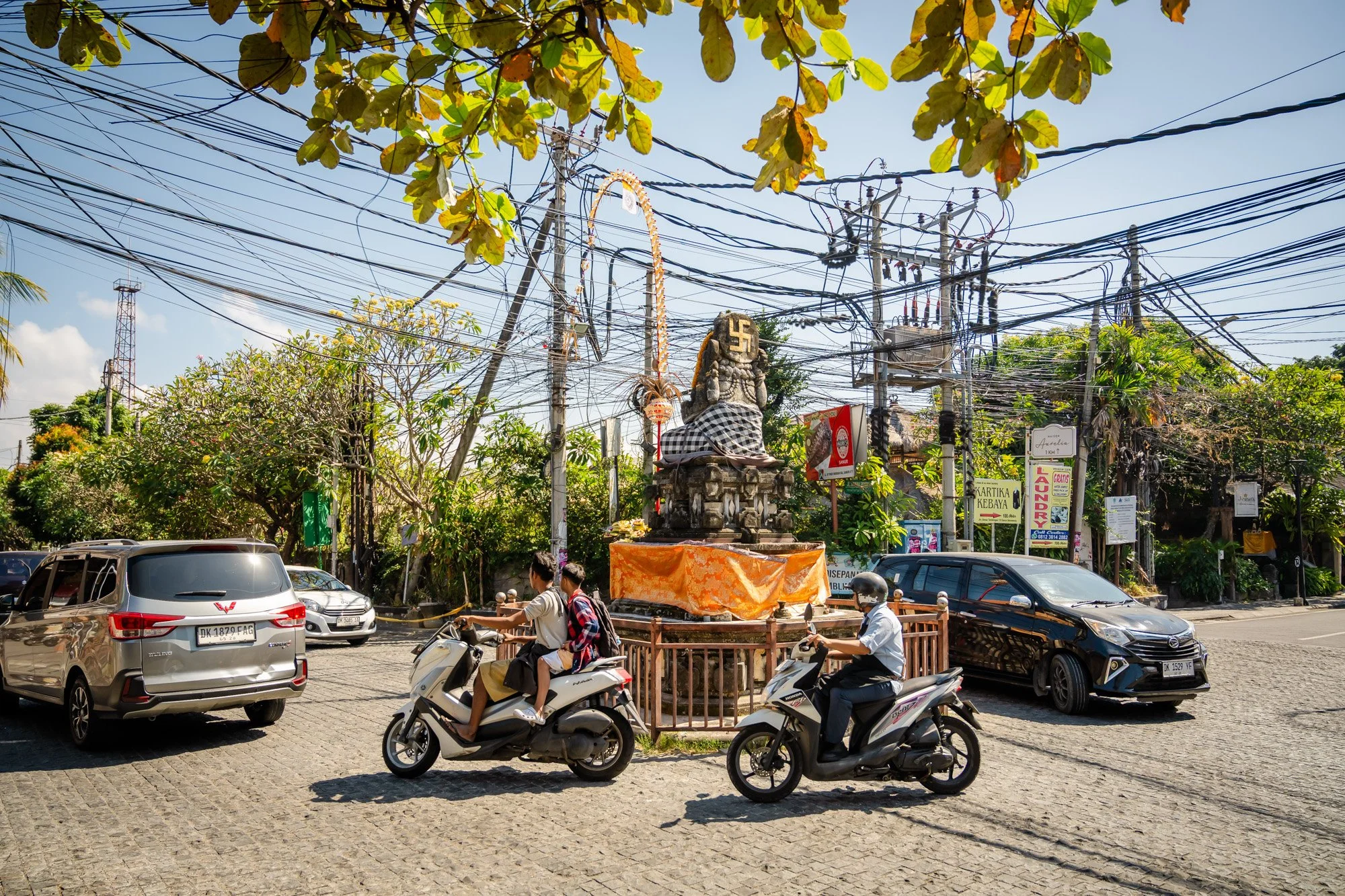
Sanur has a very different feel to places like Kuta and Legian.
It's quieter.
Calmer.
And definitely attracts a different crowd.
A slower pace of life
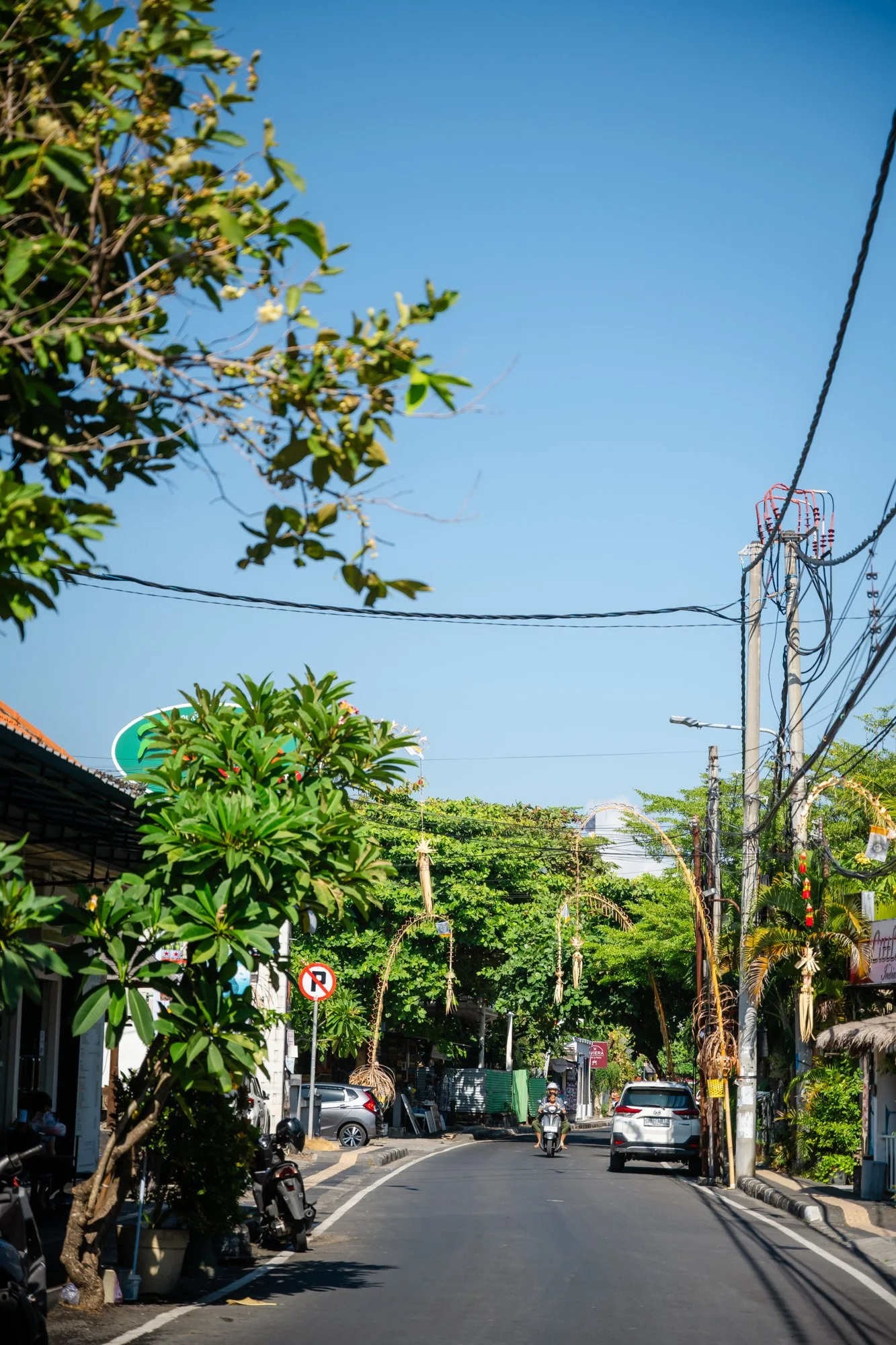
One of the first things I noticed was how much more relaxed everything felt.
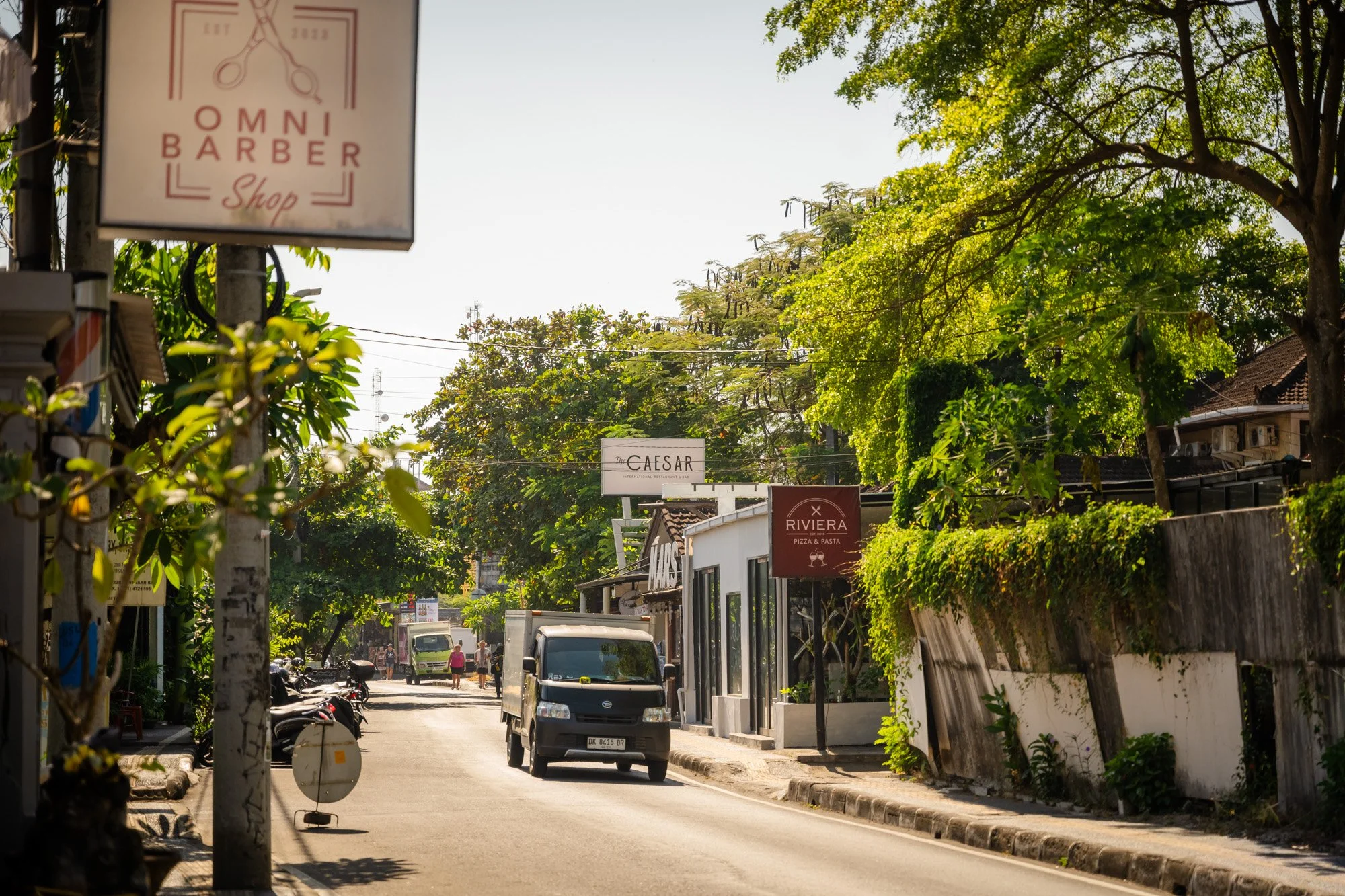
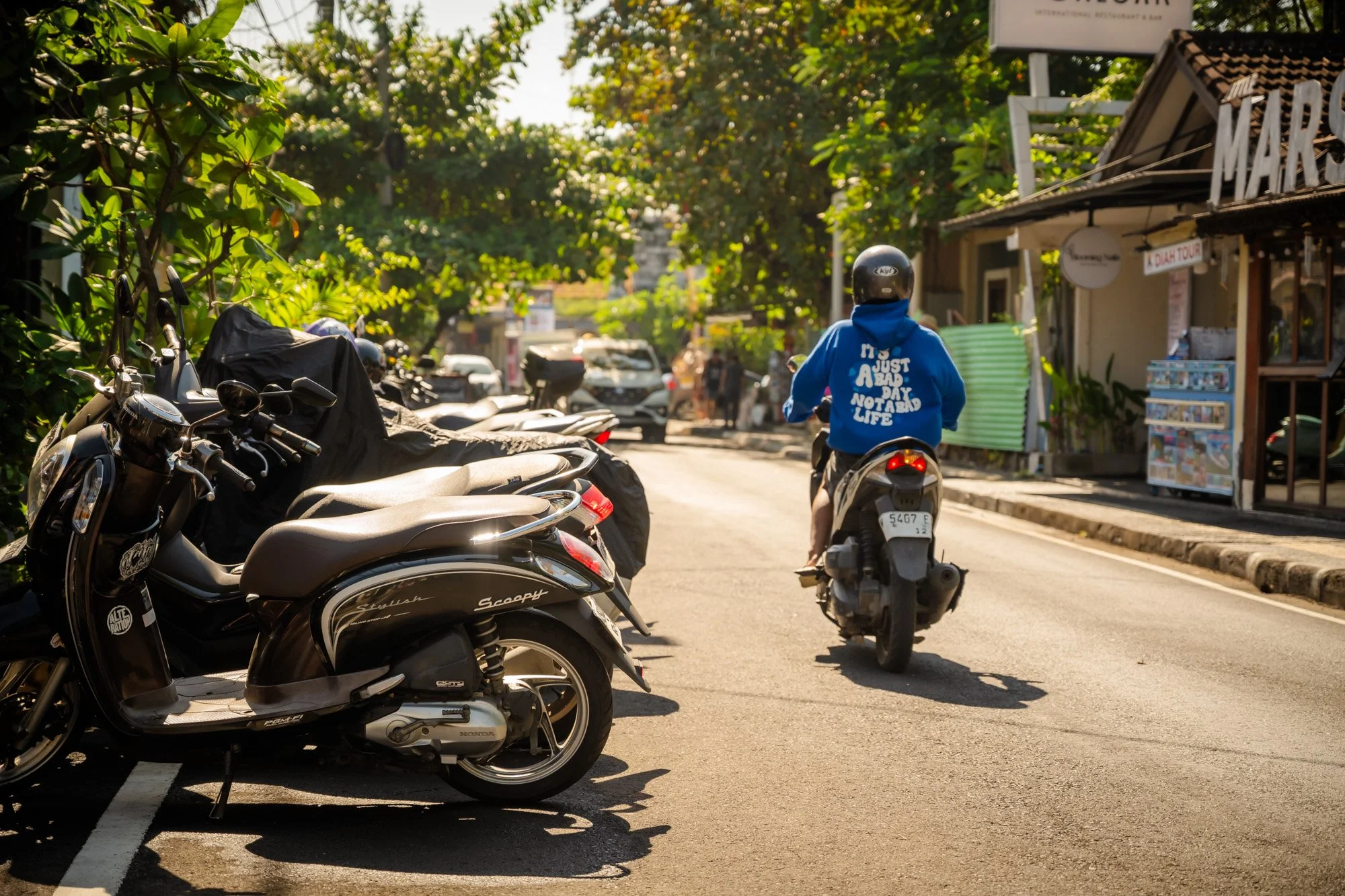
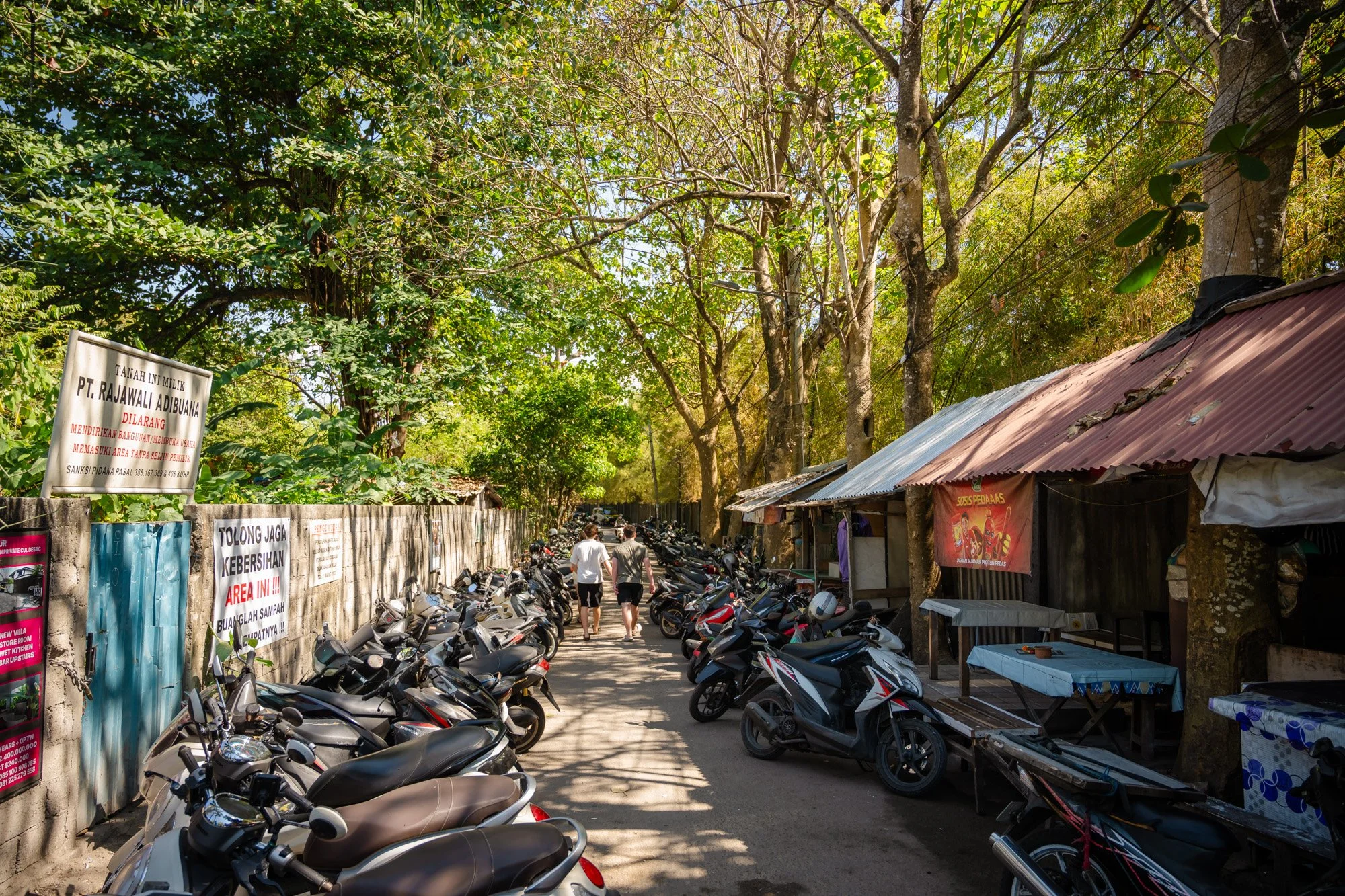
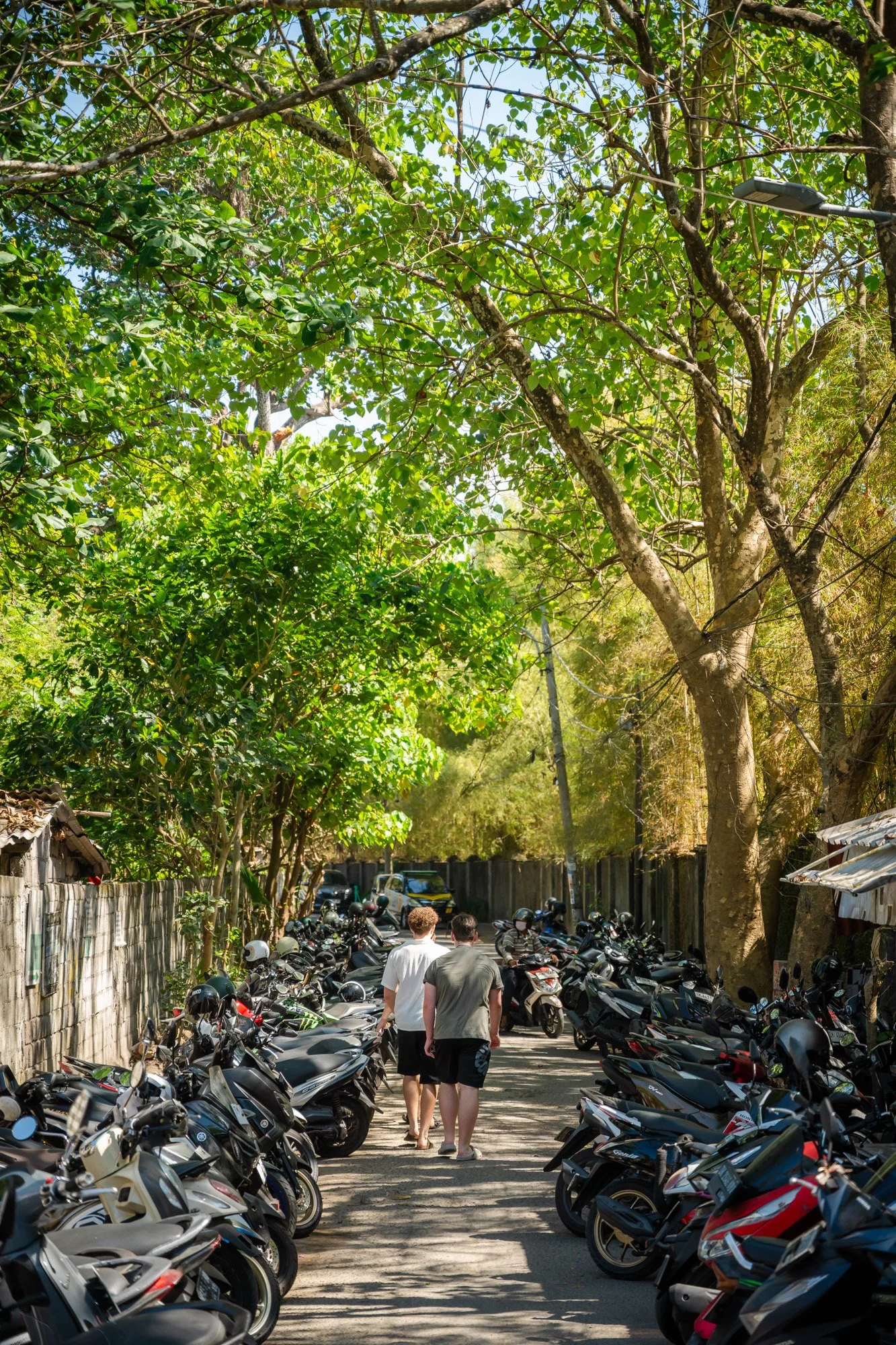
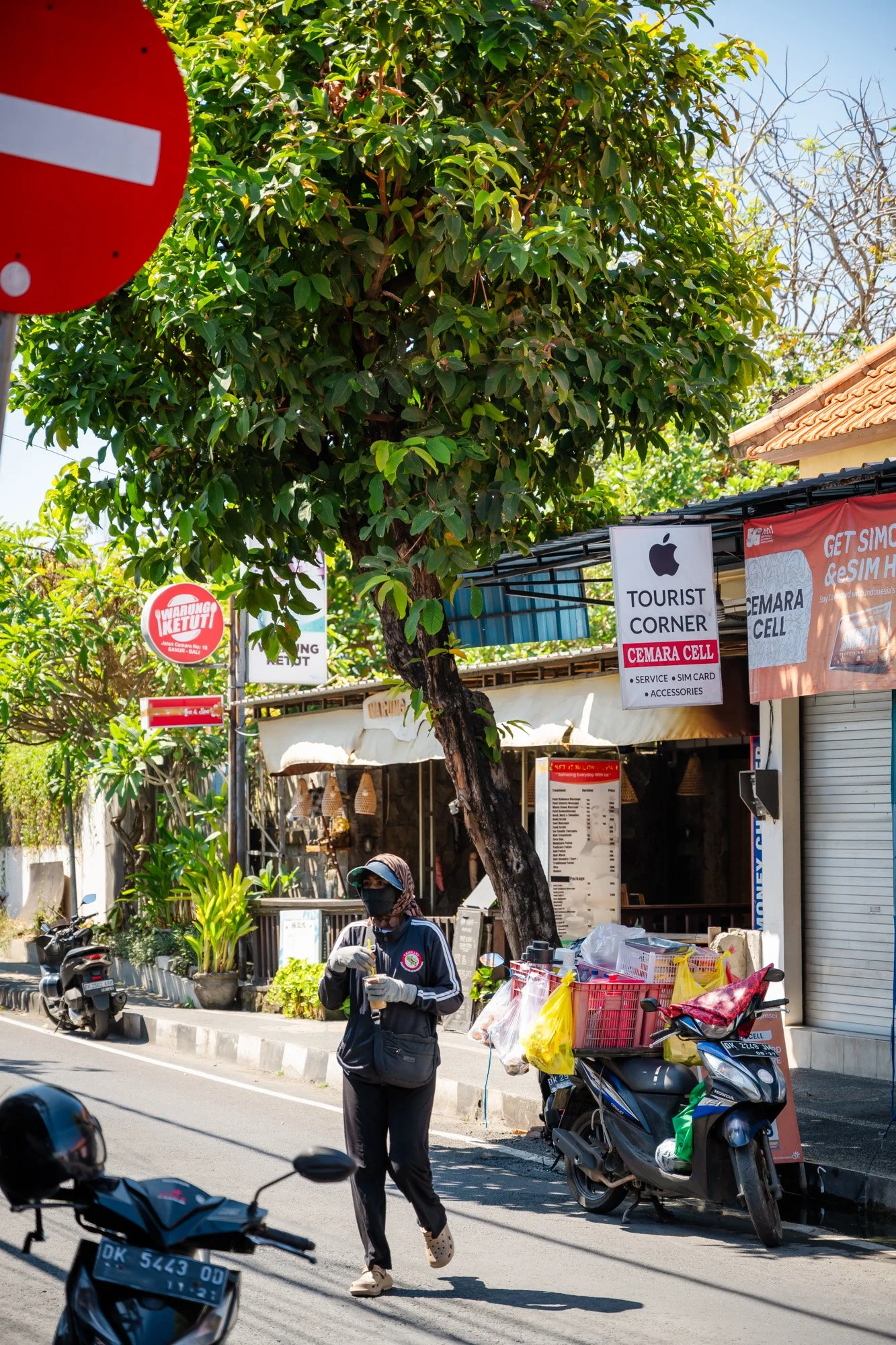
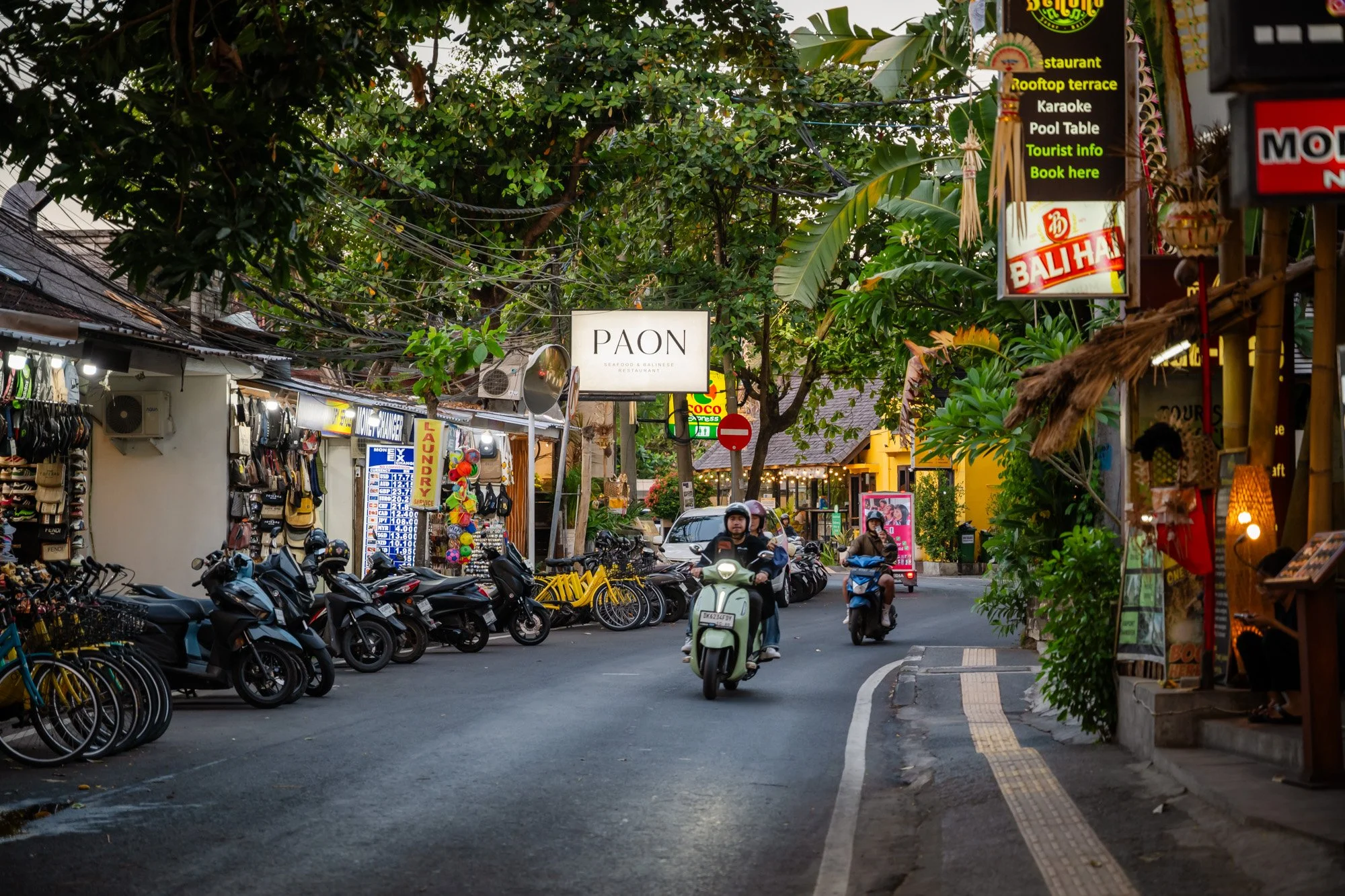
The traffic wasn't nearly as hectic, people wandered rather than rushed, and bicycles seemed just as common as scooters. Walking around felt easy, with plenty of cafés, restaurants, massage shops and little businesses lining the streets.
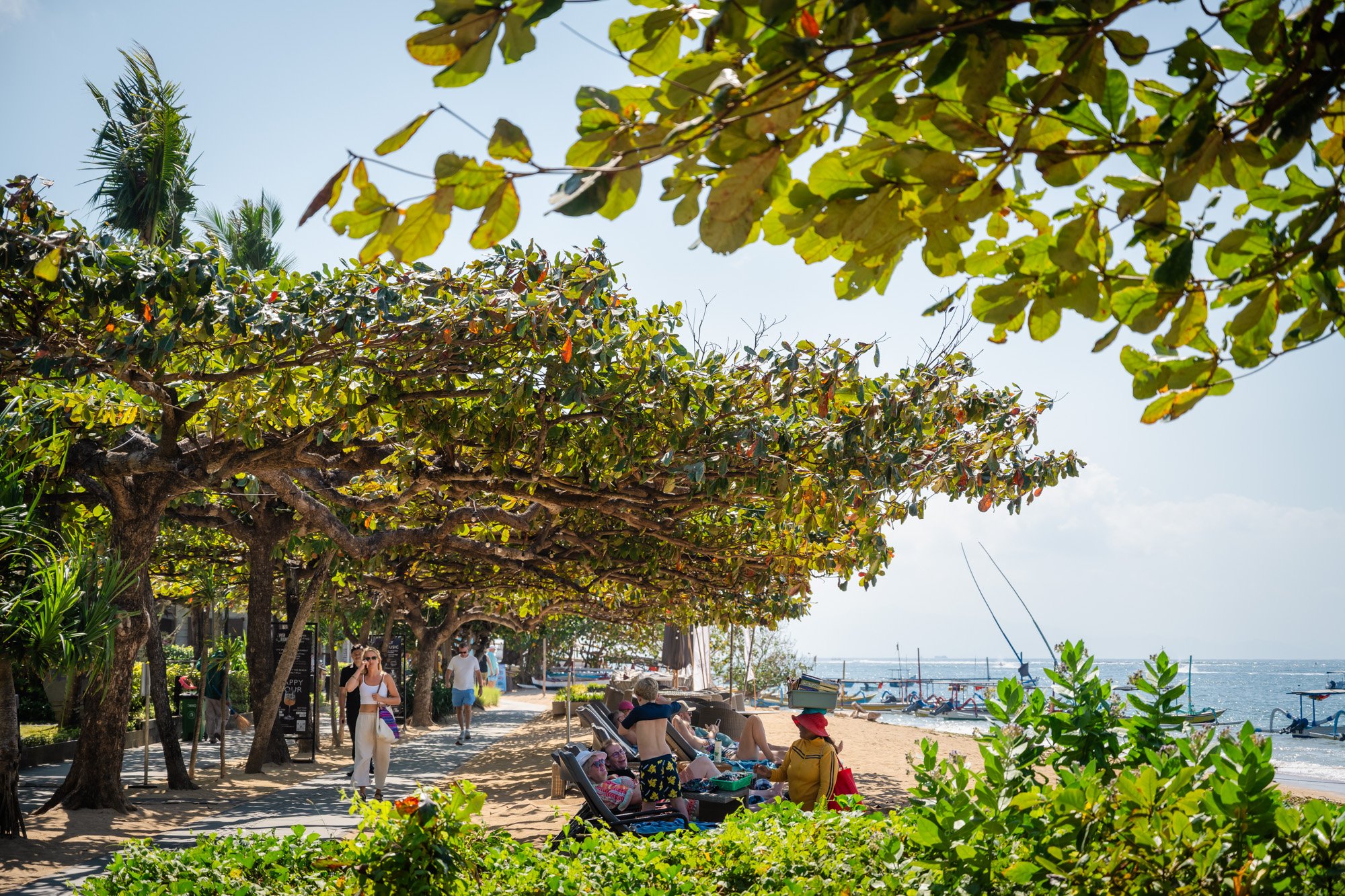
Running alongside the waterfront is a lovely boardwalk that stretches for kilometres. Some sections are shaded by trees, while others open out to cafés, hotels and beachside restaurants.
It's the kind of place where you can happily spend an hour or two wandering without any real destination in mind.
The markets
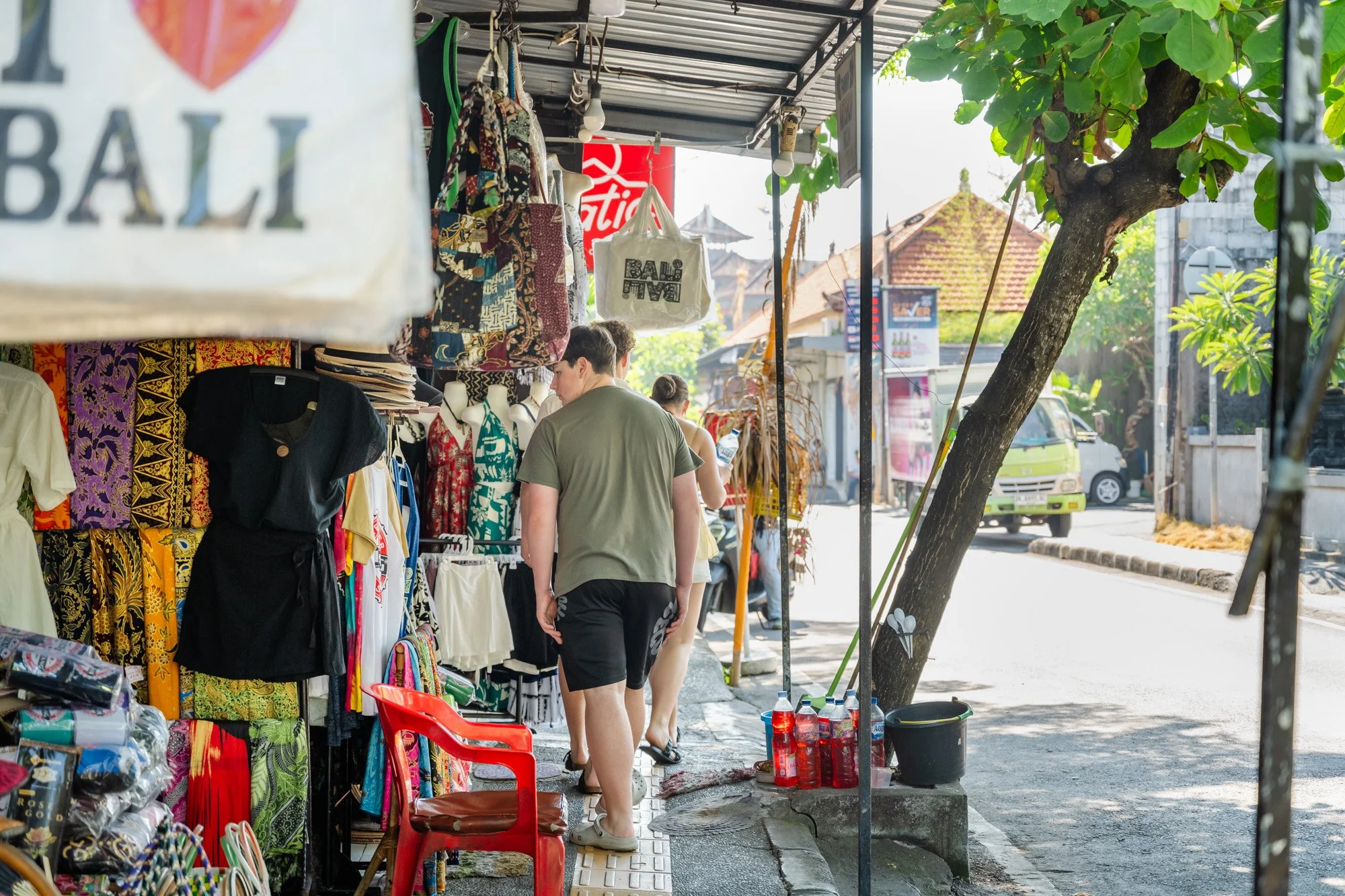
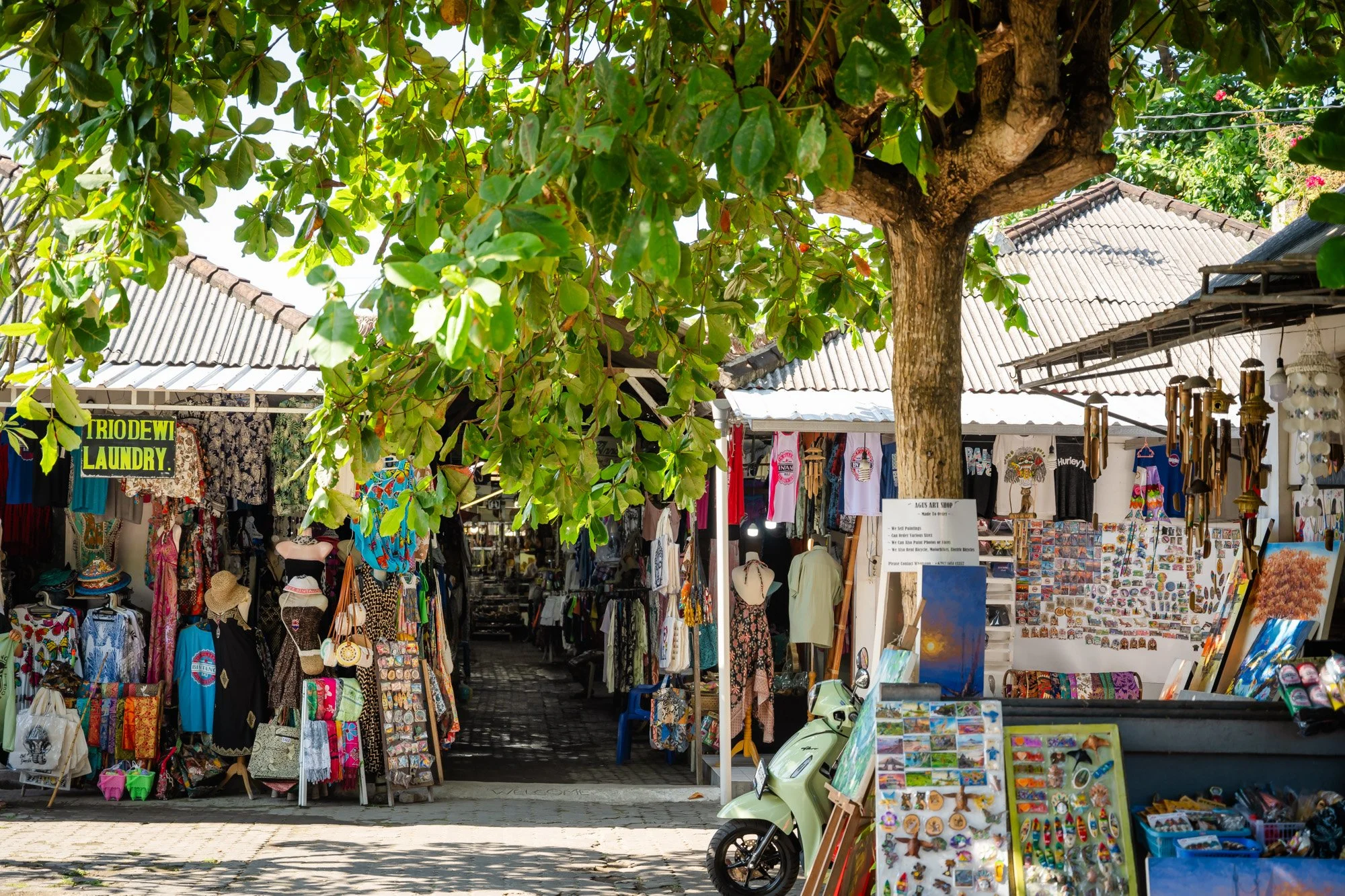
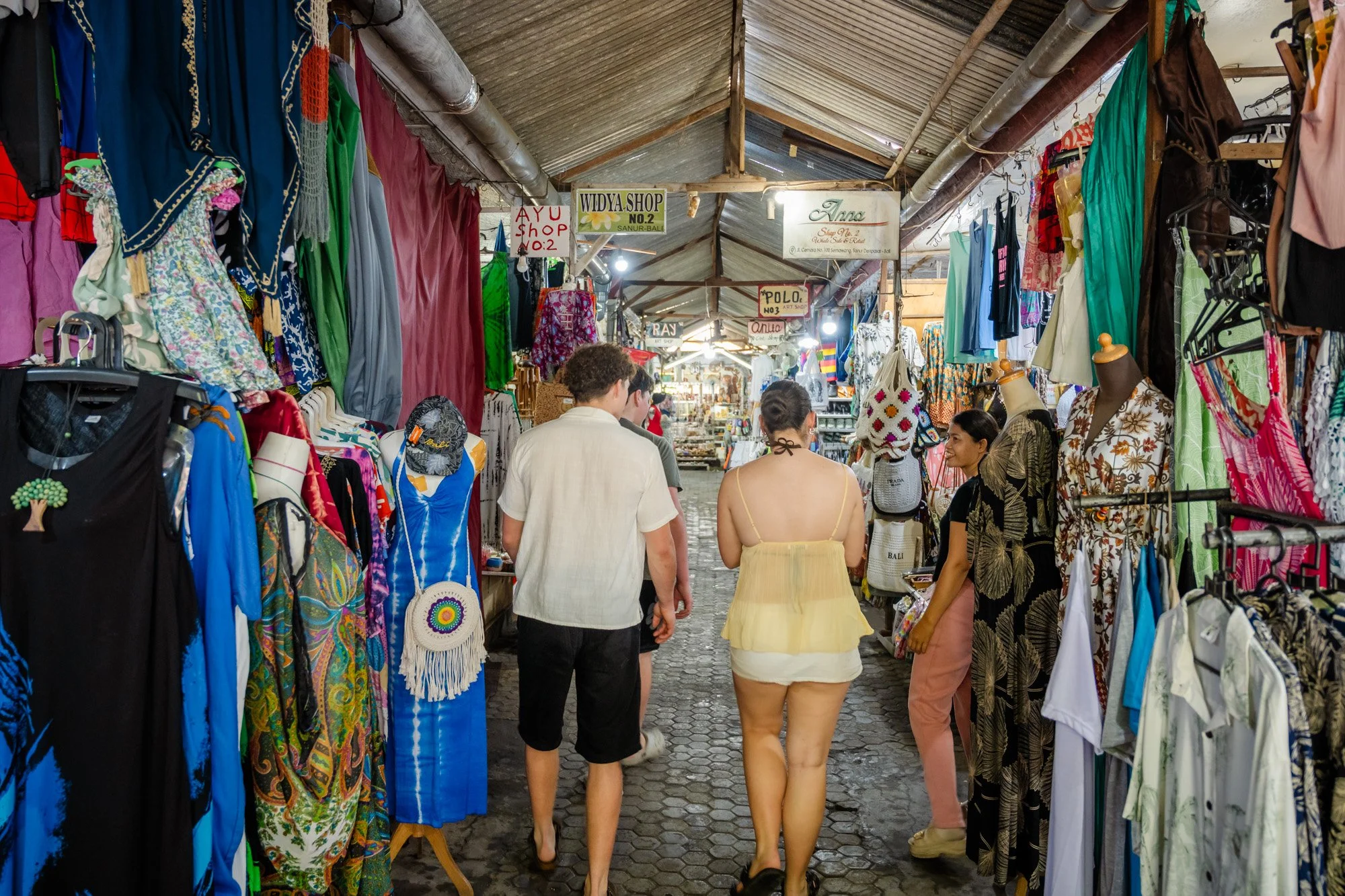
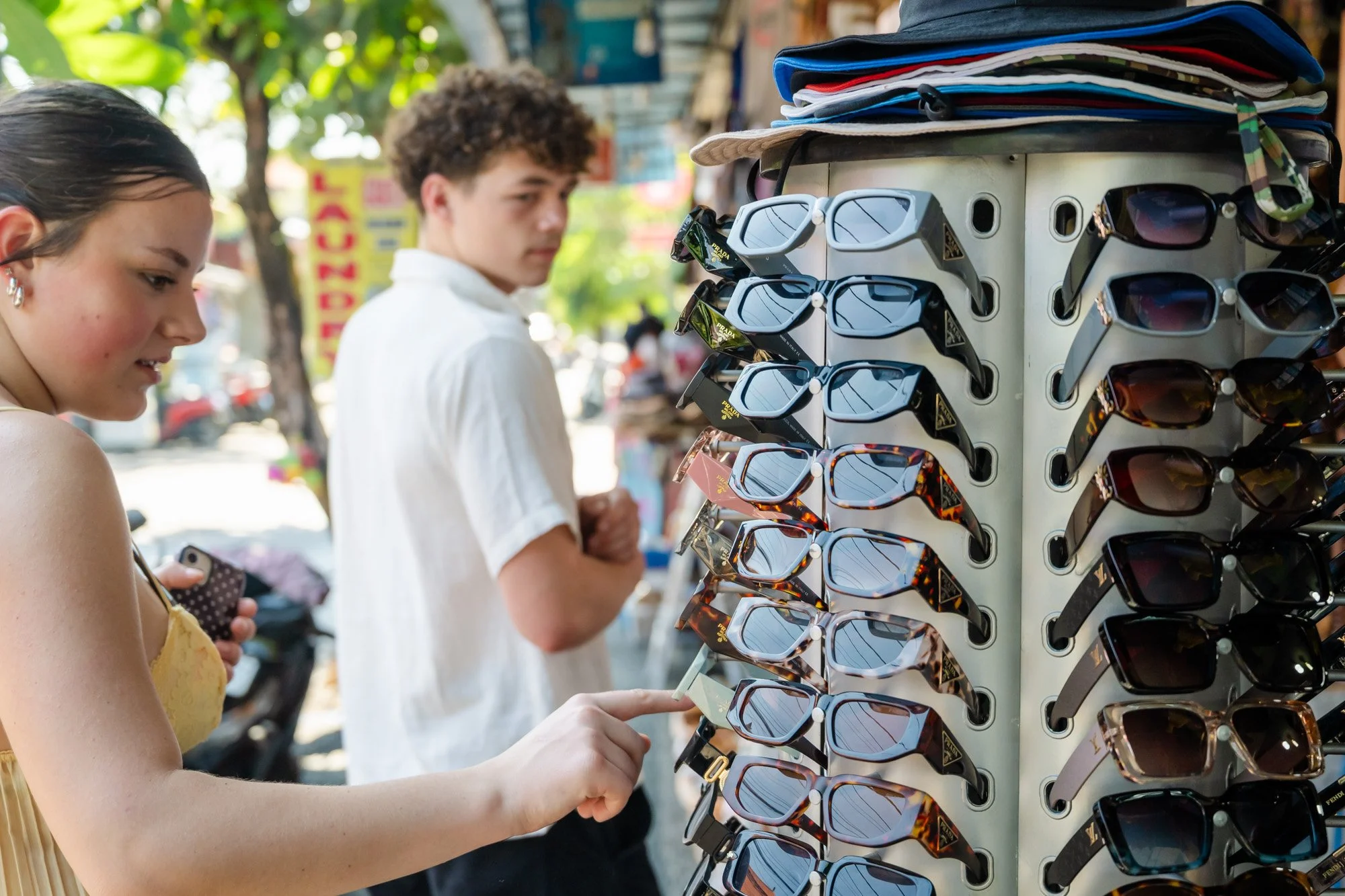
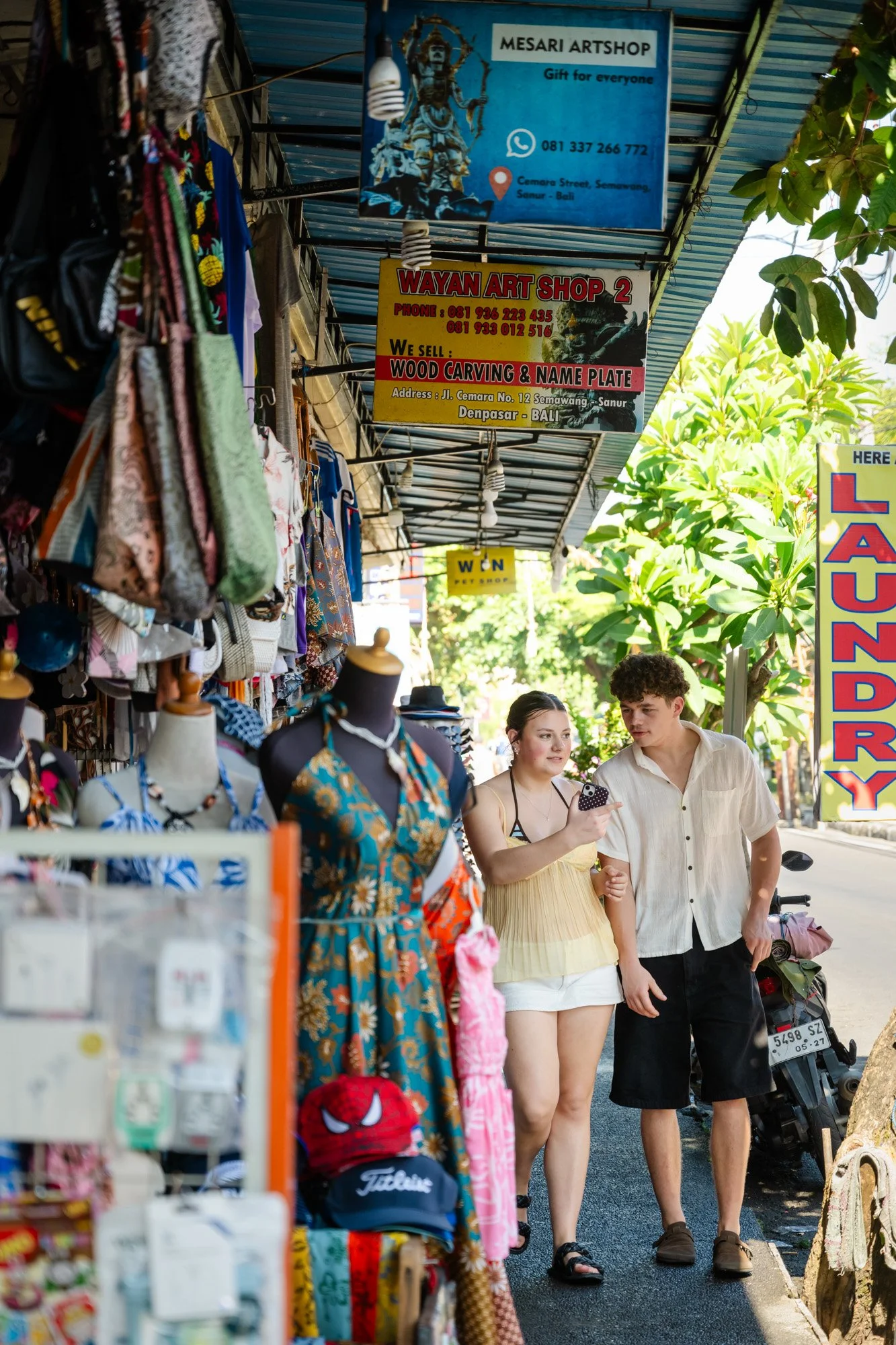
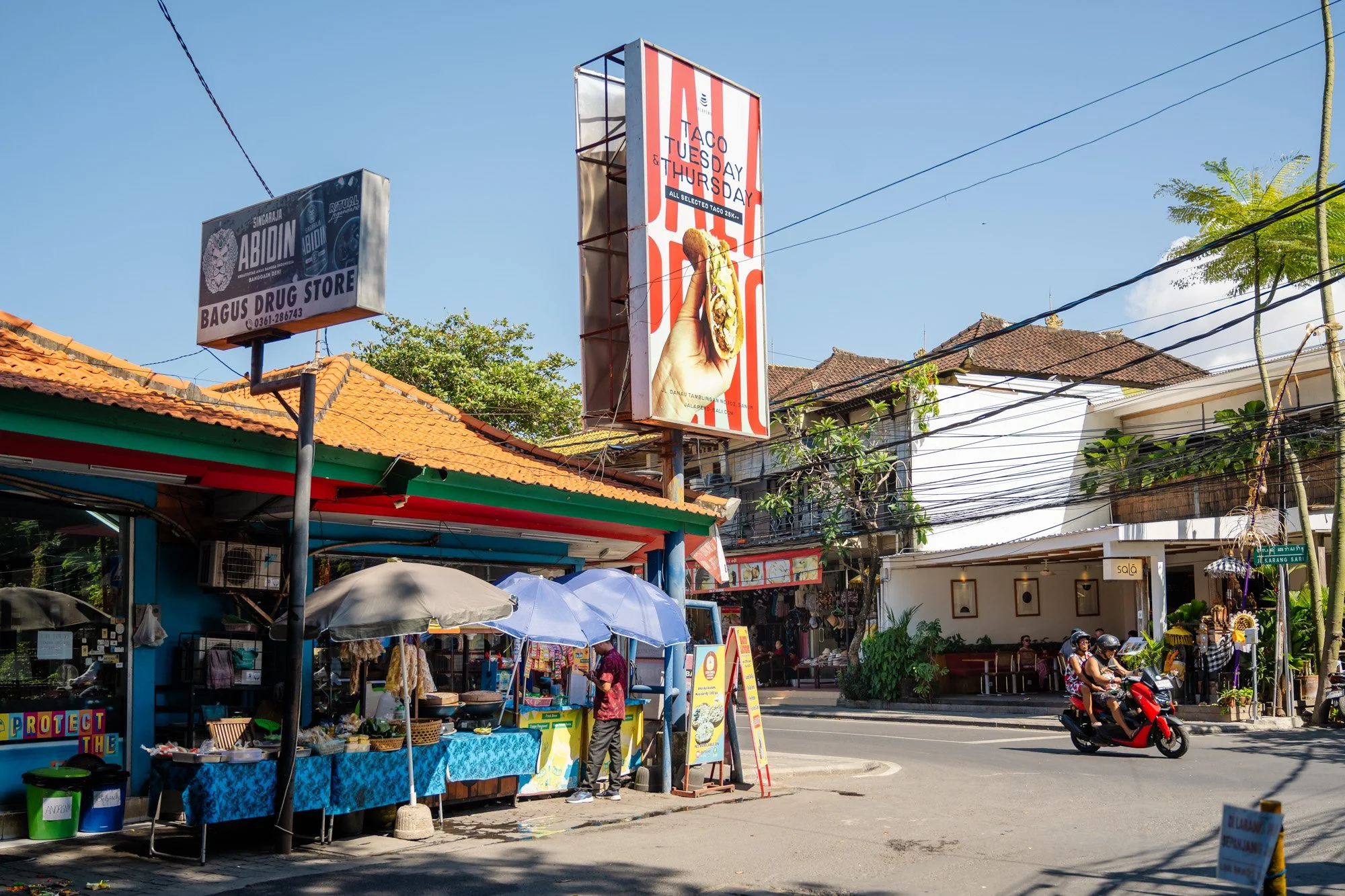
Like much of Bali, you'll come across markets selling souvenirs, clothing, bags and handmade items.
To be honest, they offer much the same as you'll find in Kuta or Legian, so if shopping is high on your priority list, I probably wouldn't make Sanur your destination just for that.
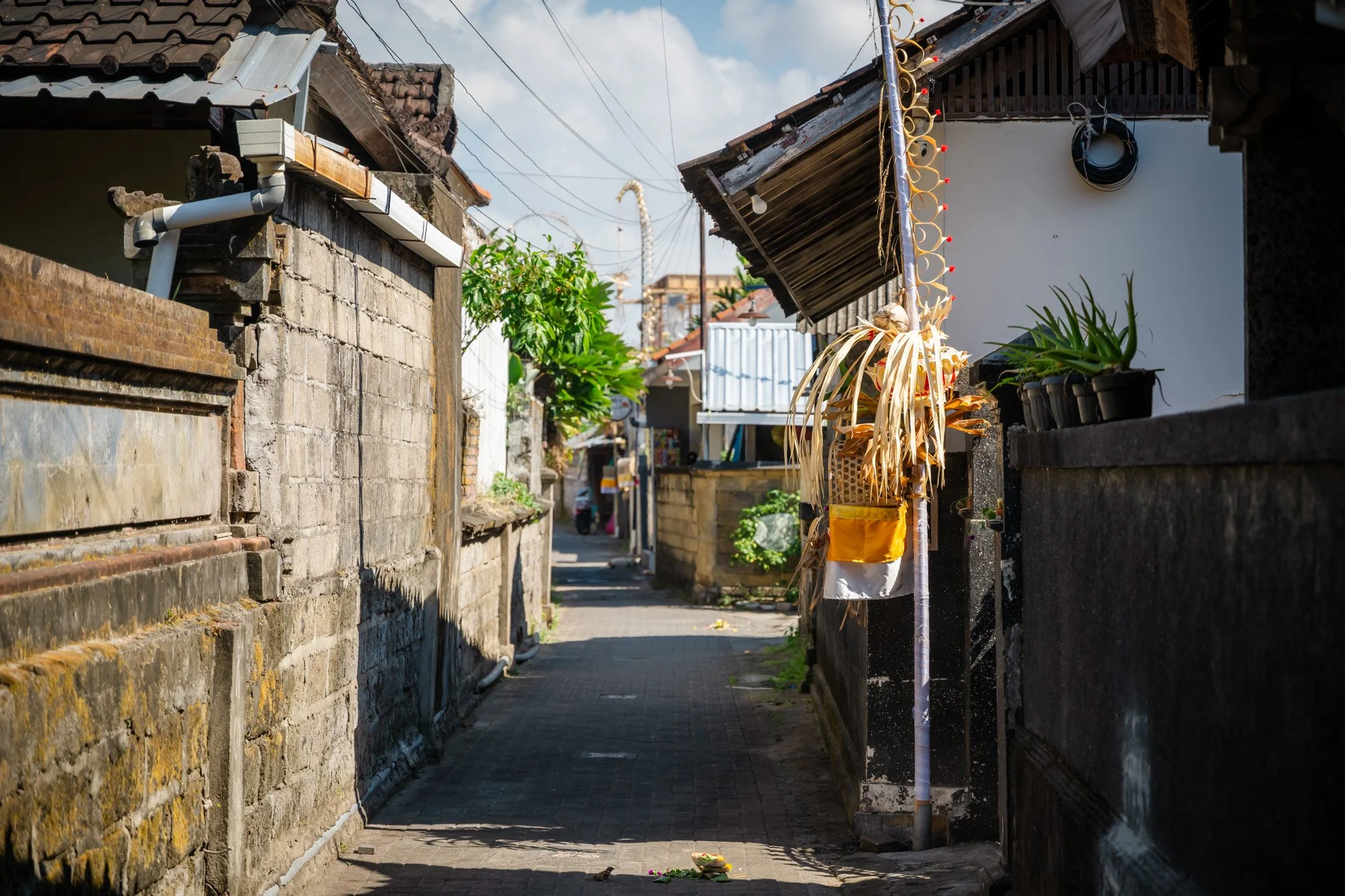
For me, it was more about wandering through the little laneways, watching daily life unfold and soaking up the atmosphere.
One of my favourite things about Bali is noticing the small details.
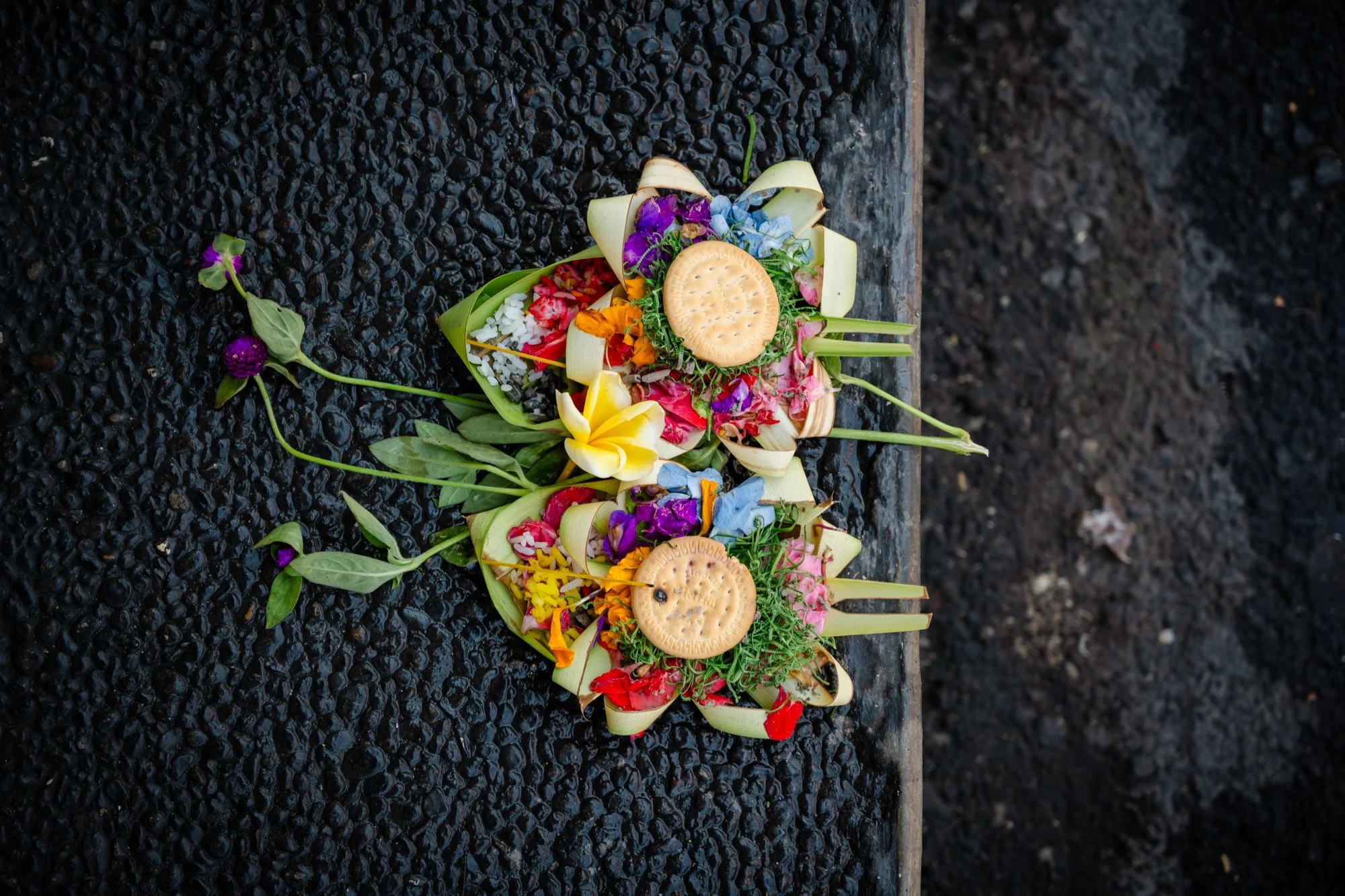
The colourful offerings left outside businesses each morning.
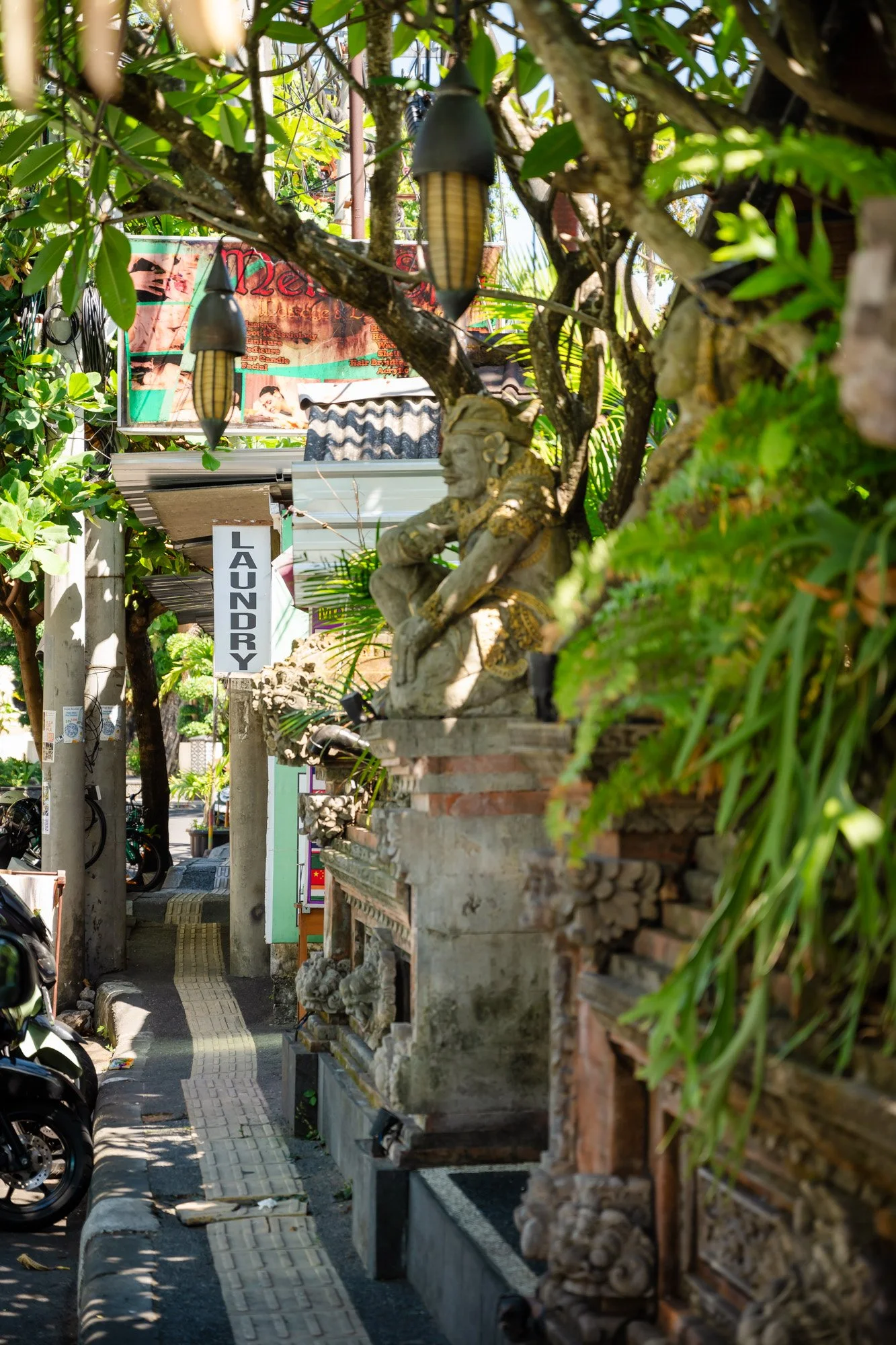
The tiny side streets that disappear between buildings.
The smiles from locals as you wander past.
Those are often the moments I remember most.
The waterfront
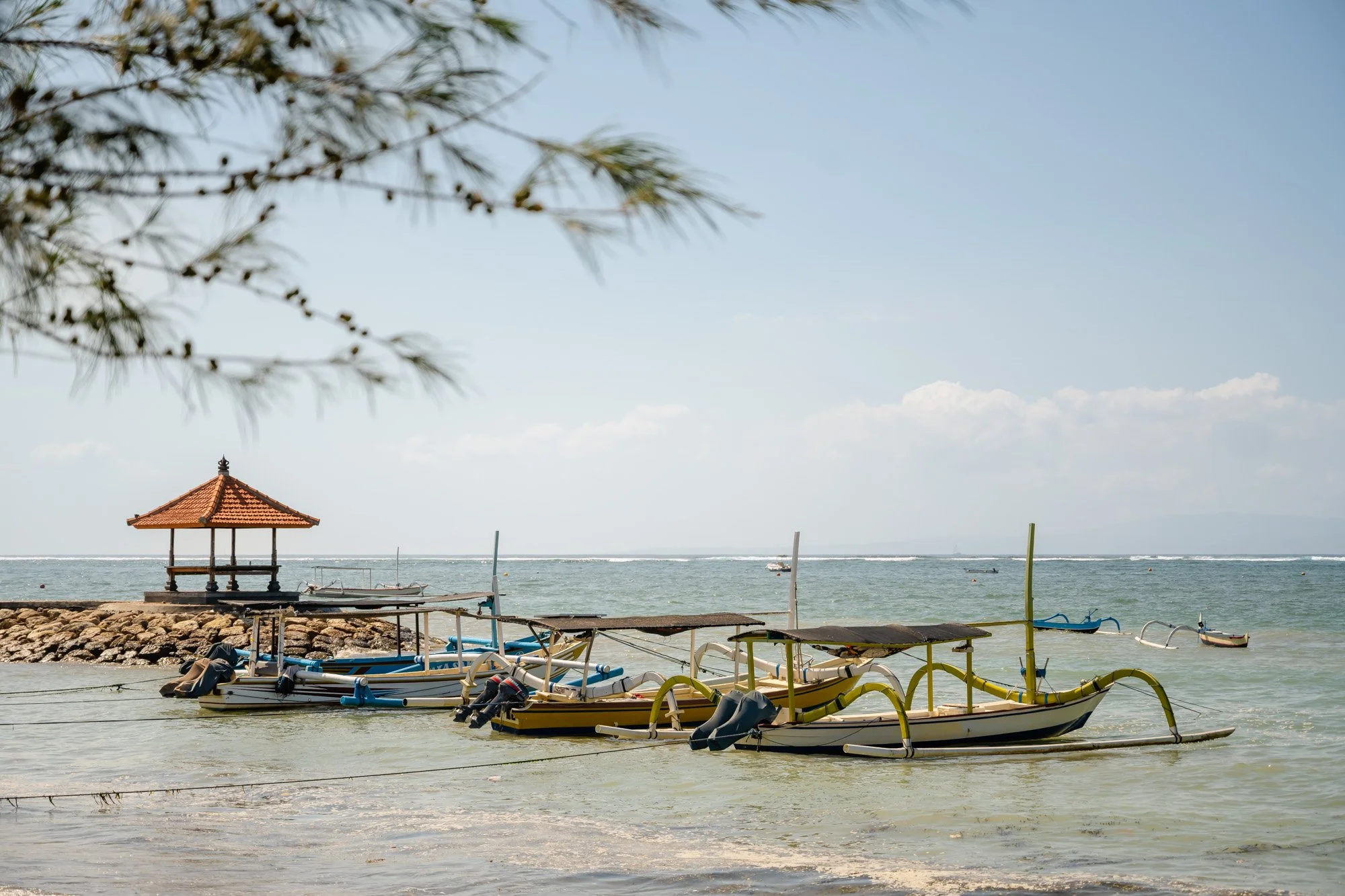
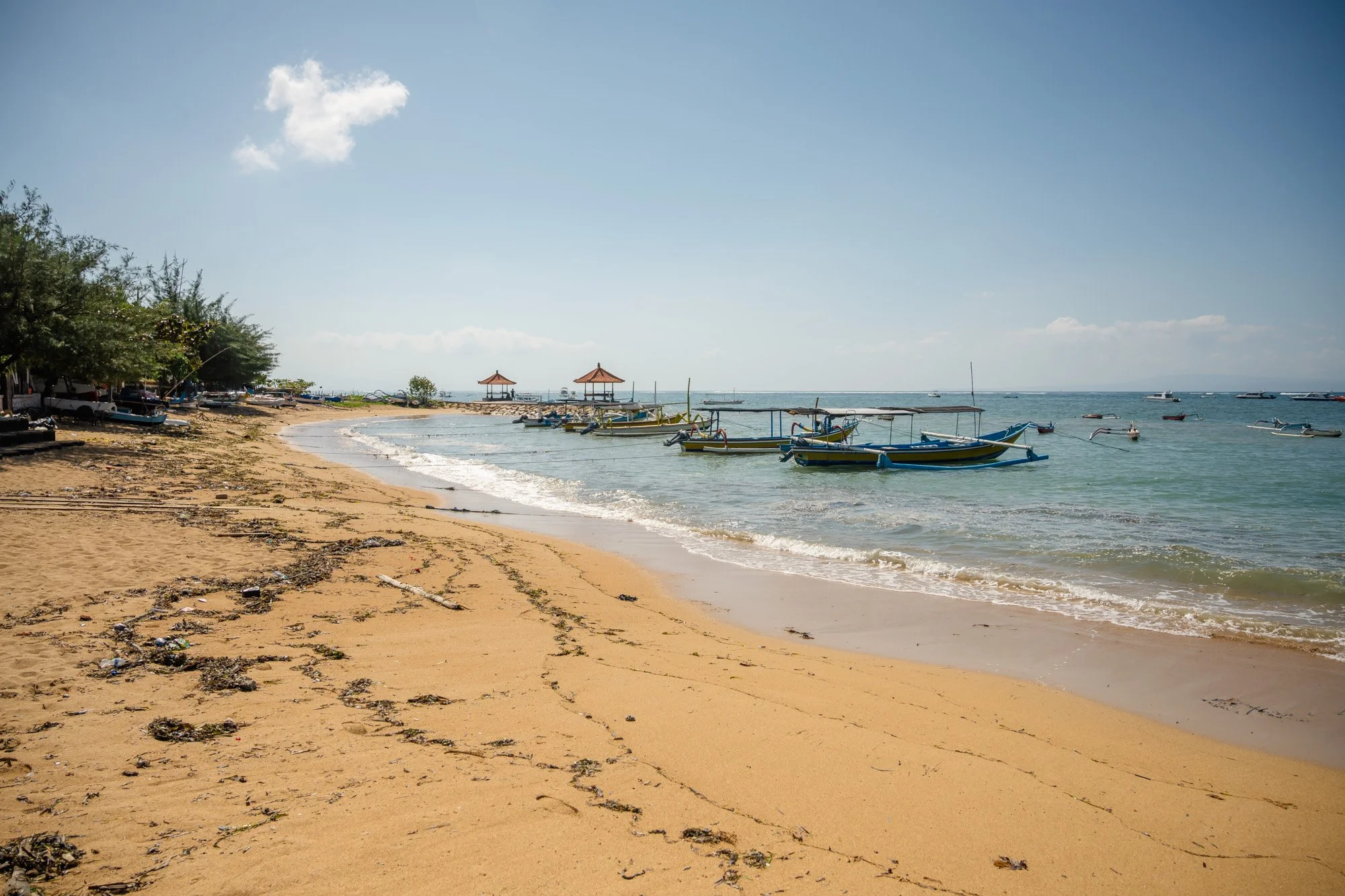
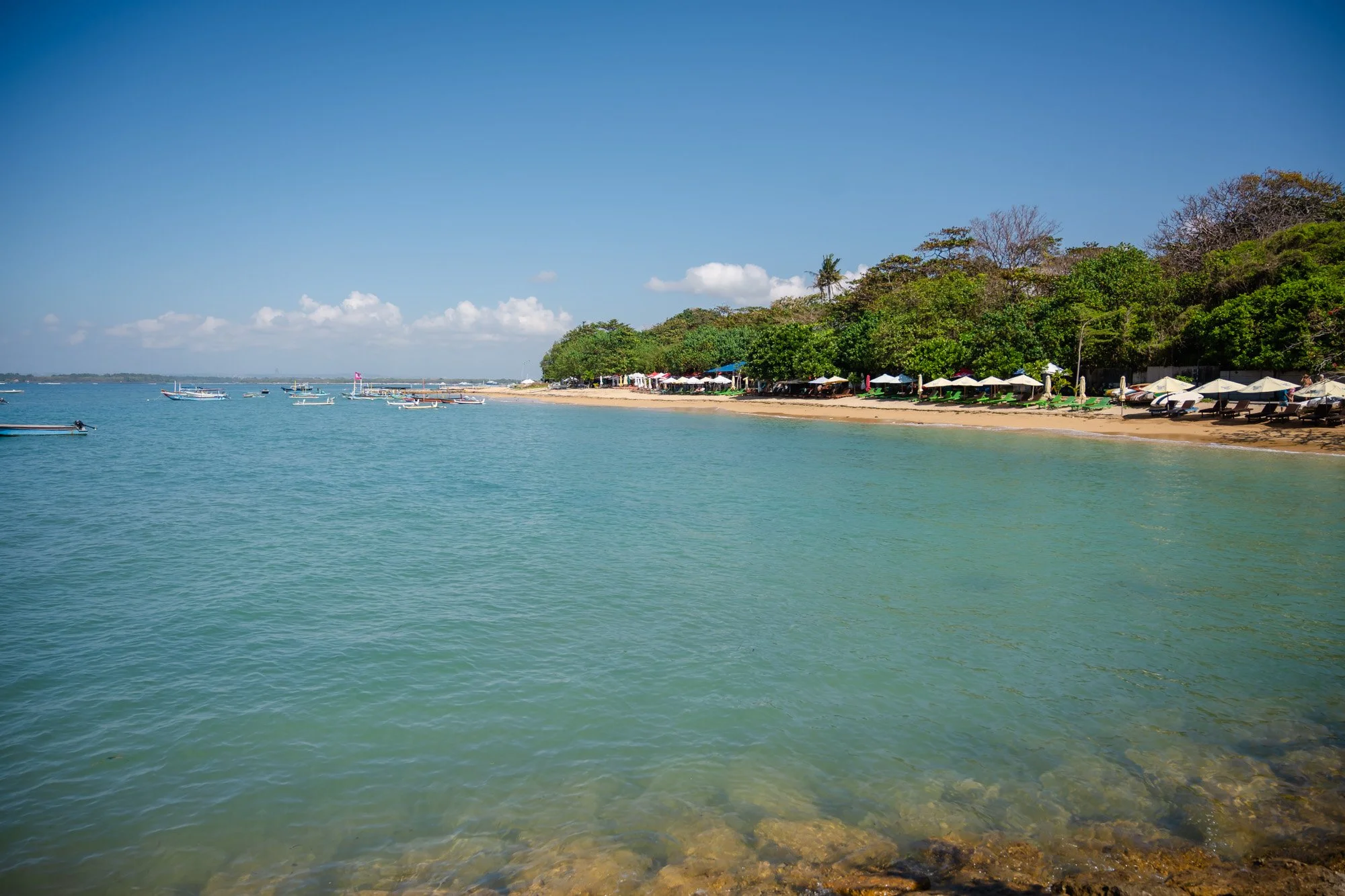
Sanur's beach isn't what I expected.
The shoreline is relatively narrow and, during our visit, there was quite a bit of rubbish that had washed in. The beaches in front of resorts had been cleaned, and showed such a contrast.
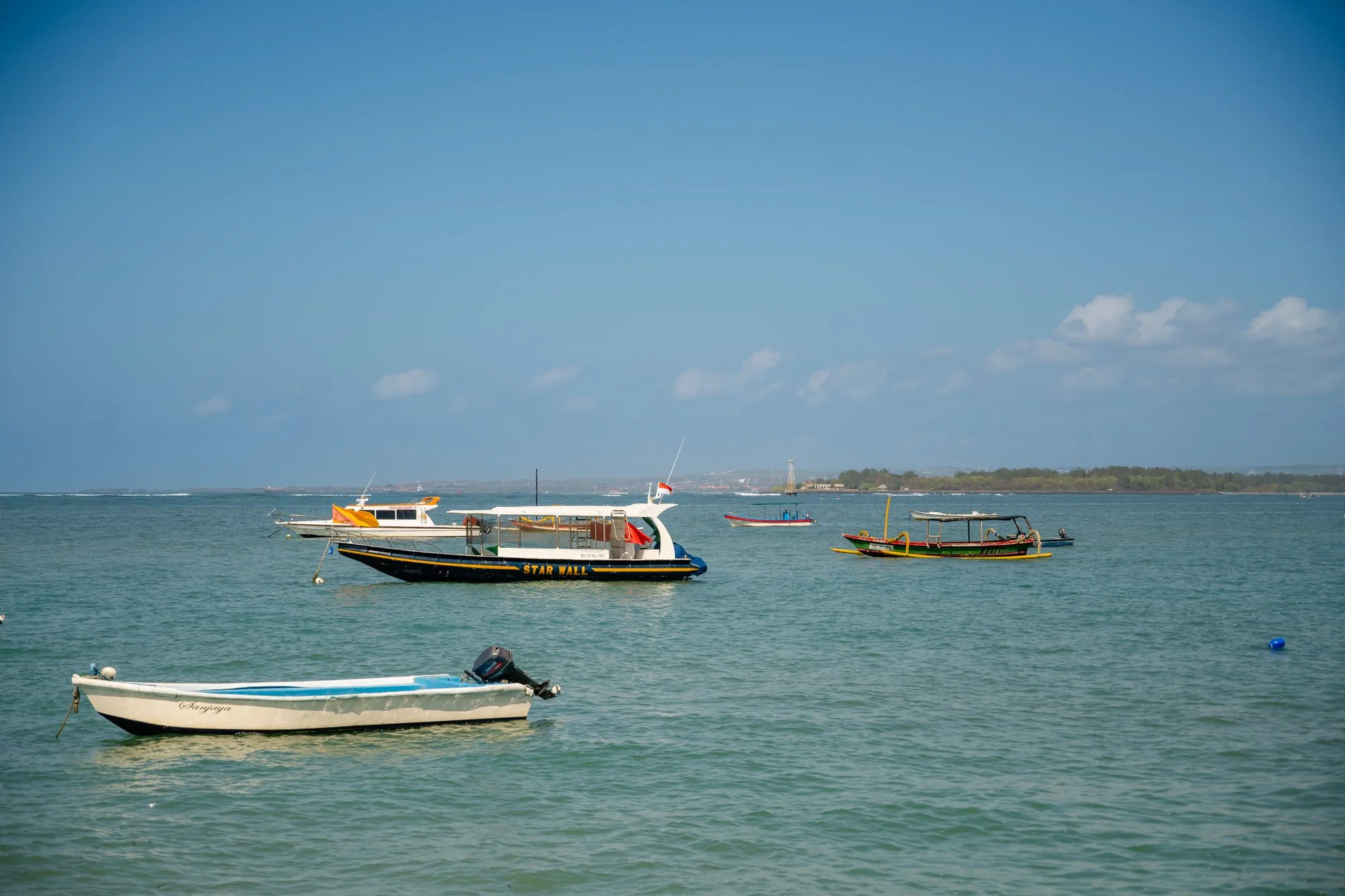
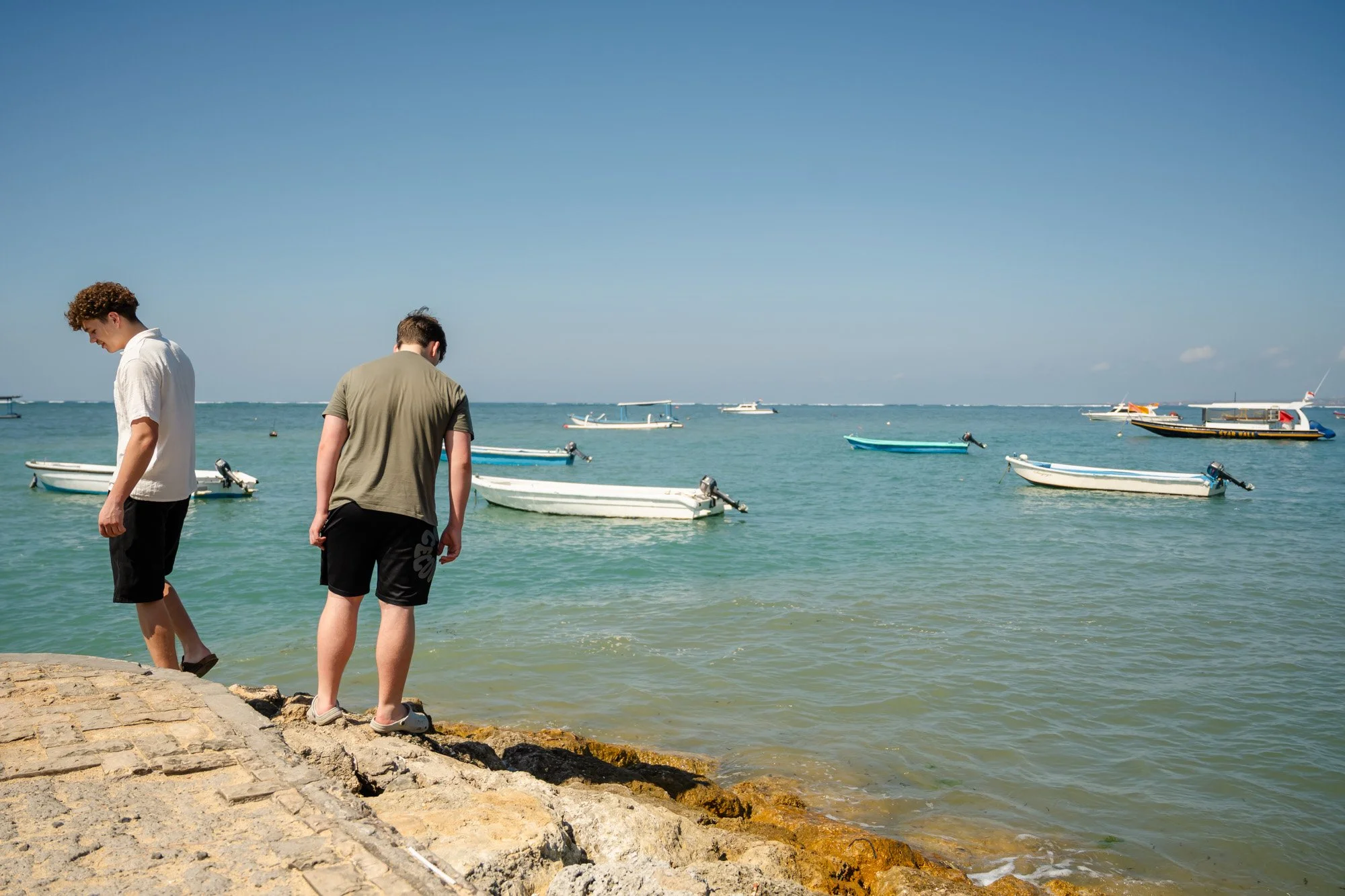
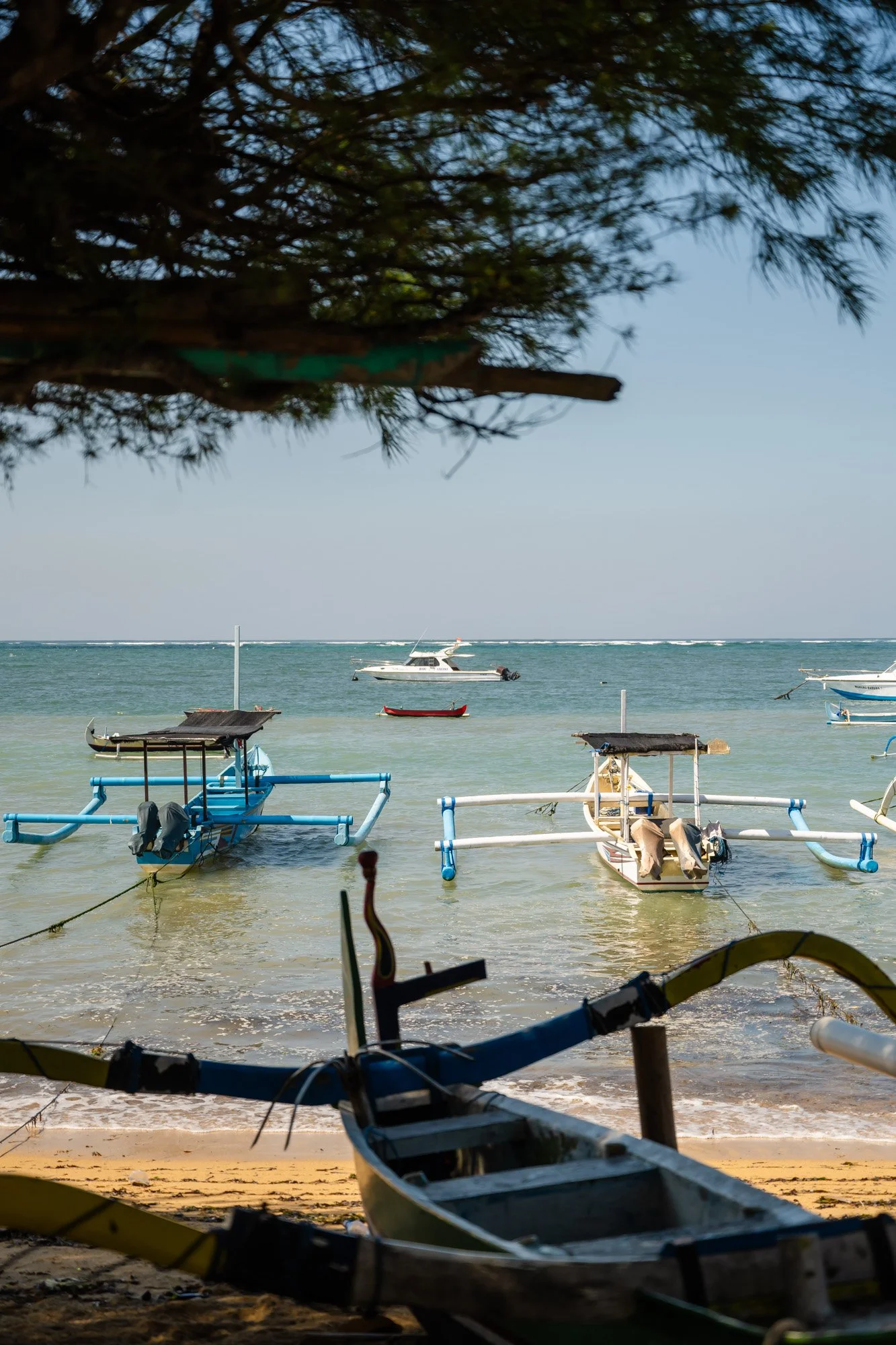
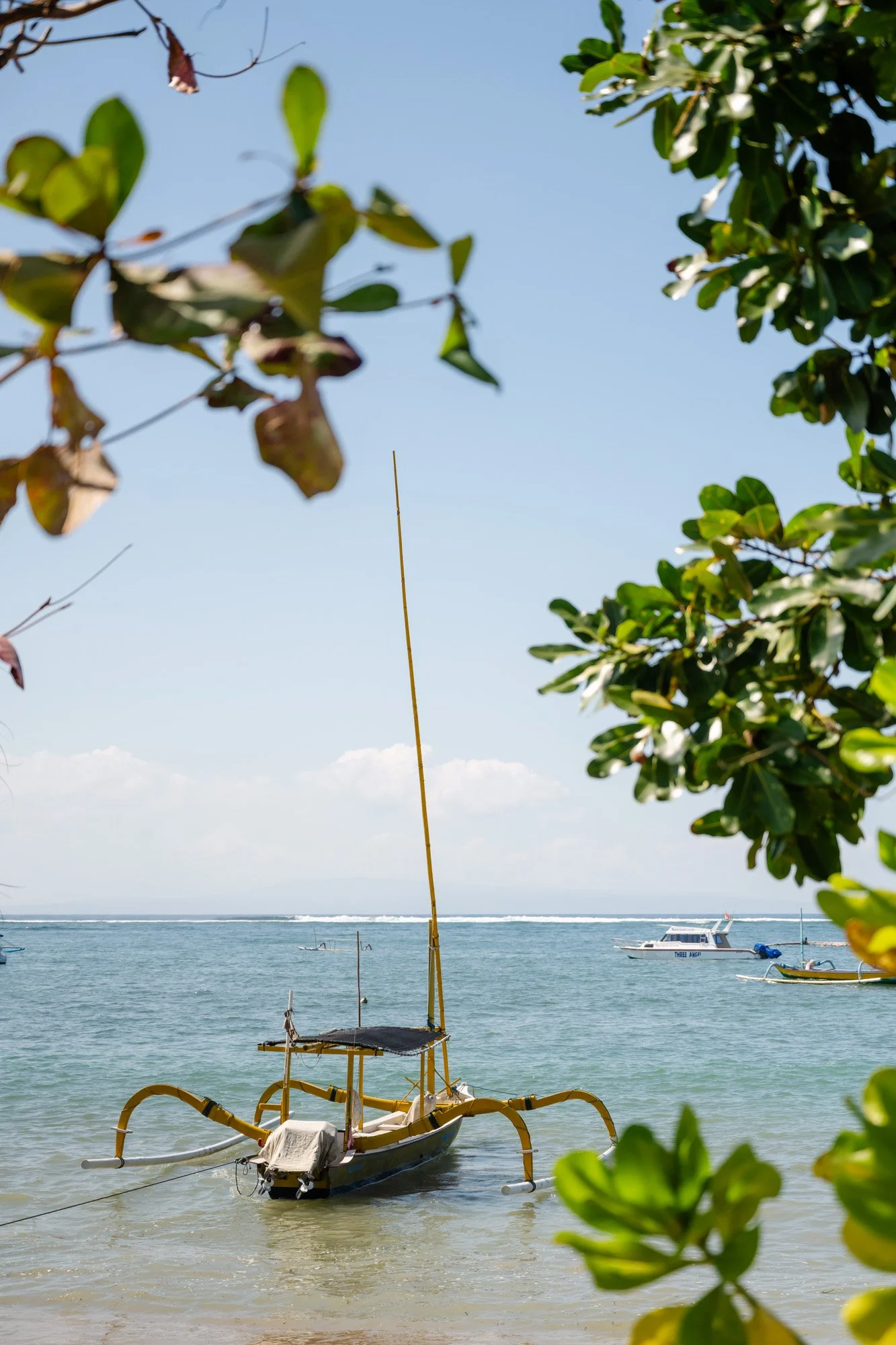
The waterfront felt less like a swimming beach and more like a working harbour. Boats lined the shoreline, ready to take visitors fishing, snorkelling or across to islands like Nusa Penida and the Gili Islands.
Even so, the boardwalk itself is lovely, and I found myself enjoying the atmosphere more than the beach itself.
Is Sanur worth visiting?
I think it really depends on what you're looking for.
If you're after nightlife, beach clubs, shopping and plenty of action, I'd probably point you towards Kuta to Canggu area.
But if you'd rather start your holiday somewhere peaceful, enjoy slower mornings, walk along the waterfront and escape the crowds, then Sanur has a lot to offer.
For us, it was exactly what we needed.
It was an easy first stop after a late-night flight, conveniently located between the airport and Padang Bai, where we caught our boat a couple of days later.
Sometimes a destination doesn't need to be exciting.
Sometimes it simply needs to give you space to slow down before the next adventure begins.
And Sanur does that beautifully.

Say Yes to Adventure: A Road Trip Through WA
Say Yes to Adventure: A Road Trip Through Western Australia’s Coral Coast
I love adventures. Most people who know me know that.
I’m incredibly lucky to have a group of people in my life who, when I say, “Hey, what if we did this?” don’t immediately come up with all the reasons why we shouldn’t. They usually respond with, “Yes. Let’s do it.”
And honestly, those are my favourite people.
This adventure started late last year while I was at Rottnest Island with friends. We had just ticked off something pretty wild - skydiving - and I remember saying, “Thank you. You’ve helped me tick something off my bucket list that I probably wouldn’t have done without a little push to book (and fall out of the plane).”
Because sometimes you don’t need someone to convince you. You just need someone to say, “Come on, let’s book it.”
So naturally, the conversation turned to the next adventure.
“What are we doing next year?”
I mentioned that Cocos Keeling Islands were on my list, but then I threw another idea into the mix.
“I’d really love to swim with whale sharks at Ningaloo Reef.”
The response was immediate.
“Yes. Absolutely. Let’s do it.”
And that was it. The plan was made.
The beauty of travelling with people who just make things happen
My friend who lives in Perth took charge of organising the trip. He researched the best dates, identified the best companies, planned the route, and found the places we should stop along the way.
This was actually a little challenging for me.
I like organising things. I like knowing the details. I like being prepared.
So handing over the reins and just saying, “Okay, I’ll come along for the ride,” was a good lesson for me.
And you know what? It was wonderful.
There is something really special about allowing someone else to create the adventure for you.
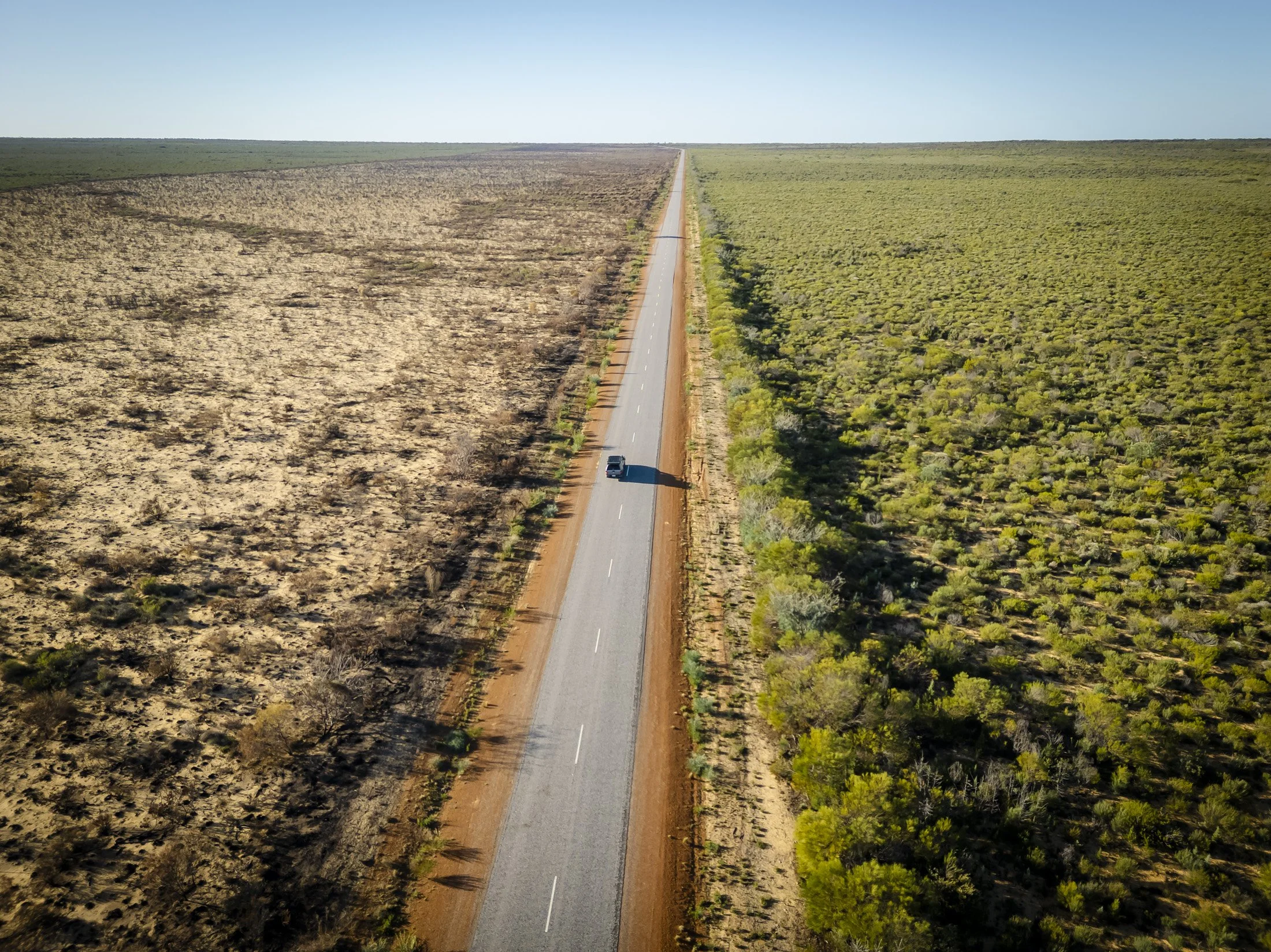
So in June 2026, I flew into Perth, jumped into a four-wheel drive with my friends, and we started heading north.
Four people. Two cars.
And a whole lot of kilometres ahead of us.
The road north
Our first stop was Cervantes, where we stayed overnight and explored the Pinnacles next morning. We were planning a sunrise visit, but rain halted that.
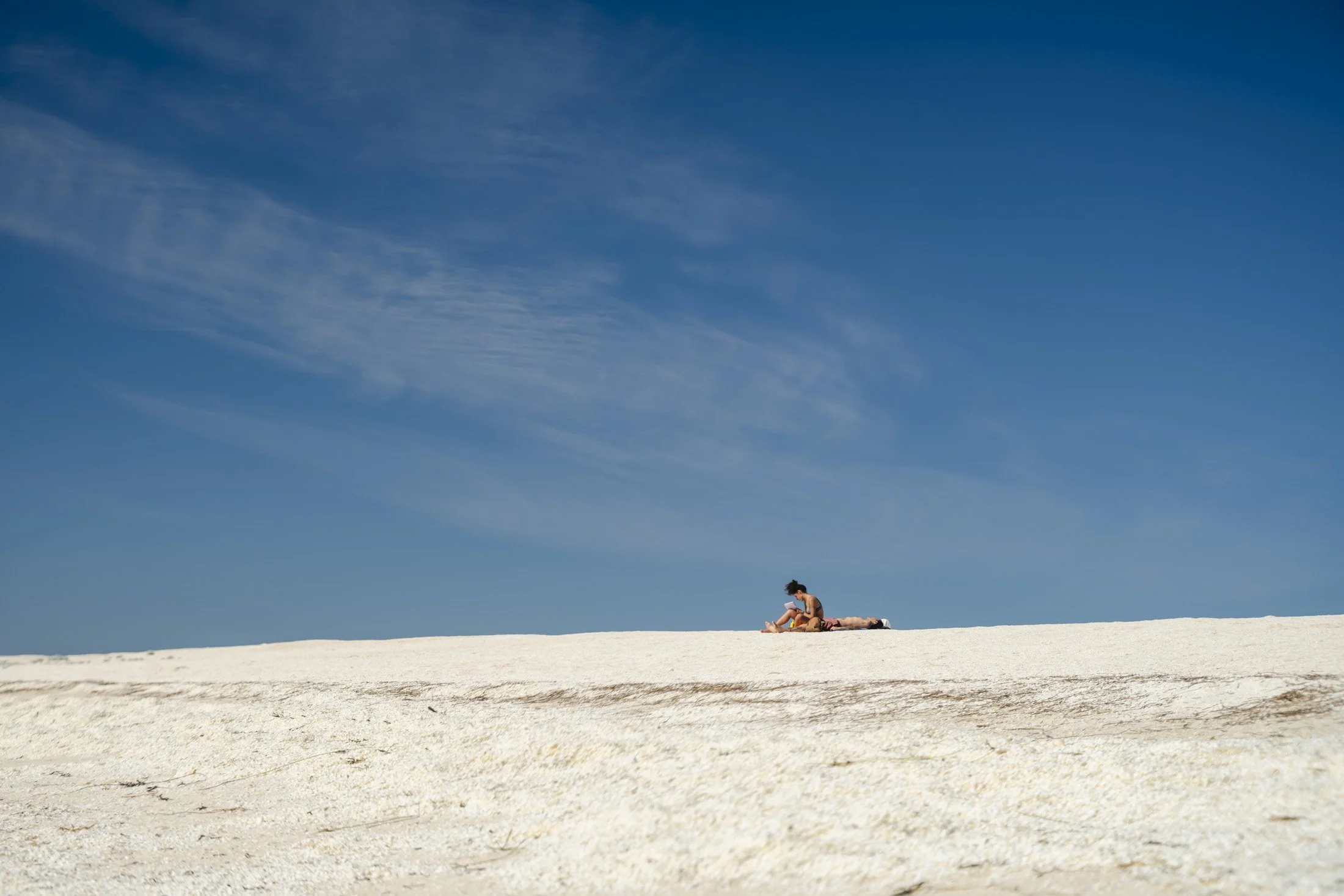
The landscape was definitely interesting - this incredible desert filled with limestone formations rising from the sand. It’s absolutely worth stopping to see, although personally, I wouldn’t say it’s somewhere I would make a huge trip just to visit. It was one of those places that was cool to experience as part of a bigger adventure.
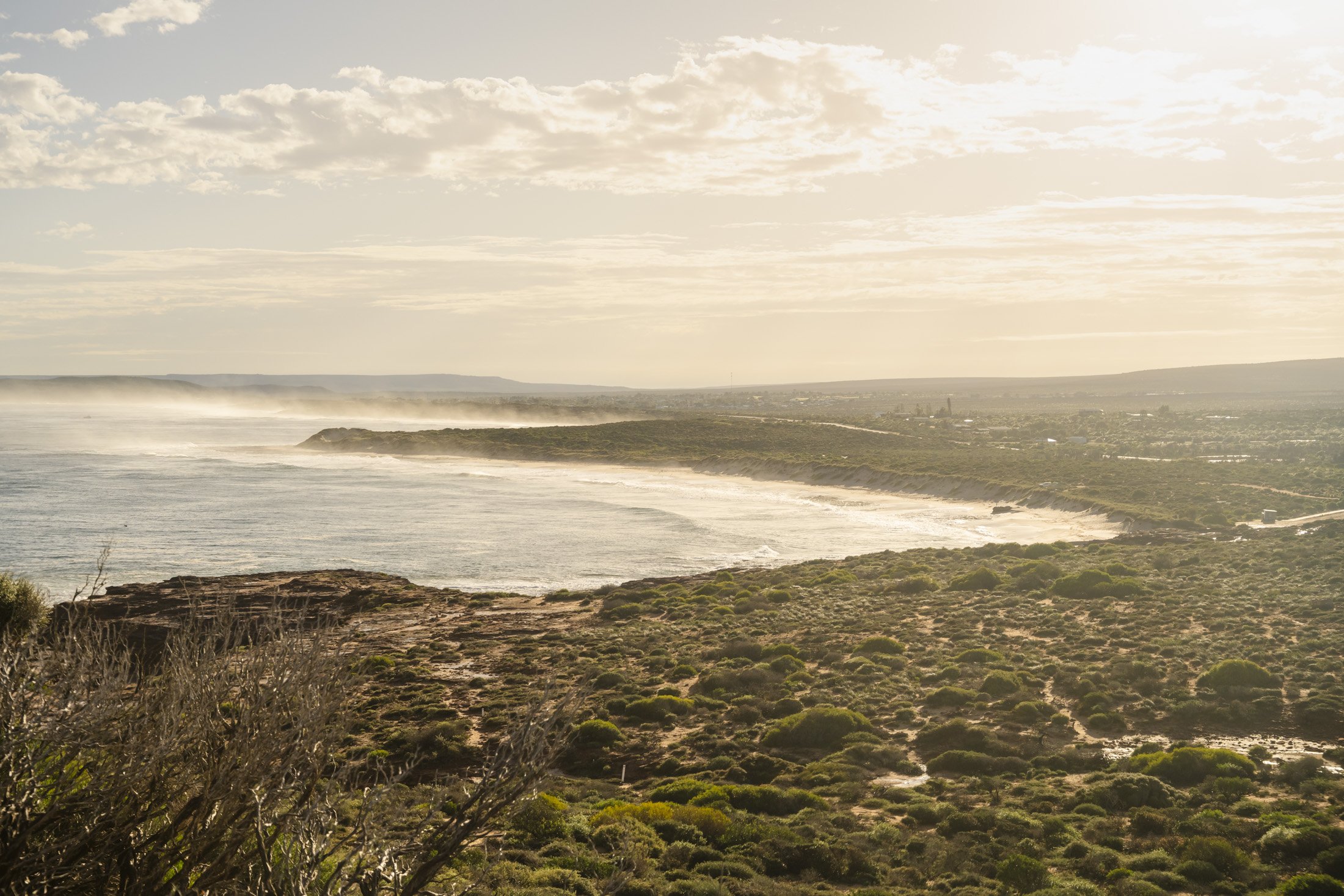
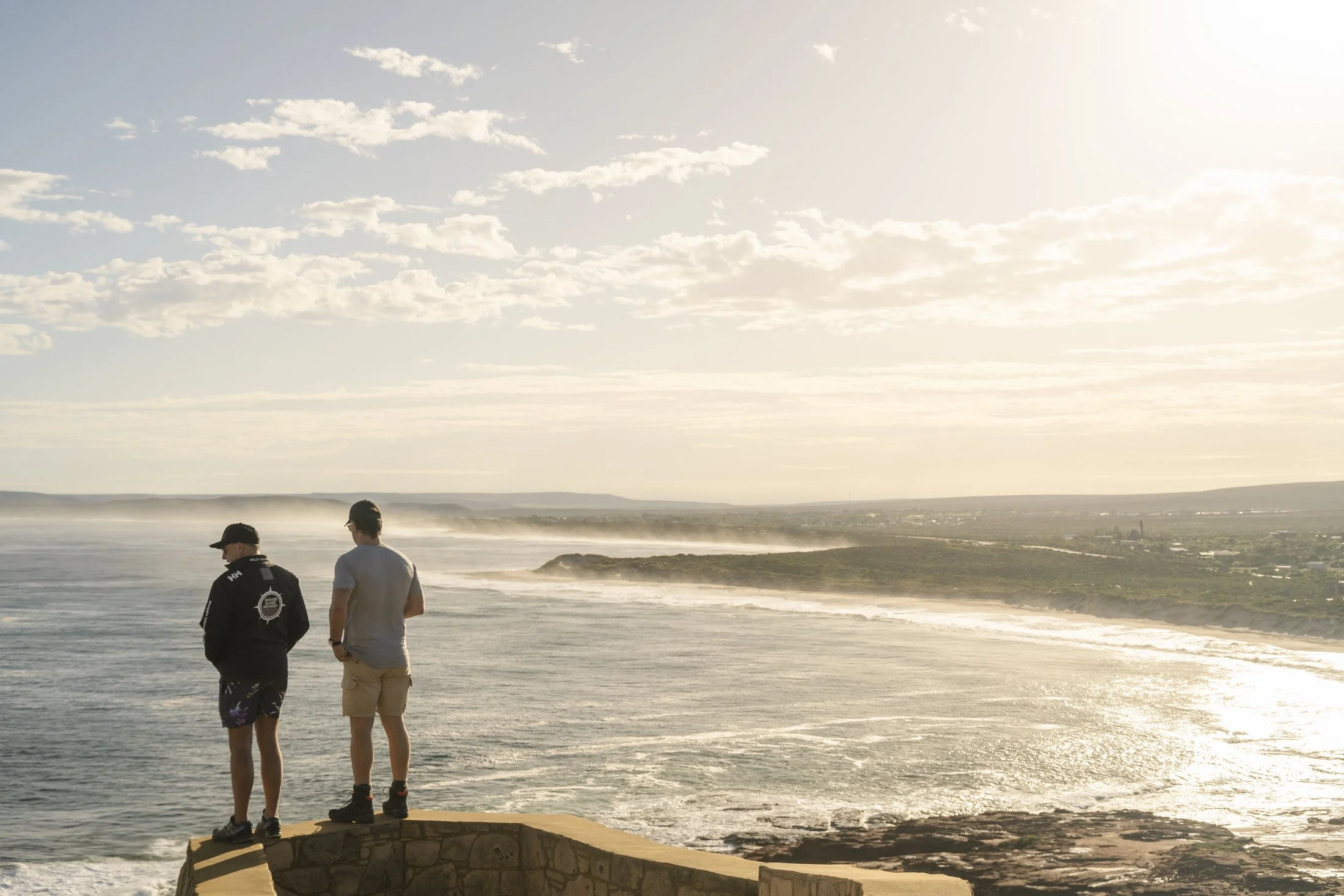
From there, we continued north to Kalbarri, where I really started falling in love with the journey.
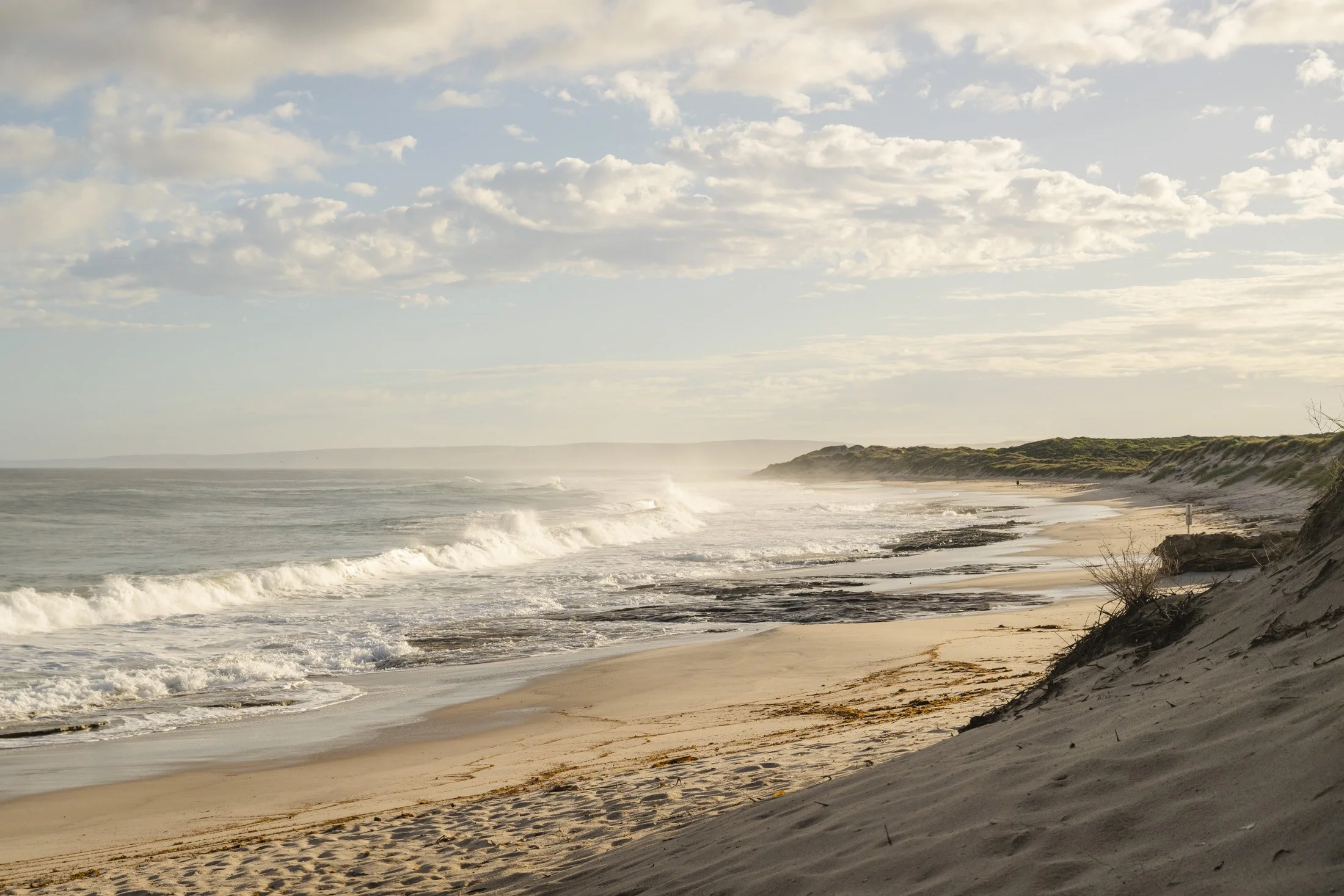
Kalbarri had a little bit of everything:
the beautiful inlet
the wild surf beaches
a bakery serving amazing buddha bowls, sweet treats and good coffee (always important!)
and a relaxed coastal feel
We also picked up some hilarious sunglasses along the way. The boys ended up wearing women’s sunglasses, while the girls went for the brightest, most colourful pairs we could find. Teamed up with our bright yellow ‘Minions’ jumpers that my friend bought - we looked like a crazy team.
But why not?
The trip was already becoming less about ticking off locations and more about collecting moments.
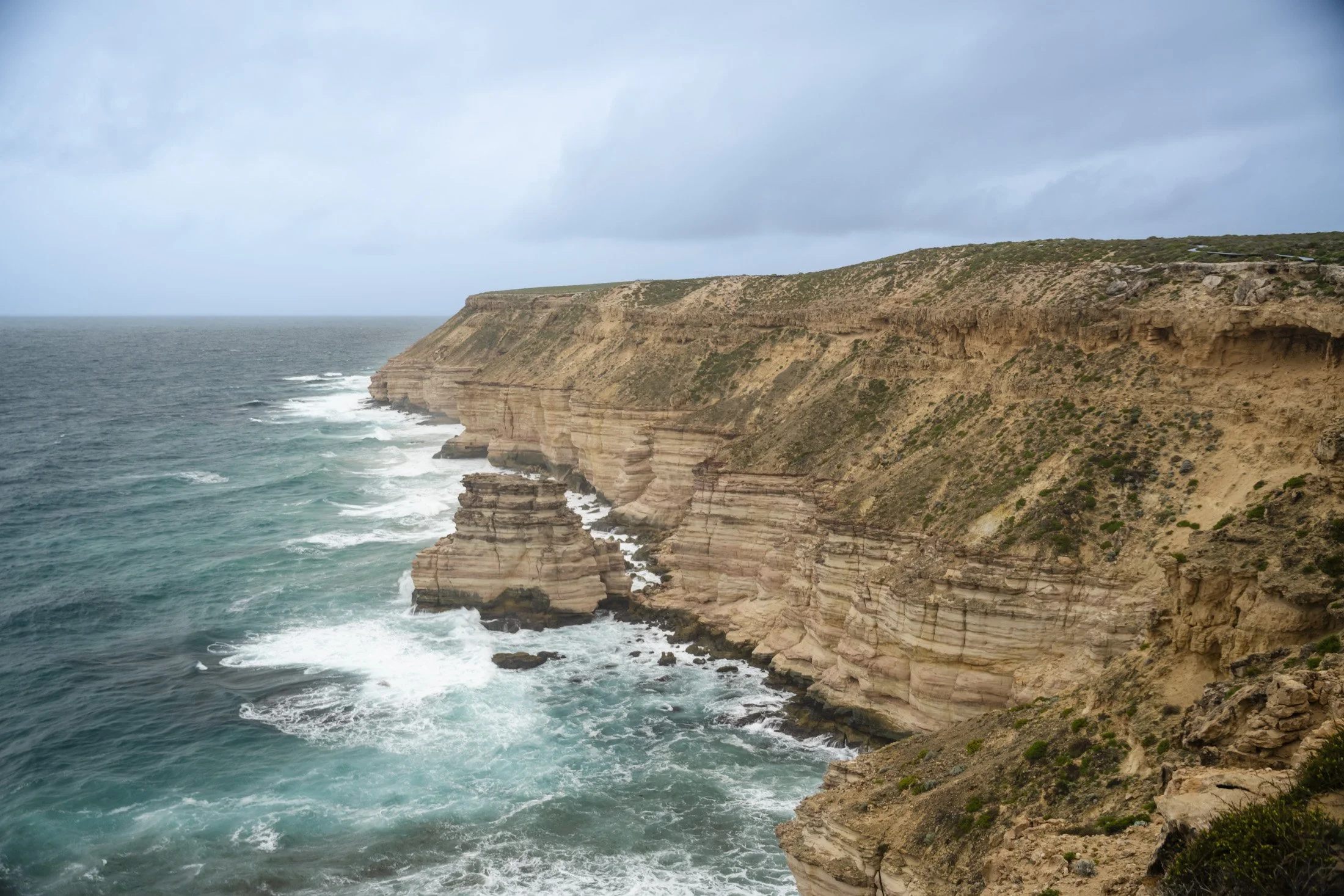
Kalbarri National Park after the rain
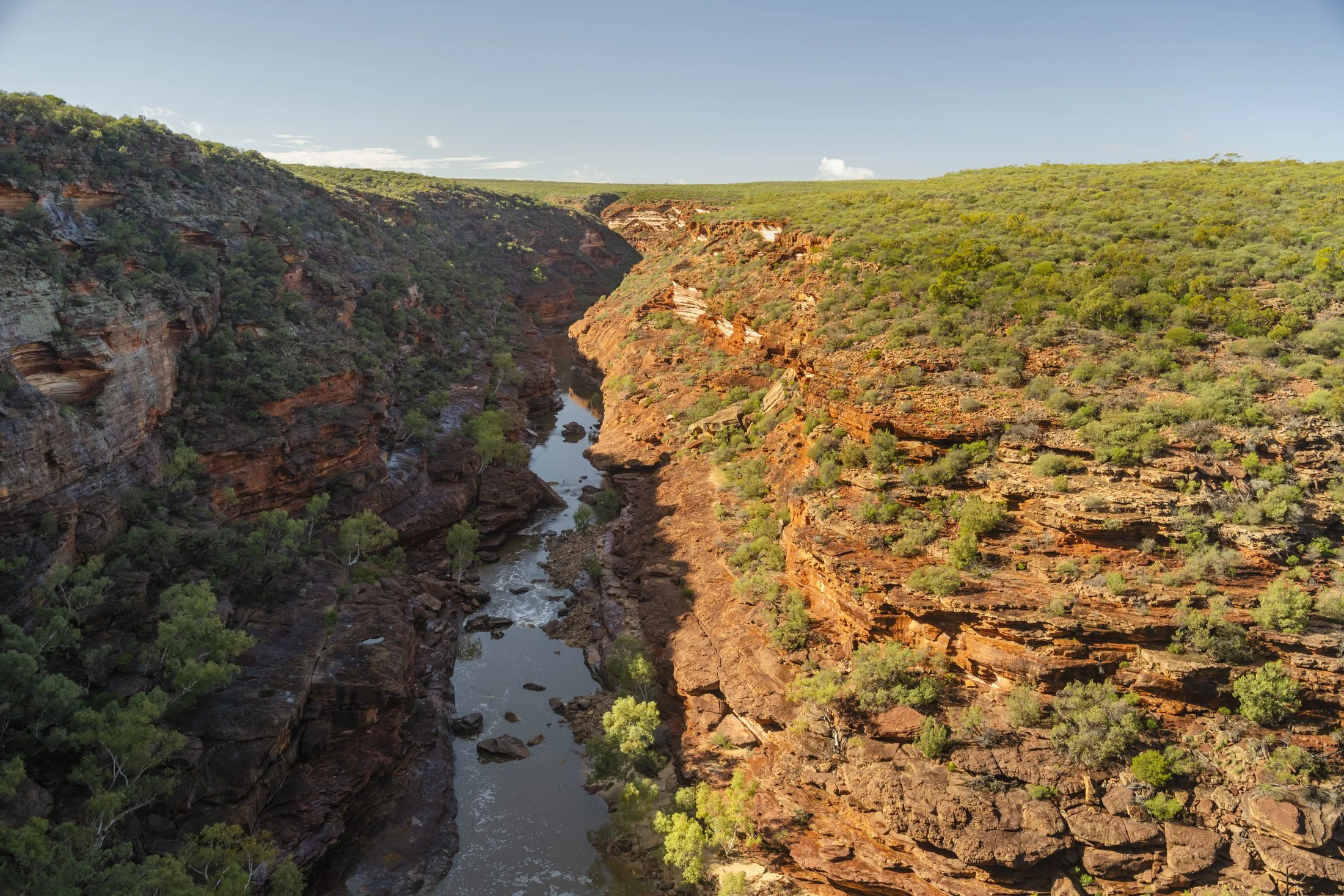
From Kalbarri, we headed into the National Park.
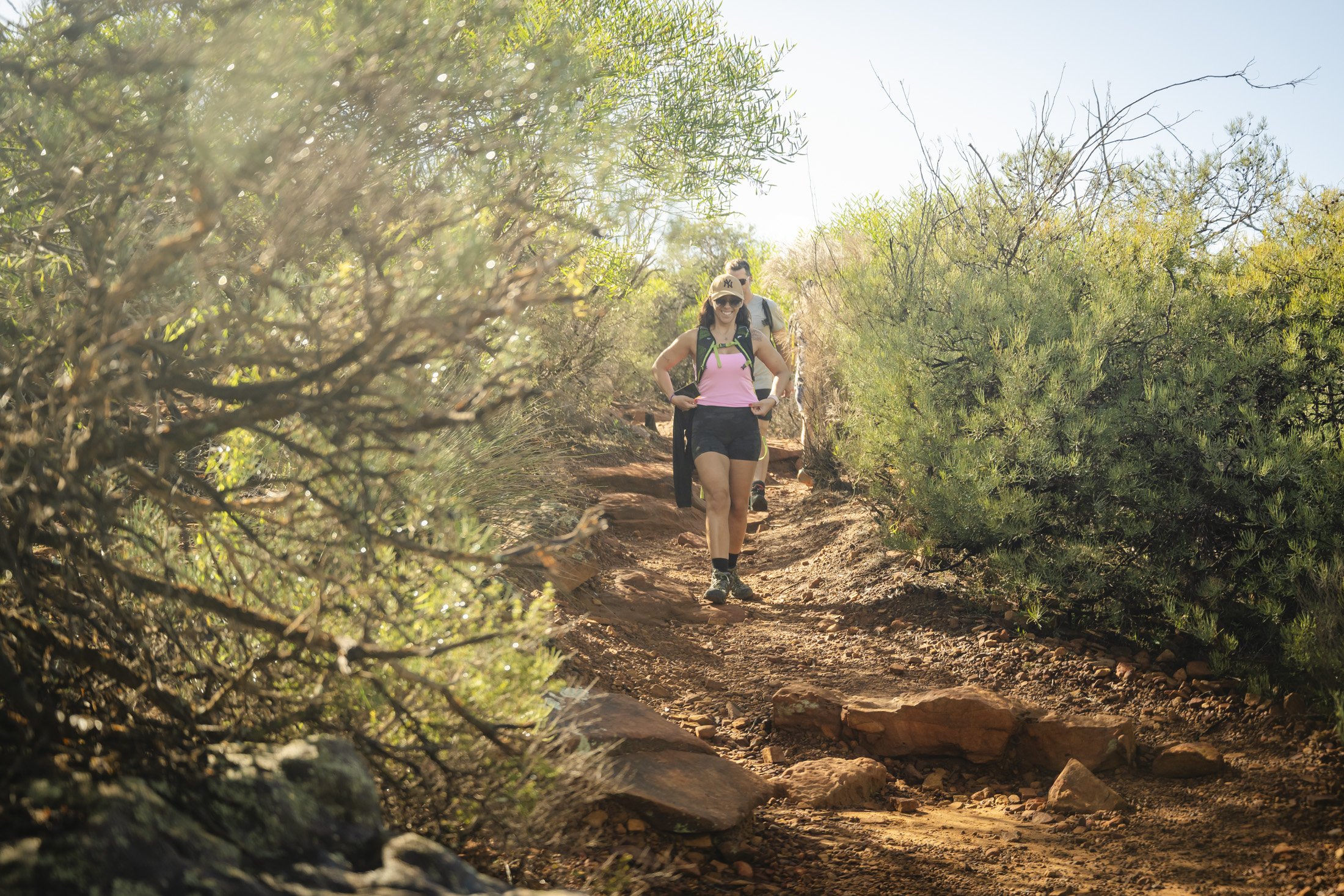
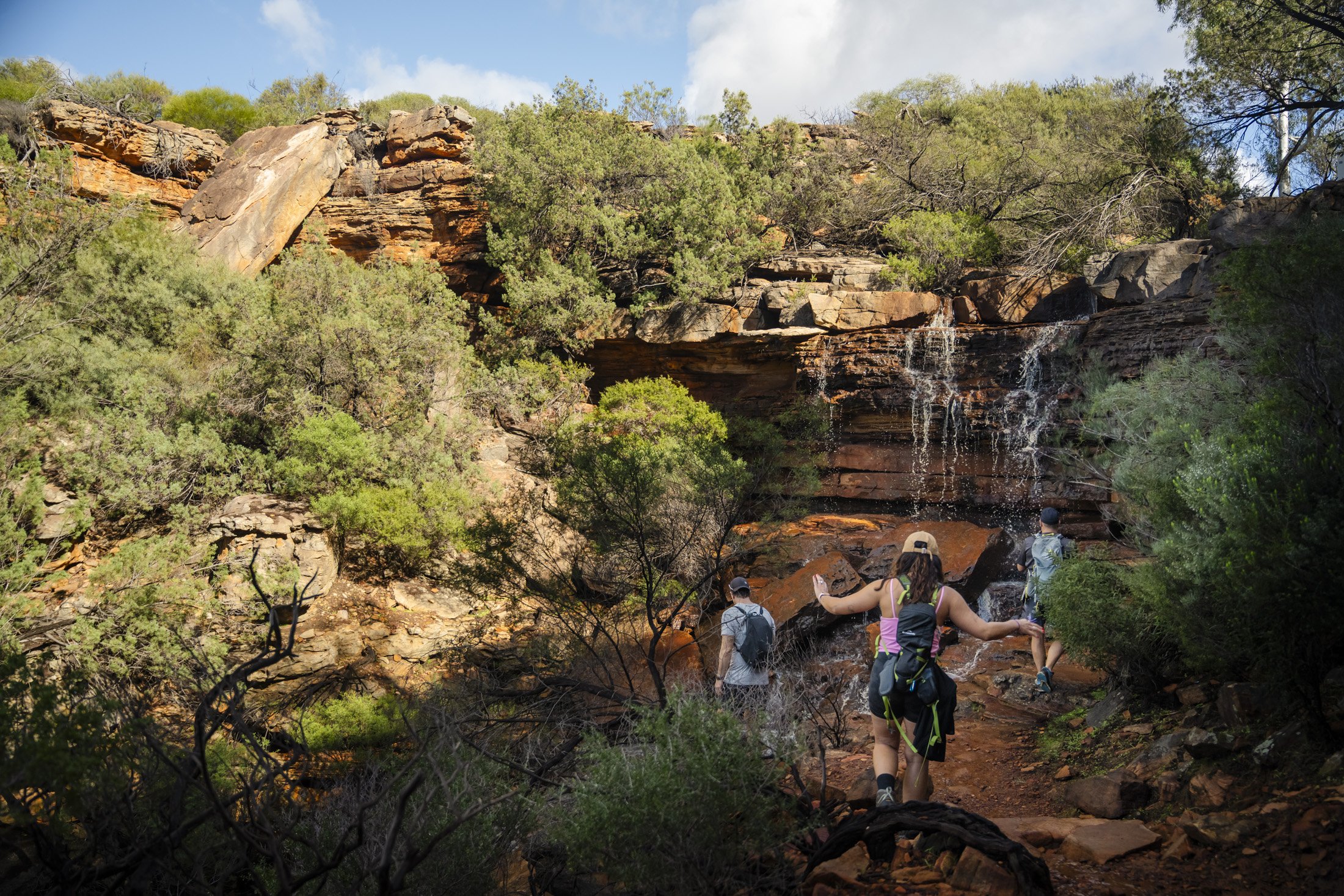
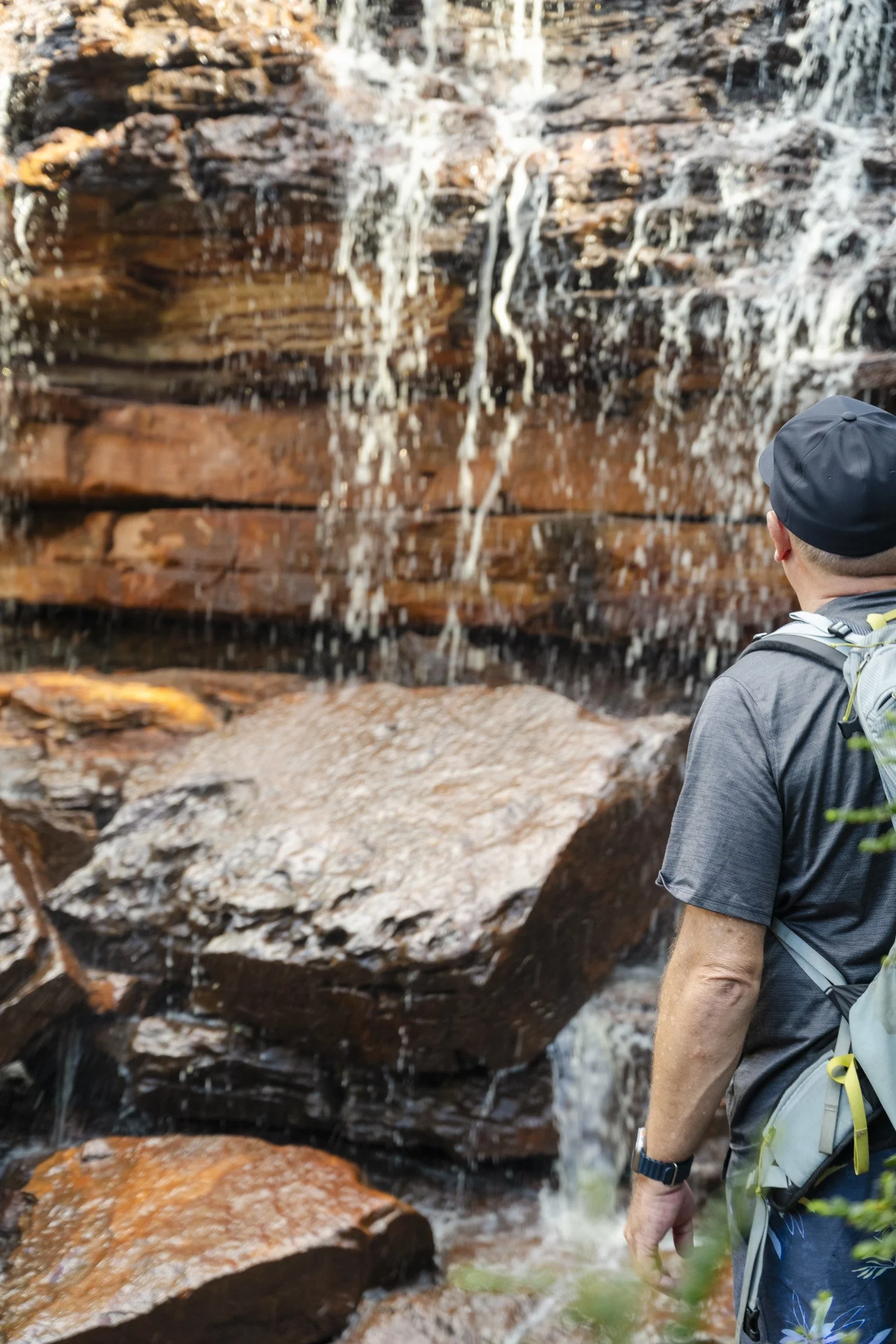
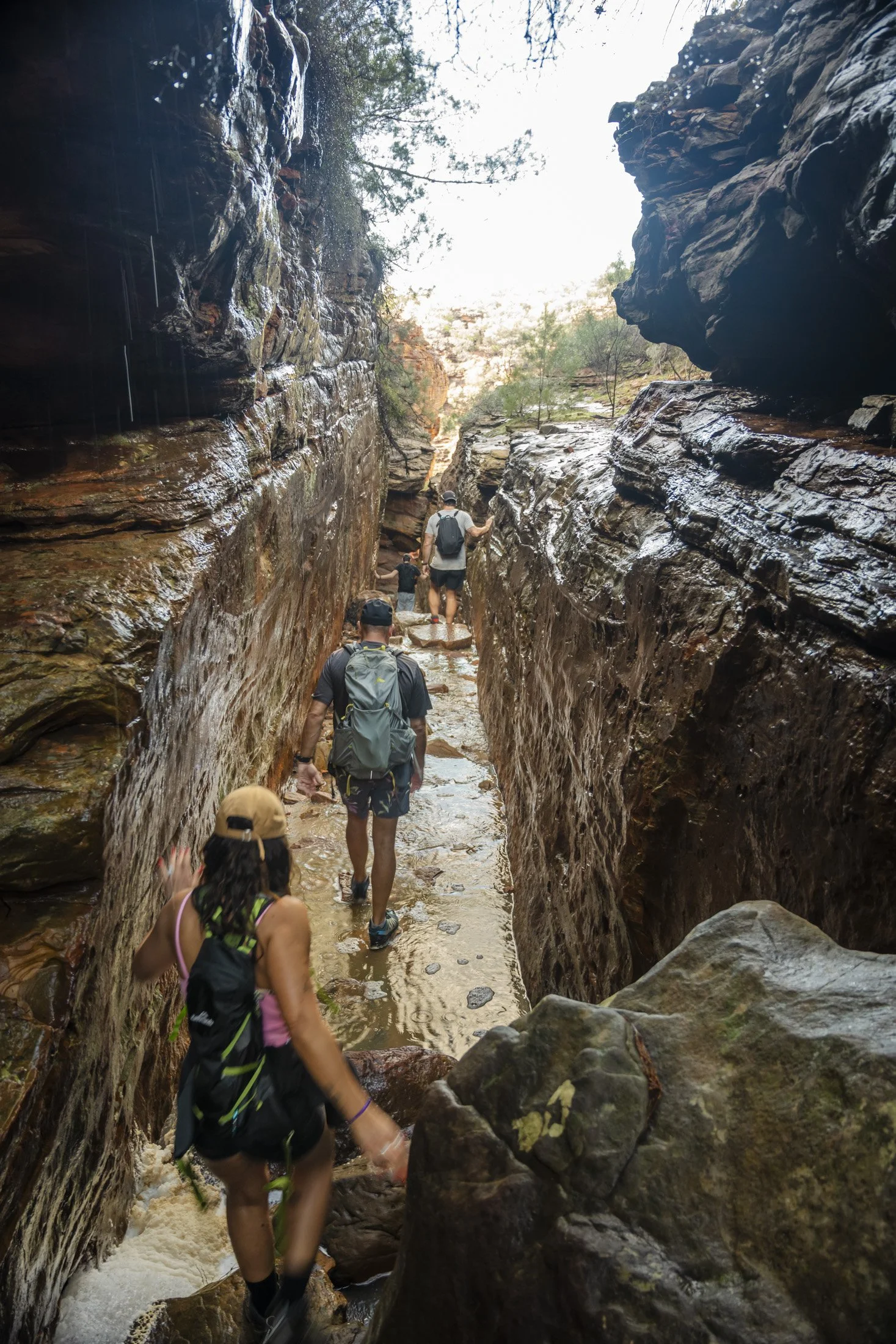
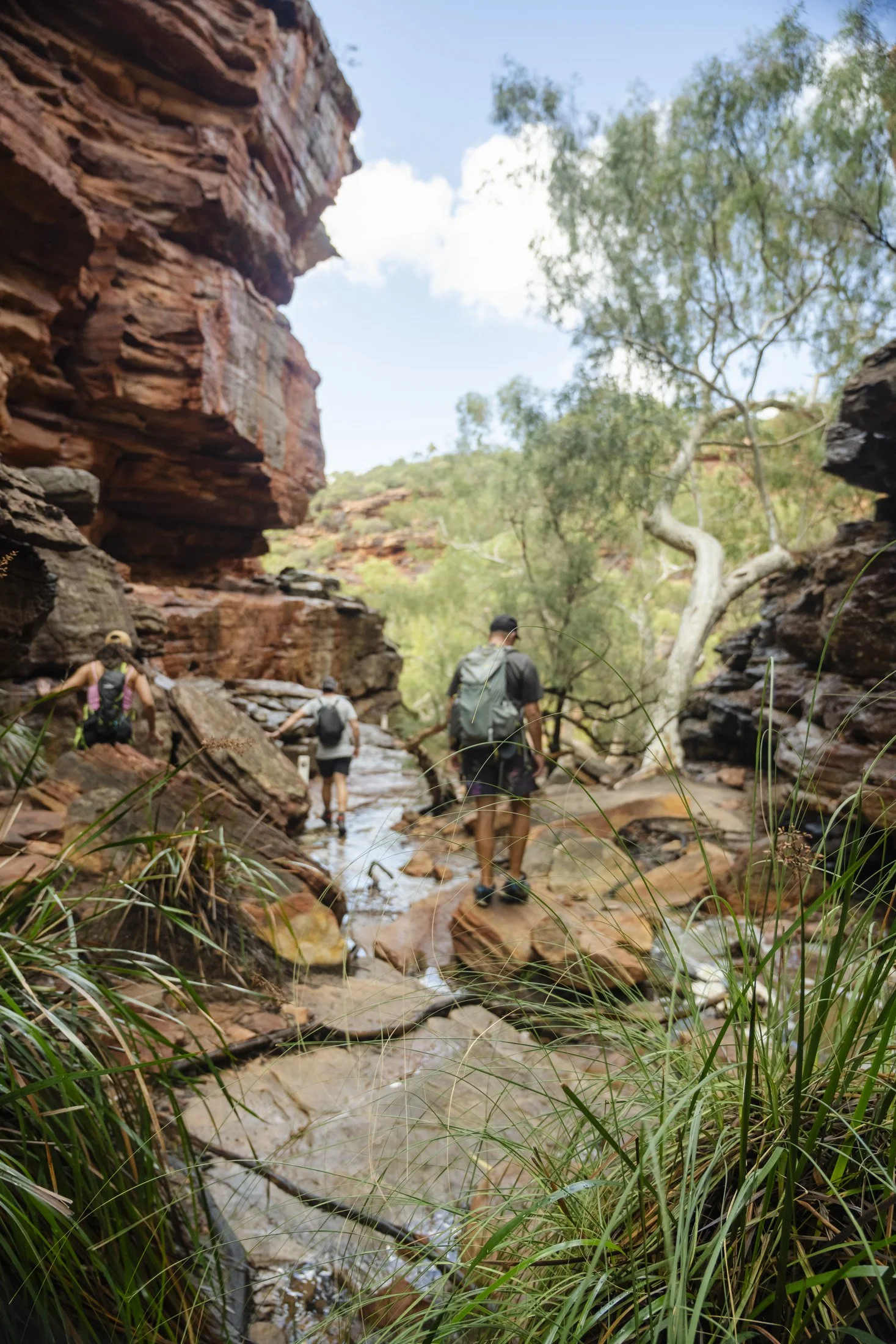
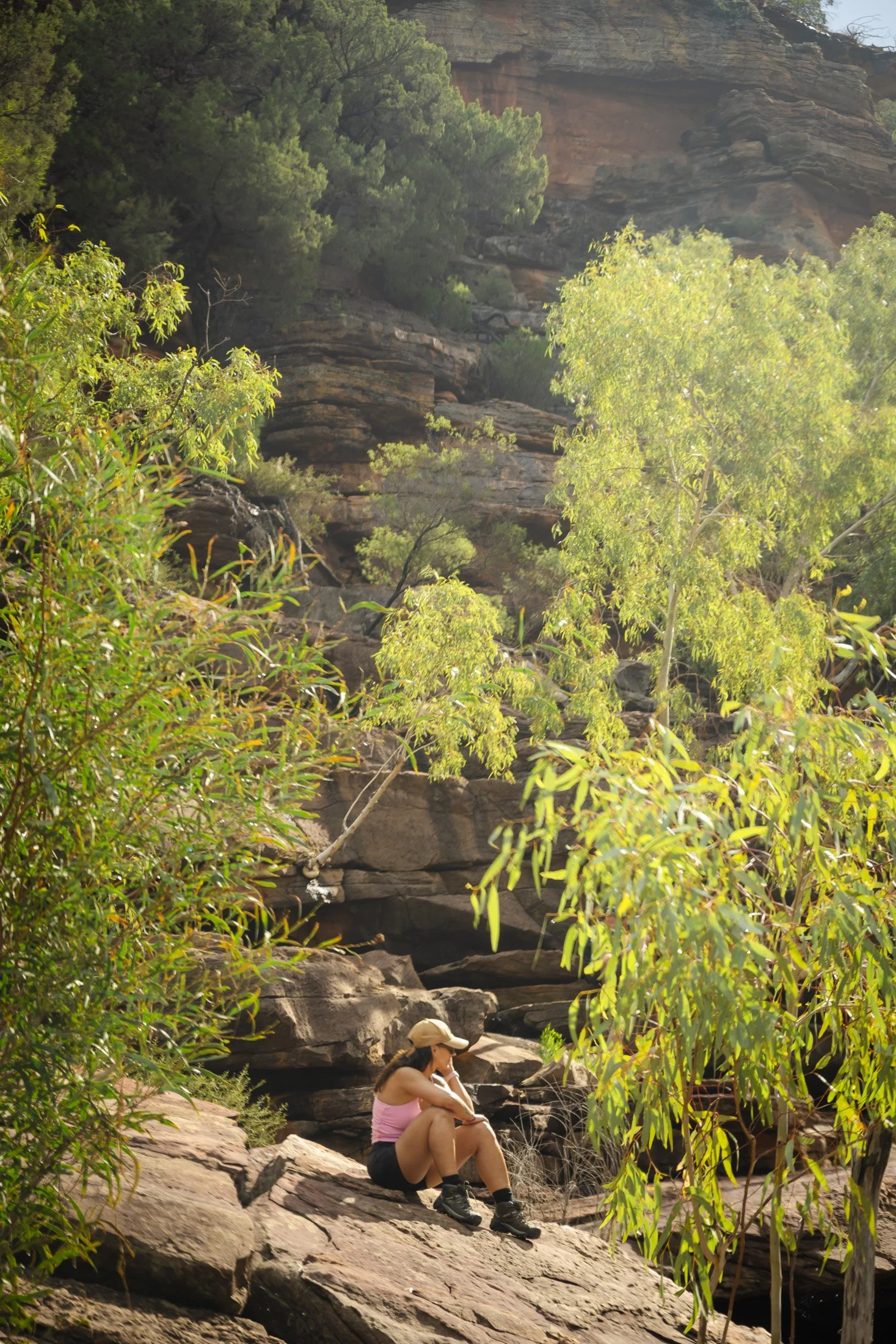
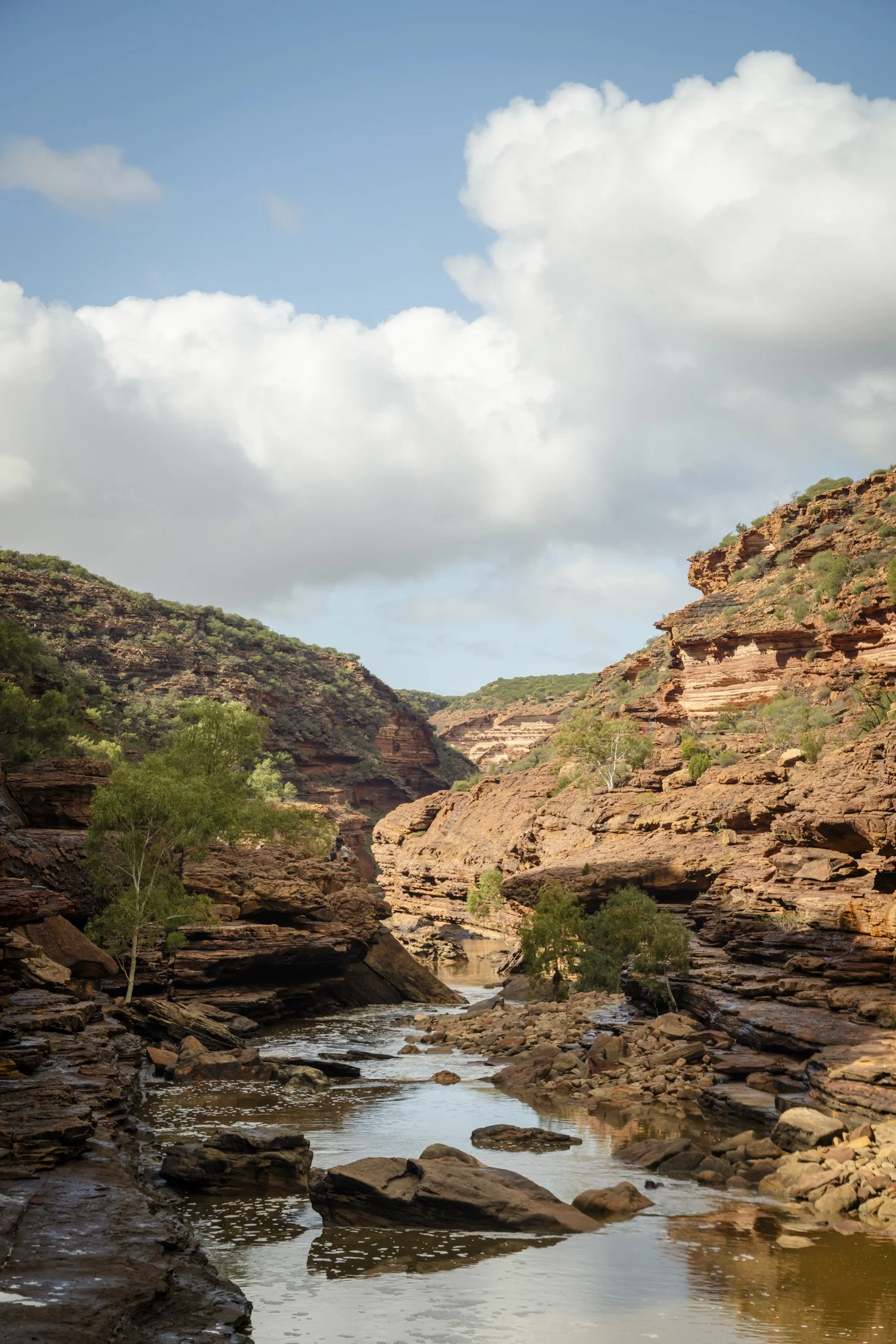
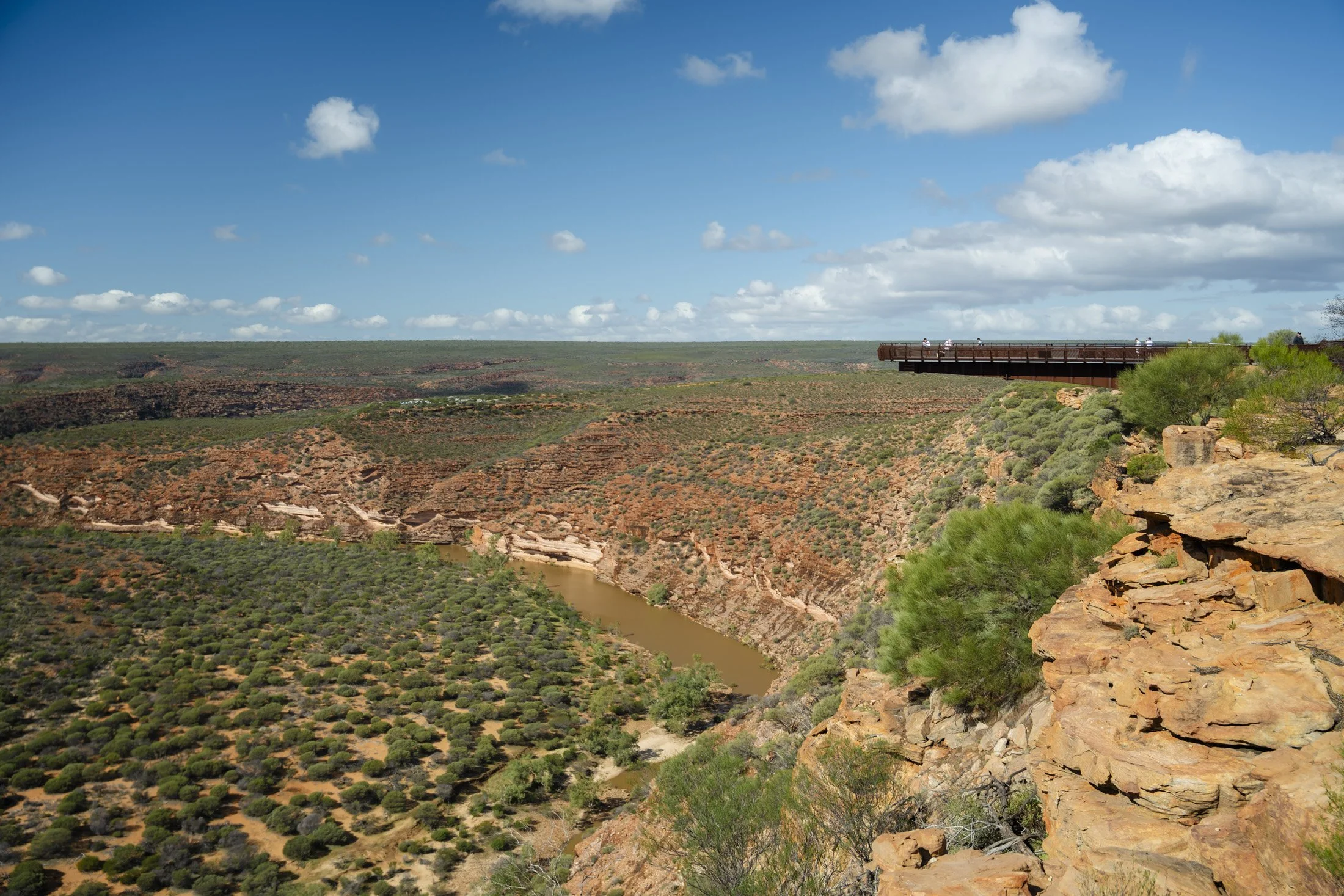
The timing was actually pretty special because there had been a lot of rain in the days leading up to our visit. As we walked down towards the gorge, we were surrounded by waterfalls spilling over the rock faces - something that isn’t always there.
It completely changed the landscape.
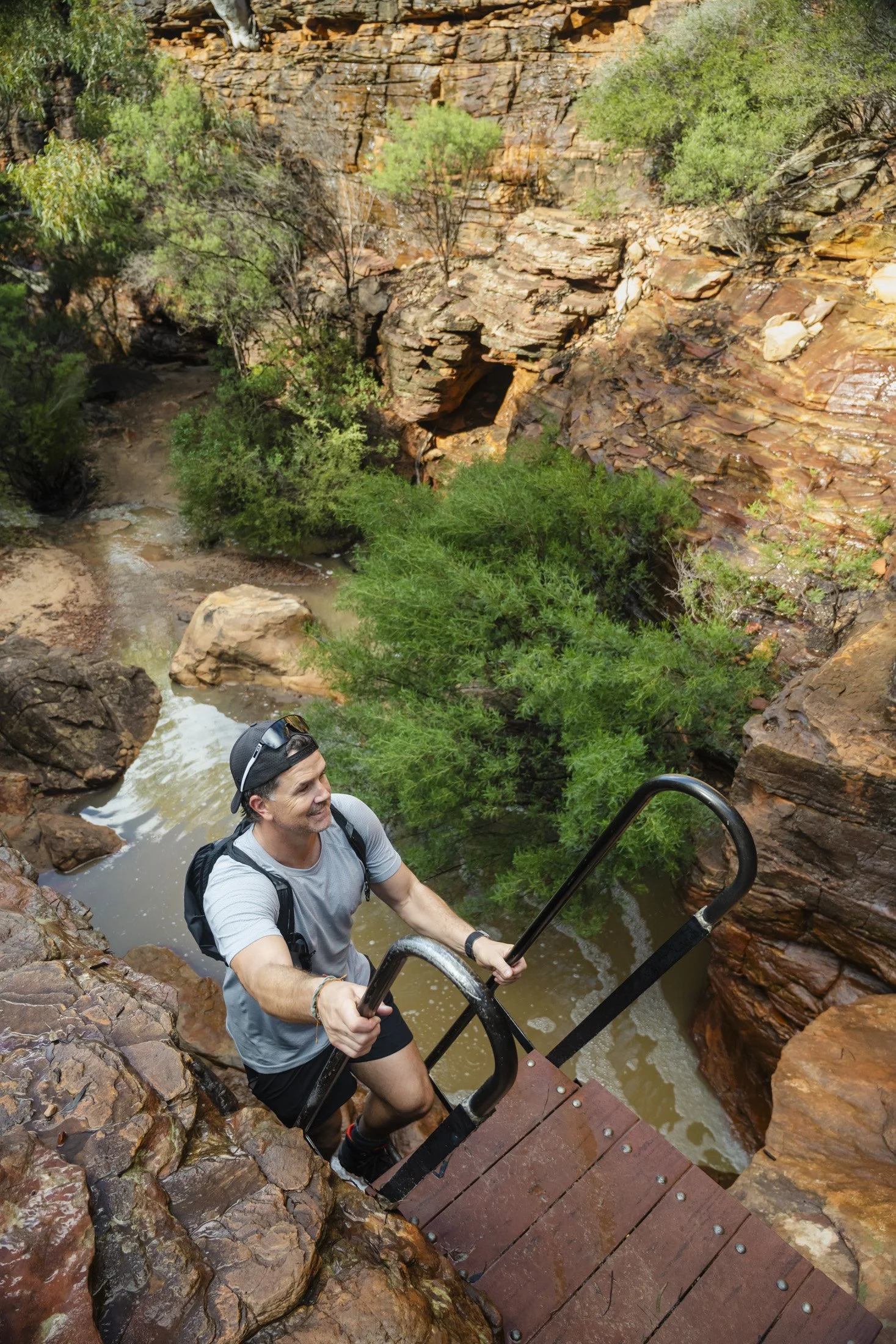
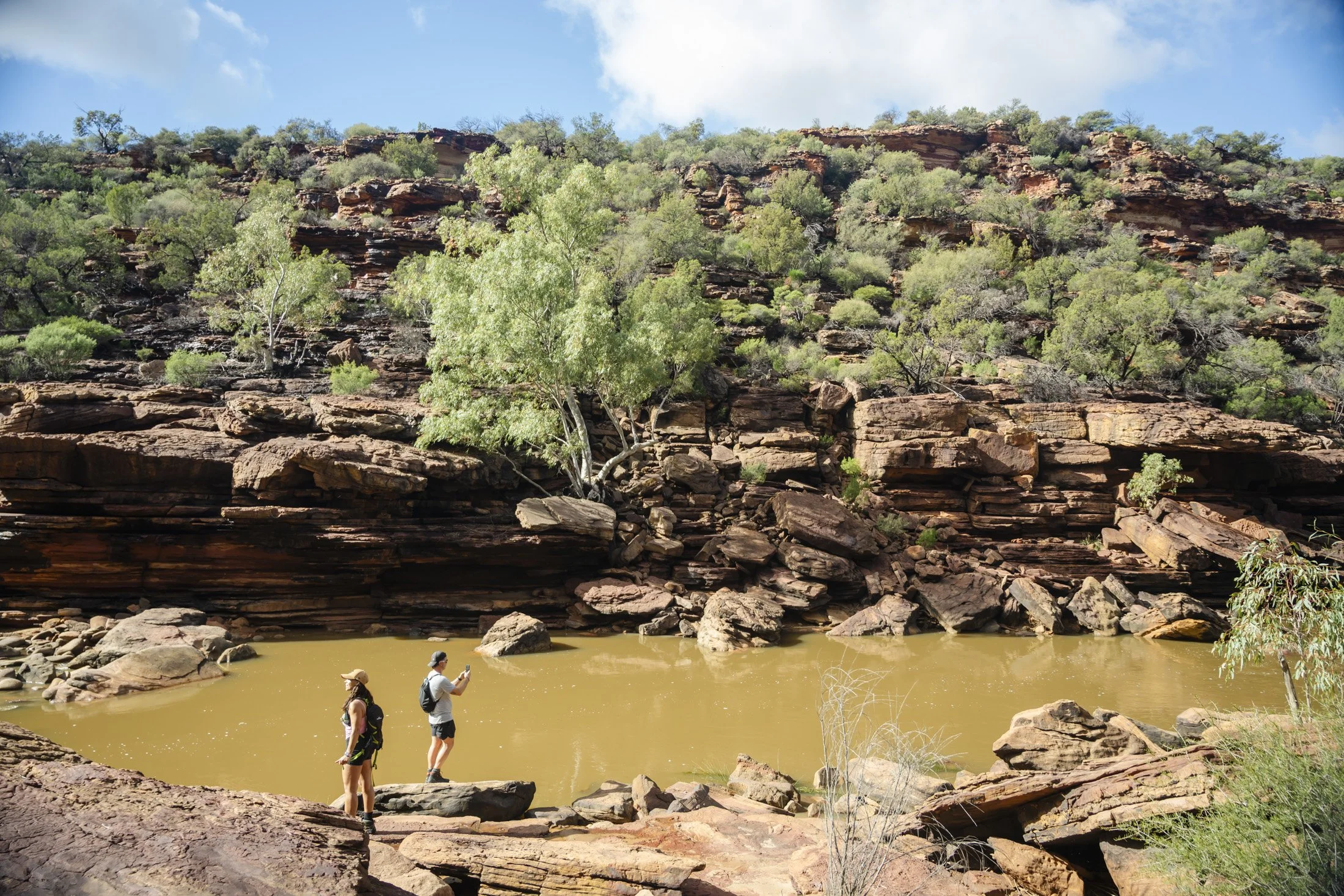
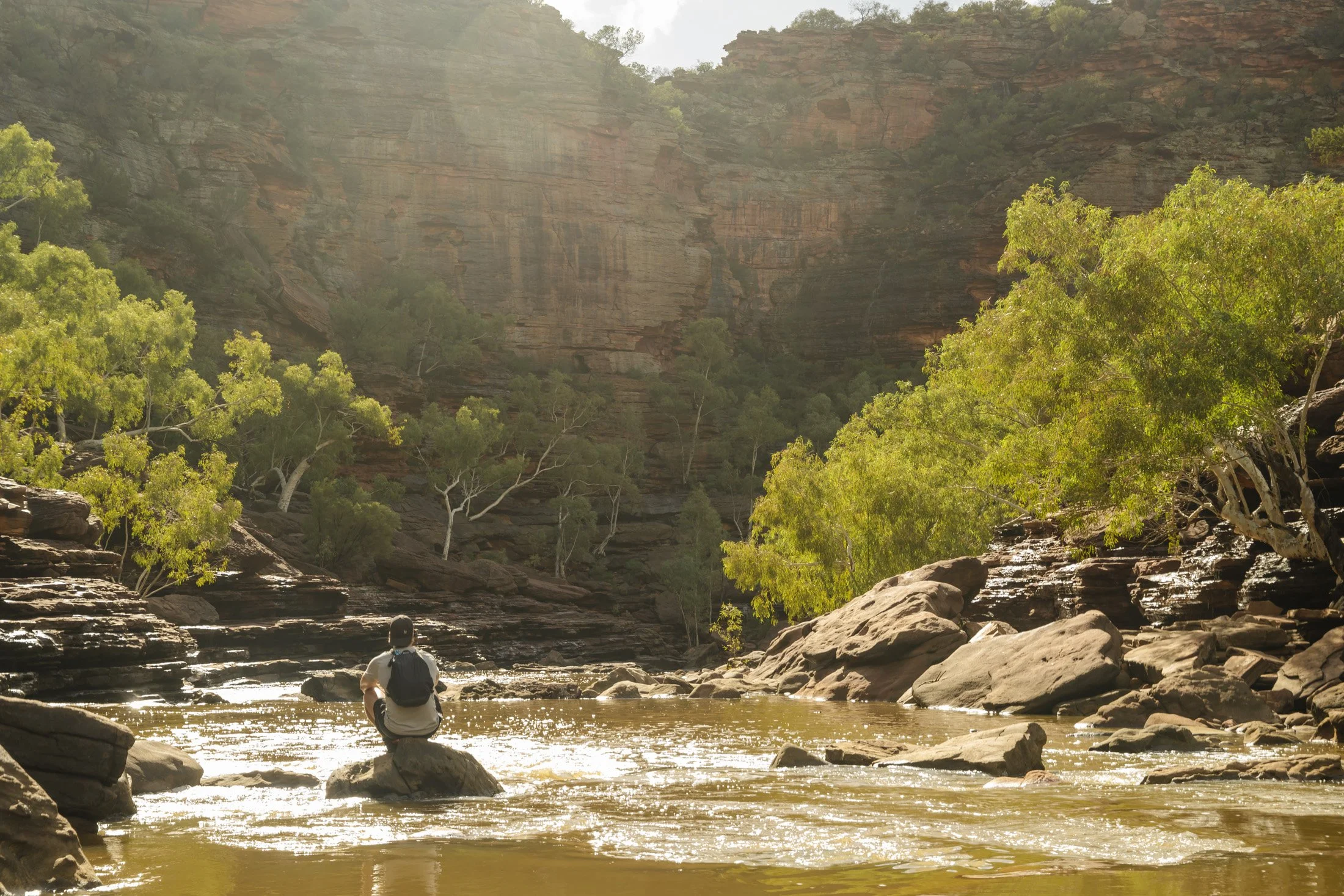
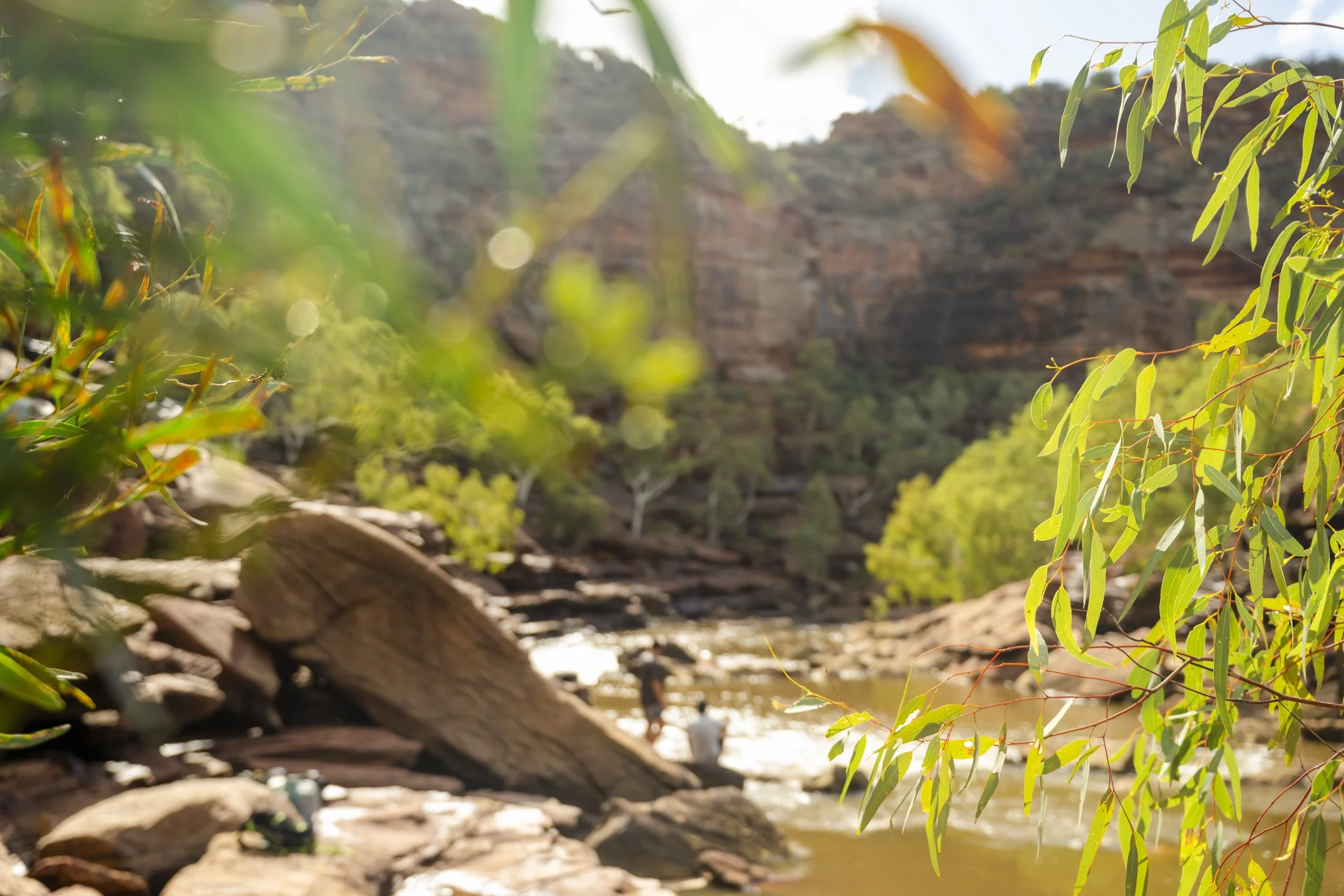
At the bottom, we explored along the river, climbed over rocks, watched people flying drones (who quickly ran the other way) and enjoyed the scenery before heading back up to experience the famous lookout points.
Even with plenty of other tourists around, those views were incredible.
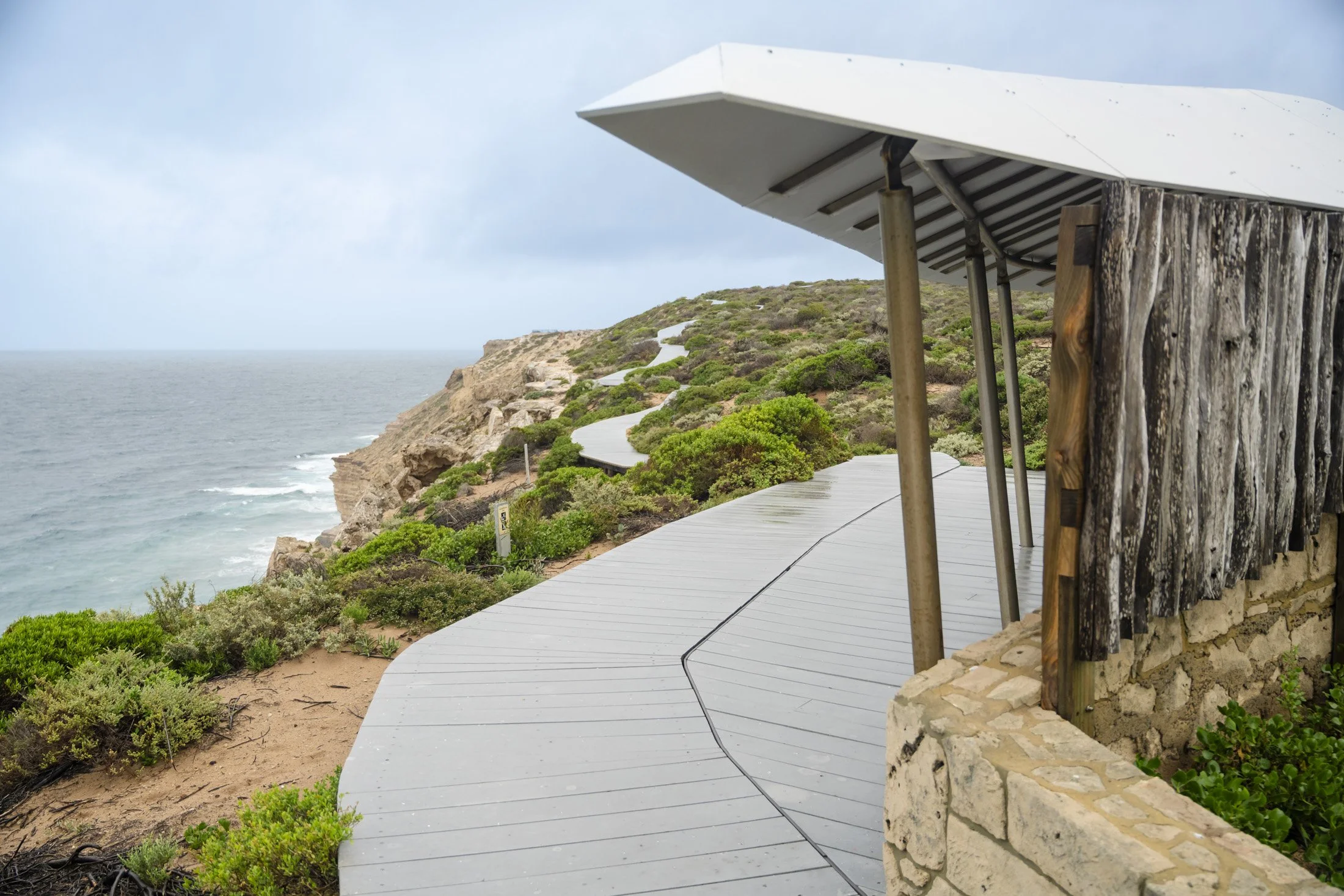
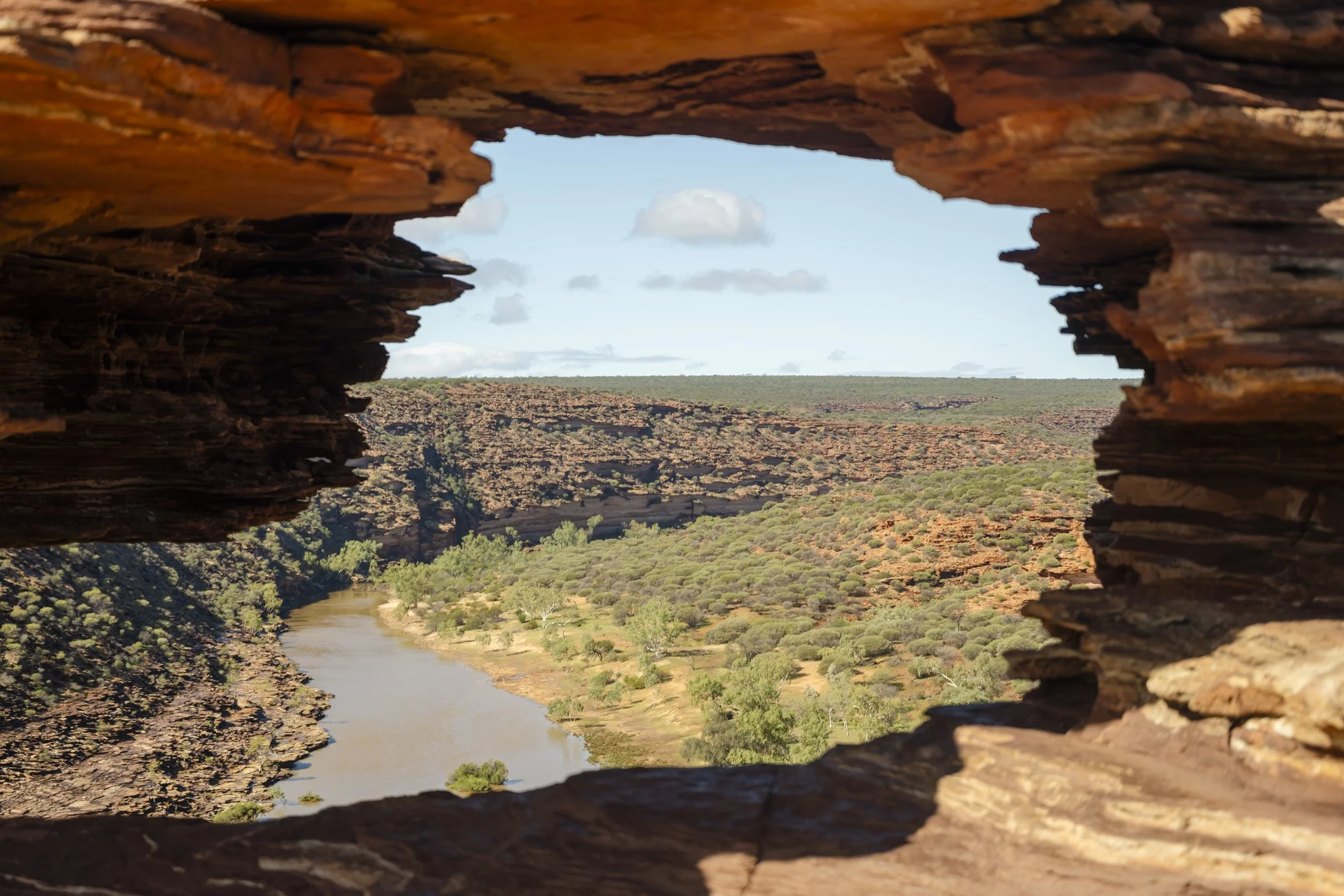
Of course, we had to visit the famous rock window and the platform that hangs out over the cliff - ticking off all those classic tourist moments - before heading back towards town.
Monkey Mia and slowing down
Next stop was Monkey Mia.
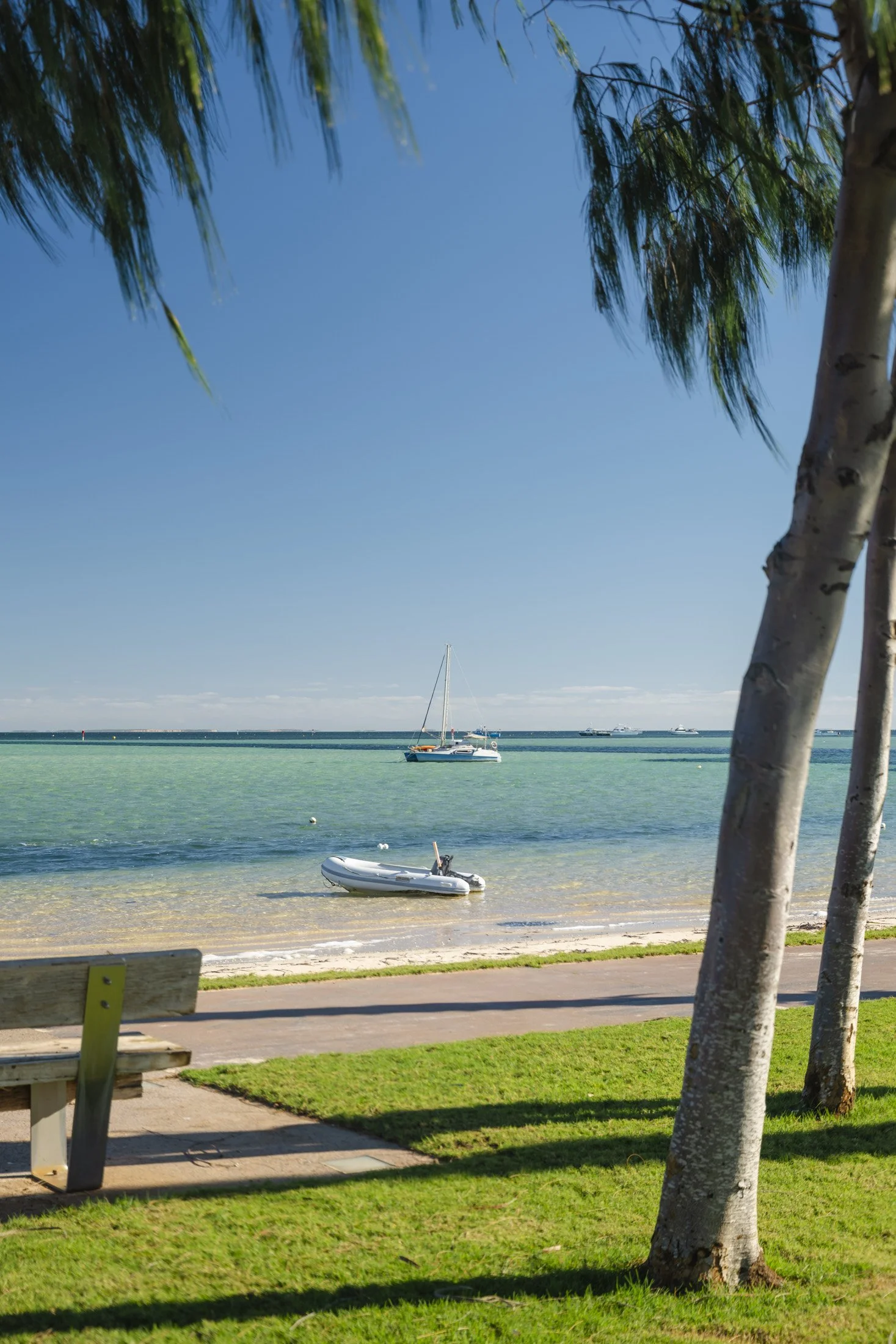
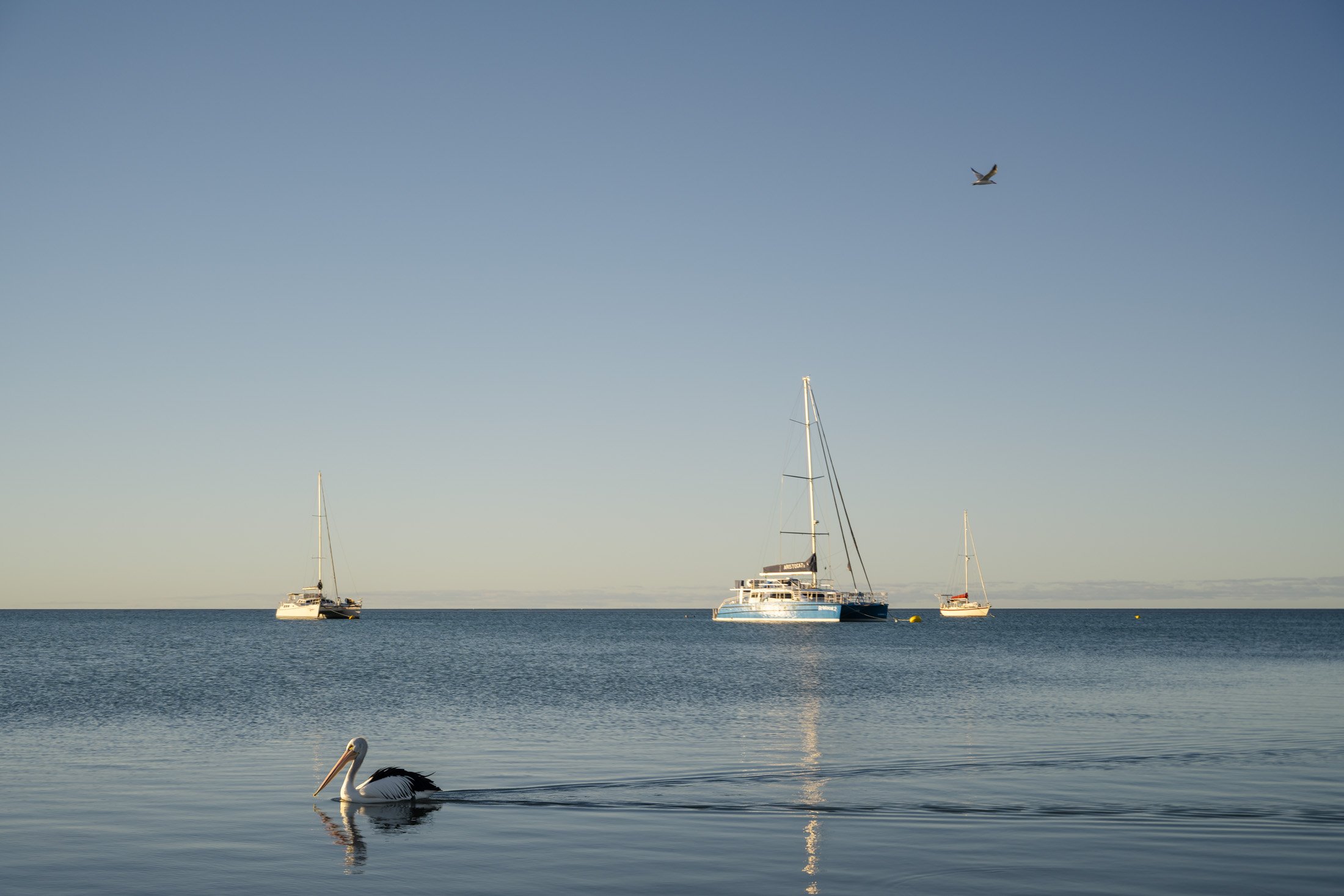
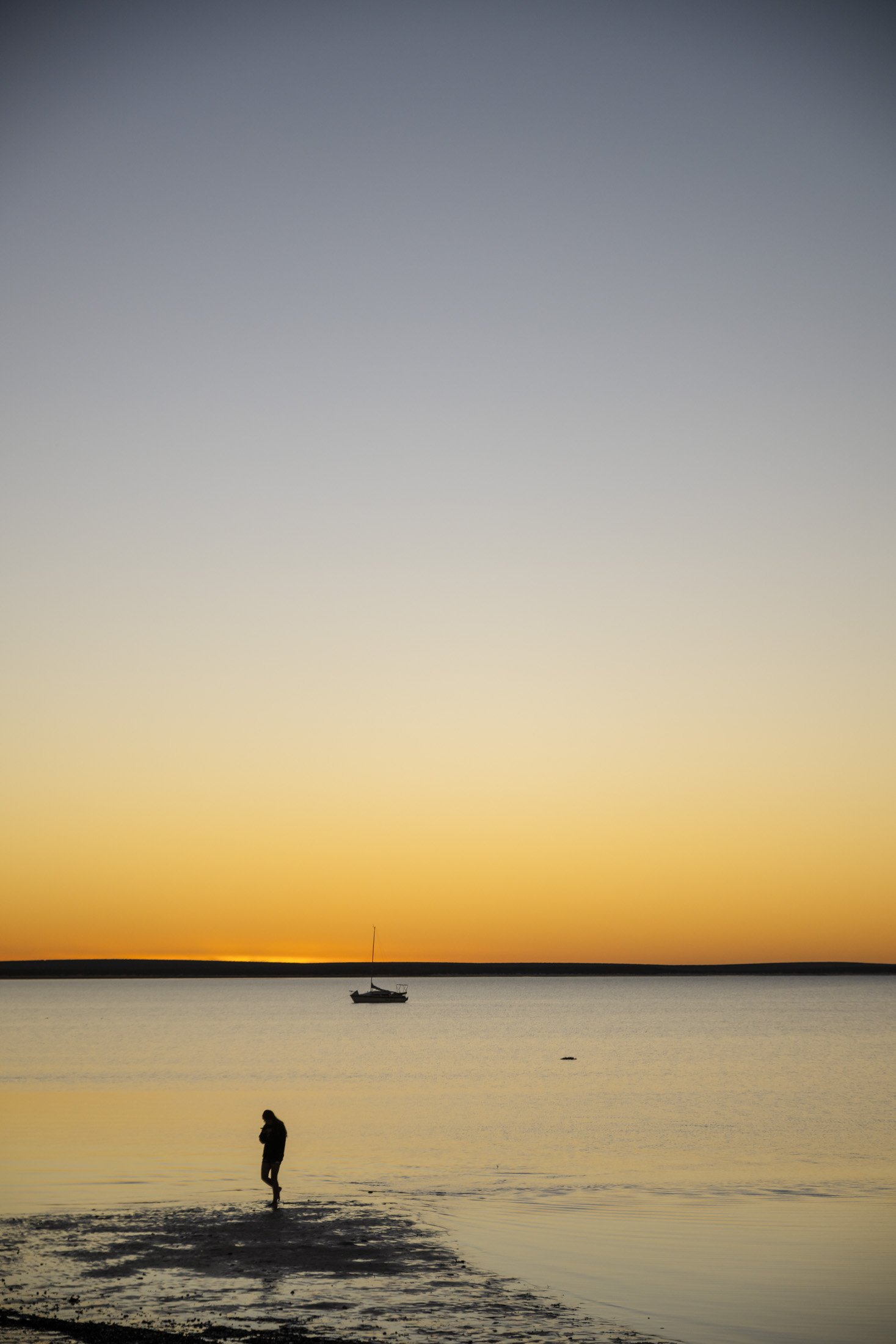
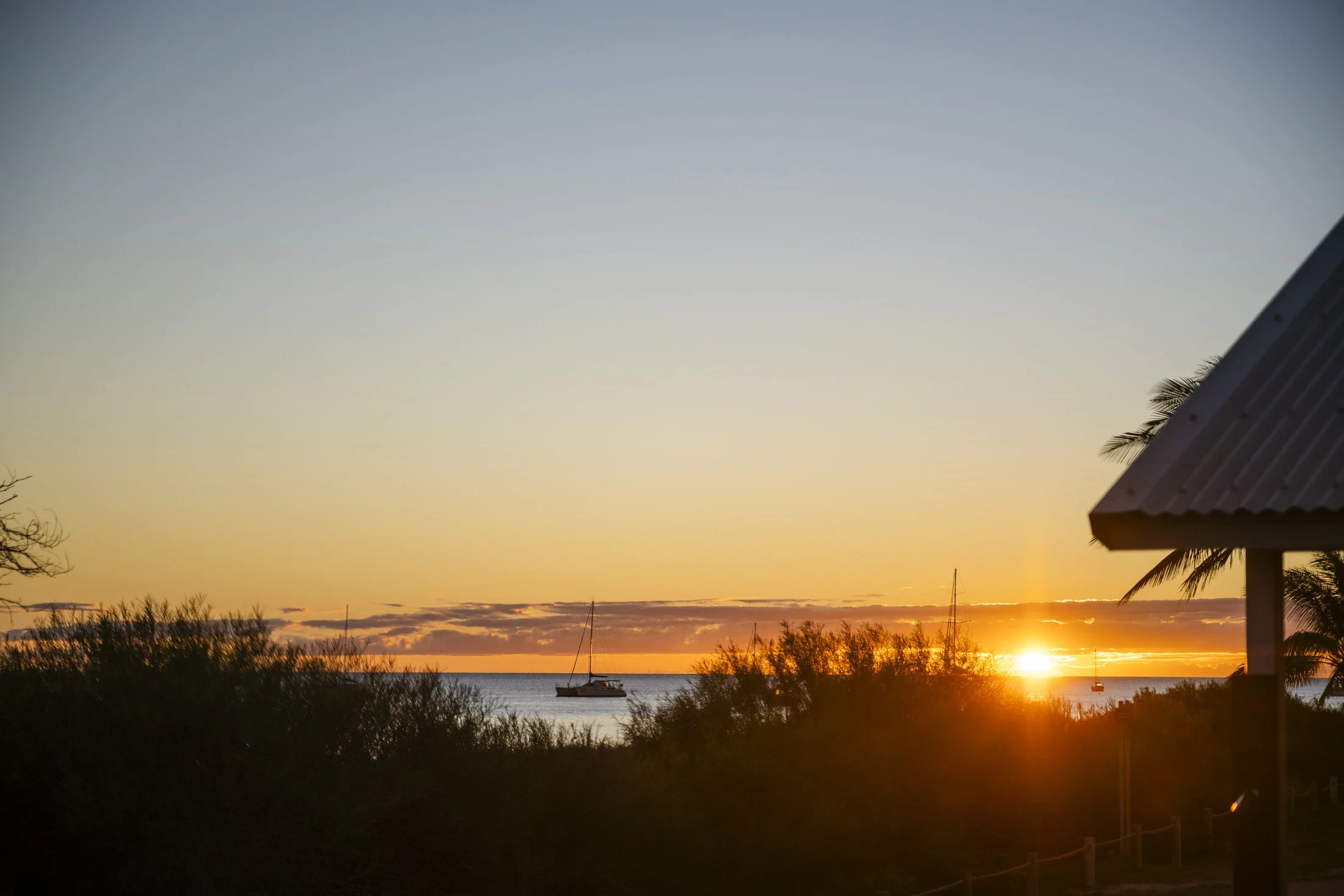
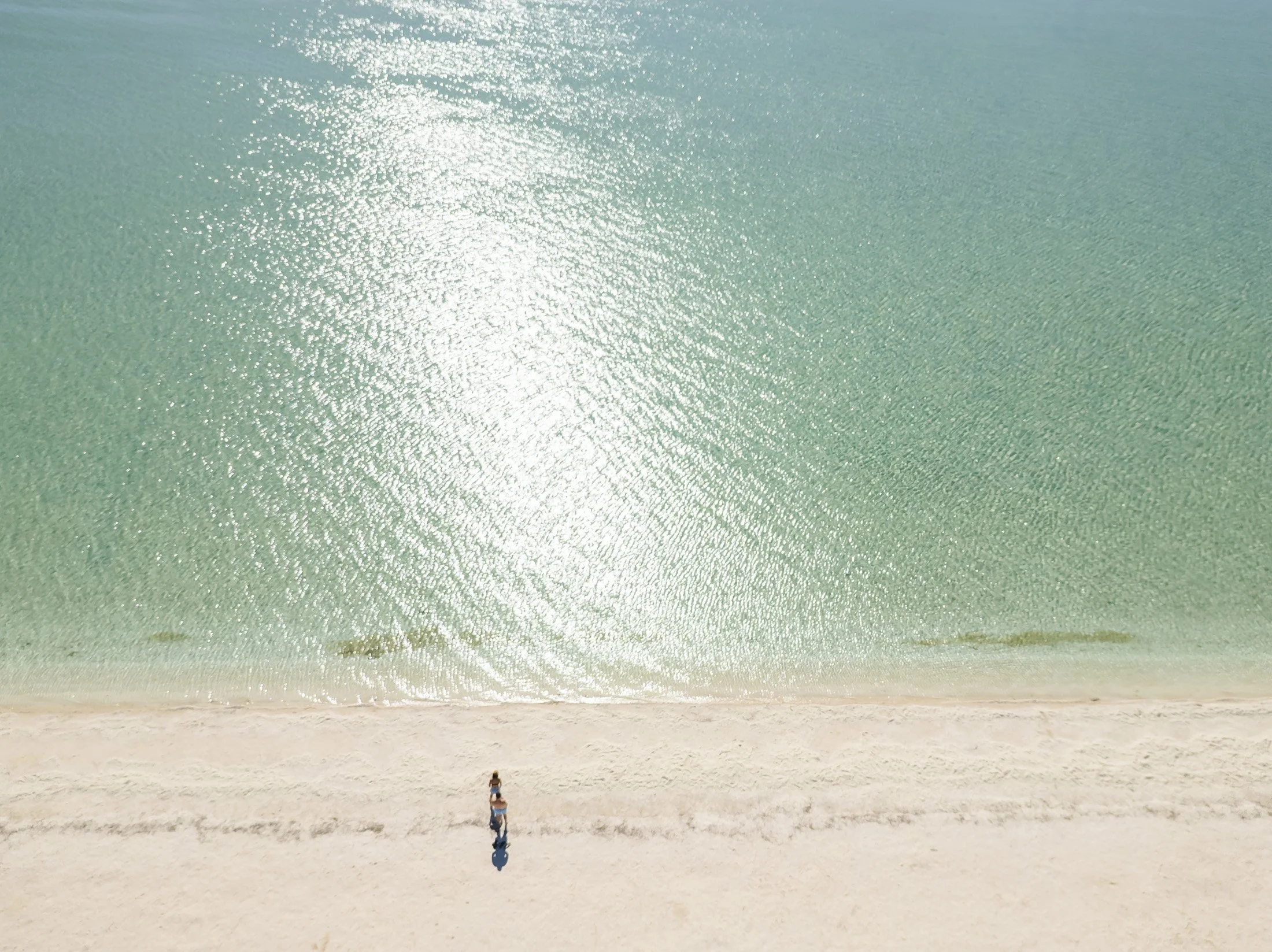
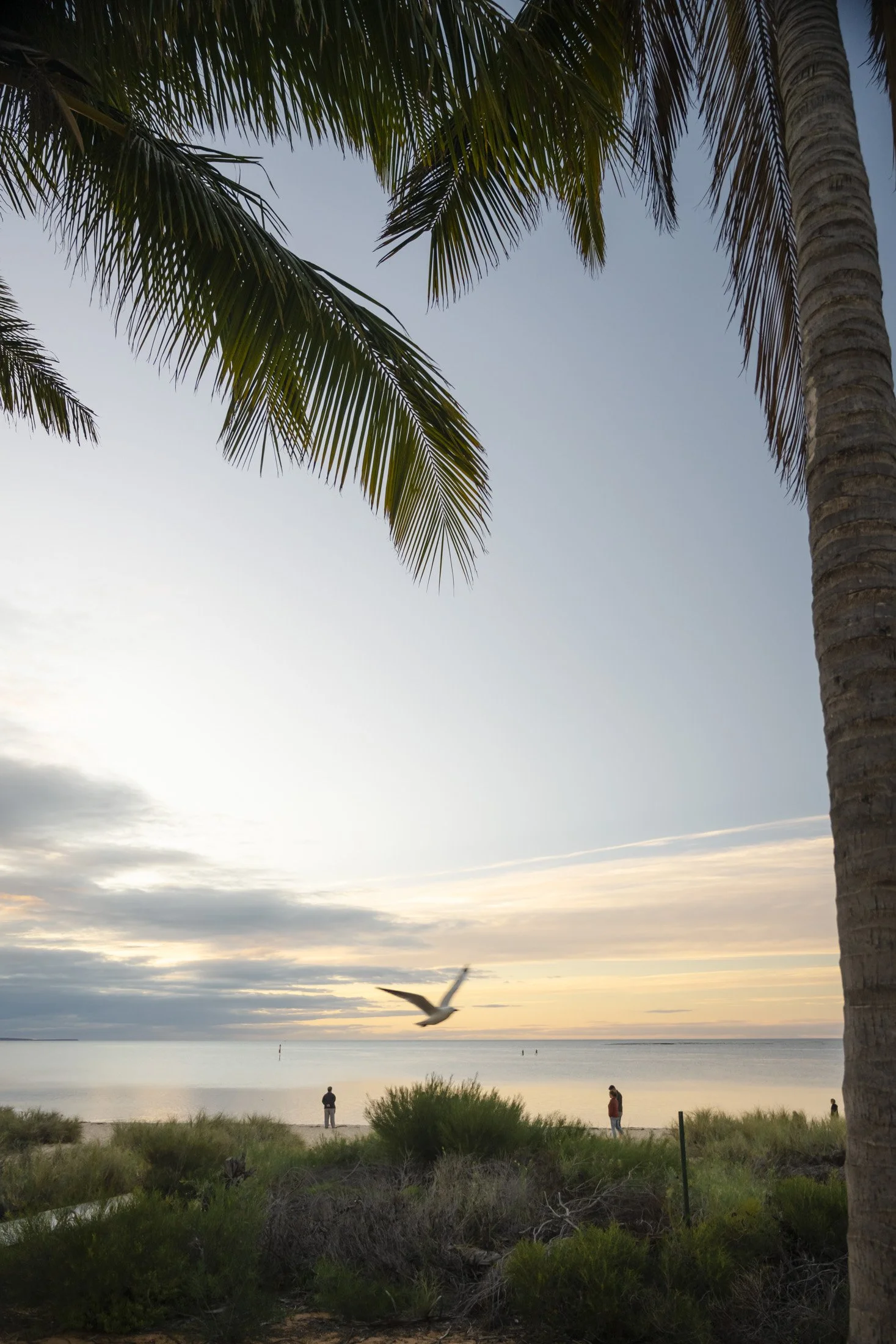
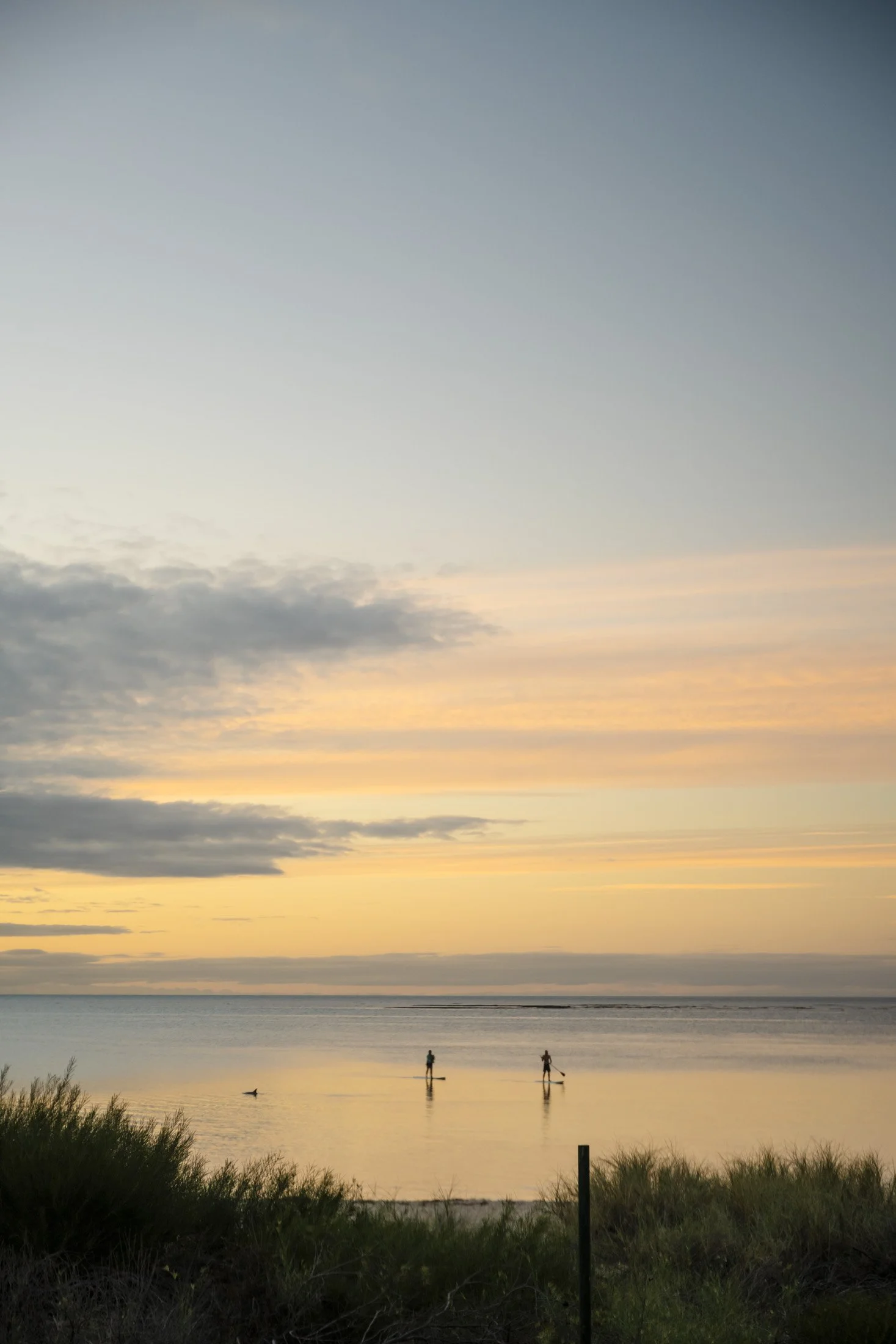
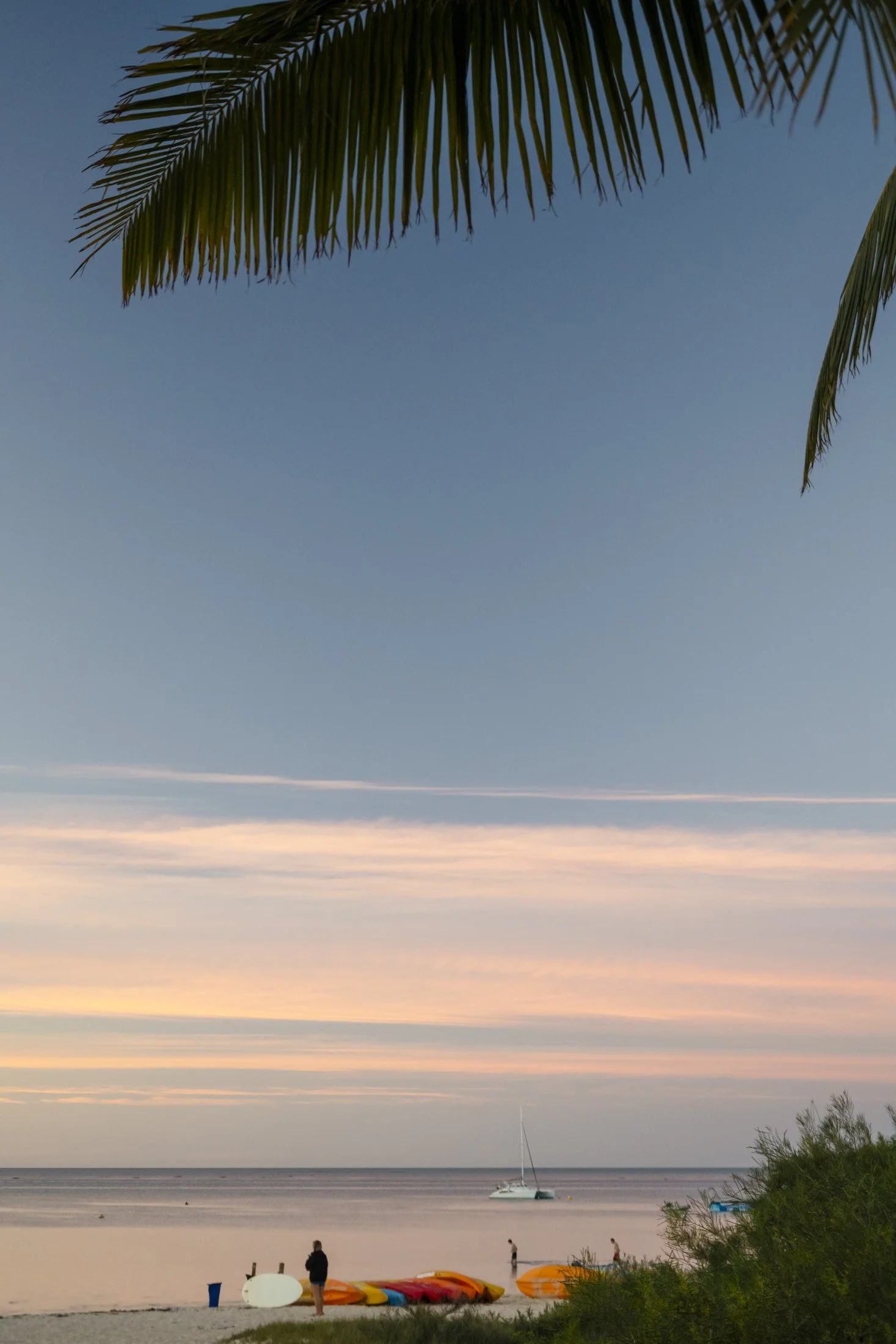
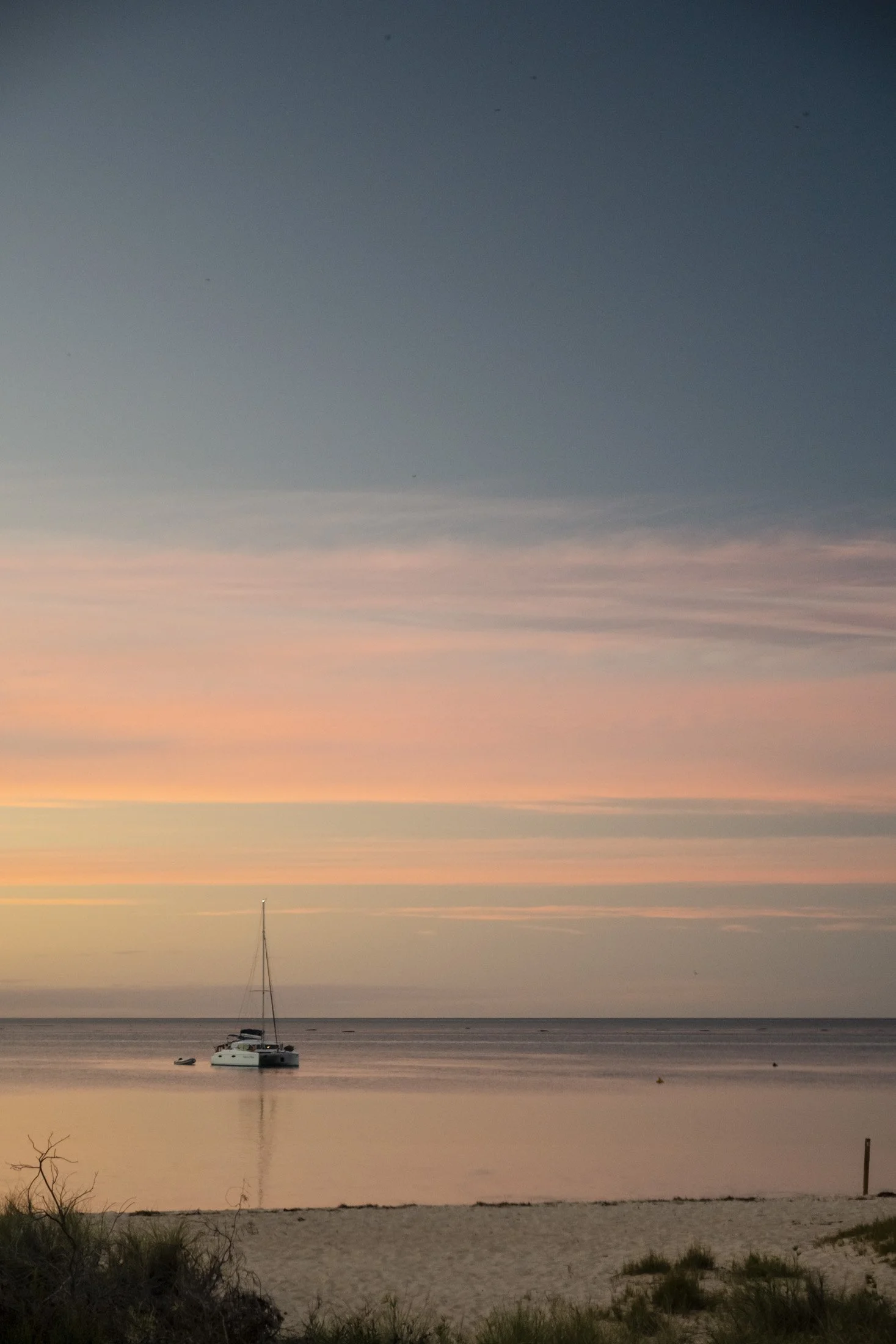
It’s one of those places that feels like it’s made for slowing down. Beautiful sunsets, calm water, dolphins nearby and that relaxed holiday feeling where nobody is rushing anywhere.
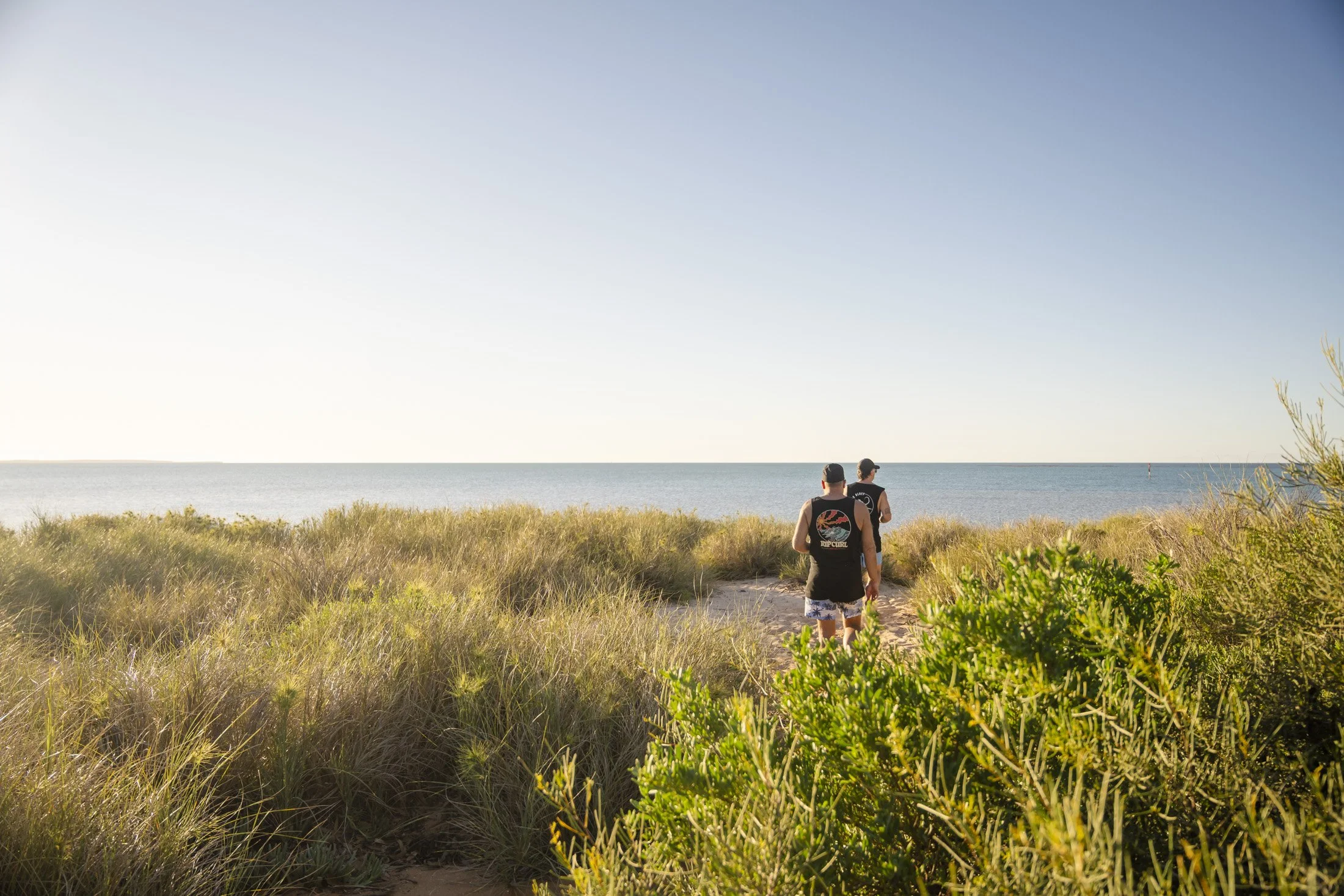
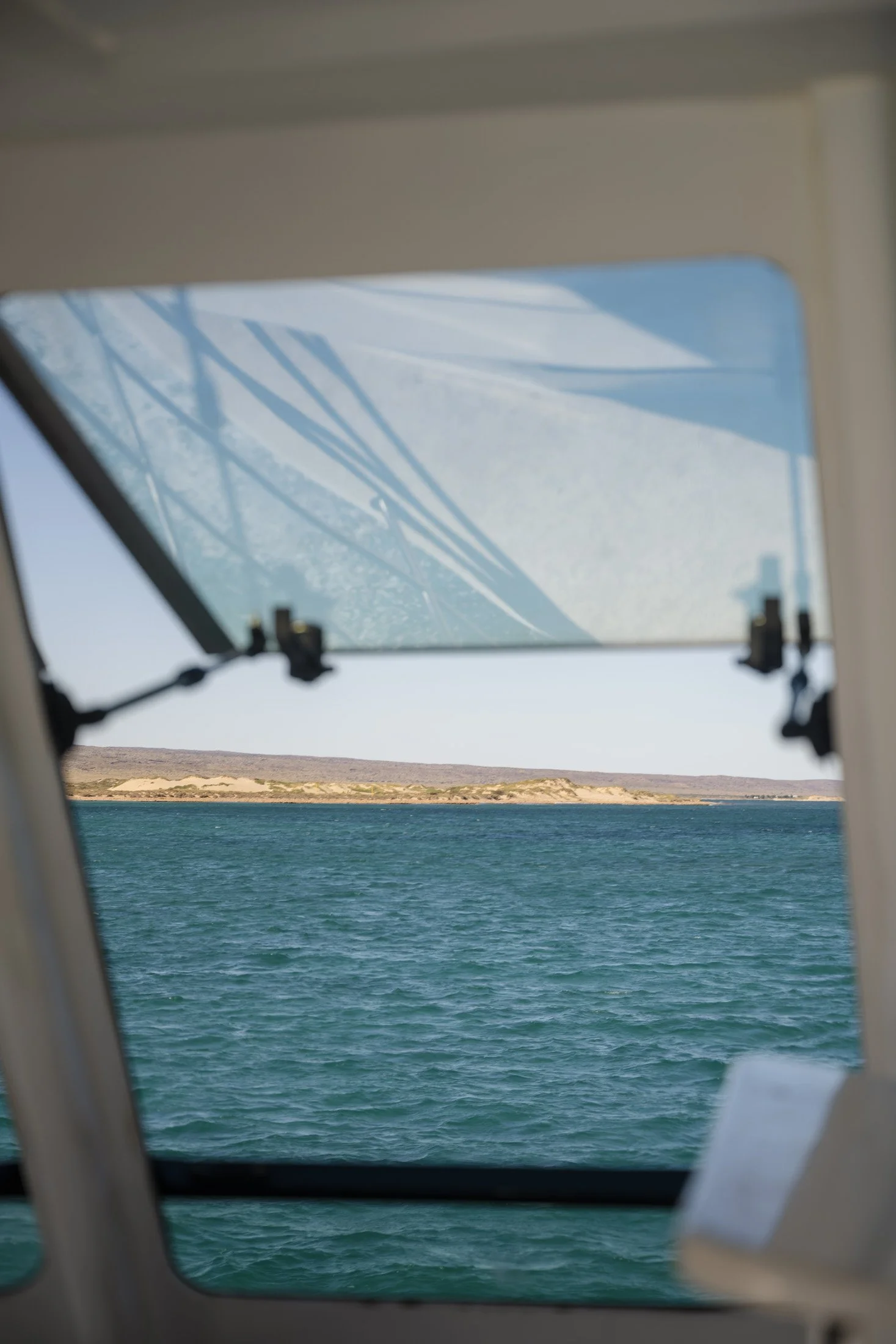
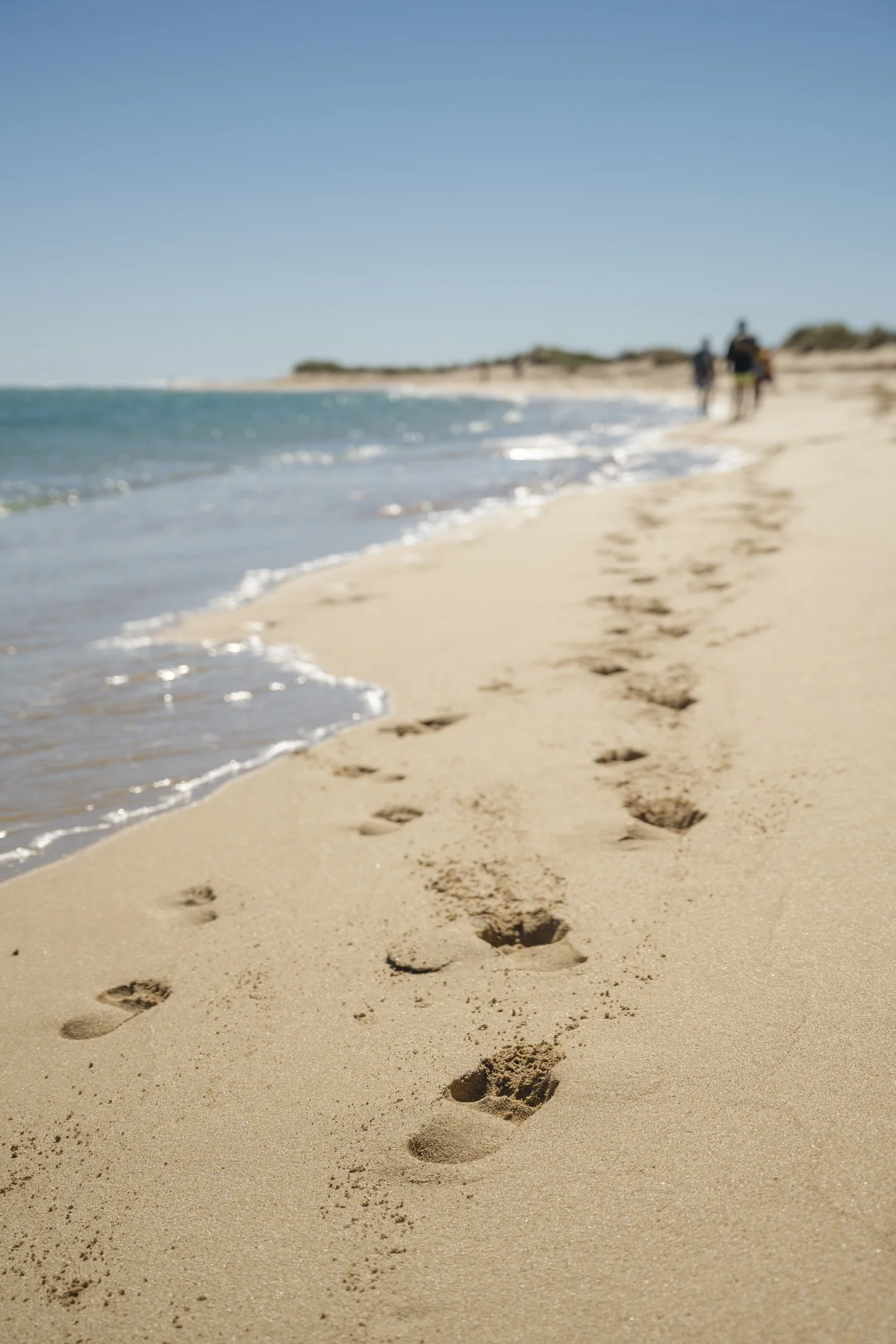
It’s easy to understand why people fall in love with this part of Western Australia. The beaches around Exmouth reiterated this.
Exmouth: the gateway to the adventure
Then we arrived in Exmouth.
Now, I’ll be honest - Exmouth itself was not what I expected.
It had a bit of a rough-around-the-edges feel. Almost a little like Coober Pedy, but without the underground homes. It felt weathered, and perhaps the recent storms had left their mark, but it was also part of the adventure.
And this is where I experienced something I don’t do often (once in my life).
I camped.
Well… I “swagged it”.
Thankfully, my friend had organised everything - the swag, the platform, the bedding - so I was actually very comfortable. I was definitely spoilt.
The next morning was the day we had all been waiting for.
Whale sharks.
Swimming with whale sharks at Ningaloo Reef
Swimming with whale sharks has been on my bucket list for years.
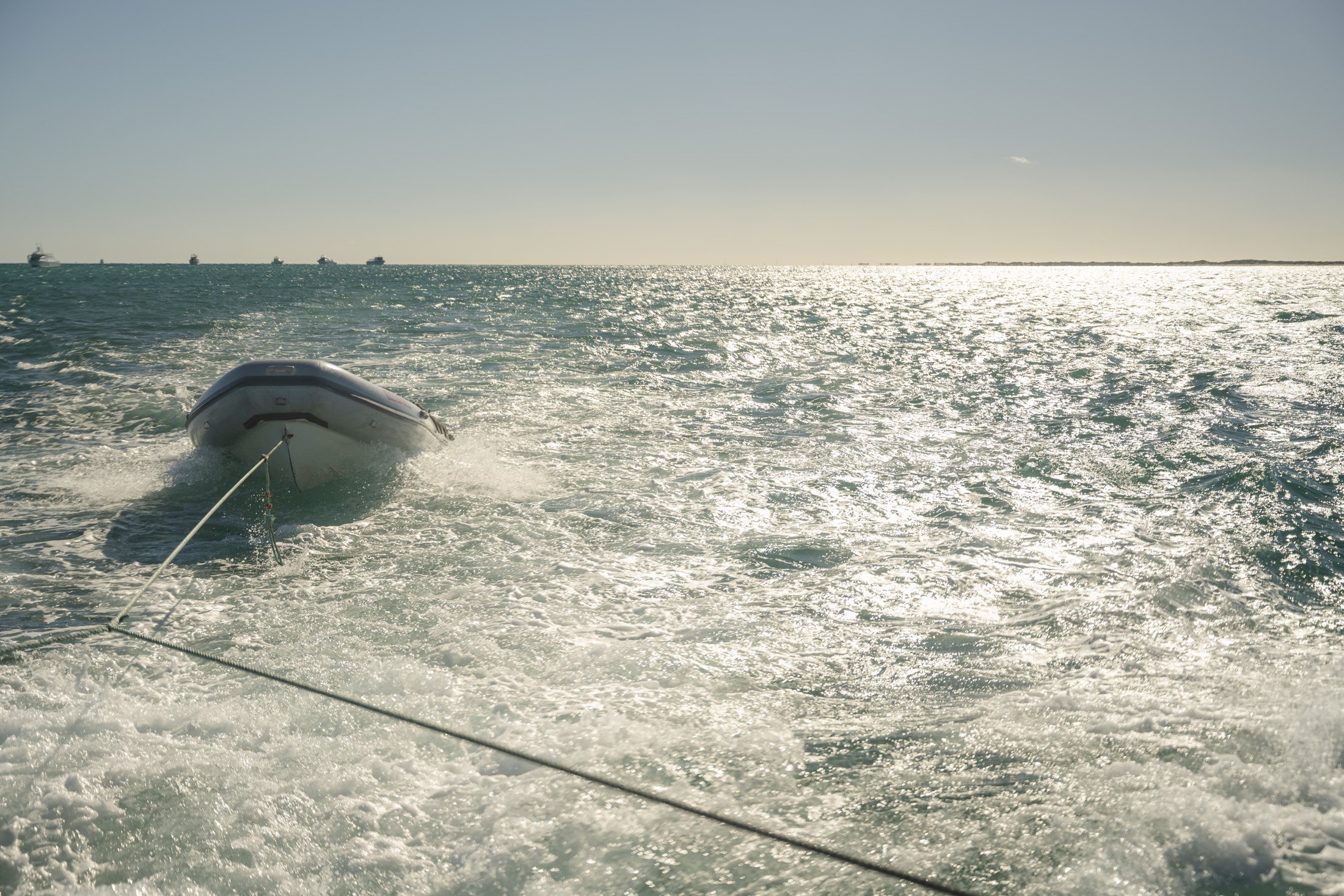
We headed out with Ningaloo Blue on what wasn’t the perfect day. There was wind, there was swell, and the boat ride was definitely enough to make you think carefully about whether you’d eaten the right breakfast!
But once we were in the water, none of that mattered.
The spotter plane found the whale sharks, and suddenly we were getting ready to jump in.
We had the opportunity to swim with two different whale sharks four or five times.
I expected to feel nervous.
I thought I might feel overwhelmed being in the water with something so huge.
But when I was actually there, I was calm.
I remember thinking, “Oh… they’re not as big as I imagined.”
Of course, they were enormous. But there was something incredibly peaceful about watching them glide through the water.
My favourite moment was when I moved away from the group and found myself swimming alongside one without the blindness of bubbles, flippers and people pushing around me.
Just me, the ocean and this incredible animal.
I did take my GoPro, but honestly, I barely looked through it. I wanted to actually experience it rather than spend the whole time trying to capture it. (See the footage below though ;))
And that’s something I’ve really been thinking about lately - sometimes the best memories are the ones where you put the camera down and just be there.
Responsible experiences with wildlife
The experience also made me reflect on wildlife tourism.
After swimming with turtles on Gili Trawangan recently, I became much more aware of how important it is that these experiences are managed properly.
Wild animals aren’t there for our entertainment.
We shouldn’t touch them. We shouldn’t crowd them. We need to respect their space.
The Ningaloo Reef operators seemed to have a real understanding of this. The experience felt carefully managed, with respect for the whale sharks and the surrounding environment.
And that makes such a difference.
Sometimes the best adventures are the ones you don’t organise
Looking back, this trip reminded me why I love adventure so much.
It’s not always about the destination.
It’s about the people you share it with.
It’s about saying yes.
It’s about having friends who hear an idea and say, “Yep. Let’s make it happen.”
And sometimes, it’s also about letting someone else take the wheel and trusting that the adventure will be even better than anything you could have planned yourself.
Western Australia, you were pretty special.
I’ll be back.
EOFY is coming… get organised.

Client: Vale 194
Every year around this time, I see the same thing.
Budgets are being reviewed.
Projects are being wrapped up.
And content… often gets left until the last minute.
Not because it’s not important, but because it’s easy to push down the list.
Then suddenly it’s June, and there’s pressure to “get something done”.
But EOFY doesn’t have to feel rushed or reactive.
It can actually be one of the most useful times of year to create content that sets you up properly for what’s ahead.
What usually happens
A lot of businesses get to this point and realise:
their imagery is outdated
they don’t have enough content for upcoming campaigns
their website doesn’t reflect what they currently offer
they’ve been meaning to “get photos done” for months
Sound familiar?

Client: Vale 194
A better way to approach it
Instead of trying to squeeze in one shoot and tick it off the list, this is a really good opportunity to think more strategically.
Ask:
What do we actually need content for over the next 6–12 months?
Where are we currently falling short?
What would make our marketing feel more aligned and consistent?
From there, you can create content that:
works across multiple campaigns
can be used in different formats
continues to deliver value long after the shoot
Story-led imagery (and why it matters)
The strongest content isn’t just a collection of nice images.
It tells a story.
It captures:
the atmosphere
the experience
the people
the small in-between moments
The kind of imagery that helps someone feel something, and ultimately decide to visit, book or engage.
One shoot vs ongoing content
This is where a lot of people get stuck.
A single shoot can absolutely be valuable, especially if you just need a refresh.
But more and more, I’m seeing a shift towards ongoing content creation.
Not everything needs to happen in one day.
A more flexible approach
This year, I’ve been offering a retainer-style option, which has been working really well for many clients.
Instead of trying to capture everything at once, you can:
spread shoots across different seasons
capture different aspects of your business over time
build a consistent, evolving image library
It also takes the pressure off having to get everything “perfect” in one shoot.

Client: Vale 194
Making it work with your budget
I understand that budgets vary, especially at this time of year.
That’s why I keep things flexible.
This might look like:
a short shoot to make use of the remaining budget
a more considered shoot planned for the new financial year
or a retainer that spreads investment across the year
There’s no one-size-fits-all approach.

Client: Vale 194
Working locally and beyond
I’m based on the Mid Coast in South Australia and work regularly across McLaren Vale, the Adelaide Hills and surrounding regions.
I also travel to regional areas across Australia, often grouping shoots together to make things more efficient.
If you’re outside of South Australia, feel free to reach out as well, there’s usually a way to make it work. I’m always travelling.
If you’ve been thinking about updating your content…
This is a really good time to act.
Whether it’s:
a small refresh
something more strategic
or just starting the conversation
I’m always happy to chat through ideas and see what might work for you.


